🚀 Zaprep: Your Socials on Steroids. 免费开始 — 每月自动发送 1,000 条私信,将互动转化为潜在客户。 ,每月 1,000 条自动私信。

The portfolio spans over 20 million square feet, with a committed occupancy of 98.8% as of December 2025.
View
Apple is evaluating alternative chipmakers as peers sign foundry deals amid supply constraints and AI demand.
View

The collaboration aims to equip students with hands-on experience, combining academic learning with real-world AI engineering challenges.
View

For content creators and journalists, India’s digital speech landscape is becoming harder to navigate. The new IT Rules make it easier to control.
View

The companies will help enterprises deploy their tools across different businesses.
View

Krutrim said it has become financially self-sustaining and does not require immediate external funding, including from its founder.
View

Kapur’s new role highlights how filmmakers and artists are increasingly shaping conversations around AI’s future and its creative potential.
View

With voice agents now active across key businesses of Aditya Birla Capital, Blue Machines AI is pushing automation deeper into the customer lifecycle from acquisition to support.
View

MathCo has partnered with Google Cloud to help enterprises move beyond isolated AI use cases and embed intelligence directly into end-to-end workflows.
View
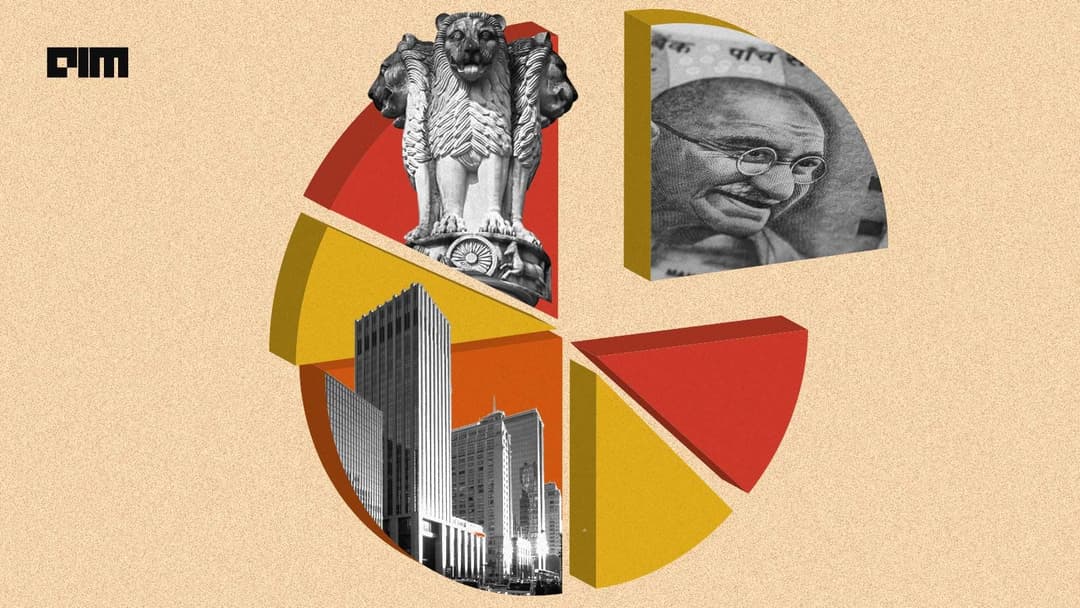
With GCC and startup policies armed with incentives, Uttar Pradesh hopes to sprint to the front of deeptech innovation. But its startup ecosystem still shows signs of structural immaturity.
View

The Centre is designed to bridge the gap between research and real-world applications by enabling the commercialisation of space technologies.
View
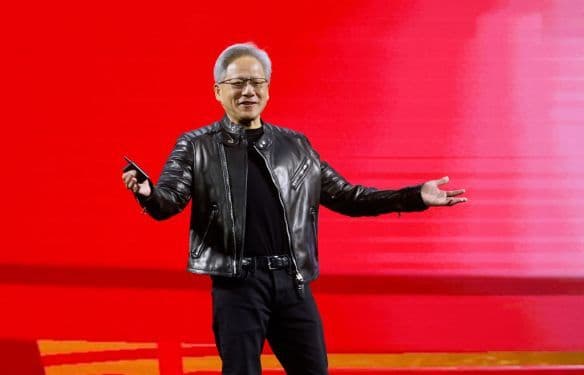
When it comes to the specter of AI’s labor-displacing potential, Jensen Huang thinks that the American worker has nothing to fear. Duringa conversationMonday night with MSNBC’s Becky Quick hosted by the Milken Institute — an economic policy think tank, the jovial Nvidia CEO said that AI was an industrial-scale generator of jobs, not the harbinger of mass unemployment that so-called “AI doomers” have often accused it of being. A number of different topics were broached during the talk, but a central theme that kept coming back was the ongoing economic anxiety surrounding the AI industry and whether it was something Americans should be legitimately worried about. At one point Quick noted: “This is happening so quickly. Is there a bigger dislocation than we’ve seen in the past that leads to greater inequality? And what do we do about that?” Throughout the night, Huang struck an optimistic note. “AI creates jobs,” Huang asserted during the discussion, adding that “AI is [the] United States’ best opportunity to re-industrialize” itself. Huang noted that the AI industry is powered by a new breed of industrial factories—the kinds producing the hardware that acts as critical infrastructure for the AI business. (Huang’s company notably sells a lot of that hardware.) Those factories necessarily need workers, as does the rest of the blossoming AI industry. Just because a specific task is automated, that doesn’t mean that a person’s entire job is going to be replaced, Huang reasoned. People who believe this “misunderstand that the purpose of a job and the task of a job are related” but not ultimately the same thing, he said. In other words, Huang’s argument is that even when AI takes over a discrete task within a role, the broader function that employee serves in an organization is likely to remain. Relatedly, Huang was critical of people who allege AI will dominate humanity or that it will wipe out huge sectors of the economy. “My greatest concern is that we scare…people—all the people that we’re telling these science fiction stories to, to the point where AI is so unpopular in the United States, or people are so afraid of it, that they don’t actually engage it,” he said. Ironically, much of the “doomer” rhetoric has been generatedby the AI industry itself, and critics maintain that such hyperbole has been used as a marketing gimmick designed to gin up buzz and excitement for products that aren’t anywhere near the capabilities that such rhetoric suggests. It remains to be seen what kind of long-term impact AI will have on the overall economy. That said, reputable financial and academic organizations have suggested that asmuch as 15% percent of jobsin the U.S. will be eliminated over the next several years as a result of AI.
View

