🚀 Zaprep: Your Socials on Steroids. 免费开始 — 每月自动发送 1,000 条私信,将互动转化为潜在客户。 ,每月 1,000 条自动私信。
最新 AI 资讯

AI companies are spending millions to thwart this former tech exec’s congressional bid
Loading the player… If you’ve seen the recent ads attacking New York assembly member Alex Bores, you’ll know he used to work for Palantir, the AI company that’spowering the controversial raidsand high-volume deportation efforts from U.S. Immigration and Customs Enforcement. The ads even accuse Bores of having made hundreds of thousands of dollars building the tech for ICE and “powering their deportations.” But that’s not quite the whole story. “I quit Palantir specifically over its work with ICE in 2019,” Bores told TechCrunch on last week’s episode ofEquity. Now he’s running for New York’s 12th congressional district, with Big Tech billionaires funding outside groups targeting his campaign. The ads are fundedby a super PAC calledLeading the Future,which, ironically, has the backing of Palantir co-founder Joe Lonsdale, as well as OpenAI President Greg Brockman, VC firm Andreessen Horowitz, AI search startup Perplexity, and other Silicon Valley heavy-hitters. The PAC hasraised $125 millionto go after candidates in state elections that are introducing AI legislation and to support candidates with a light-to-no-touch approach to regulating AI. “They have committed to spending at least $10 million against me…because they know I am their biggest threat in their quest for unbridled control over the American worker, over our kids’ minds, climate, and our utility bills,” Bores said. “They’re targeting me to make an example of me.” He said his background working in tech, including at Palantir and several startups, is exactly why Leading the Future made him its first target. “I actually deeply understand the technology and I can’t be dismissed as ‘this person just doesn’t understand it,’” Bores said, adding that if elected, he would be only the second Democrat in Congress with a computer science degree. Bores incurred the ire of Silicon Valley after sponsoring theRAISE Act,an AI transparency bill that was signed into law in December. The law requires large AI labs — specifically those making more than $500 million in revenue — to have a publicly available safety plan in place, to stick to it, and to report when a catastrophic safety incident has occurred. It’s the sort of light-touch law that other industries might kill for — more disclosure and planning than proactive oversight. Bores says he doesn’t believe Leading the Future wants to see any AI regulation, unless, as the PAC has said, it’s at the federal level. Over the last year, states have beenfightingagainst industry to protect their rights to regulate AI in the absence of a federal standard. In December, President Trump signed anexecutive orderdirecting federal agencies to challenge “onerous” state AI laws, like Bores’ RAISE Act. Bores pointed to his campaign’sproposed national AI governance blueprint— spanning eight issue areas and 43 policy recommendations — adding that anyone serious about federal AI regulation should be supporting him. He has also introduced legislation that would force companies to disclose what goes into their training data and to embed metadata standards that would make synthetic content easier to trace. Leading the Future isn’t the only Silicon Valley-backed PAC getting involved in the midterms. Meta has put$65 millioninto two super PACs — American Technology Excellence Project and Mobilizing Economic Transformation Across (Meta) California — to elect state-level candidates who are friendly to the AI and tech industry. And AI companies, industry groups, and top executives donated at least$83 millionin 2025 to federal campaigns and committees. “This is not a ‘We want to have a piece of the conversation,’” Bores said. “This is: ‘We want to intimidate elected officials and browbeat anyone who doesn’t agree with us.’” “The average assembly race in New York raises maybe $100,000 total, maybe less,” Bores continued. “For one company (Meta) to be spending $65 million on state races, let alone everything they’re doing in Congress — I think it’s tough for people to understand how much that is above the norm.” For his part, Bores has garnered the support of a separate Anthropic-backed PAC called Public First Action, which isspending $450,000on the New Yorker. Public First Action also describes itself as pro-AI, but with a focus on transparency, safety, and public oversight. Leading the Future, he says, represents “an extremely small minority of voices” who see any regulation as a threat to AI progress and who just “want to let it rip.” Among Bores’base of supportersare tech workers at the very firms whose leaders want to thwart his campaign — part of abroader patternof grassrootsorganizing inside tech companiesover howAI is deployedand who it serves. On the other end of the spectrum are the minority of people who “want to pretend AI never existed and put the genie back in the bottle and burn all the data centers,” Bores said. He thinks most Americans are somewhere in the middle — they use AI and see its potential but are concerned at how fast it’s moving. “[They] wonder if the government is up to the task of ensuring we have a future that benefits the many instead of the few,” Bores said.
View

X says it will suspend creators from revenue-sharing program for unlabeled AI posts of ‘armed conflict’
X says it’s going to take action against creators who post AI videos of armed conflict without disclosure that the content is AI-generated. On Tuesday, X’s head of product, Nikita Bier,announcedthat people who use AI technology to mislead others in this way will be booted from the company’s Creator Revenue Sharing Program for a three-month period (90 days). If they continue to post misleading AI content after the suspension lifts, they’ll be permanently suspended from the program. “During times of war, it is critical that people have access to authentic information on the ground. With today’s AI technologies, it is trivial to create content that can mislead people,” Bier wrote on X. “Starting now, users who post AI-generated videos of an armed conflict — without adding a disclosure that it was made with AI — will be suspended from Creator Revenue Sharing for 90 days.” X says it will identify the misleading posts through a combination of tools that are used to detect generative AI content, as well as through its crowdsourced fact-checking system,Community Notes. X’sCreator Revenue Sharing Programoffers creators the ability to generate income by posting on the platform and sharing in advertising revenue if their posts are popular. While designed to boost the amount of engaging content found on X,criticsof the program say itincentivizescreators to post sensationalized content, like clickbait or other posts designed to spark outrage. Some have also criticized its lax content controls and its requirement that creators be paid X subscribers to participate. Given how easy it is for AI to be used to make misleading photos and videos, X’s ban on financially rewarding creators for this type of content is only a limited fix. Outside of war, AI media is often used to create political misinformation or push deceptive products in theinfluencer economy— all of which will still be allowed under the new policy.
View

India's AI 'Chicken's Neck': Iran War Exposes Data Centre Energy Vulnerabilities
India's reliance on fossil fuels for AI data centres has become a challenge amid the Iran War.
View
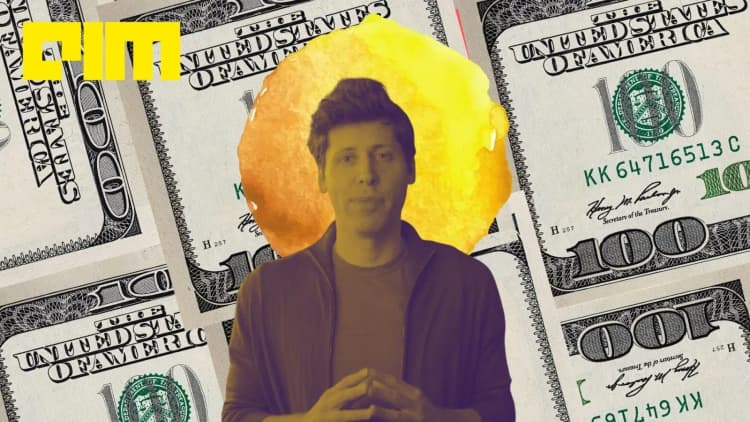
Altman Admits Rushed Pentagon Deal, Tightens Surveillance Safeguards
OpenAI chief Sam Altman has conceded the company moved too quickly in finalising its agreement with the US Department of War.
View

How Coforge is Building Its Healthcare Muscle
The healthcare segment grew 70.7% YoY in FY25 and accounted for 26% of overall revenues, reflecting diversification beyond Coforge’s traditional strongholds.
View

GCCs Aren't Exiting Middle East Yet, But Day After Remains Uncertain
The ongoing conflict in the Middle East hasn’t yet triggered structural shifts in GCC strategy.
View
Infosys, Intel Deepen Alliance to Take Enterprise AI From Pilot to Production
Expanded tie-up blends Intel compute and Infosys Topaz to scale secure, cost-efficient AI across edge-to-cloud.
View

Supreme Court Warns AI-Generated Judgments Could Amount to Judicial Misconduct
The order comes amid rising instances of fake AI-generated citations surfacing in Indian courtrooms.
View
BharatGen, L&T Forge Sovereign AI Compute Alliance for India
Their partnership aims to build indigenous AI chips, data centres and models, advancing India’s push for strategic digital autonomy.
View

Smallest.ai Launches ‘World’s-First’ Asynchronous Native Speech-to-Speech AI Model
Hydra is a native speech-to-speech model designed for the messy, overlapping, emotional nature of real conversation.
View

The Galgotias University Saga Stinks of a Deeper Rot
According to SCImago’s IRIS research integrity index, Indian universities recorded 303 retractions since 2020 due to plagiarism.
View

Google Announces Its Fastest and Most Cost-Effective AI Model; Outperforms Claude 4.5 Haiku
Gemini 3.1 Flash-Lite is 'built for ‘high volume developer workloads at scale’.
View

