🚀 Zaprep: Your Socials on Steroids. 免费开始 — 每月自动发送 1,000 条私信,将互动转化为潜在客户。 ,每月 1,000 条自动私信。
最新 AI 资讯

India Restores Access to Supabase After ISP-Level Block
Supabase said that access to its services has now been restored for developers, businesses, and builders across India.
View

Anthropic Takes on Copilot With Voice-Powered Claude Code
The company has added Voice Mode to intensify competition in the booming AI coding assistant market.
View

Anthropic Launches Feature to Bring Memory From ChatGPT, Gemini to Claude
The company said users can copy and paste a provided prompt into a chat with another AI service to retrieve their stored context.
View

Huawei’s AI Infrastructure Play is Hard to Ignore at MWC 2026
Huawei provides AI infrastructure, industry models, agent platforms, and applications to address sector-specific challenges.
View

Accenture to Acquire Ookla to Strengthen Network Intelligence and Experience for Enterprises
With this acquisition, Accenture seeks to optimise Wi-Fi and 5G networks, improve fraud prevention, and enable better analytics across sectors.
View

Qwen’s Core Team Shaken as Technical Lead, Researchers Exit
Developers and users on social media expressed surprise at the departures from the Qwen project.
View

SK Telecom, Supermicro & Schneider Electric Partner to Build Solutions for AI Data Centres
SK Telecom will provide operational expertise, Supermicro will supply GPU servers, while Schneider Electric will handle infrastructure design and construction.
View

Anthropic’s Annual Revenue Run Rate Climbs Towards $20 Billion, Bloomberg Reports
Anthropic’s revenue surge coincides with its growing dispute with the US Department of Defense.
View
Alibaba’s Qwen tech lead steps down after major AI push
Alibaba’s Qwen AI project has lost one of its most visible technical leaders just a day after the Chinese tech giant unveiled its new Qwen 3.5 open-weight small models. Junyang Lin, a central technical leader on Alibaba’s Qwen team,saidin a post on X on Tuesday that he was “stepping down” from the project, without elaborating. He joined Alibaba in July 2019 and became part of the Qwen team in April 2023,accordingto his LinkedIn profile. The abrupt departure, which drew strong reactions from colleagues and industry partners, comes as global competition among AI developers intensifies and companies race to build models rivaling those from OpenAI, Google, and Anthropic. Alibaba’s Qwen family of models has emerged as one of China’s most prominent open-weight AI efforts, with recent releases posting benchmark results that often rival systems from leading U.S. developers. The Chinese tech giant introduced the model in April 2023 and opened it to public use that September after receiving regulatory clearance. Alibabaintroducedits Qwen 3.5 Small Model series on Monday, with four models spanning 0.8B, 2B, 4B, and 9B parameters. The systems, the company said, are native multimodal models designed for uses ranging from on-device AI deployment to lightweight agents. The launch drew attention from figures in the AI community, including Elon Musk, whowroteon X that the models showed “impressive intelligence density.” Lin’s departure came just as the Qwen team was pushing ahead with new releases, prompting unusually strong reactions from colleagues and partners who described his role in the project as central. Wenting Zhao, a research scientist on the Qwen team,describedLin’s departure as “the end of an era,” thanking him in a post on X for helping drive the project’s advances in open source AI and engineering. Yuchen Jin, chief technology officer of AI infrastructure startup Hyperbolic,saidLin helped connect Qwen with the global developer community, recalling late-night collaboration with the team during model launches. Tiezhen Wang, head of APAC ecosystem at Hugging Face, alsodescribedLin’s departure as “an immense loss” for the Qwen project. The circumstances surrounding Lin’s departure remain unclear. Lin did not respond to a request for comment. Chen Cheng, a contributor to the Qwen project,wrotethat he was “heartbroken” by the news. In his post on X, Cheng appeared to be addressing Lin directly, writing, “I know leaving wasn’t your choice” and said the team had been working together on model launches only hours earlier. Binyuan Hui, another member of the Qwen team, hasupdatedhis X profile to describe himself as “formerly MTS @Alibaba_Qwen.” However, it is not immediately clear whether he had left the company or when the change was made. Alibaba did not respond to a request for comment on the reasons for the move or on the leadership structure of the Qwen team.
View

Why AI startups are selling the same equity at two different prices
As competition among AI startups heats up, founders and VCs are turning to novel valuation mechanisms to manufacture a perception of market dominance. Until recently, the most sought-after companies raised multiple rounds of funding in quick succession at escalating valuations. However, because constant fundraising distracts founders from building their products, lead VCs have devised a new pricing structure that effectively consolidates what would have been two separate funding cycles into one. Recent rounds employing this scheme include Aaru’s Series A. The synthetic-customer research startup raised a round led by Redpoint, which invested a large portion of its check at a $450 million valuation, TheWall Street Journal reported. Redpoint then invested a smaller portion at a $1 billion valuation, and otherVCs joined at that same $1 billionprice point, according to our reporting. TechCrunch was the first to reportAaru’s financing, including its multi-tiered valuation. The approach allows desirable startups like Aaru to call themselves a unicorn — valued at more than $1 billion — even though a significant portion of the equity was acquired at a lower price. “It is a sign that the market is incredibly competitive for venture capital firms to win deals,” said Jason Shuman, a general partner at Primary Ventures. “If the headline number is huge, it’s also an incredible strategy to scare away other VCs from backing the number two and number three players.” The massive “headline” valuation creates the aura of amarket winner, even though the lead VC’s average price was significantly lower. Multiple investors told TechCrunch that until recently, they had never encountered a deal where a lead investor splits their capital between two different valuation tiers in a single round. Wesley Chan, co-founder and managing partner at FPV Ventures, views this valuation tactic as a symptom of bubble-like behavior. “You can’t sell the same product at two different prices. Only airlines can get away with this,” he said. In most cases, founders offer a discount to top-tier VCs because their involvement serves as a powerful market signal that helps attract talent and future capital. But since these rounds are frequently oversubscribed, startups have found a way to accommodate the excess interest: Rather than turning away eager investors, they allow them to participate immediately, but at a significantly higher price. These investors are willing to pay that premium because it is the only way to secure a spot on a high-demand cap table. Another startup that gave preferential pricing to its lead investor is Serval, an AI-powered IT help desk startup, according to The Wall Street Journal. While Sequoia’s lowest entry price was at a $400 million valuation, Serval announced in December that its $75 million Series B valued the company at $1 billion. While the high “headline” valuation can help recruit talent and attract corporate customers who may view the company as having a stronger market position than its competitors, the strategy is not without its risks. Even though the true, blended valuation for these startups is lower than $1 billion, they are expected to raise their next round at a valuation that is higher than the headline price; otherwise it will be a punitive down round, Shuman said. These companies are in high demand now, but they may face unexpected challenges that will make it very hard for them to justify their high valuations. In a down round, employees and founders end up with a smaller ownership percentage of the company; they can also erode the confidence of partners, customers, future investors, and potential new hires. Jack Selby, managing director at Thiel Capital and founder of Copper Sky Capital, warns founders that chasing extreme valuations is a dangerous game, pointing to the painful market reset of 2022 as a cautionary tale. “If you put yourself on this high-wire act, it’s very easy to fall off,” he said.
View
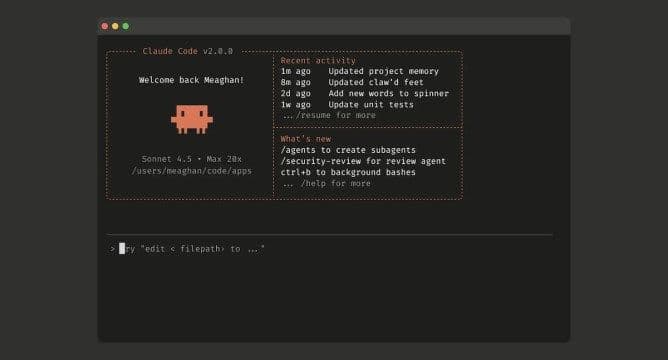
Claude Code rolls out a voice mode capability
Anthropic is bringing Voice Mode to Claude Code, the company’s AI coding assistant for developers. The launch of voice mode marks a significant step toward more hands-free, conversational coding workflows. Thariq Shihipar, an engineer at Anthropic,announcedthe feature’s gradual release on X on Tuesday. According to Shihipar, voice mode is now live for about 5% of users, with a broader rollout planned in the coming weeks. Voice mode is designed to streamline the coding experience by letting users interact with Claude Code through spoken commands. To enable it, type /voice to toggle it on, then speak your command and Claude Code will execute the request. For instance, “refactor the authentication middleware.” Voice mode is rolling out now in Claude Code. It’s live for ~5% of users today, and will be ramping through the coming weeks.You’ll see a note on the welcome screen once you have access. /voice to toggle it on!pic.twitter.com/P7GQ6pEANy— Thariq (@trq212)March 3, 2026 Voice mode is rolling out now in Claude Code. It’s live for ~5% of users today, and will be ramping through the coming weeks.You’ll see a note on the welcome screen once you have access. /voice to toggle it on!pic.twitter.com/P7GQ6pEANy It remains unclear what the limitations of the new capability are, including whether there are caps on voice interactions or specific technical constraints. It’s also unknown if this feature was built in collaboration with a third-party AI voice provider like ElevenLabs, with whom Anthropic wasreportedlyin talks. The company has not yet responded to requests for comment from TechCrunch. Anthropiclaunched Voice Modefor its standard Claude chatbot last May, allowing users to interact with the model via voice for a variety of general-purpose tasks. The competition in AI coding assistants is fierce, with Microsoft’s GitHub Copilot, Cursor, Google, and OpenAI all vying for developers’ attention. Yet, Claude Code stands out as one of the most widely adopted tools in the market today. In February, Anthropicreportedthat Claude Code’s run-rate revenue surpassed $2.5 billion, more than doubling since the beginning of 2026. Plus, weekly active users have doubled since January. Meanwhile, Claude’s mobile app has seen adramatic jump in user growthafter the company refused to allow the Department of Defense to use its AI for domestic surveillance or autonomous weapons. In the aftermath, the appsoaredto the top of the U.S. App Store charts,overtaking ChatGPT.
View

ChatGPT’s new GPT-5.3 Instant model will stop telling you to calm down
Take a breath, stop spiraling. You’re not crazy, you’re just stressed. And honestly, that’s okay. If you felt immediately triggered reading these words, you’re probably also sick of ChatGPT constantly talking to you as if you’re in some sort of crisis and need delicate handling. Now, things may be improving. OpenAI says its new model, GPT-5.3 Instant, will reduce the “cringe” and other “preachy disclaimers.” According to the model’s release notes, the GPT-5.3 update will focus on the user experience, including things like tone, relevance, and conversational flow — areas that may not show up in benchmarks, but can make ChatGPT feel frustrating, the company said. Or, as OpenAIput it on X,“We heard your feedback loud and clear, and 5.3 Instant reduces the cringe.” In the company’s example, it showed the same query with responses from the GPT-5.2 Instant model compared with the GPT-5.3 Instant model. In the former, the chatbot’s response starts, “First of all — you’re not broken,” a common phrase that’s been getting under everyone’s skin lately. In the updated model, the chatbot instead acknowledges the difficulty of the situation, without trying to directly reassure the user. We heard your feedback loud and clear, and 5.3 Instant reduces the cringe.pic.twitter.com/WqO0XzLcVu The insufferable tone of ChatGPT’s 5.2 model has been annoying users to the point that some have even canceled their subscriptions, according to numerous posts on social media. (Itwasahugepointofdiscussionon theChatGPT Reddit,for instance, before the Pentagon deal stole the focus.) People complained that this type of language, where the bot talks to you as if it assumes you’re panicking or stressed when you were just seeking information, comes across as condescending. Often, ChatGPT replied to users with reminders to breathe and other attempts at reassurance, even when the situation didn’t warrant it. This made users feel infantilized, in some cases, or as if the bot was making assumptions about the user’s mental state that just weren’t true. As one Reddit user recentlypointedout, “no one has ever calmed down in all the history of telling someone to calm down.” It’s understandable that OpenAI would attempt to implement guardrails of some kind, especially as itfacesmultiplelawsuitsaccusing the chatbot of leading people to experience negative mental health effects, which sometimes included suicide. But there’s a delicate balance between responding with empathy and providing quick, factual answers. After all, Google never asks you about your feelings when you’re searching for information.
View

