🚀 Zaprep: Your Socials on Steroids. 免费开始 — 每月自动发送 1,000 条私信,将互动转化为潜在客户。 ,每月 1,000 条自动私信。
最新 AI 资讯

OpenAI robotics lead Caitlin Kalinowski quits in response to Pentagon deal
Hardware executive Caitlin Kalinowski announced today that in response toOpenAI’s controversial agreement with the Department of Defense, she’s resigned from her role leading the company’s robotics team. “This wasn’t an easy call,” Kalinowski saidin a social media post. “AI has an important role in national security. But surveillance of Americans without judicial oversight and lethal autonomy without human authorization are lines that deserved more deliberation than they got.” Kalinowski, who previously led the team building augmented reality glasses at Meta,joined OpenAI in November 2024. In her announcement today, she emphasized that the decision was “about principle, not people” and said she has “deep respect” for CEO Sam Altman and the OpenAI team. In a follow-up post on X, Kalinowski added, “To be clear, my issue is that the announcement was rushed without the guardrails defined. It’s a governance concern first and foremost. These are too important for deals or announcements to be rushed.” An OpenAI spokesperson confirmed Kalinowski’s departure to TechCrunch. “We believe our agreement with the Pentagon creates a workable path for responsible national security uses of AI while making clear our red lines: no domestic surveillance and no autonomous weapons,” the company said in a statement. “We recognize that people have strong views about these issues and we will continue to engage in discussion with employees, government, civil society and communities around the world.” OpenAI’s agreement with the Pentagon was announced just over a week ago, afterdiscussions between the Pentagon and Anthropic fell throughas the AI company tried to negotiate for safeguards preventing its technology from being used in mass domestic surveillance or fully autonomous weapons. The Pentagon subsequentlydesignated Anthropic a supply-chain risk. (Anthropic said it willfight the designation in court; in the meantime, Microsoft, Google, and Amazon said they will continue tomake Anthropic’s Claude available to non-defense customers.) Then, OpenAI quicklyannounced a agreement of its ownallowing its technology to be used in classified environments. As executives attempted to explain the deal on social media,the company described itas taking “a more expansive, multi-layered approach” that relies not just on contract language, but also technical safeguards, to protect red lines similar to Anthropic’s. Nonetheless, the controversy appears to have damaged OpenAI’s reputation among some consumers, withChatGPT uninstalls surging 295%andClaude climbing to the top of the App Store charts. As of Saturday afternoon, Claude and ChatGPT remain the U.S. App Store’s number one and number two free apps, respectively.
View

Grammarly’s ‘expert review’ is just missing the actual experts
A recently-added feature inGrammarlypurports to improve users’ writing with help from the world’s great writers and thinkers — and some tech journalists, too. Launched in August 2025as part ofa broader set of AI-powered features, Expert Review appears in the sidebar of Grammarly’s main writing assistant, allowing users to bring up revision suggestions “from the perspective” of subject matter experts. Wired notedthat this Grammarly frames this feedback as if it was coming from well-known authors, whether they’re living or dead. In some cases,according to The Verge, it can even appear to come from tech journalists at The Verge, Wired, Bloomberg, The New York Times, and other publications. Of course, I couldn’t help but wonder: What about TechCrunch? I copy-pasted an early draft of this post into Grammarly in the hopes that that I might see some tips from my TC colleagues, but I was instead told to add ethical context like Casey Newton, “leverage the anecdote for reader alignment” like Kara Swisher, and “pose the bigger accountability question” like Timnit Gebru. Which was all rather disappointing: Yes, the feature seems a bit thoughtless and ill-advised, butifall those other pubs are going to get mentioned, then what are we doing wrong? Anyway, to state the obvious, none of these figures appear to be involved in Expert Reviews or to have given Grammarly permission to use their names. Alex Gay, vice president of product and corporate marketing at Grammarly’s parent company Superhuman, told The Verge that these experts are mentioned “because their published works are publicly available and widely cited.” And in itsuser guide to the feature, Grammarly says, “References to experts in Expert Review are for informational purposes only and do not indicate any affiliation with Grammarly or endorsement by those individuals or entities.” Which is reasonably clear, I guess. But it raises the question: In what sense is Grammarly actually providing an “expert review”? Perhaps none at all, as historian C.E. Aubin told Wired: “These are not expert reviews, because there are no ‘experts’ involved in producing them.”
View
OpenAI delays ChatGPT’s ‘adult mode’ again
OpenAI has delayed the launch of “adult mode,” a ChatGPT feature that will give verified adult users access to erotica and other adult content. OpenAI CEO Sam Altman firstannounced the feature in October, writing, “In December, as we roll out age-gating more fully and as part of our ‘treat adult users like adults’ principle, we will allow even more, like erotica for verified adults.” The launch had already beendelayed once,from December — when Altman reportedly sent an internal memo declaring a “code red” and calling for teams to focus on the core ChatGPT experience — until the first quarter of this year. Nowan OpenAI spokesperson has told Axiosthat the company is “pushing out the launch of adult mode” in order to “focus on work that is a higher priority for more users right now,” such as work on aspects like intelligence, personality, and making the chatbot “more proactive.” “We still believe in the principle of treating adults like adults, but getting the experience right will take more time, ” the spokesperson said. It’s not clear how long the delay is expected to last. The news wasfirst reported by Sources.
View
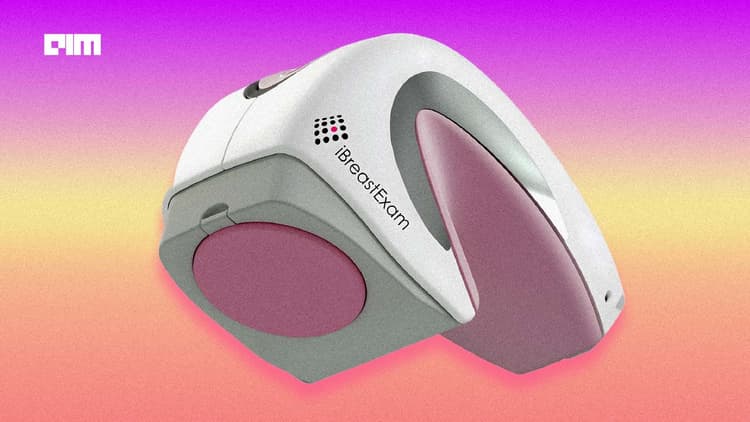
How a Portable AI Device is Helping Women in Rural India Detect Breast Cancer Early
Over 1.83 lakh women were screened for cancers across India using a portable, radiation-free AI breast screening device.
View
City Detect, which uses AI to help cities stay safe and clean, raises $13M Series A
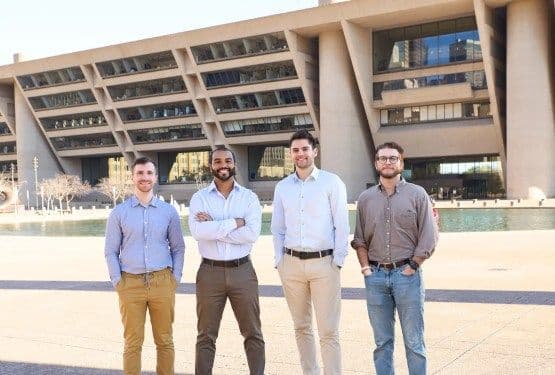
City Detect, a company that uses vision AI to help local governments monitor the health of buildings and neighborhoods, announced on Friday a $13 million Series A round led by Prudence Venture Capital. The startup launched in 2021, and Gavin Baum-Blake, the remaining co-founder, serves as CEO. He said the company was founded in part because cities were struggling to deal with “urban blight and decay.” The idea was to use advanced computer vision and AI technology to help cities track and fix such problems. City Detect mounts cameras on public vehicles like garbage trucks and street sweepers, captures photos of surrounding buildings as those vehicles pass, then uses computer vision to analyze the images. It’s essentially a Google Maps Street View, but focused on ensuring buildings are up to code. “The problems could be graffiti, illegal dumping, litter that’s on the side of the road,” Baum-Blake told TechCrunch. Then, City Detect works with local governments to fix the issues, a process that usually involves local officials sending a crew out to clean everything up. Right now, tracking dilapidated buildings is very manual, so Baum-Blake considers his competition to be the “status quo.” “They’re able to do 50 per week,” he said of humans tasked with keeping track of decaying buildings, “whereas we’re able to do thousands per week.” The product, which Baum-Blake has patented, has some fun and essential features. The latter is that faces and license plates are always blurred for privacy reasons; the former is that City Detect’s technology can distinguish between street art and vandalism. It also helps governments track whether landlords are not properly maintaining their buildings. “We’re able to see if there’s structural roof issues or we’re able to identify if there’s been storm damage,” Baum-Blake continued. City Detect is in at least 17 cities and works with local governments in places like Dallas and Miami. The company has raised $15 million in funding to date and is a member of the GovAI Coalition (an AI governance collective), is SOC 2 Type II compliant (meaning it’s independently certified for privacy), and follows its own responsible AI policy. “We published our Responsible AI policy in response to a consortium of local governments that stated they were looking for clarity on what vendors were actually willing to commit to,” Baum-Blake said. “We committed to this policy so that our local government partners could know what to expect from us.” Baum-Blake said the new funding will be used to hire more engineers and advance some of the storm-detection damage technology. It also wants to expand throughout the U.S. “We are seeing huge efficiency gains across the departments that we work with, we’re seeing more instances of blight being solved without anyone receiving a citation, we’re seeing tires and litter, and illegal dumping being abated quicker and detected quicker,” he said. “It’s exciting to see technology-forward municipalities lean into predictive AI like City Detect’s models.” Zeal Capital Partners, Knoll Ventures, and Las Olas Venture Capital also participated in the round.
View
Claude’s consumer growth surge continues after Pentagon deal debacle
Claude’s daily active users are on the rise on mobile devices, as are its new app installs, following the company’sfallout with the Pentagon. After Anthropic CEO Dario Amodeirefusedto allow the government to use its AI systems for mass surveillance of Americans or to power fully autonomous weapons, the AI model provider behind Claude was marked as asupply-chain risk. However, Anthropic’s stance led many consumers to favor the model, data suggests. App intelligence providerAppfiguresreports that the U.S. downloads of Claude’s mobile app continue to surpass those of ChatGPT. The most recent figures from March 2 show Claude with 149,000 daily downloads, compared with 124,000 for ChatGPT, the company’s estimates indicate. While download figures offer a window into how many new users are installing the app for the first time, active users offer insight into how many people are actually using it. On that front, another market intelligence provider,Similarweb, found that Claude’s app on iOS and Android devices saw 11.3 million daily active users on March 2, up 183% from the start of the year when usage was around 4 million, and up from 5 million daily active users at the beginning of February. Claude’s growth put it ahead of other AI apps by daily active users, like Perplexity and Microsoft Copilot, but not other top rivals like ChatGPT. This is partially due to the fact that Claude’s jump in usage began later in the month, timed aroundthe news ofAnthropic’s tense negotiations with the Pentagon. If these trends continue throughout March, it could rank higher. Of course, ChatGPT still dominates the market by a significant factor, as its daily active users on March 2 were 250.5 million across iOS and Android. Similarweb also reports that Claude’s web traffic has been growing. While it’s still far behind other top AI providers in terms of web traffic, Claude’s web traffic was up 43% month-over-month in February, and up 297.7% year-over-year. At least some of this growth could be at the expense of ChatGPT, whose web traffic dropped 6.5% month-over-month during the same time period. Gemini also saw a slight bump of 2.1%, which is slower growth than in previous months. Anthropic itself has been touting Claude’s progress, noting that its AI chatbot isnow seeingmore than 1 million sign-ups per day after becoming theNo. 1 app on the U.S. App Storeover the past weekend — a position it still holds. The app is also No. 1 in 15 other countries, including Austria, Belgium, Canada, Finland, France, Germany, Ireland, Italy, New Zealand, Norway, Portugal, Singapore, Switzerland, the U.K. The company noted, too, that Claude has broken its own signup record every day since early last week in every country where Claude is available. ChatGPT’s app uninstalls, meanwhile, have been growing, an earlier report found. Anthropic said it doesn’t comment on third-party data, but a spokesperson noted that daily active users have more than tripled since the beginning of 2026, and paid subscribers have doubled. Updated with Anthropic’s comment after publication.
View
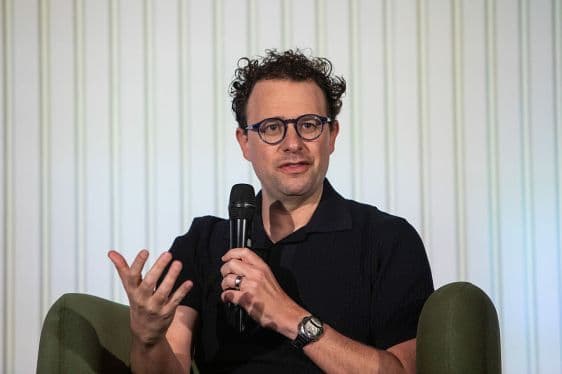
Anthropic vs. the Pentagon, the SaaSpocalypse, and why competitions is good, actually
The Pentagon has officiallydesignated Anthropic a supply-chain riskafter the two failed to agree on how much control the military should have over its AI models, including its use in autonomous weapons and mass domestic surveillance. As Anthropic’s $200 million contract fell apart, the DoD turned to OpenAI instead, which accepted and then watchedChatGPT uninstalls surge 295%. As the stakes keep rising, the question remains: how much unrestricted access should the military have to an AI model? On this episode of TechCrunch’s Equity podcast, hosts Kirsten Korosec, Anthony Ha, and Sean O’Kane dig into what startups should think about when chasing federal contracts, especially whennobody seems to know what to do with AIin Washington, and more of the week’s headlines. Listen to the full episode to hear more about: Subscribe to Equity onYouTube,Apple Podcasts,Overcast,Spotifyand all the casts. You also can follow Equity onXandThreads, at @EquityPod.
View
Anthropic’s Pentagon deal is a cautionary tale for startups chasing federal contracts
Loading the player… The Pentagon has officiallydesignated Anthropic a supply-chain riskafter the two failed to agree on how much control the military should have over its AI models, including its use in autonomous weapons and mass domestic surveillance. As Anthropic’s $200 million contract fell apart, the DoD turned to OpenAI instead, which accepted and then watchedChatGPT uninstalls surge 295%. As the stakes keep rising, the question remains: how much unrestricted access should the military have to an AI model? Watch as Equity hosts Kirsten Korosec, Anthony Ha, and Sean O’Kane break down what startups should know about chasing federal AI contracts, plus the week’s biggest tech stories, fromParamount’s Warner Bros. dealand MyFitnessPal’sCal AI acquisitiontoPinterest’s $1B AI push,Anduril’s $60B valuation, and whether the “SaaSpocalypse” is real. Subscribe to Equity onYouTube,Apple Podcasts,Overcast,Spotifyand all the casts. You also can follow Equity onXandThreads, at @EquityPod.
View

Anthropic’s Claude found 22 vulnerabilities in Firefox over two weeks
In a recent security partnership with Mozilla, Anthropic found22 separate vulnerabilitiesin Firefox — 14 of them classified as “high-severity.” Most of the bugs have been fixed inFirefox 148(the version released this February), although a few fixes will have to wait for the next release. Anthropic’s team used Claude Opus 4.6 over the span of two weeks, starting in the javascript engine and then expanding to other portions of the codebase. According to the post, the team focused on Firefox because “it’s both a complex codebase and one of the most well-tested and secure open-source projects in the world.” Notably, Claude Opus was much better at finding vulnerabilities than writing software to exploit them. The team ended up spending $4,000 in API credits trying to concoct proof-of-concept exploits, but only succeeded in two cases. Still, it’s a reminder of how powerful AI tools can be for open-source projects — even if they bringa flood of bad merge requestsalongside the useful ones.
View
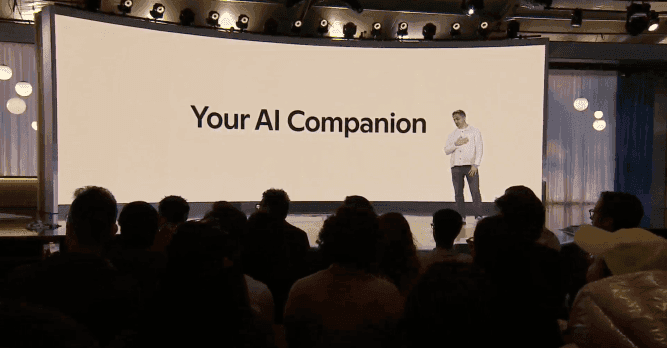
Microsoft: Anthropic Claude remains available to customers except the Defense Department
Enterprises and startups that use Anthropic Claude through Microsoft’s products need not fear that the model will be ripped from their reach, Microsoft has confirmed to TechCrunch and other publications. Microsoft is the first big tech company to offer assurance that Anthropic’s models will remain available to its customers even though the Trump Administration’s Department of War — formally known as the Department of Defense — has escalated its feud with Anthropic. The Defense Department designated the American AI startup as a supply chain risk after the AI company refused to give it unrestricted access to its tech for applications the company said its AI could not safely support, such as mass surveillance and fully autonomous weapons. The supply-chain risk designation is typically reserved for foreign adversaries. For Anthropic, the designation means that the Pentagon can’t use the company’s products — and also requires any company or agency that works with the Pentagon to certify that they don’t use Anthropic’s models, either. Anthropichas vowed to fight the designationin court. Microsoft sells an array of products, from Office to its cloud, to many federal agencies including the Defense Department. A Microsoft spokesperson said that the company will continue making Anthropic’s models available within its own products and to Microsoft customers. “Our lawyers have studied the designation and have concluded that Anthropic products, including Claude, can remain available to our customers — other than the Department of War — through platforms such as M365, GitHub, and Microsoft’s AI Foundry, and that we can continue to work with Anthropic on non-defense related projects,” the spokesperson said in an email. CNBCfirst reportedon the comment. This echoes what Anthropic CEO Dario Amodei said in his statement vowing to fight the designation. “With respect to our customers, it plainly applies only to the use of Claude by customersas a direct part ofcontracts with the Department of War, not all use of Claude by customers who have such contracts,” Amodei said, adding, “Even for Department of War contractors, the supply chain risk designation doesn’t (and can’t) limit uses of Claude or business relationships with Anthropic if those are unrelated to their specific Department of War contracts.” In the meantime, Claude’sconsumer growth surge has continuedafter Anthropic refused to give in to the department’s demands.
View

Xiaomi Testing Experimental AI Agent Miclaw, Can Perform Complex Tasks Across Devices
Xiaomi, on Friday, announced a new artificial intelligence (AI) agent, dubbed miclaw, for its smartphones and smart home devices. The agentic AI assistant has now entered a limited closed beta phase, and the company is now testing how the agent performs in real-world scenarios. The Chinese tech giant said that the tool is designed to function as a device-wide assistant that can autonomously complete tasks across third-party apps and system features. Currently, there is no word on when the Xiaomi miclaw will be integrated into devices.
View
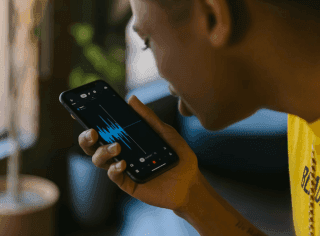
This AI-Powered Portable Device Claims to Detect Microphones and Jam Audio Recordings
A San Francisco-based startup is making some serious claims about its yet-to-be-released artificial intelligence (AI) audio jamming device. Dubbed Deveillance, the company is said to have developed a portable table-top anti-surveillance device called Spectre I, which can stop nearby microphones from recording audio. The startup claims that it achieves this by using power-efficient omnidirectional signals that are inaudible but can distort the audio recorded by devices within its range. Spectre I is currently available for pre-order, with shipping expected to start later this year.
View

