🚀 Zaprep: Your Socials on Steroids. 免费开始 — 每月自动发送 1,000 条私信,将互动转化为潜在客户。 ,每月 1,000 条自动私信。
最新 AI 资讯

AI Must Show Up in P&L, Says Accenture CEO as Firm Builds 80,000 AI Workforce
Accenture CEO Julie Sweet argued that AI transformation projects must have a financial value.
View

Regional Languages Dominate Voice Travel Searches on MakeMyTrip
Insights from MakeMyTrip’s AI assistant Myra also revealed that travellers are using longer, more detailed voice queries.
View
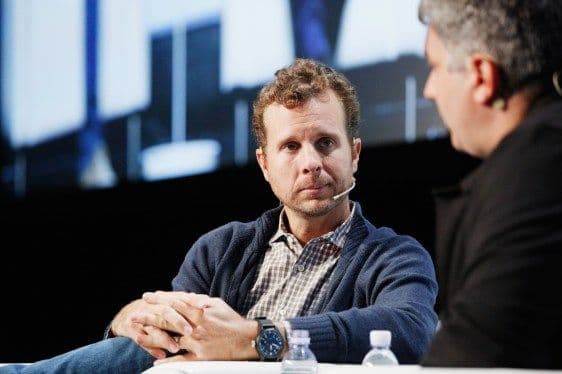
Ring’s Jamie Siminoff has been trying to calm privacy fears since the Super Bowl, but his answers may not help
When Ring founder and CEO Jamie Siminoff decided to use the company’s first-ever Super Bowl commercial to introduce Search Party — an AI-powered feature that uses Ring camera footage to help find lost dogs — he expected Americans to love it. Instead, the TV spot set off a firestorm. In fact, practically since the moment it aired in February, Siminoff has been making the rounds on CNN, NBC, and in the pages of the New York Times, explaining that his critics fundamentally misunderstand what Ring is building. He sat down with TechCrunch a few days ago to make his case again, and while he was candid and plainly eager to reframe the narrative, some of his answers may well raise fresh questions among those already uneasy about the growth of home surveillance. The feature at the center of the controversy is fairly mundane on the surface, and something we covered in astraightforward waywhen it was first released. A dog goes missing; Ring alerts nearby camera owners to ask whether the animal shows up in their footage; users can respond or ignore the request entirely and stay invisible to everyone involved. Siminoff leaned heavily on this throughout our conversation — the idea that doing nothing counts as opting out, that no one is conscripted into anything. “It is no different than finding a dog in your backyard, looking at the collar and deciding whether or not to call the number,” he said. What he believes actually prompted the backlash was the visual in the Super Bowl spot: a map showing blue circles pulsing outward from house after house as cameras switched on across a neighborhood grid. “I would change that,” he said. “It wasn’t our job to try to poke anyone to try and get some response.” But Ring picked a rocky moment to make its case. Nancy Guthrie — the 84-year-old mother of Today Show anchor Savannah Guthrie — had vanished from her Tucson home in late January. Footage from a Google Nest camera at the property, capturing a masked figure trying to smother the lens with foliage, had swept across the internet and plopped home surveillance cameras squarely into the center of a national argument about safety, privacy, and who gets to watch whom. Siminoff leaned into the Guthrie case rather than away from it. In aseparate interviewwith Fortune, he contended it was an argument for putting more cameras on more houses. “I do believe if they had more [footage from Guthrie’s home], if there was more cameras on the house, I think we might have solved” the case, he said. Ring’s own network, he noted, had turned up footage of a suspicious vehicle two and a half miles from the Guthrie property. Whether you find that heartening or disturbing depends on your point of view. Siminoff clearly believes video is an unqualified social good, but some might look at the same statements and see a company founder using a kidnapping to get more of his products into consumers’ hands. Either way, the discomfort with Search Party isn’t simply about those blue concentric circles in the ad. The feature sits alongside two others — Fire Watch, which crowdsources neighborhood fire mapping, and Community Requests, which allows local law enforcement to ask Ring users in a given area whether they have relevant footage from an incident. Ring relaunched Community Requests in September through a partnership with Axon, the company that makes police body cameras and tasers, and operates the evidence management platform Evidence.com. (Axon and Ring announced the partnership in April of last year, shortly after Siminoffrejoined the companyafter stepping away in 2023.) A previous version of thatpartnershipinvolved Flock Safety, which operates AI-powered license plate readers. Ringended that arrangementseveral days after the Super Bowl ad aired, with Siminoff citing the “workload” it would create when he talked with us. Asked directly, Siminoff declined to address whether Flock’s reported data-sharing with U.S. Customs and Border Protection also played a role. (Dozens of towns across the U.S. have cut ties with Flock over exactly those concerns.) Still, the timing of Ring’s decision was notable. While Siminoff believes some customers are misreading his products, he knows Ring can’t afford to dismiss their anxieties, particularly right now. None of this is happening in isolation. Just days ago, NPR reported on itsown investigationcompiled from dozens of accounts from people who found themselves caught in the Department of Homeland Security’s expanding surveillance apparatus, including U.S. citizens with no immigration status issues at all. O One woman, a constitutional observer trailing an ICE vehicle in Minneapolis in late January, described a masked federal agent leaning out the window, photographing her, and then calling out her name and home address. “Their message was not subtle,” she told NPR. “They were, in effect, saying, we see you. We can get to you whenever we want to.” Siminoff seems to understand deeply that his answers about Ring’s own data practices take on added weight as a result. When we talked, he pointed to end-to-end encryption as Ring’s strongest privacy protection and confirmed that when it’s enabled, not even Ring employees can view the footage since decryption requires a passphrase tied to the user’s own device. He described this as an industry first for residential camera companies. The facial recognition question is where things get more tangled. Ring rolled out a feature called Familiar Faces in December, two months before the Super Bowl ad aired. It allows users to catalog up to 50 frequent visitors — family members, delivery drivers, neighbors — so that instead of a generic motion alert, Ring owners get a notification that reads “Mom at Front Door.” Siminoff described the feature enthusiastically during our conversation, saying that he gets alerts, for example, when his teenage son pulls into the driveway. He compared it to the facial recognition now routine at TSA checkpoints – the implication being that the public has already made its peace with this kind of thing. When asked about consent from people who appear on a Ring camera but never agreed to be catalogued, he said simply that Ring adheres to applicable local and state laws. He was also careful when asked whether Amazon draws on Ring’s facial recognition data. “Amazon does not access that data,” he said, then he added: “In the future, if we could see a feature where the customer wanted to opt in to do something with that, maybe you could see that happening.” He further volunteered that end-to-end encryption is an opt-in feature: users have to manually enable it in the Ring app’s Control Center. But according to Ring’s ownsupport documentation, the tradeoff for enabling it is steep. The full list of features disabled by end-to-end encryption includes event timelines, rich notifications, quick replies, video access on Ring.com, shared user access, AI video search, 24/7 video recording, pre-roll, snapshot capture, bird’s eye view, person detection, AI video descriptions, video preview alerts, virtual security guard, and Familiar Faces, which requires processing in the cloud. In other words, the two things Ring is actively promoting as flagship capabilities — AI-powered recognition of who’s at your door, and true privacy from Ring itself — are mutually exclusive. You can have one or the other but not both. As for whether Ring users should worry about their footage ending up in front of a federal immigration agency, Siminoff said no — community requests run only through local law enforcement channels — and pointed to Ring’s transparency report on government subpoenas. He didn’t take up what happens when that boundary proves porous. Unsurprisingly, Siminoff is building toward something bigger than doorbell cameras. Ring has more than 100 million cameras in the field and is now quietly dipping a toe into enterprise security with a new “elite” camera line and a security trailer product. He said that small businesses have been pulling Ring into their spaces already, whether Ring markets to them or not. He’s also open to outdoor drones — “if we could get the cost in a place where it made sense” — and on license plate detection, which Ring’s now-former-partner Flock Safety has made its core business, he declined to say never. (Ring is “definitely not” working on it today, he’d said when asked whether it’s something Ring might explore. After a beat, he added that “it’s very hard to say we’re never going to do something in the future.”) Siminoff frames all of it through a belief he says he has held from the start of the company, that each home is a node controlled by its owner, and residents should be able to choose whether to participate in neighborhood-level cooperation when something happens. Alas, in a moment when an NPR investigation has documented federal agents photographing and identifying civilians who were doing nothing more than observing arrests, and when a kidnapping case has become a national talking point about both cameras and privacy, the question isn’t just about whether Ring’s opt-in framework is designed well. It’s whether what Ring is building — including a network of tens of millions of cameras, AI-powered search, and facial recognition — can remain as benign as Siminoff may well intend it, regardless of who is in power, what partnerships get struck, and how the data flows.
View

Oracle Denies Slowdown at AI Data Centre Project in US
Oracle has secured additional computing capacity to meet commitments tied to OpenAI’s infrastructure needs.
View

Lovable’s Internal LLM Routing Handles 1 Bn Tokens/Min While Preserving Prompt Caching
Lovable’s AI infrastructure dynamically distributes traffic across multiple model providers.
View

Emergent Runs Over 30,000 AI Coding Environments Using Kubernetes Pods
“AI coding agents need real infrastructure, not lightweight sandboxes dressed up as infrastructure,” Emergent wrote in a blog.
View

In 630 Lines of Code, Andrej Karpathy Builds AI Research System Running on a Single GPU
The autonomous system allows roughly 12 experiments per hour and about 100 experiments overnight.
View

Will the Pentagon’s Anthropic controversy scare startups away from defense work?
In just over a week, negotiations over the Pentagon’s use of Anthropic’s Claude technology fell through, the Trump administrationdesignated Anthropic a supply-chain risk, and the AI company said it would fight that designation in court. OpenAI, meanwhile, quickly announced a deal of its own, prompting backlash that sawusers uninstalling ChatGPTandpushing Anthropic’s Claude to the top of the App Store charts. Andat least one OpenAI executive has quitover concerns that the announcement was rushed without appropriate guardrails in place. On the latest episode ofTechCrunch’s Equity podcast, Kirsten Korosec, Sean O’Kane, and I discussed what this means for other startups seeking to work with the federal government, especially the Pentagon, as Kirsten wondered, “Are we going to see a changing of the tune a little bit?” Sean pointed out that this is an unusual situation in a number of ways, in part because OpenAI and Claude make products that “no one can shut up about.” And crucially, this is a dispute over “how their technologies are being used or not being used to kill people” so it’s naturally going to draw more scrutiny. Still, Kirsten argued, this is a situation that should “give any startup pause.” Read a preview of our conversation, edited for length and clarity, below. Kirsten:I’m wondering if other startups are starting to look at what’s happened with the federal government, specifically the Pentagon and Anthropic, that debate and wrestling match, and [take] pause about whether they want to be going after federal dollars. Are we going to see a changing of the tune a little bit? Sean:I wonder about that, too. I think no, to some extent, in the near term, if only because when you really try to think about all the different companies, whether they’re startups or even more established Fortune 500s that do work with the government and in particular with the Department of Defense or the Pentagon, [for] a lot of them, that work flies under the radar. General Motors makes defense vehicles for the Army and has done [that] for a very long time and has worked on all electric versions of those vehicles and autonomous versions. There’s stuff like that that goes on all the time and it just never really hits the zeitgeist. I think the problem that OpenAI and Anthropic ran into within the last week is like, these are companies that make products that a ton of people use — and also more importantly, [that] no one can shut up about. So there’s just such a spotlight on them, that naturally highlights their involvement to a level that I think most of the other companies that are contracting with the federal government — and, in particular, any of the war-fighting elements of the federal government — don’t necessarily have to deal with. The only caveat I’ll add to that is a lot of the heat around this discussion between Anthropic and OpenAI and the Pentagon is very specifically about how their technologies are being used or not being used to kill people, or in parts of the missions that are killing people. It’s not just the attention that’s on them and the familiarity we have with their brands, there is an extra element there that I feel is more abstract when you’re thinking about General Motors as a defense contractor or whatever. I don’t think we’re going to see, like, Applied Intuition or any of these other companies that have been framing themselves as dual use back off much, just because I don’t see the spotlight on it and there’s just not the sort of shared understanding of what that impact might be. Anthony:This story is so unique and specific to these companies and personalities in a lot of ways. I mean, there have been a lot ofreally interesting thought piecesabout: What is the role of technology in government? [Of] AI in government? And I think those are all good and worthwhile questions to ask and explore. I think also, though, that this is a very curious lens through which to examine some of those things because Anthropic and OpenAI are not actually that different in a lot of ways or the stances they’re taking. It’snotlike one company is saying, “Hey, I don’t want to work with the government” and one is saying, “Yes, I do.” Or one is saying, “You can do whatever you want.” and [the other is] saying, “No, I want to have restrictions.” Both of them, at least publicly, are saying, “We want restrictions on how our AI gets used.” It just seems like Anthropic is digging in their heels a lot more about: You cannot change the terms in this way. And then on top of that, there also just seems to be a personality layer where, the CEO of Anthropic and, Emil Michael — who a lot of TechCrunch readers mightremember from his Uber days, and is now [chief technology officer for the Department of Defense]. Apparently, they just really don’t like each other.Reportedly. Sean:Yes, there’s a very big “girls are fighting” element here that we should not overlook. Kirsten:Yeah, a little bit. There is, but the implications are a little bit stronger than that. Again, to pull back a little bit, what we’re talking about here is the Pentagon and Anthropic coming into a dispute in which Anthropic appears to have lost, although I should say they are still very much being used by the military. They are considered a crucial technology, but OpenAI has kind of stepped in, and this is evolving and will likely change by the time this episode comes out. The blowback has been interesting for OpenAI, where we’ve seen a lot ofuninstalls of ChatGPT I think surged 295%after OpenAI locked in the deal with the Department of Defense. To me, all of this is noise to the really critical and dangerous thing, which is that the Pentagon was seeking to change existing terms on an existing contract. And that is really important and should give any startup pause because the political machine that’s happening right now, particularly with the DoD, appears to be different. This isn’t normal. Contracts take forever to get baked in at the government level and the fact that they’re seeking to change those terms is a problem. Loading the player…
View

Owner of ICE detention facility sees big opportunity in AI man camps
To house the hundreds or thousands of temporary workers needed to build an AI data center, developers are increasingly relying on temporary villages known as man camps. This style of camp was popularized ashousing for men working in remote oil fields. For example, as a Bitcoin mining facility in rural Dickens County, Texas is converted into a 1.6 gigawatt data center,Bloomberg reportsits workers are living in gray housing units with access to a gym, a laundromat, game rooms, and a cafeteria that grills steaks on-demand. A company called Target Hospitality has signed multiple contracts worth a total of $132 million to build and operate the Dickens County camp, which could eventually house more than 1,000 workers. Target apparently sees the U.S. data center construction boom as its most lucrative growth opportunity, with chief commercial officer Troy Schrenk describing it as “the largest, most actionable pipeline I’ve ever seen.” Target alsoowns the Dilley Immigration Processing Centerin Texas, which holds families detained by Immigration and Customs Enforcement. Court filings have alleged that the center’s food has had worms and mold, and that children have suffered without accommodation for allergies and special diets.
View
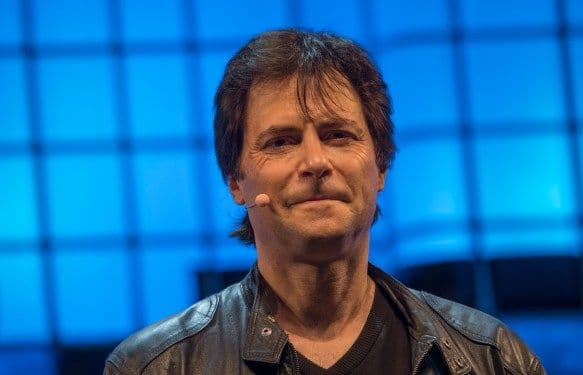
A roadmap for AI, if anyone will listen
While Washington’s breakup with Anthropic exposed the complete lack of any coherent rules governing artificial intelligence, a bipartisan coalition of thinkers has assembled something the government has so far declined to produce: a framework for what responsible AI development should actually look like. ThePro-Human Declarationwas finalized before last week’s Pentagon-Anthropic standoff, but the collision of the two events wasn’t lost on anyone involved. “There’s something quite remarkable that has happened in America just in the last four months,” said Max Tegmark, the MIT physicist and AI researcher who helped organize the effort,in conversationwith this editor. “Polling suddenly [is showing] that 95% of all Americans oppose an unregulated race to superintelligence.” The newly published document, signed by hundreds of experts, former officials, and public figures, opens with the no-nonsense observation that humanity is at a fork in the road. One path, which the declaration calls “the race to replace,” leads to humans being supplanted first as workers, then as decision-makers, as power accrues to unaccountable institutions and their machines. The other leads to AI that massively expands human potential. The latter scenario depends on five key pillars: keeping humans in charge, avoiding the concentration of power, protecting the human experience, preserving individual liberty, and holding AI companies legally accountable. Among its more muscular provisions is an outright prohibition on superintelligence development until there’s scientific consensus it can be done safely and genuine democratic buy-in; mandatory off-switches on powerful systems; and a ban on architectures that are capable of self-replication, autonomous self-improvement, or resistance to shutdown. The declaration’s release coincides with a period that makes its urgency far easier to appreciate. On the last Friday in February, Defense Secretary Pete Hegseth designated Anthropic — whose AI already runs on classified military platforms — a “supply chain risk” after the company refused to grant the Pentagon unlimited use of its technology, a label ordinarily reserved for firms with ties to China. Hours later, OpenAI cut its own deal with the Defense Department, one that legal experts say will be difficult to enforce in any meaningful way. What it all laid bare is how costly Congressional inaction on AI has become. As Dean Ball, a senior fellow at the Foundation for American Innovation,told The New York Timesafterward, “This is not just some dispute over a contract. This is the first conversation we have had as a country about control over AI systems.” Tegmark reached for an analogy that most people can understand when we spoke. “You never have to worry that some drug company is going to release some other drug that causes massive harm before people have figured out how to make it safe,” he said, “because the FDA won’t allow them to release anything until it’s safe enough.” Washington turf wars rarely generate the kind of public pressure that changes laws. Instead, Tegmark sees child safety as the pressure point most likely to crack the current impasse. Indeed, the declaration calls for mandatory pre-deployment testing of AI products — particularly chatbots and companion apps aimed at younger users — covering risks including increased suicidal ideation, exacerbation of mental health conditions, and emotional manipulation. “If some creepy old man is texting an 11-year-old pretending to be a young girl and trying to persuade this boy to commit suicide, the guy can go to jail for that,” Tegmark said. “We already have laws. It’s illegal. So why is it different if a machine does it?” He believes that once the principle of pre-release testing is established for children’s products, the scope will widen almost inevitably. “People will come along and be like — let’s add a few other requirements. Maybe we should also test that this can’t help terrorists make bioweapons. Maybe we should test to make sure that superintelligence doesn’t have the ability to overthrow the U.S. government.” It is no small thing that former Trump advisor Steve Bannon and Susan Rice, President Obama’s National Security Advisor, have signed the same document — along with former Joint Chiefs Chairman Mike Mullen and progressive faith leaders. “What they agree on, of course, is that they’re all human,” says Tegmark. “If it’s going to come down to whether we want a future for humans or a future for machines, of course they’re going to be on the same side.”
View

In 2026, Leadership Still Evades Women in Tech. But GCCs May Be Changing That
Global capability centres, leaders argue, are giving women something that traditional technology structures rarely did.
View
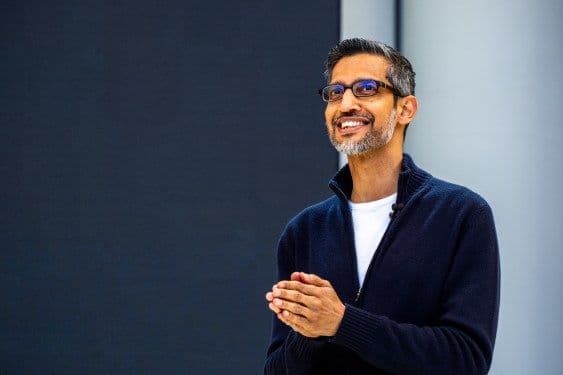
Google just gave Sundar Pichai a $692M pay package
Sundar Pichai’s new pay package could be worth $692 million. Per afilingfirstspied by the FT, Alphabet has structured a three-year deal for its Google CEO that could make him one of the highest-paid executives on the planet — but most of it is tied to performance, including new stock incentives linked to Waymo and Wing, its drone delivery venture. What’s striking is how little public fascination Pichai attracts compared to Google’s founders. Larry Page and Sergey Brin — the second- and fourth richest people in the world — have lately captured headlines for a different reason entirely; both have been snapping up lavish Miami properties, widely seen as a response to California’s proposedBillionaire Tax Act— a ballot initiative targeting the state’s roughly 200 billionaires with a one-time 5% levy on net worth exceeding $1 billion. Page reportedly spent over $173 million on two mansions in Coconut Grove, Florida, recently, while Brin was just linked to a $51 million megamansion14 miles away, atop two earlier purchases totaling $92 million. Pichai, by contrast, remains quietly rooted in Los Altos, California, as far as the public knows. He’s a billionaire, too — the nearly sevenfold growth in Google’s market cap since he took the helm in 2015 has made the stock he’s accumulated along the way hugely valuable. He and his wife currently hold shares worth nearly$500 million, with another estimated$650 millionsold as of last summer, per Bloomberg’s calculations.
View

