

最新 AI 资讯

Nvidia’s new $500B plan is risky but brilliant, especially for aging GPUs
Nvidiaannouncedthis week that Apollo, BlackRock, Blackstone, Brookfield, Goldman Sachs, and KKR were willing to commit up to $500 billion to build AI data centers. That eye-popping figure got a lot of the attention, but the bigger story is Nvidia’s effort to create a secondary market for aging GPUs. To convince those big-name financial companies, Nvidia has agreed to guarantee, with its own money, that its chips used as collateral in these deals will retain their value. Many have now commented on howunusual,smart, anddangerousthis plan is. It is all of those things. The bond marketsgot so spookedthat Nvidia CEO Jensen Huangtook to Xandbusiness TVto better explain how Nvidia’s risk would be limited. But underneath the financial maneuvering to fund AI data centers (and keep revenue for Nvidia flowing), is something, perhaps, far more interesting for startups and enterprises: Huang wants to ensure an ecosystem of used AI hardware flourishes, helping sustain demand for Nvidia hardware as it ages. Specifically, Nvidia is promising that if GPUs used as collateral don’t retain their value as expected, the company will cover up to 25% of the difference. So, if a data center owner defaults on a loan and the lender must liquidate, but the chips can’t command the price the books say they should, Nvidia will chip in. The dangerous part for Nvidia is that this creates something financiers call “wrong way” risk. That is, Nvidia’s obligations will grow as demand weakens. Should that happen, its revenues will likely be squeezed as well. Still, the scheme is deliberatelyunlike the comparison to Lucent Technologiesthat some have been making. Lucent was the telecommunications equipment provider that rose and crashed with the dotcom bubble after lending its customers money to buy its wares. The Lucent comparison is a shadow over Nvidia, Huang knows. And not an unfair one. Nvidia definitely has committed billions towards those who buy its chips, including frontier AI labs OpenAI and Anthropic, neoclouds like CoreWeave (the originator of using Nvidia chips as collateral) as well as Nebius, Firmus, and Lambda. And it has been working on another$750 billion worth of circular dealsthis summer, Bloomberg has calculated. “Is this circular financing?” Huang wrote on X about the new scheme. “This initiative is designed to address that concern. We are bringing independent, long-term institutional capital into the AI infrastructure market.” That’s true. Unlike Lucent, Nvidia is getting others to shoulder the bulk of the capital and risk, merely by agreeing to protect a portion of its chips’ value in the future. Should this plan work, Nvidia will have found new sources of money for AI data center builds, after many of the traditional methods have begun to wear thin. For instance, some of the hyperscalers have already taken on a lot of debt (likeOracle), issued new tranchesof equity (Google), and burnedmuch cash (Meta). The situation has become so dicey that Microsoft CEO Satya Nadella recently recommended the book“1873”during his latest earnings call. It’s about the railroad-era financial engineering that crashed the nation’s economy. The risk is that today’s AI boom, where demand far outstrips capacity, doesn’t continue for much longer. Rather than being in the early innings, what if enterprises and consumers temper AI usage? Or new technologies come along to make existing infrastructure more effective and/or all of today’s AI infrastructure obsolete? Then, like so many buggy whips in the face of automobiles (to paraphrase Danny Devito’s Lawrence Garfield), demand dries up and everything crashes. Yet, Huang is arguing that won’t happen by selling a vision of AI as a long-term “investable infrastructure,” as he describes it. That makes his AI servers, which he calls “AI factories” akin to railroads or airlines rather than quickly depreciating assets like PCs. “When needs change, the factory can be used by another customer, another cloud or another operator. This broad ecosystem gives NVIDIA compute a deep market of potential users and offtakers, helping protect residual value,” he promised. In that future, Nvidia cares as much about aging architecture as it does the new chips. And perhaps startups, enterprises, and even researchers will tap into a broader variety of hardware, each tuned to different AI needs, just like they are beginning to pick affordable open-weight models alongside the frontier choices. As the king of AI, Nvidia has the power, and the window of opportunity, to make that happen.
View
Microsoft kills off unsuccessful AI features while merging its separate Copilot apps
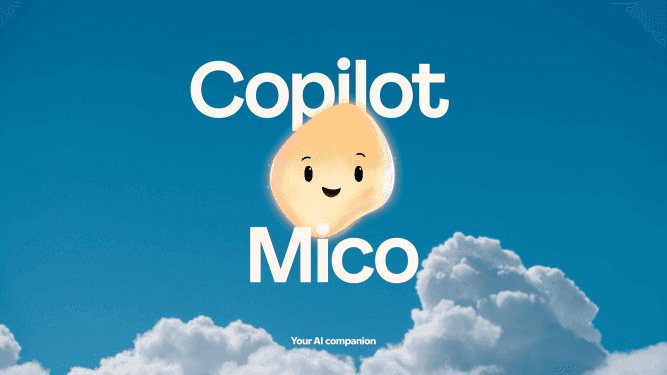
Two years ago,Microsoft described AIas a “generational shift” in technology that it wanted to lead. Today, the company is merging its Copilot-branded consumer and business apps, and ditching a number of unsuccessful AI features. As initially reported byGeekWireand detailed inMicrosoft’s support documentation, the tech giant will combine the functionality of its consumer-facing Copilot app and the more business-oriented Microsoft 365 Copilot app. The move is both an acknowledgement that personal and professional uses of AI often overlap, and that Microsoft’s prior strategy was too complicated to make Copilot a viable competitor to the likes of ChatGPT, Claude, and Gemini. It also follows a broader consolidation in the AI app space that has seen ClaudemergingCowork into Chat; OpenAI merging its agentic featureOperator into ChatGPT; and Google addingspecialized capabilitiesto its Gemini app, like the combination of deep research and web browsing. According to Microsoft, consumers will lose access to Group Chats, AI-generated podcasts in Copilot, Copilot Labs experimental features, and Deep Research, by August 18, 2026. For paying professional users,Researcherwill offer a replacement for the latter, at least. The company will alsoditchitsgoofy animated character for Copilot, named Mico, a floating blob that felt likean AI-ified version of Clippy. Other features may temporarily disappear during the transition, Microsoft warns, and files generated by the standalone Copilot app will be migrated to OneDrive. While the company says the goal is to make Copilot a “simpler, more cohesive experience,” it’s also an admission that Copilot has lost its way. In July,The Informationreported that Microsoft EVP Jacob Andreou, who oversees Copilot, said in an internal memo that the app needed to earn “the right to exist” in its customers’ lives, which required moving on from features that didn’t work.
View

How Two Indian Startups Are Replacing Paper With Digital Trust
Two founders digitise critical transactions, using data, regulation, and AI to replace trust with verifiable proof.
View

Google Gemini Expands Connected Apps With OpenTable, Ticketmaster and More
Google is expanding the range of third-party apps and services that can connect to Gemini, allowing users to handle more tasks through the AI assistant. The new integrations cover productivity, creativity, local services, entertainment, music, home, health and lifestyle. The rollout will add tools such as Granola, Otter.ai, Wix, Fever, GetYourGuide, Localiza, OpenTable, Ticketmaster, iHeartRadio, Pandora, Angi, Thumbtack and Zocdoc over the coming weeks. Google has also shared new figures showing how people are using Gemini across platforms.
View

CloudSEK Identifies AI Supply Chain Exposure Affecting More Than 2,500 Organisations
Cybersecurity firm CloudSek has identified an AI supply-chain attack on LiteLLM that affected more than 2,500 organisations. The incident, which reportedly occurred in March this year, seems to have potentially exposed around 4,34,000 automated software development pipelines. The attack reportedly exposed data of many leading tech brands, including Microsoft, X, Amazon, Cisco, Samsung and Salesforce.
View
Google’s Age Signals Could Protect Kids But Raise New Privacy Questions
Google is giving apps access to users’ age signals, raising questions over data minimisation, profiling and the limits of platform-led child safety.
View

Chandra’s Exit Brings a Rare Moment of Uncertainty for Tata Group
N Chandrasekaran’s exit has unsettled investors at a critical juncture for the Tata Group, raising fresh questions over succession, capital allocation and the conglomerate’s future direction.
View

L&T's Vyoma.AI Lands NVIDIA 10K-GPU Deal
L&T will deploy a 10,000-GPU NVIDIA B300 AI Factory at Vyoma.AI's gigawatt-scale Chennai data centre campus to support Together AI's AI Native Cloud platform.
View
CodeRabbit Raises $143 Mn as AI Coding Agents Generate More Code
The company is expanding beyond AI code reviews with tools that prioritise changes, explain large pull requests and monitor software for security risks.
View

SpaceXAI Launches Grok 4.6 to Take On GPT-5.6 and Fable 5
The company says the model can handle multi-step research, coding and app-building tasks while checking and refining its own work along the way.
View

Amazon will train on Twitch streamers’ content by default, unless they opt out
The streaming platformTwitchwill nowuse creators’ contentto help train generative AI models for its parent company, Amazon. This move has inspired swift and concentrated backlash from the Twitch community, especially because creators are opted in to having their content used for this AI training by default. For Amazon, these stream recordings are incredibly valuable, offering thousands of hours of audio and video content to help train AI models. But Twitch users worry that since creators have to manually opt out, they might be surrendering their content to train Amazon’s AI content models without even knowing it. This is especially concerning on a platform like Twitch, where creators are often recording livestreams of themselves and their voices for many hours per week. In astreamon the official Twitch channel, Twitch Head of Community Mary Kish and Chief Product Officer Mike Minton addressed a live audience of nearly 3,000 aggrieved users, many of whom were posting anti-AI sentiments in the chat. “Why is it not opt-in? That’s what everybody is spamming in chat. I get it. ‘Let me opt in versus making me opt out,’” Minton said. “Well, there’s an honest answer… If this was opt-in, nobody would opt in. That’s honestly the answer.” Twitch knows that its community of streamers is largely opposed to the use of generative AI, since the most prevalent generative AI products are trained on books, images, videos, and other materials scraped from the internet without consent. Even Twitch’s approach to breaking this news shows that the company is braced for backlash. Instead of telling the community that Amazon would begin training on Twitch users’ content, Twitchframedthis change as “[adding] a setting that lets you opt out of having your channel content used to train generative AI content models across Amazon.” In some cases, this created confusion among streamers about whether their content had already been fed to Amazon without their knowledge. When one user asked if their videos had already been used for training, Minton responded, “I don’t actually know the answer to that question because I don’t know what Amazon […] has done in terms of model training and what they’ve used and not used.” Kish noted that Twitch is not unique in its use of user content for AI training. Meta, for example, uses public content from its platforms totrain its own AI models,meaning that if your Facebook and Instagram accounts are public, then your data has probably already been used for Meta’s AI training. (If youlive in the U.K., you can opt out of Meta’s training — if not, the only way to “opt out” is to use private settings, which isn’t feasible for creators who monetize their accounts.) Kish said that even including an opt-out option on Twitch is “a reflection of reacting to this community’s voice that you are not wanting to train Gen AI models, and we want to give you that option.” To opt out of AI training on Twitch, users can navigate to their channel settings (not the creator dashboard), select the security and privacy tab, scroll down to the option “training for generative AI,” and toggle it off.

Some Claude users are mad that Anthropic’s new watermarks will catch them using it at their jobs, classes
Anthropic recently made the decision to watermark Claude’s outputs — inserting invisible code into the chatbot’s editorial text that marks it as AI-generated. Anthropic rolled out this new policy to satisfy theEU AI Act’s Transparency Code, which now requires tech companies to label content that has been AI-generated or edited in a manner identifiable to computer systems. Yet while European regulators may be happy, some AI users are decidedly not. One need look no further than Reddit to find evidence of brewing discontent, though other posters on the site are not in agreement. One of the morehistrionic postsI came across was from a user named visionode, whose account is notably only three weeks old. According to visionode, the new watermarking system is a draconian conspiracy designed to victimize innocent chatbot users worldwide. Visionode’s basic argument appears to be that, while savvy Claude users may be able hide evidence of their AI usage by paraphrasing or otherwise cleaning their outputs through other AI services, the average user of Claude will be caught. “Who will get caught? You. The student who used Claude to reorganize a paragraph. The journalist who asked the AI to summarize a two-hundred-page transcript. The writer who had creative block and asked for synonyms. Those guys come out of the process with a digital tattoo on their forehead.” Far be it from me to undermine visionode’s outrage, but those are not the best examples. A journalist asking AI to summarize a two-hundred-page transcript is not going to be bothered by a watermark attached to that summary, unless they are copying and pasting the summary verbatim into their article — which is plainly unethical and shouldn’t be happening. It is equally unethical for a student who copies and pastes Claude’s output into an essay after asking it to “reorganize a paragraph.” Other Redditors were also not particularly supportive of the poster’s outrage. “Get a load of this guy,” one poster merely commented. Another asked the OP to take “a deep breath.” Visionode wasn’t the only one complaining. Another unhappy camper called the watermarks “unethical” and “disgusting” and argued that by using Claude, they had done the lion’s share of the work. In their view, the chatbot was merely a “tool” that had facilitated their arduous labor. “I gave the instructions, context, decisions, and countless refinements, claude was the tool. If Claude starts watermarking the code or anything else it generates, what exactly is it claiming credit for?”the poster asked. Again, other users dogpiled onto the critic. “It’s not claiming credit though,” one user shot back. “It’s about being able to detect AI generated outputs because of the risks AI generated outputs can cause in various situations.” “Bro couldn’t even complain about Claude without using Claude to write it,” another quipped. Some critics have steered clear of the victimhood narrative and made slightly more nuanced arguments against Anthropic’s new policy. For instance, one poster complained of a general hypocrisy in watermarking an editorial product that was, itself, generated by hoovering up other people’s work. “I think it’s a very sinister direction to take,”said the user. “I don’t use Claude to write anything but having an AI that watermarks your work is terrifyingly ironic given how many of the frontier models came by their training data.” In general, however, users have tended to support the watermarking system as a sensible way to track material that was generated by algorithm. “There is literally no good argument for why this isn’t a good idea,” a useron another thread said. “The only reason you wouldn’t want this is to lie to people.”