🚀 Zaprep: Your Socials on Steroids. 免费开始 — 每月自动发送 1,000 条私信,将互动转化为潜在客户。 ,每月 1,000 条自动私信。
提交您的工具
发现
资源
Outrank. 付费提升排名。
出价即可占据 PoweredByAI 的 dofollow 第 1 名。
11.99 美元起 · 加 2 美元即可超越 · 无到期
AI NewsL&T's Vyoma.AI Lands NVIDIA 10K-GPU Deal
5:21 PM IST · August 13, 2026
L&T will deploy a 10,000-GPU NVIDIA B300 AI Factory at Vyoma.AI's gigawatt-scale Chennai data centre campus to support Together AI's AI Native Cloud platform.
KAS and Vigyanlabs are betting that sovereign, energy-efficient AI infrastructure can bring high-performance compute closer to organisations.
View
As OpenAI heads toward an IPO, the bigger test for Astra may have little to do with whether it can be called AGI and much more to do with whether it can turn frontier capability, enterprise-grade privacy, and lower cost per task into higher enterprise revenue.
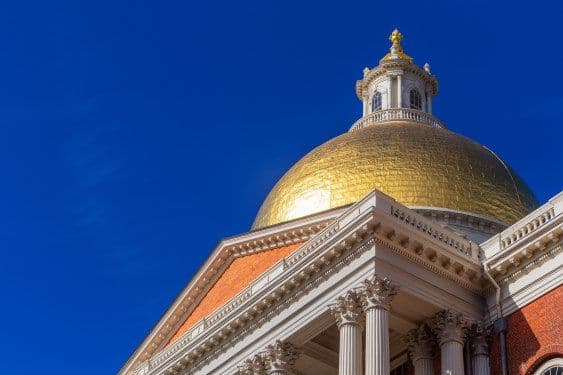
Massachusetts became the latest state to force data centers to bring their own power, but this time there’s a twist. A new state mandate would require developers building data centers larger than 25 megawatts to provide clean power or pay into a ratepayer protection fund. Gov. Maura Healey’sexecutive orderis the latest example of states turning against data centers. Just a few years ago, tech companies and data center developers were showered with incentives to locate facilities in a particular state. Now, they’re fightinga groundswell of public oppositionas politicians seek to show voters they’re addressing their concerns. Under Healey’s order, data centers larger than 25 megawatts of peak demand will have to bring their own power and guarantee that it adheres to the state’s clean energy requirements. Healey would prefer that they generate the clean power onsite, too. If not, they’ll need to fund the construction of new generation nearby or pay into a ratepayer protection fund. Massachusetts is also directing communities to “avoid signing non-disclosure agreements,” according to the executive order. To give regulators time to implement the new restrictions, the governor is pausing applications for a data center sales tax exemption that went into effect last month. Healey said data centers must meet the Massachusetts clean energy standard enshrined instate law, although it comes with some added strength. The state’s clean energy standard dictates that industry only generate a portion of their power using approved sources like wind, solar, and hydro. In 2030, for example, those sources must contribute at least 40% of the total. The amount varies by year, and it ratchets up over time. But the governor’s office clarified that data centers will be required to meet 100% of its electricity demand with clean energy generation. With the new restrictions, Massachusetts becomes the third state in as many months to rein in data center development. In August, Texas Gov. Greg Abbott announced that all new data centers in the state would need tosubmit to auditsby the public utility commission and the grid operator, ERCOT. In July, New York’s governorstopped constructionof new data centers 50 megawatts or larger. With public sentiment shifting against data centers, the tech industry is starting to push back. Pro-AI super PAC Leading the Future — which is funded by Marc Andreessen, Ben Horowitz, and Greg Brockman — isbuying ads that seek to sway votersin battleground states ahead of midterm elections. Update: This article was updated with information from the Massachusetts governor’s office that clarified the executive order will require data centers to meet 100% of its electricity demand with clean energy generation.
Paul Christiano, an influential AI researcher focused on keeping AI systems aligned with human interests and under human control, is joining the OpenAI Foundation board, the frontier labsaidWednesday. “I now believe there is a meaningful risk that rapid acceleration in AI capabilities leads to catastrophic and irreversible loss of control in the very near term,” Christiano wrote ina social media post. “I do not think that the AI industry in general, including OpenAI, is currently on track to reduce this risk to an acceptable level. I’m joining because I believe that if OpenAI rises to the occasion we could significantly reduce risk.” Christiano wrote that using AI models to train subsequent AI systems could result in an explosion of capabilities that their creators can’t control. He joins the board as OpenAI faces renewed scrutiny over its safety procedures, following a series of incidents in which AI agents broke out of restraints and penetrated outside computer systems without the knowledge of OpenAI’s researchers. On Tuesday, Anthropic researcher Jacob Coxonresigned his positionto call attention to what he considers irresponsible AI development — and it seems tohave worked. Christiano will join the board’s Safety and Security Committee, led by Carnegie Mellon University professor Zico Kolter. The committee has the final say on whether OpenAI releases new models, like Astra, which was deployed last week. Kolter has not commented publicly on the recent security incidents. OpenAI has not responded to TechCrunch’s request for Kolter’s perspective on the company’s approach to safety following those incidents. Christiano is one of the people behind reinforcement learning (RL) from human feedback, a key technique for training large language models that he developed while working at OpenAI. He left the lab in 2021, subsequently founding the Alignment Research Center to focus on how to determine if an AI model could threaten its human creators. “We currently train our AI agents with RL to get as much reward as they can,” he wrote Wednesday. “It has long seemed theoretically possible that this could motivate AI agents to undermine human control, seek power and resources, and cover up their tracks in pursuit of misaligned goals correlated with reward. Public evidence from recent incidents suggests that this is not just a theoretical possibility.” Sometime in 2024, Christianobecame affiliatedwith the U.S. government’s AI Safety Institute, which later became the Center for AI Standards and Innovation. There, he plays a role in the U.S. government’slargely hidden effortto evaluate frontier AI models before their release. According to the frontier lab’s announcement, Christiano will continue advising the government while serving in his new role as a board member, but will recuse himself from OpenAI matters and model evaluations. However, that will hardly quell widespread concerns about the AI industry’s influence over policymaking.
PoweredByAI.app 是一个 AI 工具目录,帮助个人、企业和创作者发现写作、编程、设计、生产力等领域的最佳 AI 工具。
© 2026 , 产品来自011BQ. 保留所有权利。