Featured in:Best AI Writing Tools
Get featured →🚀 Zaprep: Your Socials on Steroids. Start free — automate 1,000 DMs/month & turn engagement into leads. with 1,000 automated DMs/month.


✦
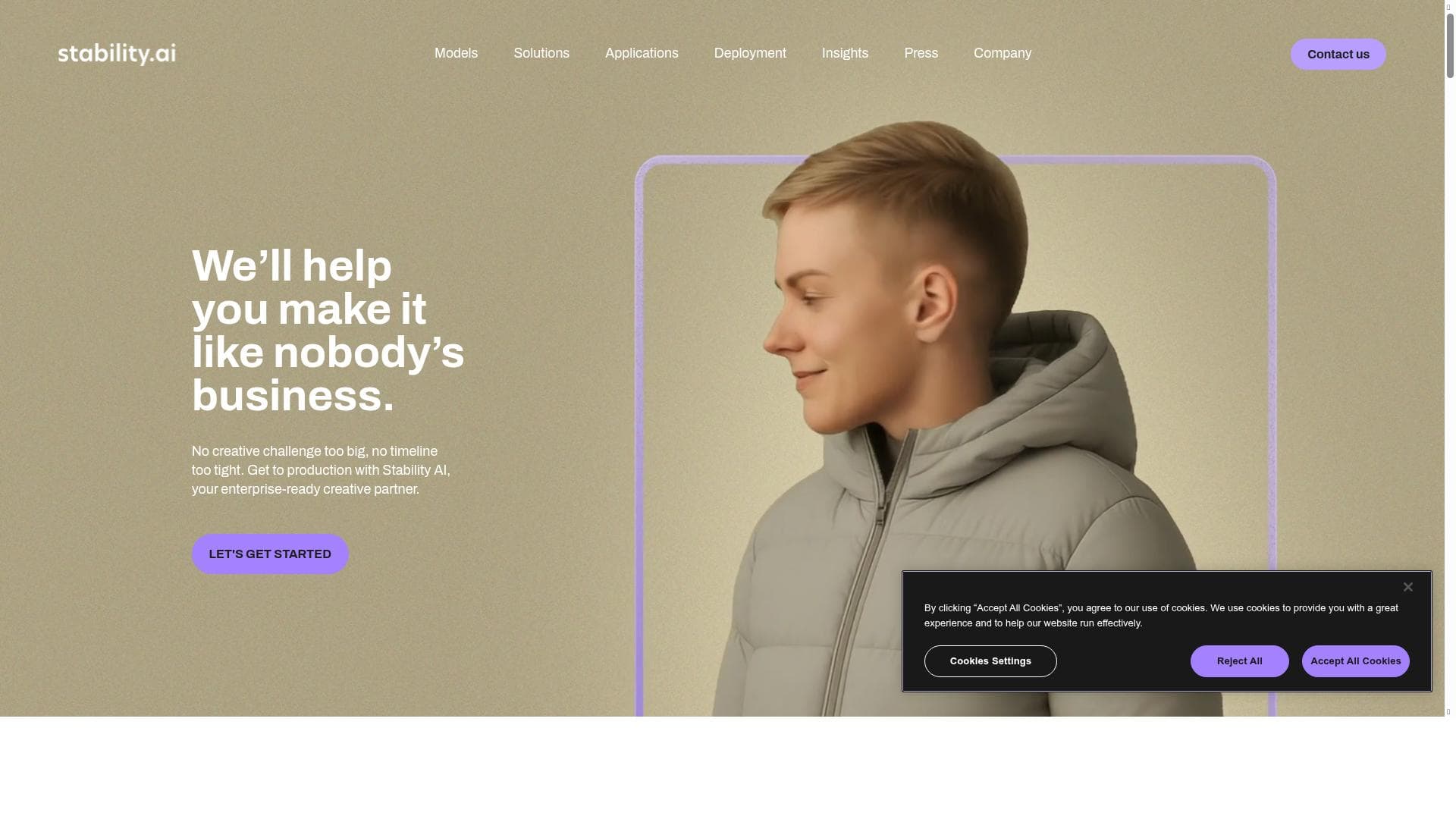
Stable Diffusion is a cutting-edge text-to-image AI model that transforms textual prompts into detailed, high-quality images, supporting advanced tasks like inpainting and outpainting. Ideal for artists, designers, and enterprises, it accelerates creative workflows with powerful media editing tools and scalable solutions.

Description
Stable Diffusion is a deep learning, text-to-image model released in 2022. It is primarily used to generate detailed images conditioned on text descriptions, though it can also be applied to other tasks such as inpainting, outpainting, and generating image-to-image translations guided by a text prompt.
Detailed Description
Stable Diffusion is a state-of-the-art deep learning model designed to generate high-quality images from textual descriptions. Released in 2022 by Stability AI, it leverages advanced text-to-image synthesis techniques to transform written prompts into detailed, photorealistic, or artistic images. Beyond simple text-to-image generation, Stable Diffusion supports a range of creative tasks including inpainting (filling in missing parts of images), outpainting (extending images beyond their original borders), and image-to-image translations guided by text prompts. This versatility makes it a powerful tool for artists, designers, and content creators who want to explore new visual concepts or enhance existing media assets with AI-driven creativity. At its core, Stable Diffusion uses a latent diffusion model that operates on compressed representations of images, enabling it to generate complex visuals efficiently while maintaining high fidelity. This approach allows it to handle multimodal media generation, meaning it can work across different types of media inputs and outputs, not just static images. The model also incorporates media editing tools that facilitate fine-tuning and modification of generated content, empowering users to iterate rapidly and customize outputs to their precise needs. Enterprise-ready creative solutions are another hallmark of Stable Diffusion, with features designed to support large-scale production workflows and complex creative challenges. By accelerating production timelines, it helps teams reduce the time and cost associated with traditional image creation and editing processes. Stable Diffusion is ideal for a wide range of users, from individual artists and hobbyists to professional designers and large creative agencies. Its ability to generate detailed images from simple text prompts makes it invaluable for concept art, marketing visuals, storyboarding, game design, and even scientific visualization. Enterprises benefit from its scalability and integration capabilities, which allow seamless incorporation into existing creative pipelines and digital asset management systems. Additionally, educators and researchers use Stable Diffusion to explore AI-driven creativity and develop new applications in computer vision and generative art. The pricing model for Stable Diffusion is freemium, offering users access to basic features at no cost with options to upgrade for enhanced capabilities, higher usage limits, and enterprise-grade support. This flexible pricing structure lowers the barrier to entry for newcomers while providing scalability for professional and commercial use cases. Users can experiment with the tool’s core functionalities freely before deciding to invest in premium plans tailored to their specific requirements. Compared to alternative text-to-image models, Stable Diffusion stands out due to its open-source nature, allowing a broad community of developers and artists to contribute improvements and customize the model. Unlike some proprietary solutions, it offers greater transparency and adaptability. Its efficiency in generating high-resolution images quickly also surpasses many competitors, making it a preferred choice for time-sensitive projects. However, users should be aware that, like all AI-generated content, outputs may occasionally require manual refinement to meet exact artistic standards. Ethical considerations around content generation and copyright also apply, necessitating responsible use. In summary, Stable Diffusion is a versatile, powerful AI tool that democratizes image creation by converting text prompts into rich visual content. Its broad feature set, enterprise readiness, and flexible pricing make it suitable for a diverse user base seeking to harness AI for creative innovation. While it excels in many areas, users should consider the need for post-processing and ethical guidelines when deploying AI-generated imagery in professional contexts.
Tool Features
- Multimodal media generation
- Media editing tools
- Enterprise-ready creative solutions
- Supports complex creative challenges
- Accelerates production timelines
Description
✦
Stable Diffusion is a cutting-edge text-to-image AI model that transforms textual prompts into detailed, high-quality images, supporting advanced tasks like inpainting and outpainting. Ideal for artists, designers, and enterprises, it accelerates creative workflows with powerful media editing tools and scalable solutions.
Stable Diffusion is a deep learning, text-to-image model released in 2022. It is primarily used to generate detailed images conditioned on text descriptions, though it can also be applied to other tasks such as inpainting, outpainting, and generating image-to-image translations guided by a text prompt.
Detailed Description
Stable Diffusion is a state-of-the-art deep learning model designed to generate high-quality images from textual descriptions. Released in 2022 by Stability AI, it leverages advanced text-to-image synthesis techniques to transform written prompts into detailed, photorealistic, or artistic images. Beyond simple text-to-image generation, Stable Diffusion supports a range of creative tasks including inpainting (filling in missing parts of images), outpainting (extending images beyond their original borders), and image-to-image translations guided by text prompts. This versatility makes it a powerful tool for artists, designers, and content creators who want to explore new visual concepts or enhance existing media assets with AI-driven creativity. At its core, Stable Diffusion uses a latent diffusion model that operates on compressed representations of images, enabling it to generate complex visuals efficiently while maintaining high fidelity. This approach allows it to handle multimodal media generation, meaning it can work across different types of media inputs and outputs, not just static images. The model also incorporates media editing tools that facilitate fine-tuning and modification of generated content, empowering users to iterate rapidly and customize outputs to their precise needs. Enterprise-ready creative solutions are another hallmark of Stable Diffusion, with features designed to support large-scale production workflows and complex creative challenges. By accelerating production timelines, it helps teams reduce the time and cost associated with traditional image creation and editing processes. Stable Diffusion is ideal for a wide range of users, from individual artists and hobbyists to professional designers and large creative agencies. Its ability to generate detailed images from simple text prompts makes it invaluable for concept art, marketing visuals, storyboarding, game design, and even scientific visualization. Enterprises benefit from its scalability and integration capabilities, which allow seamless incorporation into existing creative pipelines and digital asset management systems. Additionally, educators and researchers use Stable Diffusion to explore AI-driven creativity and develop new applications in computer vision and generative art. The pricing model for Stable Diffusion is freemium, offering users access to basic features at no cost with options to upgrade for enhanced capabilities, higher usage limits, and enterprise-grade support. This flexible pricing structure lowers the barrier to entry for newcomers while providing scalability for professional and commercial use cases. Users can experiment with the tool’s core functionalities freely before deciding to invest in premium plans tailored to their specific requirements. Compared to alternative text-to-image models, Stable Diffusion stands out due to its open-source nature, allowing a broad community of developers and artists to contribute improvements and customize the model. Unlike some proprietary solutions, it offers greater transparency and adaptability. Its efficiency in generating high-resolution images quickly also surpasses many competitors, making it a preferred choice for time-sensitive projects. However, users should be aware that, like all AI-generated content, outputs may occasionally require manual refinement to meet exact artistic standards. Ethical considerations around content generation and copyright also apply, necessitating responsible use. In summary, Stable Diffusion is a versatile, powerful AI tool that democratizes image creation by converting text prompts into rich visual content. Its broad feature set, enterprise readiness, and flexible pricing make it suitable for a diverse user base seeking to harness AI for creative innovation. While it excels in many areas, users should consider the need for post-processing and ethical guidelines when deploying AI-generated imagery in professional contexts.
Frequently Asked Questions
What is Stable Diffusion?
Stable Diffusion is a deep learning-based text-to-image model released in 2022 that generates detailed images from text descriptions. It also supports related tasks such as inpainting, outpainting, and image-to-image translations guided by text prompts.
How much does Stable Diffusion cost?
Stable Diffusion operates on a freemium pricing model, allowing users to access basic features for free with options to upgrade for enhanced capabilities, higher usage limits, and enterprise support.
Who is Stable Diffusion best for?
It is best suited for individual artists, designers, content creators, and enterprises looking to accelerate creative workflows, generate concept art, marketing visuals, or integrate AI-driven media generation into their production pipelines.
What are the main features of Stable Diffusion?
Key features include multimodal media generation, advanced media editing tools, enterprise-ready creative solutions, support for complex creative challenges, and accelerated production timelines.
Does Stable Diffusion offer a free trial?
Yes, Stable Diffusion offers free access to its core features under its freemium model, enabling users to try the tool before opting for paid plans.
What integrations does Stable Diffusion support?
Stable Diffusion supports integration into various creative workflows and digital asset management systems, making it adaptable for enterprise environments and scalable production pipelines.
How does Stable Diffusion work?
Stable Diffusion uses a latent diffusion model that generates images by iteratively refining compressed representations based on text prompts, enabling efficient and high-quality image synthesis and editing.
Socials
Use ToolReviews
0 reviews
No reviews yet. Be the first to share your experience.
Sponsored Tools





























Recommended Tools
Stay updated on latest Ai tools
Get the latest insights, Join our newsletter
Read and trusted by 50,000+ readers
Join the biggest AI Community
Our community and staff are here to help!
Your feedback will help Alice AI improve in future versions.








Submit your Tool


PoweredByAI.app is an AI Tools Directory helping individuals, businesses, and creators discover the best AI tools for writing, coding, design, productivity, and more.
© 2026 , Product of011BQ. All rights reserved.