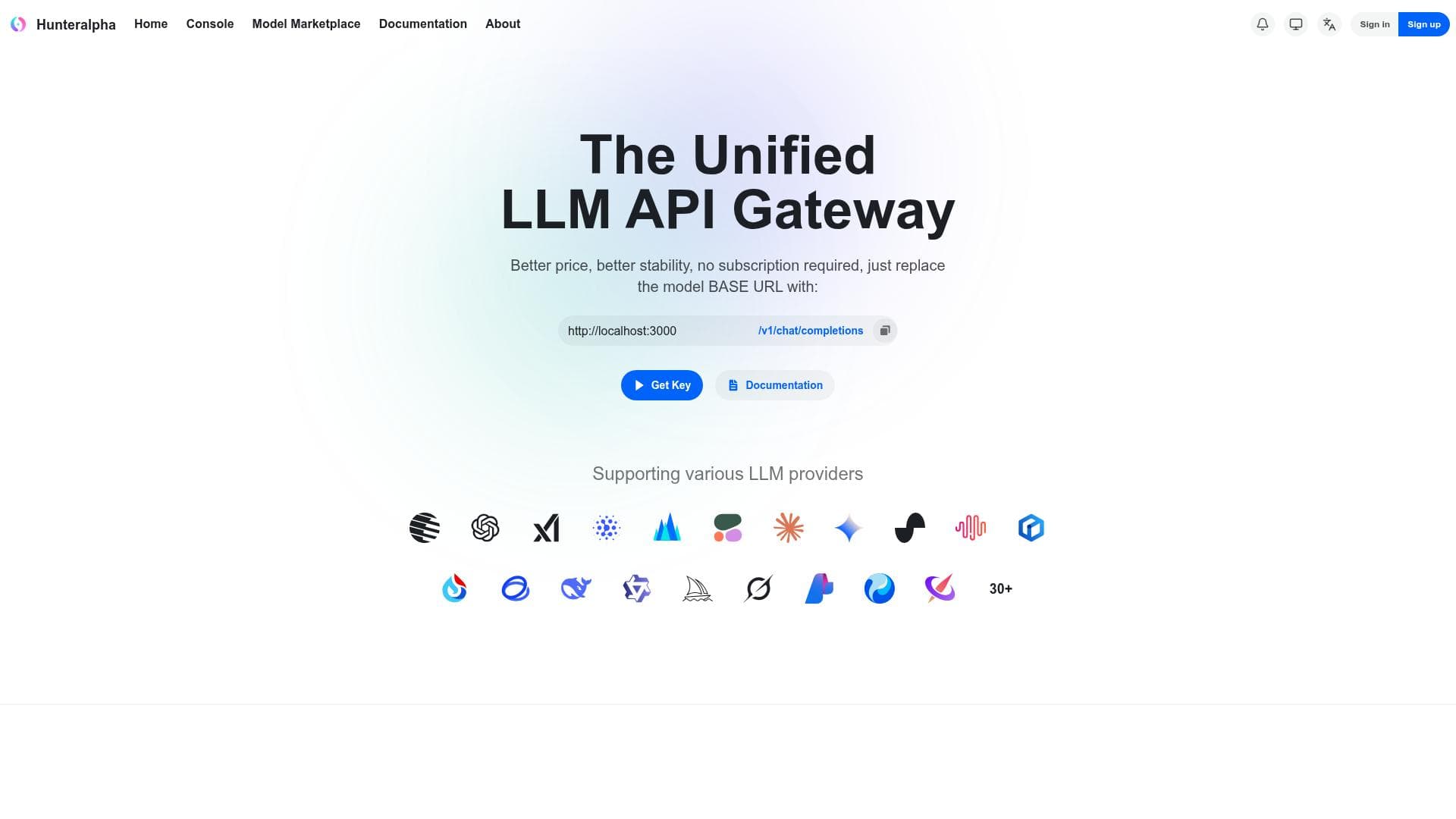


Hunteralpha is a unified AI model hub that enables seamless cross-conversion and centralized management of large language models across OpenAI, Claude, and Gemini formats. Ideal for developers and enterprises seeking flexible, cost-effective AI solutions without subscription constraints, it offers superior stability and pricing compared to alternatives.
Description
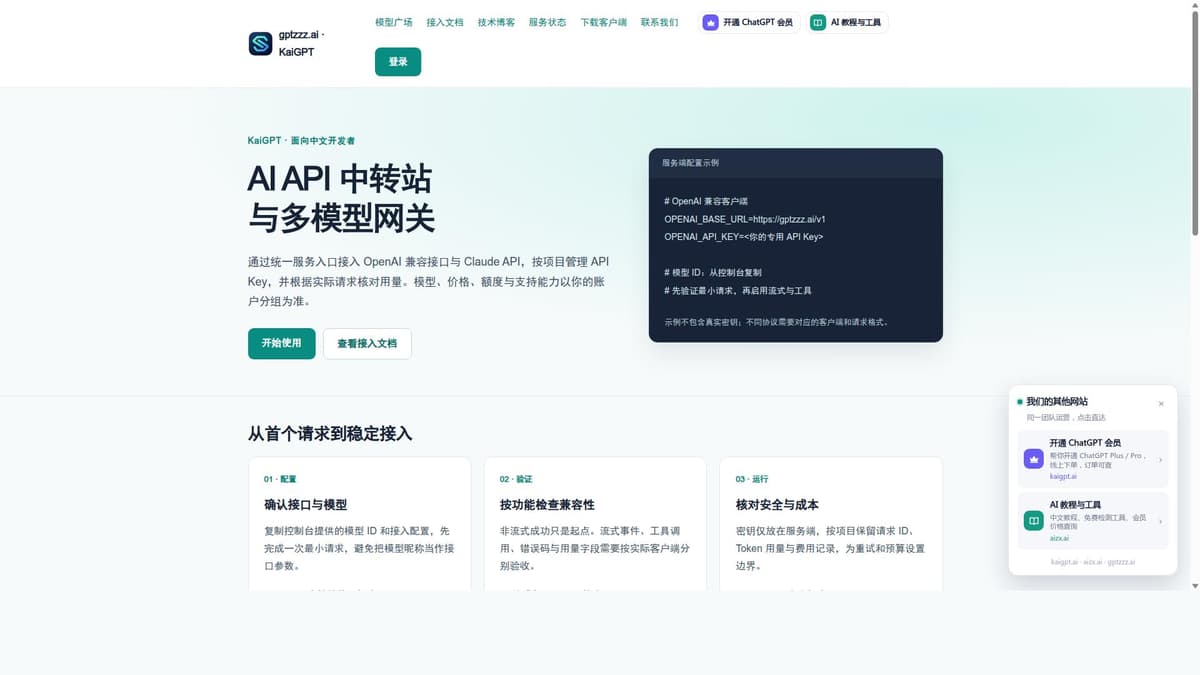
Hunteralpha is a unified AI model hub for aggregation and distribution. It supports cross-converting various large language models into OpenAI-compatible, Claude-compatible, or Gemini-compatible formats. It provides a centralized gateway for personal and enterprise model management, offering better price, better stability, and no subscription requirement.
Detailed Description
Hunteralpha is an innovative AI model hub designed to unify the aggregation and distribution of large language models (LLMs) across multiple platforms. Its core purpose is to simplify and streamline access to various AI models by enabling seamless cross-conversion between different model formats, including OpenAI-compatible, Claude-compatible, and Gemini-compatible interfaces. This capability allows users to leverage the strengths of diverse AI models without being locked into a single ecosystem, fostering greater flexibility and efficiency in AI deployment. Hunteralpha acts as a centralized gateway that supports both personal and enterprise-level model management, making it an indispensable tool for developers, businesses, and AI enthusiasts who require reliable, cost-effective, and versatile AI solutions. One of Hunteralpha's standout features is its unified AI model aggregation and distribution system. Instead of managing multiple APIs or platforms separately, users can access a broad range of AI models through a single interface. This consolidation not only reduces complexity but also enhances operational stability and performance. The platform's cross-conversion capability is particularly noteworthy, as it allows users to convert models from one compatibility format to another effortlessly. For example, a model originally designed for OpenAI's API can be converted to work with Claude or Gemini interfaces, enabling broader application and integration possibilities. This feature is highly valuable for organizations that utilize multiple AI providers or want to experiment with different models without the overhead of managing separate environments. Hunteralpha also emphasizes cost efficiency and stability. It offers better pricing compared to many alternatives in the market, making advanced AI model access more affordable for startups and enterprises alike. Additionally, the platform does not require a subscription, which lowers the barrier to entry and provides users with more control over their usage and expenses. Stability is another critical advantage; Hunteralpha ensures consistent performance and uptime, which is essential for mission-critical applications and enterprise deployments. The tool is ideal for a wide range of users, including AI developers, data scientists, product managers, and businesses seeking to integrate AI capabilities into their workflows without vendor lock-in. Use cases span from developing AI-powered applications, chatbots, and virtual assistants to conducting research and experimentation with different LLMs. Enterprises can benefit from centralized model management, simplifying governance, compliance, and scaling of AI initiatives. Freelancers and smaller teams will appreciate the cost savings and the ability to access multiple AI models through one platform without subscription commitments. Hunteralpha operates on a freemium pricing model, allowing users to start with basic features at no cost and upgrade as needed for more advanced capabilities or higher usage volumes. This flexible pricing approach makes it accessible to a broad audience, from individual developers testing new models to large organizations requiring robust AI infrastructure. Compared to alternatives, Hunteralpha stands out by combining multi-model compatibility, centralized management, and cost-effectiveness in a single platform. Many competitors focus on a single AI provider or require separate subscriptions for each model ecosystem, which can increase complexity and expenses. Hunteralpha's cross-conversion technology and unified gateway reduce these challenges, offering a more streamlined and economical solution. However, users should consider that while Hunteralpha supports major AI interfaces, the breadth of supported models may evolve over time, and some niche or proprietary models might not yet be compatible. Additionally, as with any platform that aggregates multiple AI services, performance can depend on the underlying models and network conditions. In summary, Hunteralpha is a powerful and flexible AI model hub that addresses the growing need for interoperability and cost efficiency in AI deployment. Its unique cross-conversion capabilities, centralized management, and no-subscription pricing make it an excellent choice for anyone looking to harness the power of multiple large language models without the complexity and cost of managing them individually.
Tool Features
- Unified AI model aggregation and distribution
- Cross-conversion of large language models to multiple compatible formats
- Centralized gateway for personal and enterprise model management
- Better price and stability compared to alternatives
- No subscription required
- Supports OpenAI, Claude, Gemini compatible interfaces
Description
Hunteralpha is a unified AI model hub that enables seamless cross-conversion and centralized management of large language models across OpenAI, Claude, and Gemini formats. Ideal for developers and enterprises seeking flexible, cost-effective AI solutions without subscription constraints, it offers superior stability and pricing compared to alternatives.
Hunteralpha is a unified AI model hub for aggregation and distribution. It supports cross-converting various large language models into OpenAI-compatible, Claude-compatible, or Gemini-compatible formats. It provides a centralized gateway for personal and enterprise model management, offering better price, better stability, and no subscription requirement.
Detailed Description
Hunteralpha is an innovative AI model hub designed to unify the aggregation and distribution of large language models (LLMs) across multiple platforms. Its core purpose is to simplify and streamline access to various AI models by enabling seamless cross-conversion between different model formats, including OpenAI-compatible, Claude-compatible, and Gemini-compatible interfaces. This capability allows users to leverage the strengths of diverse AI models without being locked into a single ecosystem, fostering greater flexibility and efficiency in AI deployment. Hunteralpha acts as a centralized gateway that supports both personal and enterprise-level model management, making it an indispensable tool for developers, businesses, and AI enthusiasts who require reliable, cost-effective, and versatile AI solutions. One of Hunteralpha's standout features is its unified AI model aggregation and distribution system. Instead of managing multiple APIs or platforms separately, users can access a broad range of AI models through a single interface. This consolidation not only reduces complexity but also enhances operational stability and performance. The platform's cross-conversion capability is particularly noteworthy, as it allows users to convert models from one compatibility format to another effortlessly. For example, a model originally designed for OpenAI's API can be converted to work with Claude or Gemini interfaces, enabling broader application and integration possibilities. This feature is highly valuable for organizations that utilize multiple AI providers or want to experiment with different models without the overhead of managing separate environments. Hunteralpha also emphasizes cost efficiency and stability. It offers better pricing compared to many alternatives in the market, making advanced AI model access more affordable for startups and enterprises alike. Additionally, the platform does not require a subscription, which lowers the barrier to entry and provides users with more control over their usage and expenses. Stability is another critical advantage; Hunteralpha ensures consistent performance and uptime, which is essential for mission-critical applications and enterprise deployments. The tool is ideal for a wide range of users, including AI developers, data scientists, product managers, and businesses seeking to integrate AI capabilities into their workflows without vendor lock-in. Use cases span from developing AI-powered applications, chatbots, and virtual assistants to conducting research and experimentation with different LLMs. Enterprises can benefit from centralized model management, simplifying governance, compliance, and scaling of AI initiatives. Freelancers and smaller teams will appreciate the cost savings and the ability to access multiple AI models through one platform without subscription commitments. Hunteralpha operates on a freemium pricing model, allowing users to start with basic features at no cost and upgrade as needed for more advanced capabilities or higher usage volumes. This flexible pricing approach makes it accessible to a broad audience, from individual developers testing new models to large organizations requiring robust AI infrastructure. Compared to alternatives, Hunteralpha stands out by combining multi-model compatibility, centralized management, and cost-effectiveness in a single platform. Many competitors focus on a single AI provider or require separate subscriptions for each model ecosystem, which can increase complexity and expenses. Hunteralpha's cross-conversion technology and unified gateway reduce these challenges, offering a more streamlined and economical solution. However, users should consider that while Hunteralpha supports major AI interfaces, the breadth of supported models may evolve over time, and some niche or proprietary models might not yet be compatible. Additionally, as with any platform that aggregates multiple AI services, performance can depend on the underlying models and network conditions. In summary, Hunteralpha is a powerful and flexible AI model hub that addresses the growing need for interoperability and cost efficiency in AI deployment. Its unique cross-conversion capabilities, centralized management, and no-subscription pricing make it an excellent choice for anyone looking to harness the power of multiple large language models without the complexity and cost of managing them individually.
Frequently Asked Questions
What is Hunteralpha?
Hunteralpha is a unified AI model hub that aggregates and distributes large language models, allowing users to cross-convert models into OpenAI-compatible, Claude-compatible, or Gemini-compatible formats. It serves as a centralized gateway for managing AI models for both personal and enterprise use.
How much does Hunteralpha cost?
Hunteralpha operates on a freemium pricing model, offering free access to basic features with options to upgrade for advanced capabilities or higher usage. It does not require a subscription, providing cost-effective AI model access.
Who is Hunteralpha best for?
Hunteralpha is best suited for AI developers, data scientists, businesses, and enterprises that need to manage multiple large language models efficiently. It is ideal for those seeking flexibility, better pricing, and centralized AI model management without vendor lock-in.
What are the main features of Hunteralpha?
Key features include unified AI model aggregation and distribution, cross-conversion of large language models into OpenAI, Claude, and Gemini-compatible formats, centralized model management for personal and enterprise use, better pricing and stability, and no subscription requirement.
Does Hunteralpha offer a free trial?
Yes, Hunteralpha offers a freemium model that allows users to access basic features for free, enabling them to try the platform before opting for any paid upgrades.
What integrations does Hunteralpha support?
Hunteralpha supports integration with major AI model interfaces, including OpenAI, Claude, and Gemini-compatible APIs, enabling cross-platform compatibility and flexible AI deployment.
How does Hunteralpha work?
Hunteralpha works by aggregating various large language models into a single platform and enabling cross-conversion between different AI model formats. Users can manage and deploy models through a centralized gateway, accessing multiple AI ecosystems without needing separate subscriptions or interfaces.
Reviews
No reviews yet. Be the first to share your experience.