🚀 Zaprep: Your Socials on Steroids. Start free — automate 1,000 DMs/month & turn engagement into leads. with 1,000 automated DMs/month.


Is this your AI tool? Claim it today.
Verify ownership, manage your profile, and unlock growth features.
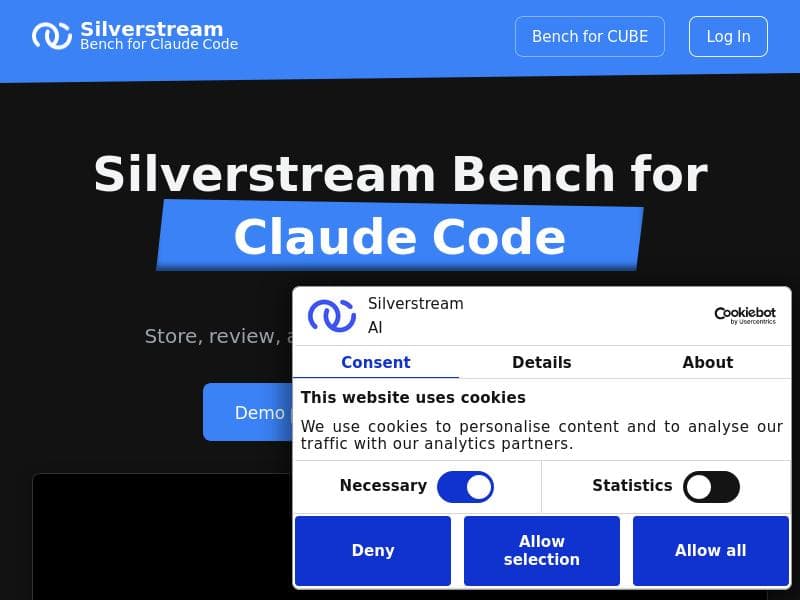
Bench for Claude Code revolutionizes AI development by automatically capturing and storing every coding session, enabling developers to effortlessly track changes, spot issues, and share full context through a single link. Ideal for AI teams seeking seamless collaboration and transparency, it integrates directly into PRs and supports Mac and Linux setups with a free, unlimited plan.

Description
Claude Code just opened a PR. But do you really know what it did? By using Bench you can automatically store every session and easily find out what happened. Spot issues at a glance, dig into every tool call and file change, and share the full context with others through a single link: no further context needed. When things go right, embed the history in your PRs. When things go wrong, send the link to a colleague to ask for help. Free, no limits. One prompt to set up on Mac and Linux.
Detailed Description
Bench for Claude Code is an innovative tool designed to provide comprehensive visibility and traceability into AI code development sessions, particularly those involving Claude Code's pull requests (PRs). Its core purpose is to automatically capture and store every interaction within a coding session, allowing developers and teams to easily understand what changes were made, how they were implemented, and the context behind each modification. This level of transparency is crucial in collaborative AI development environments where understanding the evolution of code and model adjustments can significantly impact debugging, review processes, and overall project success. At its heart, Bench for Claude Code offers a seamless way to track every tool call, file change, and session detail. Users can quickly spot issues at a glance through an intuitive interface that highlights discrepancies or unexpected behaviors. The tool’s ability to embed the entire session history directly into PRs means that reviewers have immediate access to the full context without needing to request additional information. This reduces friction in code reviews and accelerates the feedback loop. When problems arise, sharing a single link with colleagues enables efficient collaboration and troubleshooting, eliminating the need for lengthy explanations or fragmented communication. Key features of Bench for Claude Code include advanced AI model development support, which facilitates the iterative process of building and refining AI models. It also offers deployment and management capabilities, helping teams transition smoothly from development to production environments. Integration with data science workflows ensures that Bench fits naturally into existing pipelines, supporting data preprocessing, model training, evaluation, and deployment phases. The tool is designed for ease of setup, requiring only one prompt on Mac and Linux systems, making it accessible for developers without complex installation procedures. Bench for Claude Code is best suited for AI developers, data scientists, and machine learning engineers who frequently collaborate on AI projects and need clear, persistent records of their development sessions. It is particularly valuable in environments where multiple contributors work on the same codebase, as it provides a centralized source of truth for changes and decisions. Use cases include debugging complex AI models, conducting thorough code reviews, onboarding new team members by sharing detailed session histories, and maintaining compliance and audit trails in regulated industries. The pricing model for Bench for Claude Code is freemium, offering free access with no limits, which is highly attractive for individual developers and small teams looking to enhance their workflow without upfront costs. This approach encourages widespread adoption and allows users to experience the full benefits of the tool before considering any potential premium features or enterprise-level offerings that may be introduced later. Compared to alternatives, Bench for Claude Code stands out by focusing specifically on the transparency and traceability of AI code sessions rather than just version control or generic code review tools. Its ability to capture every session detail and integrate that history directly into PRs provides a unique advantage in understanding AI model development nuances. While traditional tools may require manual documentation or separate communication channels, Bench consolidates all relevant information into a single, shareable link. One notable consideration is that Bench for Claude Code currently supports setup on Mac and Linux, which may limit accessibility for Windows users until further platform support is added. Additionally, while the tool excels in session tracking and collaboration, organizations with highly specialized or proprietary workflows might need to evaluate integration compatibility. Overall, Bench for Claude Code offers a powerful, user-friendly solution for enhancing transparency and collaboration in AI development projects, making it an essential tool for teams aiming to streamline their coding and review processes.
Tool Features
- Advanced AI model development
- Deployment and management of AI models
- Integration with data science workflows
Description
Bench for Claude Code revolutionizes AI development by automatically capturing and storing every coding session, enabling developers to effortlessly track changes, spot issues, and share full context through a single link. Ideal for AI teams seeking seamless collaboration and transparency, it integrates directly into PRs and supports Mac and Linux setups with a free, unlimited plan.
Claude Code just opened a PR. But do you really know what it did? By using Bench you can automatically store every session and easily find out what happened. Spot issues at a glance, dig into every tool call and file change, and share the full context with others through a single link: no further context needed. When things go right, embed the history in your PRs. When things go wrong, send the link to a colleague to ask for help. Free, no limits. One prompt to set up on Mac and Linux.
Detailed Description
Bench for Claude Code is an innovative tool designed to provide comprehensive visibility and traceability into AI code development sessions, particularly those involving Claude Code's pull requests (PRs). Its core purpose is to automatically capture and store every interaction within a coding session, allowing developers and teams to easily understand what changes were made, how they were implemented, and the context behind each modification. This level of transparency is crucial in collaborative AI development environments where understanding the evolution of code and model adjustments can significantly impact debugging, review processes, and overall project success. At its heart, Bench for Claude Code offers a seamless way to track every tool call, file change, and session detail. Users can quickly spot issues at a glance through an intuitive interface that highlights discrepancies or unexpected behaviors. The tool’s ability to embed the entire session history directly into PRs means that reviewers have immediate access to the full context without needing to request additional information. This reduces friction in code reviews and accelerates the feedback loop. When problems arise, sharing a single link with colleagues enables efficient collaboration and troubleshooting, eliminating the need for lengthy explanations or fragmented communication. Key features of Bench for Claude Code include advanced AI model development support, which facilitates the iterative process of building and refining AI models. It also offers deployment and management capabilities, helping teams transition smoothly from development to production environments. Integration with data science workflows ensures that Bench fits naturally into existing pipelines, supporting data preprocessing, model training, evaluation, and deployment phases. The tool is designed for ease of setup, requiring only one prompt on Mac and Linux systems, making it accessible for developers without complex installation procedures. Bench for Claude Code is best suited for AI developers, data scientists, and machine learning engineers who frequently collaborate on AI projects and need clear, persistent records of their development sessions. It is particularly valuable in environments where multiple contributors work on the same codebase, as it provides a centralized source of truth for changes and decisions. Use cases include debugging complex AI models, conducting thorough code reviews, onboarding new team members by sharing detailed session histories, and maintaining compliance and audit trails in regulated industries. The pricing model for Bench for Claude Code is freemium, offering free access with no limits, which is highly attractive for individual developers and small teams looking to enhance their workflow without upfront costs. This approach encourages widespread adoption and allows users to experience the full benefits of the tool before considering any potential premium features or enterprise-level offerings that may be introduced later. Compared to alternatives, Bench for Claude Code stands out by focusing specifically on the transparency and traceability of AI code sessions rather than just version control or generic code review tools. Its ability to capture every session detail and integrate that history directly into PRs provides a unique advantage in understanding AI model development nuances. While traditional tools may require manual documentation or separate communication channels, Bench consolidates all relevant information into a single, shareable link. One notable consideration is that Bench for Claude Code currently supports setup on Mac and Linux, which may limit accessibility for Windows users until further platform support is added. Additionally, while the tool excels in session tracking and collaboration, organizations with highly specialized or proprietary workflows might need to evaluate integration compatibility. Overall, Bench for Claude Code offers a powerful, user-friendly solution for enhancing transparency and collaboration in AI development projects, making it an essential tool for teams aiming to streamline their coding and review processes.
Frequently Asked Questions
What is Bench for Claude Code?
Bench for Claude Code is a tool that automatically records and stores every coding session involving Claude Code, allowing developers to easily track changes, review tool calls and file modifications, and share the full context of their work through a single link.
How much does Bench for Claude Code cost?
Bench for Claude Code offers a freemium pricing model, providing free access with no limits, making it accessible for individual developers and teams without any upfront cost.
Who is Bench for Claude Code best for?
It is best suited for AI developers, data scientists, and machine learning engineers who collaborate on AI projects and require detailed session tracking, transparent code reviews, and efficient troubleshooting.
What are the main features of Bench for Claude Code?
Key features include automatic session storage, detailed tracking of tool calls and file changes, embedding session histories into pull requests, advanced AI model development support, deployment and management of AI models, and integration with data science workflows.
Does Bench for Claude Code offer a free trial?
Yes, Bench for Claude Code is free to use with no limits, effectively serving as a free trial with full access to its features.
What integrations does Bench for Claude Code support?
Bench integrates with data science workflows and supports embedding session histories directly into pull requests, facilitating smooth collaboration within existing AI development pipelines.
How does Bench for Claude Code work?
Bench automatically captures every coding session involving Claude Code, storing all tool calls and file changes. Users can then review this detailed history, embed it in PRs, or share it via a single link to provide full context for collaboration and troubleshooting.
Socials
Use ToolReviews
No reviews yet. Be the first to share your experience.
Sponsored Tools





































Recommended Tools
Stay updated on latest Ai tools
Get the latest insights, Join our newsletter
Read and trusted by 50,000+ readers
Join the biggest AI Community
Our community and staff are here to help!
Your feedback will help Alice AI improve in future versions.








Submit your Tool


PoweredByAI.app is an AI Tools Directory helping individuals, businesses, and creators discover the best AI tools for writing, coding, design, productivity, and more.
© 2026 , Product of011BQ. All rights reserved.