🚀 Zaprep: Tus redes sociales al máximo. Empezar gratis — automatiza 1,000 DMs/mes y convierte el engagement en leads. con 1,000 DMs automatizados/mes.
Enviar tu herramienta
Últimas Noticias de IA
Trump’s latest AI czar has already resigned
Chris Fall, the director of the Center for AI Standards and Innovation (CAISI), has resigned, the agencyconfirmedto multiple news outlets. He was appointed just three months ago after the last appointee, Collin Burns, left in less than a week, TheWashington Post reportedat the time. Burns was reportedly “pushed out” of the job in April because he previously worked for Anthropic and the Trump administration had been battling with the company, sources told the Post. No reason was given for Fall’s departure. Prior to leading CAISI, Fall was the director of the Department of Energy’s Office of Science during the first Trump administration and had been the acting director of the DOE’s Advanced Research Projects Agency-Energy. He worked in the DOE’s Office of Naval Research (ONR) prior to that. Before Burns and Fall, the agency was led by venture capitalist David Sacks, whose title at the time was White House AI and crypto czar. Sacks stepped down in March. CAISI, which operates under the National Institute of Standards and Technology, is the primary organization for developing technical standards and testing methods for AI models as well as assessing cybersecurity risks. Yet it was not the agency at the center of the most recent model-risk brouhaha. That occurred in June when the U.S. Commerce Department invoked an obscure export control directive that effectively forced Anthropic to pull its Mythos and Fable models from the market. The ban waslifted by the end of the month, when Secretary of Commerce Howard Lutnick said he was satisfied with Anthropic’s safety plans. Earlier this month, the White House alsosigned an executive orderfor a new AI safety oversight program called “Gold Eagle” that creates a clearinghouse for cybersecurity vulnerability coordination. A host of federal organizations were named as part of the program, including the Commerce Department and Department of Homeland Security. But, as CNBC pointed out, CAISI was not among the federal organizations mentioned. Meanwhile, after Anthropic’s models were freed from the ban, Google DeepMind CEO Demis Hassabis began calling for the creation of anindependent, industry-run standards bodyto regulate frontier AI modeled after FINRA — the same sort of mission that CAISI was formed to tackle. Fall’s resignation also follows this weekend’s handwringing overChinese AI lab Moonshot’snew version of its open model Kimi, which performed competitively against flagship frontier models. The administration was weighing efforts to somehow ban Chinese open models,Axios reported. This sparked immediate debate and outrage over the weekend,including from Sacks, who argued that regulations shouldn’t be used as a protectionism strategy for U.S. proprietary AI labs. While CAISI has released a few reports on the capabilities of Chinese open-weight models Z.ai’s GLM-5.2 and DeepSeek V4 Pro, it hasn’t talked much about its processes for testing. (Open weight means these models can be publicly downloaded and run locally, but its training code and datasets are not available). Since July 9, TechCrunch has sent multiple inquiries to both the DoC and NIST about how its LLM evaluations work and has not received a response.
View

YouTube clarifies policies around AI slop and upsetting videos
A recentchangesees YouTube further cracking down on AI slop by clarifying its policies around how content on its platform can be monetized. To discourage creators from using AI and other tools to make low-quality content, YouTube’s policy now explains that there are three types of videos under the broader category of “inauthentic content” that cannot be monetized. YouTube already had policies around AI content. Last year,the company announcedit was stemming creators’ ability to generate revenue from what it called “inauthentic content,” including mass-produced videos and other types of repetitive content that have become easier to generate with the help of AI technology. Rather, the recent update is about adding more nuance to the existing policies. The updated guidelines break down inauthentic content into three categories, including generic, repetitive, or template-based content, followed by off-putting or distressing content, and then any content where AI personas are used to discuss sensitive topics, like health and finance. While AI slop, much like adult content, is something of a “you’ll know it when you see it” situation for many, YouTube’s policies are meant to more specifically spell out when AI’s use in content creation is allowed or is not permitted for videos being monetized through its YouTube Partner Program (YPP). The program, which allows creators to earn money through advertising and subscriptions, is YouTube’s lifeblood; allowing it to fill up with AI slop or other low-quality fare would not be in the company’s financial interests. This is especially important given that YouTube is inclose competition with TVand other streamers for TV ad dollars. Google’s video platform now generatesmore ad revenue than rival streamersand hasovertaken Netflix in average daily views worldwide. As YouTube’s trust and safety chief Matt Halprin explained in aCreator Insider videolast week, the company’s goal with its policy revision is to cut down on content farming efforts — a reference to low-quality videos that exist solely to generate revenue. “AI can actually allow people to make a lot of videos,” said Halprin. “Sometimes those videos are great, and it really enhances creativity. And you can create a higher volume of high-quality content that we want to encourage and have in YPP.” “But that exact same new tool can allow you to make lots of videos really quickly that are very similar. They’re very generic and don’t really have a narrative arc and don’t really show your creativity. So the same technology really enables great stuff, but it also enables stuff that’s kind of content farming, and that’s the stuff that we don’t want to have in YPP,” Halprin added. The first category, he said, includes repetitive content, such as material that can be easily made with AI, computer-generated imagery (CGI), or templates, with little variation from video to video. This fills a channel with cookie-cutter videos. Halprin notes that tutorial videos could also fall under this policy if they’re reproducing content that’s already prevalent on the platform, instead of being original. The second category focuses on what YouTube calls “off-putting” content, or content designed to be distressing or emotionally manipulative to chase views. This could include videos featuring an animal in distress, which someone then comes along and rescues, Halprin said. “We’ve heard from our viewers that that’s not something that they like. They find it off-putting. They don’t want to come back to that channel, or maybe even the platform,” Halprin said. Channels dedicated to this content will be removed from YPP, regardless of whether the content is AI-generated or not. The third bucket more directly targets the use of AI personas — representations of real people made with AI. YouTube says it doesn’t want to incentivize creators using AI personas to discuss more sensitive topics, like finance, legal issues, healthcare, and medical issues. Any YouTube channel that has too much of any of these three types of content will not be able to monetize, Halprin said. The policy clarifications were rolled out on July 16 and impact all YouTube Partner Program members.
View
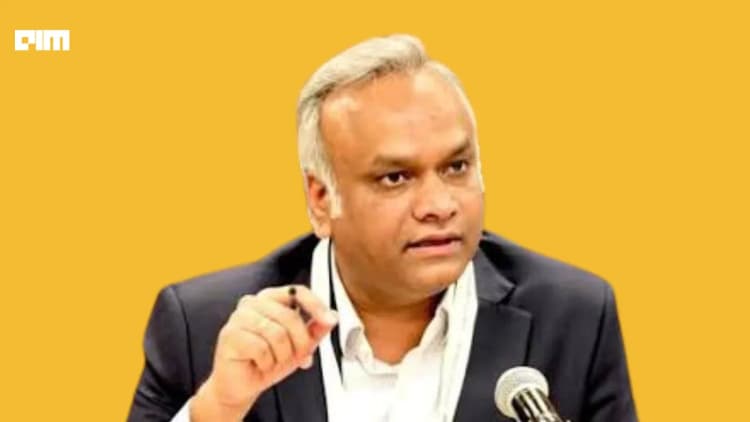
Karnataka Approves ₹12 Crore AI Centre of Excellence at IIIT Raichur
The centre will focus on developing practical AI applications across sectors including agriculture, healthcare, education, MSMEs, and governance.
View
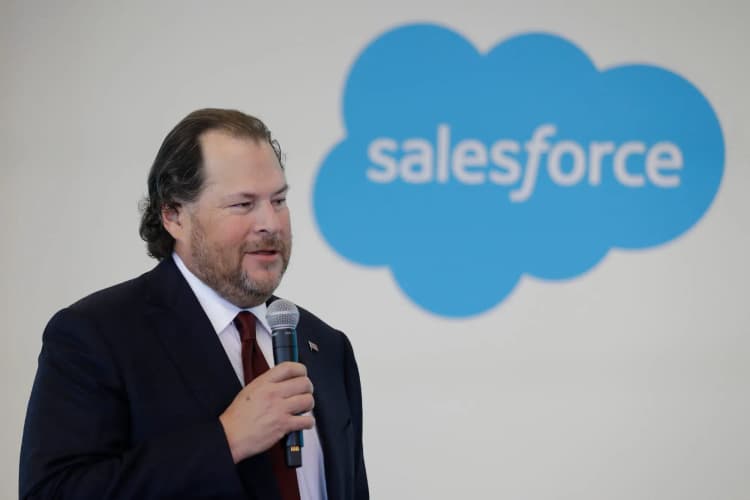
Salesforce Launches SMB Growth Kit for Indian Businesses
The company said businesses adopting the package can go live within four to six weeks through structured onboarding and implementation support.
View

Meet the AI Startup Behind India’s Got Latent Viral Song ‘Chai Ki Tapri’
The startup is betting that AI’s future lies beyond song generation, with agents designed to help creators produce, distribute and monetise music.
View
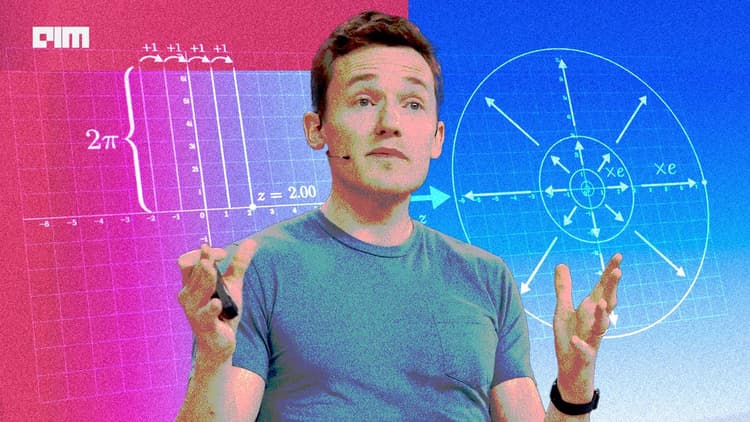
Now That AI Has All the Answers, 3Blue1Brown’s Grant Sanderson Says Humans Must Ask Better Questions
The creator of 3Blue1Brown argues that curiosity, not information, may be the most valuable skill in the age of AI.
View
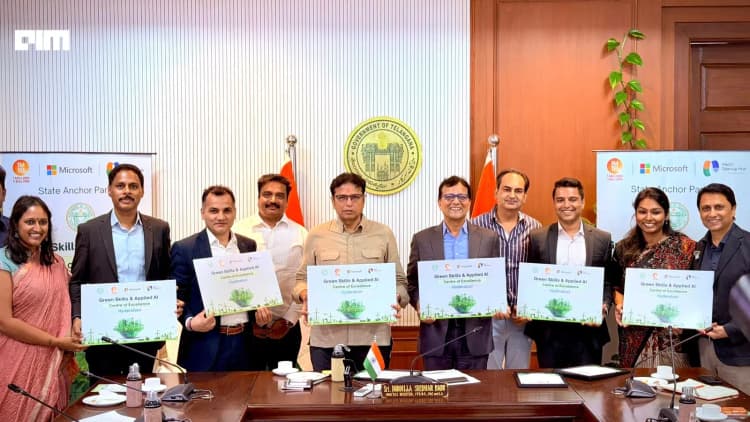
Telangana Partners With Microsoft to Launch India’s First Green Skills & Applied AI Centre for Green Pharma
The centre of excellence will include dedicated learning zones focused on Applied AI.
View

HCLTech Launches Global Technology Centre in GIFT City, Signs AI Research Pacts with IIT Gandhinagar & GTU
The facility will deliver AI-powered solutions for HCLTech’s global financial services clients.
View
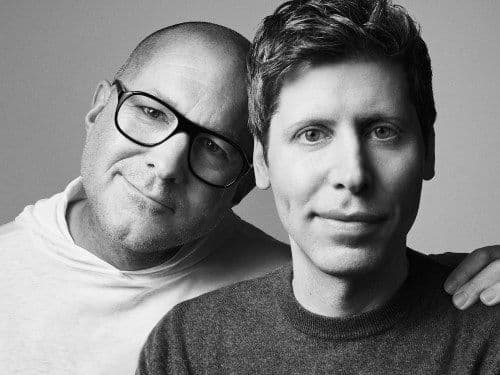
Can an Apple lawsuit derail OpenAI’s hardware plans?
Apple recentlyfiled a trade secrets lawsuit against OpenAI, accusing the AI company of a pattern of misconduct aimed at getting current and former Apple employees to share confidential information. (In response,OpenAI saidit is “not aware of any evidence that this complaint has merit.”) On the latest episode ofTechCrunch’s Equity podcast, Kirsten Korosec, Sean O’Kane, and I debated whether this lawsuit will cast a shadow over OpenAI’s much-discussed plans to get into the hardware business (starting witha mobile smart speaker) andgo public. “Even setting aside whether or not the court grants any kind of injunctive relief or any kind of restraining order over what OpenAI is doing, it just naturally can lead to that sort of situation where it’s going to cause some delays in what OpenAI is working on,” Sean suggested. “Which I’m sure was probably part of the reasoning behind Apple doing this. They don’t do this stuff willy nilly.” With all those plans on the line, will OpenAI try to settle this as quickly as possible, or did it learn fromits recent courtroom victory against Elon Muskthat it can endure the cost and embarrassment of a trial? Kirsten, at least, predicts the latter. Keep reading for a preview of our conversation, edited for length and clarity. Kirsten Korosec:Sean, how do you feel about Sam Altman listening to you with a little device maybe in your pocket? Sean O’Kane:I’m good. Maybe that’s predictable, but I’m good. No thanks. We’ll get into it, I’m sure, but this is allegedly the first product that OpenAI has been working on in its hardware division with Jony Ive and company. They’ve been really coy ever sincethat weird video they put out last yearof them sitting at that coffee shop or bar in San Francisco and sort of talking very vaguely about hardware and legacy devices, meaning laptops and phones. And so if this is the direction they’re headed in, all power to people who want to have somebody like that always listening to them. This is not going to be for me. Anthony Ha:Part of what we have to remember about those kinds of devices is also that, depending on how mobile it is, it’s not just listening to you, it’s listening to the people around you. I might be fine with it — I’m not fine with it, but let’s say I was — but then if we met up in-person at Disrupt, then suddenly it might be listening to all of us. There’s all kinds of social norms that are going to have to be renegotiated if these things become widespread. I think we should make fun of and criticize people who record other people without consent. Kirsten:Well, I bring up the device that has been speculated about for a really long time, and we’ll see what it really ends up being once it’s officially introduced, but it’s important in the context of this lawsuit that Apple filed last Friday. It was the biggest news of the week, certainly, and this is a trade secret lawsuit. It has some pretty wild allegations and we should very much emphasize these are allegations that have been filed in a complaint by Apple. But what it is accusing OpenAI of is a pattern of misconduct at the highest levels, specifically directed towards OpenAI employees who used to work at Apple. And in fact they’ve named the chief hardware officer Tang Tan in this lawsuit. This is all important because Apple is accusing OpenAI of essentially stealing their trade secrets, but in the context of that, this could be then used for a competing hardware product. I’m wondering if maybe we don’t get into whether this lawsuit has merits, because we haven’t gone through full discovery, but what are your initial impressions of the lawsuit aside from the fact that wow, this is going to be entertaining? Sean:Two things. One, this is a pretty big risk potentially to whatever it is OpenAI is working on. Even setting aside whether or not the court grants any kind of injunctive relief or any kind of restraining order over what OpenAI is doing, it just naturally can lead to that sort of situation where it’s going to cause some delays in what OpenAI is working on, which I’m sure was probably part of the reasoning behind Apple doing this. They don’t do this stuff willy nilly. The other is that we think that OpenAI is — we know that they’ve filed confidentially for an IPO. We think it might happen as early as the end of this year, or early next year, if you believe Sam Altman’s cautious language around the IPO. And this just raises a whole bunch of questions around that because, on the one hand, we think their business right now is probably overwhelmingly the software; they’re not really factoring in any hardware business into that picture at the moment. They’re about to go to the markets and they’re going to be pitching bankers and investors on where they think their addressable market should be, and if they have a big amount of that pegged to a potential hardware division and hardware products, this could be a huge risk to that and changes a lot of the calculus of sort of how the IPO gets priced. So that’s where my head’s at. Anthony:One [allegation] that I assume that Apple must have pretty solid like numbers on is, they said more than 400 Apple employees now work at OpenAI. Granted, both of them are very large companies with many thousands or tens of thousands of employees. So as a percentage, it’s not necessarily huge. But that seems like a lot of people and a pretty serious talent drain. And the other thing I’m wondering is related to Sean’s point. With the context of the potential IPO, how much damage did OpenAI ultimately take from a marketing and brand perspective from the trial it already went through? That it seemed to basically win, but there was a lot of not-terrible-but-kind-of-embarrassing dirty laundry that came out in the testimony. To what extent are they just like, “We do not want to go through that again”? Or did they take the lesson of, “Hey, we went through it and we survived and we’ll be okay if we have to do another trial with Apple”? Kirsten:I fully predict the latter, by the way.
View
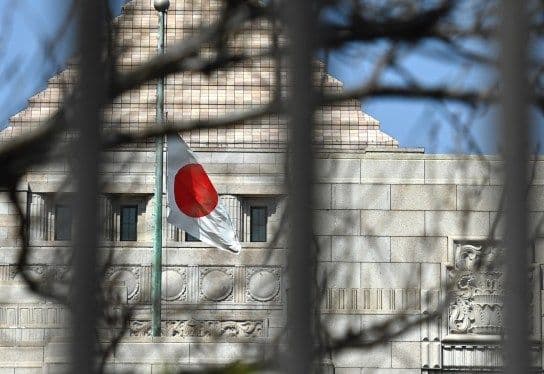
What to watch for after Jensen Huang’s Japan visit
Nvidia’s chief Jensen Huang spent two days — July 15 and 16 — in Tokyo, courting Japan’s industrial and chip-supply elite, weeks after a keynote inTaiwan,andmonths after a visit toSouth Korea. He left with deals spanning Japan’s entire tech ecosystem: a national AI factory, partnerships with the country’s leading robotics companies, and agreements with the chip-material suppliers powering Nvidia’s next generation of AI chips. His message was clear. Nvidia is targeting Japan’s factory floor, and many of the country’s biggest manufacturers are joining in. AI’s next chapter, Huang said, belongs to factory floors, robots, and machines, and he wants Japan to build it. Thirty years ago, a$5 million Sega investmenthelped keep a near-bankrupt Nvidia afloat; today, Nvidia and Japan’s industrial giants need each other again — this time to build the physical-AI era, starting with these three projects: Noetra—Japan’s sovereign-AI play.The country doesn’t want to run its factories and robots on American or Chinese AI. So, the government pulled together roughly 44 domestic firms, with SoftBank, Sony, NEC and Honda at the core, to build its own AI for robots, vehicles and factory floors. Tokyo is committing up to1 trillion yen ($6.2 billion) over five years, a bet on homegrown “physical AI”, foundation models built to run machines. Japan wants to own the software brain. The hardware to build it, though, still comes from Nvidia. The U.S chip giant is building “a Vera Rubin AI factory”, a massive data center packed with its next-generation chips, expected to launch in 2028,with 13,750 Vera CPUs and 27,500 Rubin GPUs, delivering 140 megawatts. Noetra will oversee the effort, with plans to build the data center. Noetra’splan runs in three stages: a reasoning model heavy on Japanese-language skills starting in fiscal 2026; an omni-modal version handling text, images, video, and audio by 2028; and “Real-world Native AI” built to run robots by 2030, released to outside Noetra developers in phases. The robotics coalition — Japan’s industrial giants line up behind Cosmos.Nvidia is targeting Japan’s factory floor, and many of thecountry’s top roboticsand manufacturing players are signing on. Fanuc, Yaskawa, Kawasaki Heavy, Fujitsu, Hitachi, NEC, Sony, SoftBank, Kubota and robotics group AIRoA say they plan to build on Nvidia’s Cosmos models, an open-model effort Nvidia started inMaywith a handful of global AI labs. In Tokyo, Nvidia gave them a reason to commit, unveilingCosmos 3 Edge, a version of the model that runs on its Jetson Thor chips inside the machines themselves. Some are already testing a shared control system; others, like Honda R&D and Omron, are building on the tools now. “The next frontier of AI is in the physical world, and this is a once-in-a-generation opportunity for Japan,” Huangsaidin the company’s statement. “Japan invented modern manufacturing. Now, it has the opportunity to reinvent it for the age of intelligent industries.” Toyota — cars and physical AI.Toyota uses Nvidia chips across much of its stack. It committed its next-generation vehicles to Nvidia’sDrive platformatCES in January 2025; the newer work extends Nvidia into its manufacturing, where simulations are used to design production lines, into the software that runs its vehicles, and into systems that read road traffic. Toyota’s cars will run advanced driver assistance, which steers and brakes but still requires a driver, a more conservative approach than Waymo and Tesla, which are developing systems that rely less on a human driver. Huang’s visit put physical AI at the center of Japan’s industrial strategy, and Tokyo is spending to back it.Facing a shrinking workforce,Japan wants10 million AI-equipped robotsacross 18 sectors by 2040,backed by $65 billion in public and private physical-AI investment. The longer game is bigger. Japan’s AI Robotics Strategy, released in March, aims to capturemore than 30%of the global AI robotics market by 2040, a market Tokyo values at roughly ¥20 trillion, or about $133 billion. METI is funding a domestic foundation model to run the machines, and Noetra’s Nvidia-powered factory is where models of that scale, into the trillions of parameters, would be trained. The wager is that Japan’s factory-floor data and manufacturing base can do for physical AI Underneath the industrial case is a sovereign one. As the U.S. and China pull ahead in large-scale AI, Tokyo wants its own data, its own compute, and less dependence on infrastructure it doesn’t control. Huang appeared on July 16 alongside trade minister Ryosei Akazawa at the government’s physical-AI launch, withPrime Minister Sanae Takaichijoining by video. The Takaichi administration has made AI and semiconductors the centerpiece of a growth plan chasing¥370 trillion ($2.3 trillion) in public and private investment by 2040. Noetra’s factory — which Nvidia bills as“the world’s first national AI infrastructure”— is the clearest bet yet. Japan’s push for independence, at least for now, rests on American chips.ndence runs on American silicon. In two days, Huang sat across from nearly every name that matters in Japanese tech — the CEOs of Toyota, Fanuc, Yaskawa, Fujitsu and Kawasaki over lunch, and dozens of supply-chain chiefs over skewers and whisky in a Kanda izakaya. It’s the same playbook he ran weeks earlier — a homecoming keynote in Taiwan,fried chicken, and a50,000-GPU deal in Seoul last fall.This time, it was Tokyo’s turn, with the robots, the supply chain, and the chips underneath.
View
Nonprofit Current AI is racing to build the World Wide Web of AI, free for all
A farmer in rural India takes a photo of a dying plant. She wants to research it on the internet but she doesn’t speak English. She shouldn’t have to. That’s the type of problem a nonprofit calledCurrent AIis trying to solve by building open, public AI infrastructure. In February at the India AI Summit, it teamed up withBhashini, the Indian government’s AI language division. The result became Suno Sutra, Hindi for “listening chronicles,” a pocket-sized, offline device that runs AI in 22 Indian languages, no internet required. “In India, there are hundreds of different languages and dialects, and right now AI is not representing them,” Current AI CEO Ayah Bdeir said in an interview with TechCrunch. The device is open-sourced, available for developer communities to build on. The nonprofit, founded inFebruary 2025by Martin Tisne, is moving fast. Last month, it allocated $3.2 million in grants to projects across four organizations; most recently (last week) it launched an open-source AI chatbot at theAI for Good Summit in Geneva. Bdeir, joined in January after leading Mozilla’s AI strategy. She previously founded littleBits, the STEM education company that reached millions of kids before selling toSphero in 2019. Current AI operates as a “public-private partnership” bringing together governments, companies, and philanthropies to fund public interest tech, she told TechCrunch. The French government seeded Current AI with $100 million, joined by the Ford Foundation, MacArthur Foundation, DeepMind, and Salesforce — bringing total committed funding to $400 million. “They’re not investors; they’re funders,” Bdeir said. The problem it aims to solve is straightforward: every major AI system today, from OpenAI to Google to Anthropic, belongs to a private company. “If AI is truly a transformative technology, if it’s going to change every aspect of everyone’s life, there has to be a public alternative,” Bdeir said. “Like the World Wide Web, available to anyone, for free.” Half the world’s spoken languages faceextinction. “And with English driving the largest language models and AI systems, a bulk of the world’s languages and, consequently, cultures and communities are left behind,” Bdeir said. When asked about Big Tech’s multilingual push, Bdeir drew a sharp distinction. “Big tech builds multilingual models to expand their market,” she said, “regardless of consent or context.” The consequences are concrete. “For Indigenous languages, missionary Bible translations become training data before communities have set any rules,” she said. An AI’s ability to speak a language is only part of what it needs to learn. “Language is how knowledge, tradition, memory and identity get carried from one generation to the next. So when a technology can’t speak your language, it can’t hold your culture either,” she said. Her vision for Current AI is an open system modeled on the early web, where improvements benefit everyone, no one gets locked out, and communities keep control of their own data. Current’s first cohort grant round, announced last month, involved deploying $3.2 million to four organizations across Kenya, Lebanon, and the Brazilian Amazon. The project in Masakhane, Kenya, involves building AI datasets across more than 50 African languages for health, farming, and education; Lebanon’s Institute for Worldmaking is digitizing Arab cultural history and contemporary practice into machine-readable databases that communities (not tech companies) control. Brazil’s Portal sem Porteiras is building offline AI tools with Indigenous Amazon communities, keeping data within the territory. And Kenya’s African Internet Rights Alliance is developing audit tools to hold AI systems accountable across the continent. On the question of data ownership, Bdeir didn’t mince words. “There are different models and proposals for who owns data in various communities, but one thing is sure: it shouldn’t be a company in Silicon Valley trying to make a select few thousand people wealthier,” she told TechCrunch. The nonprofit’s approach is to store models and data locally, bringing in community experts before anything is built, or writing consent protocols into the pipeline so communities can halt the process at any point. None of Current AI’s grantees have fully solved it yet. But Bdeir sees that as the point. “Every one of them has built the question into their work,” she said, “rather than accepting the usual default, where complexity becomes the excuse to let a government or a tech company decide for everyone.” As for how much progress can be made with a $3.2 million budget split across four organizations, Bdeir says, “Scale is not always the measure. That is the Big Tech paradigm,” she said. “This could look like an Indigenous elder in the Brazilian Amazon using a tool built in Kenya to be able to pass down ecological knowledge in their own language.” Earlier this month in Geneva, Current launchedAlpha Chat, anopen-source chatbotassembled in seven weeks by a coalition of ten organizations, including Hugging Face, Mozilla, and MIT Media Lab. Each contributor brought a piece of the stack, including a language model, safety tooling, and computing power. Current AI alsostruck a deal with Sakana AI, a Tokyo-based startup known for its work on what it calls Sovereign AI. The two organizations plan to build a shared open-source AI stack, one designed to support the Japanese language and culture, but also communities across the Global South that dominant AI systems have largely ignored.
View
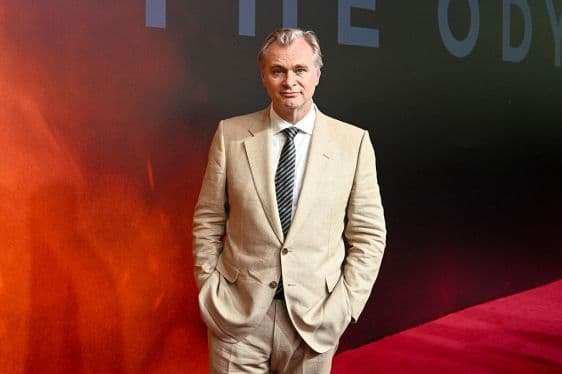
‘Odyssey’ director Christopher Nolan calls AI an obvious ‘Trojan horse’
Christopher Nolan, the Oscar-winning director whose new version of “The Odyssey” is currentlyconquering the box office, said it’s been “pretty encouraging” to see deep skepticism of AI,especially from young people. Nolan wasresponding to a question from interviewer Hugo Travers, who publishes on YouTube under the name HugoDécrypte. Travers brought up the legendary Trojan horse, which plays a key role in Nolan’s film — just as the horse was a gift concealing murderous Greek invaders, he wondered if AI might be something “that you welcome in your daily life” but ends up becoming “something else and something darker.” Laughing, Nolan responded, “I think AI is a Trojan horse that everybody knows the Greeks are inside.” He later described the technology as “a transparent horse, it’s made of glass.” “I’ve never seen a technology advancing so rapidly [that’s been] so completely rejected by the public,” he said. “Everybody’s suspicion of it is so extreme, particularly young people. The reaction to AI videos online and people my children’s age immediately calling it ‘AI slop’ and coining that term and just putting it in a box.” In Nolan’s view, this is “a very healthy skepticism, because technology is always going to give us great gifts, as you say, but it has to be viewed with skepticism.” Similarly, he said, “The motives of the people giving it to us also have to be viewed with skepticism. That’s when we’ll get the best out of a new technology, rather than just blind faith that everything’s going to be great.” (Meanwhile, SpaceX CEO Elon Musk has beenangrily posting about the film’s nonwhite and transgender cast members.) Nolan didn’t get more specific about what he views as the threat from AI, but the technology has been a growing source of concern in Hollywood and was a major focus duringthe writers’ and actors’ strikes of 2023. The Directors Guild of America, where Nolan is president,also won some generative AI protectionsin its most recent contract. The director has been famously resistant to other technologies, including smartphones; his embrace of film can make him seem simultaneously like aLudditeand a pioneer, with “The Odyssey” becoming the first feature film to be shot entirely on Imax film and cameras. When The New York Timesrecently asked Nolan if he thinks of himself as a technophobe, he replied, “I think of myself as a techno-skeptic,” and said his love of film comes from the fact that it’s “better in terms of representing the way the eye sees the world than any digital imaging system I’ve seen.” “I embrace new technology all the time, but it tends to be sold to people at the expense of systems that might still be valid and viable,” Nolan said. “That’s what I saw in my industry — throwing the baby out with the bath water. We almost lost film!”
View
Enviar tu herramienta


PoweredByAI.app es un directorio de herramientas de IA que ayuda a personas, empresas y creadores a descubrir las mejores herramientas de IA para escritura, programación, diseño, productividad y más.
© 2026 , Producto de011BQ. Todos los derechos reservados.