🚀 Zaprep: Tus redes sociales al máximo. Empezar gratis — automatiza 1,000 DMs/mes y convierte el engagement en leads. con 1,000 DMs automatizados/mes.
Enviar tu herramienta
Últimas Noticias de IA

Prompt Engineering Used to Be a Job Title. Now It’s Everyone’s Job
Employers are looking less at certificates and more at people who can learn quickly and adapt as technology evolves.
View

Kimi: Threat or menace?
Chinese company Moonshot AI released a new version of its Kimi model this week, generating another wave of discourse about China and open source AI. Moonshot saidthat although Kimi K3 “still trails the most powerful proprietary models, Claude Fable 5 and GPT 5.6 Sol,” the new open source model “demonstrated frontier-level performance across our evaluation suite, consistently outperforming other tested models.” Independent analyses fromArena.aiandVals AIalso suggested that Kimi is competitive with flagship frontier models. The announcement, which coincided witha speech from Chinese president Xi Jinpingat the World AI Conference in Shanghai, seems to have spooked Wall Street, withthe Nasdaq dropping about 1%on Friday as investors sold off stocks in chip companies like Nvidia. Many of the resulting posts from tech industry figures will sound familiar to those who remember the debate after another Chinese company, DeepSeek,released its open source R1 model in January 2025. Except now, everything seems heightened afterthe Trump administration’s tariff war with China, repeated fights overthe national security threat supposedly posed by Anthropic, and asmajor AI companies prepare to finally go public. For example, David Sacks — the Trump administration’s former AI czar and now co-chair of the President’s Council of Advisors on Science and Technology —contrasted Kimi’s progresswith a United States that is “tying itself in knots: politicians and bureaucrats are banning new data centers, piling on state regulations, and pushing for new federal agencies to pre-approve frontier models. This is how you lose the AI race.” (The news also gave him an excuseto take a digat Anthropic, calling Claude an example of “woke lobotomized models.”) And former Uber CEOTravis Kalanick echoed complaintsthat Chinese are “distilling off” (i.e.,being trained on the outputs of) American AI models. “If distillation isn’t enforced against, then everyone should be able to distill from everyone else.. otherwise one arm [would be] tied behind American models’ backs,” Kalanick wrote. (Of course, American models have also been built on top of Chinese ones,specifically Kimi.) Meanwhile, OpenAI’s head of strategic futures Dean Ballsaidthat Kimi is “a very good model” whose performance probably can’t be “explained away by distillation or anything like that,” adding that he’s “personally surprised the Chinese state continues to allow the open sourcing of models this good, given potential risks.” In fact, Ball suggested that “probable outcome of an open-weight-model-dominant world is full AI communism,” where AI is treated as “a ‘public good’ which will ultimately be provided by the state as a kind of ‘digital public infrastructure.’” “This future strikes me as a dystopian hellscape, but I’ve never met an open-weight models advocate who doesn’t ultimately concede this is where things end,” said Ball. He even suggested that the Trump administration (which he used to work for) will eventually realize it needs to “create large amounts of regulatory risk around the use of open-weight Chinese models.” “You don’t need to ‘ban open source’ (one of the dumber motifs of AI policy discussion),” Ball said. “You just need to direct every agency to issue soft law that creates FUD [fear, uncertainty, and doubt]. ‘A Federal Reserve Advisory Bulletin found that there may be backdoors in Chinese AI models.’ It needn’t be that well justified. You just create enough regulatory risk that every regulated enterprise backs off.” However, Shakeel Hashim, editor of the AI-focused publication Transformer, argued thatmuch of the worry is overblown, both because Kimi “likely does not have dangerous cyber capabilities,” and because the Chinese government will face “extremely similar incentives” to restrict open Chinese models once they develop those capabilities.
View

Neil Rimer thinks the AI money is coming back out
In late May, Neil Rimer said something during a sit-down I had with him in Athens that I haven’t been able to shake. At a vibrant newtech festivalin the city, talking about the wealth piling up around AI, he said he has “a strong sense that there will be some sort of a redistribution.” He continued on. “It’ll either be voluntary or it’ll be involuntary, but it’ll happen, and I hope it’s voluntary,” he told me, adding that he thinks tech leaders “can play a leading role in seeing that through.” Coming from most people, that would sound like standard-issue populism. Coming from Rimer, a co-founder of Index Ventures, one of the most successful venture firms of the last three decades, it seemed a striking thing to say in public. Rimer stepped back from day-to-day investing in 2021, and these days spends much of his time in Athens, where his wife is from and where his children treasure their Greek passports. He turned up to our interview in a rumpled button-down and jeans, not the quarter-zips and fine knitwear that mark so many of his peers. Yet Index’s returns in recent years have been exceptional: the firm has raised roughly $15 billion from outside investors since its founding, and last year’s exits including Figma’s IPO and Google’s purchase of the cybersecurity firm Wizreportedly netted Index roughly $9 billion. Rimer has found ways to give back. He sits on the board of Endeavor Greece, which mentors entrepreneurs in emerging markets, and chaired the board of Human Rights Watch from 2019 to 2025. In late 2021, he and his father and two brothers gave $13 million to McGill University to renovate a campus building, now the Rimer Building, and found a new Institute for Indigenous Research and Knowledges. In the meantime, his comment about redistribution comes at an odd moment, to be charitable, for giving. The Giving Pledge, the promise Warren Buffett and Bill Gates launched in 2010 to get billionaires to commit half their fortunes to charity, is becoming increasingly irrelevant. One hundred and thirteen families signed in its first five years, then 72, then 43, then just four in all of 2024, per a New York Timesreport in Marchthat underscored how out-of-fashion philanthropy has become among some of the richest people in tech. (Noted that piece: “Elon Musk, the world’s wealthiest person, has said that his businesses ‘arephilanthropy.’”) The pattern appears to hold beyond the Pledge. Total American charitable giving hit a record $592.5 billion in 2024, but the number of Americans actually giving has fallen forfive straight years, down 4.5% in 2024 alone, according to the Stanford Social Innovation Review. Two-thirds of households donated in 2000; roughly half do now, and Bank of America and Lilly Family School data shows even affluent-household giving has slipped, from 90% in 2017 to81% last year. The pattern shows up in Index’s own portfolio, too, whichincludes Anthropic. Business Insider recently asked a financial planner, Alex Caswell, whether his newly wealthy clients, many of them Anthropic employees tied to effective altruism, were pledging to give away the bulk of their fortunes. Anthropic matches employee donations of up to 25% of their equity to charity, and some of Caswell’s clients have used it, he told BI, but most weren’t building philanthropy into their plans at all; they were focused on angel investing or starting their own companies. “That’s what I’m seeing more than the desire to become philanthropic,”he told the outlet. Unsurprisingly, the absence of voluntary giving is now running up against attempts to legislate the outcome instead. California voters will decide this year on a 5% one-time wealth tax that targets the state’s billionaires. Some, including Google founders Sergey Brin and Larry Page, have already moved their primary residences toSouth Floridato be on the safe side. OpenAI is reportedly consideringgoing public in 2027, and cynically, one reasonamong othersmay be that the tax, if passed, will calculate net worth based on an individual’s worldwide assets as of the end of this calendar year. As unsurprisingly, there is plenty of opposition to any kind of wealth-redistribution measure of this scale, including by Governor Gavin Newsom, and including byeconomistswho point out that many industrialized countries have repealed similar wealth taxes since 1990 after watching their wealthy residents skedaddle. Other options on the table are as controversial. OpenAI has reportedly discussed handing the federal government a5% equity stake, an idea CEO Sam Altman has framed as sharing AI’s upside with the public, but critics see it instead as a way to buy political cover in Washington. In either case, Silicon Valley has never been eager to put Uncle Sam on the cap table. Joked veteran investor Roelof Botha during aseparate sit-downwith this editor last year: “[Some] of the most dangerous words in the world are: ‘I’m from the government, and I’m here to help.’” It’s worth thinking through how much wealth sits outside these mechanisms. Musk is worth just over $1 trillion, after SpaceX’s IPO last month made him the first person to reach that mark. Forbes counted45 new AI billionairesin its 2026 rankings alone, worth a combined $2.9 trillion, and that’s before either Anthropic or OpenAI has gone public. In that same BI story about Anthropic employees, BI notes that once Anthropic and OpenAI complete their IPOs, their combined employees will hold enough wealth to buy nearly a third of all homes in the San Francisco metro area. Itfeelsunprecedented, but whether it represents an historic extreme is a matter of some debate. The share of wealth held by the top1% of U.S. households hit 31.7%in the third quarter of last year, a record since the Federal Reserve began tracking the data in 1989, and roughly equal to what the other 90% of households outside the top decile held combined. That’s still below the 45% the top 1% commanded at the Gilded Age peak in 1916. But narrow the lens to the tippy top, and the picture flips. Renowned economist Gabriel Zucman calculates that at the height of the Gilded Age, around 1910, America’s four largest fortunes were worth a combined 4% of U.S. GDP. Today, that same sliver of the population — now19 householdsinstead of four — is worth 14%. Rimer’s two paths, voluntary or forced, have precedent from the last time American wealth concentration reached this level. In 1889, at the peak of the first Gilded Age, Andrew Carnegie published an essay arguing that a rich man should treat his fortune as a trust to be distributed for the public good within his own lifetime, calling it a disgrace to die wealthy. That essay, “The Gospel of Wealth,” became the founding document of modern philanthropy and the intellectual ancestor of the Giving Pledge. It didn’t hold off the other path for long, though. By the mid-1930s, Louisiana Senator Huey Long had built a national following behind a program calledShare Our Wealth, demanding steep taxes on the rich to fund a guaranteed income for every American. Worried about losing working-class support to Long, Franklin Roosevelt pushed through what the press called the “soak-the-rich tax,” raising the top marginal income tax rate as high as 79%. It redistributed less than Long wanted, but it remains the clearest example in American history of politically forced redistribution arriving once voluntary giving failed to adequately address the pressure building underneath it. None of this is news to Rimer, who has spent his career in tech. What’s more curious to him is “the moral center of tech companies,” a fascination he traced to being a Stanford undergrad in 1984, when Apple discounted the first Macintosh for students and Steve Jobs and Apple’s other founders were, in his words, “heroes” for building something he felt was genuinely good for the world. What troubles him now, he said, is hearing his own children talk about certain tech companies the way an earlier generation talked about defense contractors or cigarette makers. Critics may note that Rimer — as an investor in Anthropic and other tech companies — is a direct beneficiary of the windfall he says will eventually need to be shared. But he’d rather see his fellow beneficiaries choose to give some of the money back than have it taken from them. There’s an easy way to do this and a hard way, and Rimer is betting on people picking the easy one before history picks it for them.
View

AI-driven memory crunch jolts India’s smartphone market
Months after analystswarnedthat AI-driven demand for memory chips would ripple through consumer electronics, India is providing the strongest evidence yet that the disruption has arrived, with rising handset prices reshaping the smartphone market. The memory chips in question — RAM and storage components — are the same ones tech giants need by the truckload to build AI data centers. Manufacturers like Samsung, SK Hynix, and Micron have been shifting production capacity toward high-bandwidth memory, the specialized chips used in AI accelerators, because they’re much more profitable per wafer than the standard memory used in phones and laptops — leaving less capacity, and driving up costs, for everyday consumer electronics. India, the world’s second-largest smartphone market by shipments after China, saw smartphone shipments fall10% year-over-yearin the April-June quarter, according to market research firm Counterpoint Research, marking the steepest June-quarter decline in six years as higher memory costs pushed up handset prices. The impact has been more pronounced in India than in China, where smartphone shipments fell just 2% in Q2, according to Counterpoint. India has been hit harder because about 60% of its smartphone market is concentrated in the sub-₹20,000 (under $210) segment, where higher memory costs have had the biggest impact on prices, Tarun Pathak, the firm’s vice president of research, told TechCrunch. India has been a prominent market for global smartphone brands for several years. The South Asian nation, home to more than 1.4 billion people and over 700 million smartphone users, has become a bellwether for consumer demand in price-sensitive markets, making shifts in buying patterns closely watched by device makers, chip suppliers, and investors tracking the broader health of the AI supply chain. Pathak told TechCrunch that consumers are unlikely to abandon smartphones altogether. However, many of them are expected to delay upgrades, stretching replacement cycles to around four years from about 3.5 years previously, while premium brands such as Apple and Samsung remain better insulated from the slowdown. The uneven impact is already reshaping competition among smartphone makers. Samsung was the only major smartphone brand to post shipment growth in India in Q2, with volumes rising 2% year-over-year, according to Counterpoint. Apple, by contrast, saw shipments fall 3% — though that dip largely reflected supply constraints and inventory shortages limiting how many iPhones Apple could deliver. Consumers buying higher-end smartphones have proved less sensitive to price increases, with financing making expensive devices more affordable, Prachir Singh, a senior analyst at Counterpoint Research, told TechCrunch. The pain has been most acute at the lower end of the market. Shipments in the sub-₹15,000 (under $150) segment fell 45% from a year earlier, Counterpoint said. Because Chinese brands are heavily exposed to entry- and mid-tier smartphones, their combined market share fell to its lowest level for a second calendar quarter since 2020. The tougher economics are also prompting strategic shifts. This week, Chinese smartphone brand OnePlus said itwould stop launching new productsin Europe and North America, while maintaining its India business, following what it described as a careful assessment. Counterpoint data shared with TechCrunch showed China accounted for 74% of OnePlus’ global smartphone shipments to distributors and retailers in Q1, up from 59% a year earlier, while India’s share fell to 19% from 30%. In other words, OnePlus is retreating to markets where it can still turn a profit and ceding ground elsewhere — a pattern likely to repeat across other budget-focused brands as margins tighten. Indeed, Pathak told TechCrunch that running several sub-brands only makes sense if each one sells enough volume to cover shared costs, and that math stops working once margins get this thin. “Sub-brands normally have overlaps and shared resources, and you need a minimum base to justify the cut-throat margins. Profitability is the key to deciding market operations,” he said. That pressure on brands is trickling straight down to the people buying their phones. Kiranjeet Kaur, associate research director for mobile phones research at IDC, said the Indian smartphone market is shifting from volume-led growth to value growth — meaning fewer phones are being sold overall, but each one generates more revenue — as higher component costs make lower-priced smartphones increasingly uneconomical. The higher component costs are already filtering through to consumers. Smartphone prices in India have risen by between 4% and 68%, depending on the model, Pathak said, and as prices rise, consumers are either moving to higher-priced devices, delaying upgrades, or turning to the secondhand market. Financing has meanwhile become “central to affordability,” Kaur told TechCrunch. She added that brands and retailers were also building inventory ahead of the festive season to lock in lower costs before further increases in component prices. IDC also expects India’s smartphone shipments to decline by double digits in Q2, a steeper fall than the 4.1% decline in the first quarter and the 5.3% drop in the previous quarter, Kaur said. However, she noted the firm’s estimates were not yet finalized. Kaur told TechCrunch that memory shortages and elevated smartphone prices were likely to persist until at least the end of 2027, although the pace of price increases should moderate as consumers gradually adjust to higher prices becoming the new normal. “For Indian consumers, it is a double whammy as the weaker currency makes imports costlier, which has added to margin pressures for the market players, and they are passing on the cost to the consumer,” Kaur said.
View
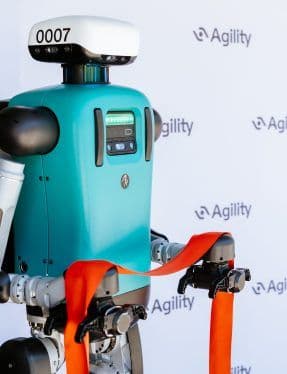
Agility Robotics plants its flag in Tesla’s backyard
Agility Robotics is opening a 60,000-square-foot facility to train its humanoid robots in Fremont, California, just up the highway from the factory where Tesla is expected to start manufacturing its Optimus robots this year. Tesla has increasingly bet on Optimus. Elon Musk recently said he expects it to be “the biggest product ever” once it’s “useful outside of Tesla sometime next year.” While Agility doesn’t have Tesla’s capital, it does have a robot, Digit, that is already useful in the real world. The robot is already generating revenue, carrying totes and bins in manufacturing and warehouse settings for customers like Amazon, GXO, Schaeffler, andToyota Motor Manufacturing Canada. The company says it has secured $300 million in contract orders for its robots. “It’s great to have [Tesla] in the same area as us, because really, for a long time Agility was out there alone, and it’s good to have others in the humanoid space,” CEO Peggy Johnson told TechCrunch. “We have commercialized. We now know what it takes to walk into these facilities and meet their safety bars, their regulatory bars, compliance, plug into their IT infrastructure, plug into their warehouse management system.” Agility hasn’t disclosed how many Digits that it has built or deployed, but outside observers estimate that dozens have worked in pilot or revenue-generating deployments. The company has said, for example, that Digits havemoved 100,000totes at a GXO logistics facility. Johnson is currently leading Agilitythrough a reverse-mergerthat is expected to make it the first pure-play humanoid robot company on the public markets later this year. Founded in 2015 by a group of researchers who developed new techniques that allow robots to safely walk on two legs, Agility is trying to capitalize on its lead over a newer generation of AI-inspired robotic startups like Figure, 1X, the Bot Company, or Sunday Robotics. While the arrival of transformer-based neural networks that helped give rise to LLMs also promises major advancements in robotic behavior, Agility is taking a practical approach to autonomy. “When you think about self-driving cars, you know, as a non-humanoid example, you really don’t want the anti-lock brake controller under AI control,” Agility co-founder and chairman Damion Shelton told TechCrunch. “The analog with humanoids is all the safety stuff needs to go through a path that’s not generative AI, right? You don’t want to get creative with your safety stack.” What AI does do, however, is deliver on the promise of scale. “One of the first times [Bruce Leak, the Quicktime inventor who serves on Agility’s board] asked us how we were going to go about coding applications for the robot, we didn’t really have a good answer,” Shelton said. “The number of things you can imagine a robot doing is far larger than the number of engineers who can program robots. And generative AI answers that question definitively.” The new facility is designed to accelerate the company’s robotic deployments. Johnson says more than 30 customers are in talks with the company about deploying Digit, and the new facility will be where the six-foot-tall robot learns new skills in environments similar to those it will experience in the field. Unlike many of the newer entrants to the humanoid space, Agility isn’t planning to offer in-home humanoid robots anytime soon. It’s a view that jibes with that of most independent robotics experts, who believe today’s most powerful robots aren’t safe enough for consumer use. Digit operates in a human-free space right now, but the version 5, expected to be unveiled this fall, will have the ability to sense humans and won’t need to be kept in a robot-only zone. Co-founder and chief robot officer Jonathan Hurst said there is plenty of work to keep Agility busy in manufacturing and logistics alone. “Let’s start with the bins and the totes, and then let’s do the picking and the kitting,” Hurst told TechCrunch. “And then let’s like start working on cardboard, which is really hard, and loading and unloading tractor trailers and things like that. Okay, now we’re at 100 million robots, you know? A trillion-dollar company.”
View

The Zoom hack that says, ‘Don’t record me’
VC Jeremy Levine has a wry solution to something that routinely annoys him, according to a newWall Street Journal articleon the rise of AI transcription apps. On Zoom, he is no longer “Jeremy Levine” but instead “Jeremy Levine I do not consent to transcribing or recording.” It may sound petty or brilliant, depending on your point of view, but what’s clear is that always-on recording is becoming ubiquitous, thanks to a growing crop of AI note-taking apps and devices,manyofwhichwe’vecoveredhere at TechCrunch (we’ve evenrankedsome). VC Eric Bahn tells the outlet he now automatically assumes his meetings with founders will be recorded, even before he sees a phone slide across a conference table. One founder tells the WSJ she records most of her first dates with the Granola app, then feeds the transcript to Claude afterward to see if she could be more “engaging or empathetic,” while also assessing who did most of the talking. (Dating in San Francisco isrough.) Levine calls the whole trend “socially unacceptable behavior” that can completely kill spontaneous conversations. Others in the piece note it’s a legal minefield. But there’s another wrinkle: if every meeting, watercooler conversation, and romantic outing gets transcribed and summarized, who’s actually reading any of it? At what point does this audio landfill of every conversation stop being useful and just become another recording no one has time to play back?
View

Databricks hits $188B valuation, extending its run as AI’s favorite second act
Databricks on Thursday announced a new round of funding that values the company at$188 billion. The round was led by Coatue. Databricks didn’t disclose exactly how much it raised; it said the money isn’t in its hands yet and that the round will close later in this summer. (Other outlets have since reported the raise is roughly$3 billion.) While it’s unusual for a company to announce before it gets the money, a VC tells TechCrunch that the deal is solid, with so many firms wanting in that the company had no reason to keep its shiny new valuation a secret. In fact, Databricks has been on a year-and-a-half fundraising tear as it successfully transitioned its image into an AI provider and not just a yesteryear SaaS sensation. Yesteryear being back in the BC times (Before ChatGPT). Only five months ago, in February, Databricks closed a $5 billion Series L raiseat a $134 billion valuation. Five months before that, in September 2025,it raised $1B at $100 billion valuation. And roughly nine months before that, in December 2024, it raised what was arecord-breaking round at the time of $10 billionat a $62 billion valuation. Databricks has raised so many rounds over the years that this latest one became the subject ofmemes about running out of lettersof the alphabet. “Turning on alerts for when we get a Series AA,” one person posted. But its image reconstruction has been legit. Founded in 2013, it initially grew to success back in the big data era, with software that enabled enterprises to store enormous amounts of data in the cloud, yet produce speedy analytics. Because it already sat on troves of enterprise data, Databricks was then well-positioned to respond as companies started wanting AI with the same security and governance they expect from traditional enterprise software. The company began rolling out one AI product after another, likeLakebase, its database built for AI agents, and Unity, its AI gateway, along with a “meta-harness” called Omnigent that manages multiple agents. Databricks also increasinglybecame knownas one of the big examples of enterprises adopting more affordable Chinese-based open-weight models (models whose underlying code is published for anyone to use and modify) for cost control,one of the big trends of 2026. It is a particular champion of Z.ai’s GLM 5.2 as a model for coding. Last week Databricks CEO Ali Ghodsishared the resultsof some internal benchmarking done to manage his own AI costs for his 3,000 software engineers. The company compared AI models on the actual tasks its programmers do. Not surprisingly,in the blog post revealing the results, Databricks shared that “open models, and GLM 5.2 in particular, are now able to handle even the highest level of task difficulty” in coding, and at a total lower cost than proprietary models from Anthropic and OpenAI. But it did surprise people by finding that the choice of harness — the agentic coding tool, like Codex or Claude Code, that wraps around a model and manages its context and instructions — equally impacted costs. It found that open-source harness Pi to be one of the best at managing context surrounding each prompt, and therefore one of the lowest costs choices without sacrificing quality. “The lesson here isn’t that one harness is always cheaper or that native harnesses are worse,” thepost declared. “Instead, model choice is only one piece of the puzzle.” All of this has added to Databricks image as an AI company, even if it wasn’t founded as an AI lab. This, in turn, has granted it the AI-halo for raising money and leaping its valuation. As we previously reported, the AI effect is so strong these days, that evensandwich shop Jersey Mike’s mentionedAI 22 times in its S-1 documents.
View

Vertu wants executives to pay $6,880 for an AI agent — here’s how it actually performs
AI has become the smartphone industry’s latest battleground, with manufacturers racing to add AI-powered features to attract mainstream consumers.Vertuis taking a different path: the UK-founded luxury phone maker, known for hand-finished devices often costing tens of thousands of dollars, has built its business selling status symbols to the ultra-wealthy rather than competing on specs. Its Alphafold targets affluent buyers, particularly chief executives, pairing luxury materials with an AI agent designed to automate parts of an executive’s working day. I decided to test that claim on its own terms. Rather than focusing on benchmark scores, camera comparisons, and media consumption — the staples of most smartphone reviews — I spent a few days using the foldable the way Vertu says its customers would: managing documents, analyzing spreadsheets and contracts, planning business trips, automating routine tasks, and relying on its AI agent as a digital companion throughout the working day. The question wasn’t whether it was a good smartphone, but whether it was a good executive smartphone. At the heart of the Alphafold is Hermes Agent, a pre-installed AI agent built on top of the open-sourceHermes project, which the company says can analyze files, automate tasks across apps, remember conversations, and hand off requests to a human concierge when needed. Unlike most smartphone AI assistants that largely just respond to prompts, Hermes is designed to execute multi-step workflows on users’ behalf, making it the centerpiece of Vertu’s pitch rather than the foldable hardware itself. Physically, the Alphafold, whichstarts at $6,880, looks and feels every bit like a luxury device. The review unit I received was wrapped in genuine calfskin leather with titanium accents, setting it apart from mainstream foldables that largely rely on glass or synthetic finishes. It’s clearly built for buyers who see their phone as both a tool and a status symbol. Compared with theSamsung Galaxy Z Fold 7, which I used as a reference device throughout this review, the 264-gram Alphafold feels noticeably heavier than Samsung’s 215-gram foldable. The extra weight is apparent during prolonged use, though it never feels unwieldy. The Alphafold’s curved frame also makes it easier to unfold than the Galaxy Z Fold 7’s flatter edges. Samsung’s design, however, feels sleeker and more comfortable to hold when folded, making it easier to use one-handed. The Alphafold also arrives in packaging that feels more akin to a jewelry presentation case than a smartphone box. The oversized box opens to reveal neatly arranged drawers containing bundled accessories, including a leather sleeve and charging cables, reinforcing the sense that Vertu is selling a luxury experience rather than just a handset. Beneath the premium materials, however, the Alphafold tells a different story. During the review, I noticed striking similarities between the device and the$1,100 ZTE Nubia Fold— from the hinge design and dimensions to the placement of the speakers, microphones, and the fingerprint reader. The most visible distinction is Vertu’s leather-clad rear panel, though. System information also revealed ZTE identifiers in parts of the software. When asked about these observations, Vertu confirmed to TechCrunch that the Alphafold was developed through a specialist supply-chain partnership involving ZTE/Nubia’s hardware platform, component integration, and production engineering. However, the company said it was responsible for the luxury materials, software experience, quality control, and after-sales service. ZTE did not respond to a request for comments. This isn’t new for Vertu. In a 2023 review of the MetaVertu, Wiredreportedthat the device appeared to be based on a ZTE Nubia handset, citing hardware similarities and comments from Counterpoint Research that Vertu had been adapting existing ZTE models with luxury materials and custom software. Still, focusing solely on the hardware misses the point of the Alphafold. Vertu’s real bet is not on building a better foldable but on whether executives will pay for an AI agent that helps them get through the working day more efficiently. Over several days, I used the Alphafold as my primary smartphone, replacing routine prompts with real executive-style workflows. Instead of asking Hermes to write emails or answer trivia questions, I tasked it with analyzing spreadsheets and contracts, planning business trips, managing my schedule, and automating actions across multiple apps. I then compared the experience with Samsung’s Galaxy Z Fold 7 runningGoogle’s Gemini. The testing evolved as I went. Early software builds struggled to upload files, analyze images, and connect to Vertu’s concierge service. After I reported these issues to Vertu, the company rolled out server-side fixes that restored the missing functionality, allowing the remaining tests to be completed. What emerged over days of testing was a more nuanced picture than the company’s claims might suggest. Hermes impressed when analyzing local files and spreadsheets, areas where Gemini on Samsung’s foldable still relied on manually uploaded documents during my testing. It was also more willing to automate actions across apps and complete multi-step workflows. But that greater autonomy came with trade-offs, raising questions about when an AI should act independently and when it should ask for clarification. One of the first tests simulated a common executive scenario before leaving for the airport. I asked Hermes Agent on the Alphafold to message a contact that I was running 20 minutes late, navigate to the airport, switch the phone to Do Not Disturb, and remind me to call the hotel in 15 minutes. The agent sent the message, enabled Do Not Disturb, and opened Google Maps with directions to the airport. It did not, however, automatically begin navigation and instead set the reminder for 9:08 p.m., despite the request being made at 2:32 a.m. for a reminder 15 minutes later. Running the same request on Samsung’s Galaxy Z Fold 7 produced a different experience. Rather than attempting every action immediately, Gemini asked follow-up questions, including which airport I wanted to travel to and whether the reminder should be created in Google Tasks or Samsung Reminder. Once I made those selections, it created the reminder for the correct time. Hermes was more willing to act autonomously, while Gemini preferred to confirm details before proceeding. As a result, Hermes completed more of the requested workflow, but Gemini ultimately produced the more accurate outcome. A second test focused on a more open-ended task. I asked Vertu’s Hermes Agent to organize a business trip from Mumbai to Pune, including a morning flight, a hotel recommendation, and adding the itinerary to my calendar. The agent responded that there were no direct morning flights available for the requested journey and offered a Contact Butler button to escalate the request to Vertu’s concierge service. It also created a calendar entry for the wrong dates, scheduling the trip for 7 July instead of 18–19 July, leaving the workflow incomplete. Gemini on Samsung’s Galaxy Z Fold 7 took a different approach. After determining that no suitable direct morning flight was available for the requested journey, it continued planning the trip by suggesting alternative travel options rather than handing the task off. Business documents revealed a mixed picture, too. I asked both Hermes Agent and Gemini to analyze a locally saved financial spreadsheet, summarize the quarterly results, and determine whether third-quarter sales figures were included. During my original testing, Hermes analyzed an uploaded sales spreadsheet and correctly summarised the Q2 figures. However, when I returned to the same conversation days later, it no longer recognized the previously shared document, instead responding: “I cannot access files stored directly on your local device. Please upload or attach the Sales spreadsheet here in the chat, and I will gladly analyze the Q2 data for you.” Gemini also required the spreadsheet to be uploaded initially, but retained the context of the conversation. Days later, it was still able to answer follow-up questions about the document, correctly identifying the North region as generating the highest sales without requiring the file to be uploaded again. Taken together, the testing suggested Hermes Agent is an ambitious AI assistant rather than a finished one. Its willingness to act autonomously often made it feel more like an agent than Gemini on Samsung’s phone, but that same approach occasionally produced incomplete workflows, incorrect outputs, and inconsistent behavior. The pace of updates during the review also suggested Vertu is actively refining the platform, meaning today’s experience may not be the same one buyers encounter a few months from now. Beyond general assistance, Vertu has built Hermes around a collection of specialist AI agents aimed at affluent professionals, including agents focused on legal advice and investment insights, along with the option to escalate certain requests to a human concierge. The idea is to position the Alphafold as more than a premium smartphone, instead presenting it as a digital assistant for executives. In practice, however, the specialist agents should be treated as starting points rather than authoritative advisers. They can provide useful summaries and recommendations, their responses remain AI-generated and should be independently verified before being relied upon for legal, financial, or other high-stakes decisions. The option to escalate certain requests to Vertu’s concierge service underscores the current limits of AI agents. Human expertise still matters. Vertu is also positioning the Alphafold as a business platform rather than just a smartphone. The company demonstrated an integrated enterprise resource planning (ERP) system designed to give executives access to business data and workflows from the device. My testing, however, was limited to a demonstration environment, making it difficult to assess how the feature performs in day-to-day use or how well it integrates with existing enterprise systems. For Alphafold’s target audience, security may matter as much as AI. Executives are unlikely to use an assistant that analyses contracts, financial reports, and business plans if they are uncertain where that data is processed or stored. Vertu says conversations with Hermes Agent are encrypted and are not used to train public AI models. According to the company, users can also choose where their data is processed, with enterprise deployments supporting private infrastructure for organizations that require greater control over sensitive information. Vertu backs those claims up with a dedicated “A5” security chip, which it says provides hardware-level protection for sensitive data, encrypted communications, and digital credentials. Those claims couldn’t be independently verified during testing, but they’re central to Vertu’s pitch to executives and enterprises. Away from AI, the Alphafold behaves much like any modern flagship foldable. The battery comfortably lasted more than a day during testing. However, the absence of wireless charging is a surprising omission at this price, particularly when Samsung’s Galaxy Z Fold 7 supports convenient Qi charging alongside wired USB-C charging. The camera app also includes a document scanning mode under a “Smart AI” setting that can recognize paperwork and save them with enhancements, making it useful for digitizing contracts, receipts, and other business documents. Samsung offers a comparable scanning experience through its own camera software, so this is feels more like a parity feature than a differentiator. The Alphafold is an ambitious attempt to build an AI-first luxury smartphone, but the execution falls short of its price tag. Despite its premium materials and exclusive services, the core hardware offers little that cannot be found in significantly less expensive foldables, while Hermes Agent remains an evolving platform rather than a compelling reason to spend thousands more. Ultimately, Vertu is asking buyers to pay a substantial premium for branding, craftsmanship, and an ecosystem of AI and concierge services built on top of an established smartphone platform. Based on my testing, that premium is difficult to justify, particularly when Samsung’s Galaxy Z Fold 7 offers a more mature foldable experience with comparable day-to-day functionality at a fraction of the price. With Samsung’s next-generationGalaxy Z Fold 8 expected very soon, the Alphafold’s value proposition becomes even harder to defend.
View
Apple’s lawsuit couldn’t come at a worse time for OpenAI
Applefiled a trade secrets lawsuit against OpenAIlast Friday, and it’s not messing around. The complaint alleges a pattern of misconduct reaching all the way up to OpenAI’s chief hardware officer and claims more than 400 former Apple employees now work at the company.OpenAI’s response so farhas been carefully hedged, and the timing couldn’t be worse with the company reportedly eyeing an IPO as early as later this year. On this episode of TechCrunch’sEquitypodcast, hosts Kirsten Korosec, Anthony Ha, and Sean O’Kane dig into what the lawsuit could mean for OpenAI’s own hardware ambitions and IPO timeline, plus a bigger theme running through the week’s news: how much should anyone trust AI companies with their data? Listen to the full episode to hear more about: Subscribe to Equity onYouTube,Apple Podcasts,Overcast,Spotifyand all the casts. You also can follow Equity onXandThreads, at @EquityPod.
View

Patreon stops asking AI bots not to scrape — and starts blocking them
Patreon, the membership platform for creators, is cracking down on AI scraping its content for training purposes. On Thursday, the company shared that it’s working with internet infrastructure provider Cloudflare to directly block access to AI bots designed to train their AI models on creators’ work without permission. The strengthened measures were necessary because AI scraping has become more sophisticated since it first put measures in place to deter AI crawlers in 2023, the company says. In addition, Patreon’s paywall has long locked much of creators’ content out of reach of crawlers. But more recently, the company introduced new discovery tools like a redesigned Home Feed and itstweet-like Quips, which could expose more content to crawlers. The changes come about as more online publishers and content creators are coming to grips with how AI is ingesting their work for the purpose of making their AI models smarter. To combat this, Cloudflare now offers tools that allow website publishersto restrict AI bots, including amarketplace that lets websites charge AI bots for scraping, dubbed Pay Per Crawl. Earlier this month,it changed its policiesso that “mixed-use” crawlers, meaning those that both index and train on a website’s content, are blocked by default on any pages that host ads. Patreon says that it’s extending its existing work with Cloudflare to use the company’s AI Crawl Control technology to update its AI policies and enforcement tools. The difference here is that instead of simply asking AI crawlers not to scrape content using the robots.txt files — a standard way to provide bots with instructions on how they can use its site — Patreon is now actively blocking AI training bots. “Consent shouldn’t depend on whether a scraper chooses to behave,” aPatreon blog postexplains, referencing the stricter measures. When testing the features, individual AI training crawlers’ weekly attempts to access Patreon went from “thousands of attempts to zero,” the post noted. That indicates that the AI scrapers were ignoring Patreon’s robots.txt file and scraping the site anyway, despite its requests. However, the company said that it will allow bots that index pages and organize information that can be used to send users back to Patreon. “As AI agents become increasingly powerful and popular, creators deserve a meaningful say in how their work is used by AI companies,” remarked Patreon’s product chief Drew Rowny in the announcement. “On most of the Internet, creators have to accept AI training on their work just to reach and grow an audience. Patreon has a different vision: creators should be able to grow their audience and control how their work is used.”
View

How Apple’s big lawsuit could disrupt OpenAI’s IPO plans
Loading the player… Applefiled a trade secrets lawsuit against OpenAIlast Friday, and it’s not messing around. The complaint alleges a pattern of misconduct reaching all the way up to OpenAI’s chief hardware officer and claims more than 400 former Apple employees now work at the company.OpenAI’s response so farhas been carefully hedged, and the timing couldn’t be worse with the company reportedly eyeing an IPO as early as later this year. On this episode of TechCrunch’sEquitypodcast, hosts Kirsten Korosec, Anthony Ha, and Sean O’Kane dig into what the lawsuit could mean for OpenAI’s own hardware ambitions and IPO timeline, plus a bigger theme running through the week’s news: how much should anyone trust AI companies with their data? Subscribe to Equity onYouTube,Apple Podcasts,Overcast,Spotifyand all the casts. You also can follow Equity onXandThreads, at @EquityPod.
View
Why the first GPU financiers are turning to inference chips in a $400 million deal
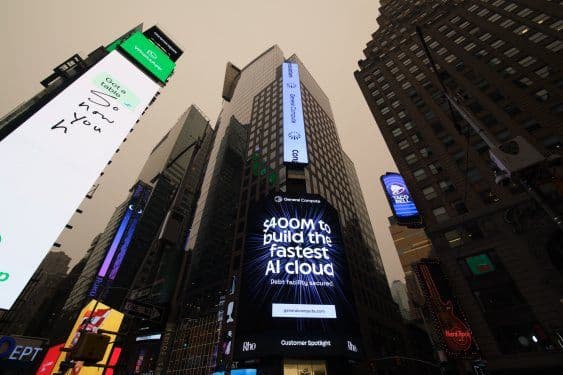
General Compute, an AI inference cloud startup, has landed a $400 million loan from Upper90, a tech investment firm. It might be the first deal to put up inference-specific chips as collateral — chips built to run already trained AI models quickly and efficiently, rather than the more expensive chips used to build the models in the first place. The financing is the latest signal that markets are responding to concerns over the price of AI tools and tokens by turning to infrastructure that runs open source models more cheaply than the newest LLMs from frontier labs. Founded by CEO Finn Puklowski and CTO Jason Goodison, General Computeraised a $15 millionseed round in May to build an inference neocloud around silicon from SambaNova, an Intel-backed chipmaker. (Neoclouds are purpose-built for AI workloads, unlike the general-purpose infrastructure offered by traditional hyperscalers like AWS or Azure.) The company’s SN50 chips are designed for inference. They’re power-efficient and don’t require expensive water-cooling systems, which means they can be deployed more quickly than GPUs across a larger variety of data centers. General Compute says the new chips will provide 16 times faster inference than GPU-based clouds. The challenge is getting a lot of these chips, especially when you’re a brand-new company. Upper90 co-founder and CEO Billy Libby, a former Goldman Sachs quantitative trader, had a playbook for this: In 2021, his firm financed GPU purchases by Crusoe, the energy-focused data center startup, which he believes was the first loan against the value of advanced chips. Traditional lenders eschewed such deals at the time because of the risks and uncertainties around GPU depreciation. But as CoreWeave made chips-backed loans into a business model and then the basis of a blockbuster IPO, this kind of financing has become common. “When we financed Nvidia GPUs as the first group to do that, the market was inefficient,” Libby told TechCrunch. “We could really put together something as an early participant, and kind of get compensated for the risk.” Now that GPUs are comparatively well understood andperhaps over-bought, Upper90 is turning to companies like General Compute to ride the next wave of the AI boom. “We think open source models are going to be important, and we went and looked for a player last year that was in inference,” Libby said. “Everyone doesn’t need a supercomputer, but they do need inference and AI.” That thesis has been growing stronger, with companies that provide access to open models, like OpenRouter and Fireworks, raising new rounds at huge valuations. New models likeKimi’s K3have proven to compete with the latest releases from Anthropic and OpenAI on coding benchmarks. And new chipmakers like Groq and Cerebras have drawn interest from acquirers and public markets alike. General Compute’s ability to access chips outside of Nvidia’s ecosystem matters for the same reason. TensorWave, another AI infrastructure company, is making a similar bet on a partnership with AMD. As more alternatives to Nvidia emerge, compute providers that aren’t locked into Nvidia deals may have an advantage in providing cost-efficient inference. “There are a bunch of chips that are starting to scale that have amazing [total cost of ownership], or that can operate much faster than Nvidia, but there’s not too many buyers for them,” Puklowski said. “By getting together with Upper90, this is not just, ‘a cool startup got some money to buy some compute.’ Like, this is the first signal of capital organizing itself and the fragmenting of Nvidia’s monopolistic dominance.”
View
Enviar tu herramienta


PoweredByAI.app es un directorio de herramientas de IA que ayuda a personas, empresas y creadores a descubrir las mejores herramientas de IA para escritura, programación, diseño, productividad y más.
© 2026 , Producto de011BQ. Todos los derechos reservados.