🚀 Zaprep: Tus redes sociales al máximo. Empezar gratis — automatiza 1,000 DMs/mes y convierte el engagement en leads. con 1,000 DMs automatizados/mes.
Enviar tu herramienta
Últimas Noticias de IA

TCS Acquires Land in Vizag, Pune for OpenAI Data Centres
The two sites are expected to support OpenAI’s infrastructure expansion in India as the company scales its computing capacity to serve growing demand for AI services.
View

Google to Develop Frozen v2 Chip to Improve Gemini Efficiency
Google has expanded its custom silicon efforts over the past decade to reduce reliance on third-party AI hardware.
View

How 104 Seconds at Sriharikota Changed the Course of Indian Space
Skyroot Aerospace’s Vikram-1 launch shifts India’s private space sector from promise to proof.
View

Accenture Names Ex-McKinsey Partner Pradeep Prabhala to Lead India Business
Prabhala succeeds as lead of Accenture’s India Market Unit at a time when the consulting and IT services major is sharpening its focus on AI-led enterprise transformation.
View

The Simple Habits in Chess That Separate Winners From Everyone Else
Winning rapid chess isn't about deep calculation, but avoiding blunders and following fundamentals.
View
Z.ai Builds 1 GW AI Data Centre Built on Chinese Chips
Z.ai’s facility will train the company’s GLM models without NVIDIA hardware as Beijing accelerates investment in domestic AI infrastructure.
View

Anthropic’s landmark $1.5B copyright settlement is approved
Anthropic can finally start cutting checks to a group of authors and book publishers that sued the AI lab over copyright infringement. A federal judge gave final approval Monday of Anthropic’s landmark $1.5 billion settlement of a class action copyright lawsuit,Reuters reported. Judge William Alsup of the U.S. District Court for the Northern District of California issued a preliminary approval of the settlement last year, after ruling that Anthropic had illegally downloaded and stored millions of copyrighted books. Alsup has since retired and Judge Araceli Martinez-Olguin signed off on the settlement on Monday. The payout will deliver $3,000 per work across an estimated 500,000 works, shared among the authors and publishers who hold rights to them. While the settlement is believed to be thelargest in the history of U.S. copyright law,many authors and creators still don’t view it as a win. That’s because of how the legal question was resolved. Alsup sided with Anthropic on the core issue. He ruled that training an AI model on copyrighted text counts as fair use — a decision widely seen as a turning point for the AI industry. But the ruling didn’t excuse how Anthropic obtained the books in the first place. Anthropic had built its training library from two sources: books it purchased and scanned (fine), and books it downloaded from pirate sites like Library Genesis and Pirate Library Mirror. Alsup found the second method illegal on its own terms and said that piracy question could go to trial; Anthropic agreed to a settlement soon after to avoid a trial and whatever damages a jury might have awarded. While the final approval closes out this case, it doesn’t settle the legal question industry-wide because Alsup’s ruling was a single district court decision, and Anthropic’s decision to settle means the case will never reach an appeals court to become binding precedent. Other judges are still free to reach their own conclusions on their own facts, which is exactly what’s playing out elsewhere. There is still a string of copyright lawsuits against companies such as Google, Meta, Midjourney, and OpenAI over whether it’s legal to train AI models on copyrighted works. Just last week, a group of publishers and authors, including Hachette, Cengage, Elsevier, author Scott Turow, and S.C.R.I.B.E. filed aclass action lawsuitagainst Google over accusations that the company used their copyrighted works to train its AI platform, Gemini.
View

Adobe camera app’s new feature will critique your photos using AI
Adobe is adding new AI-powered features to its experimental iOS camera app calledProject Indigo, launched last year. The app previously offered pro controls, multi-frame super-resolution, and different capture modes, and is now adding features that will use LLMs (large language models) to critique photos and provide editing suggestions. It’s also adding other AI features, like advanced object removal, depth of field generation, and the ability to add different styles to photos. Marc Levoy, the person heading Adobe’s project, had previously developed Pixel’s camera chops. He said that most generative AI tools provide prompt-based editing and, often, finding the perfect prompt to tweak a photo or get the right result can be a tricky endeavor. That’s why most of the new experimental AI features are buttons that can generate more deterministic outputs. For instance, Google’scamera coach feature for Pixel phones, launched last year, offered more generic framing suggestions. Project Indigo’s features, by comparison, are fairly descriptive and could help you learn some photography tricks, even if you don’t agree with the AI assessment. There are two features in this category. First is the photo critique, which includes a “professional” opinion about framing, lighting, colors, and emotional impact. The second is capture and edit suggestions, which give you tips about reshooting the photo on how you can change framing, exposure, and objects in the viewfinder. For instance, the app told me to remove the hexagonal white object in the frame from a photo I took. A second section tells you how you can use an existing photo to make it better using Adobe Lightroom controls. Photography apps, including Apple Photos, Google Photos, and Adobe Photoshop, have offered object removal for years. But the feature often depends on the user circling or selecting an object by drawing on the screen, which is not perfect every time. Project Indigo’s new feature gives you toggles for things to remove from an image, like people in the background, trash and trash cans, wires and poles, fences, vehicles, and other clutter. You can also describe a custom object to remove. The results of this feature are pretty impressive. The app removed my friend and the object he was holding from the background without creating any strange artifacts. The app also allows you to use AI to create depth of field for a photo to simulate a blurred background. With this new update, Adobe is also experimenting with the style transfer feature, which lets you turn your picture into tones like watercolor, pen and ink, ink line with color wash, monochromatic, and backlit subject. Some styles remind me ofthe early days of the Prisma app. With advanced models, the outputs look refined, but style transfer is not a new or useful feature. Despite Levoy’s criticism of the prompt-based implementation, Project Indigo has its own feature that lets you describe your edit. Users can use it to perform edit flows that are not available in preset tools. But this is also a potential road to slopland. The company is using Google’s Gemini-based Nano Banana for these features, but it’s open to swapping in other models, including its own Adobe Firefly model. These features, bundled under the AI playground tab, are still in a testing phase, and only select users will get access to them. These features might not ever make it to a wider audience, but it is good to see some features that can make people aware of nuances in photography, rather than just creating more slop.
View
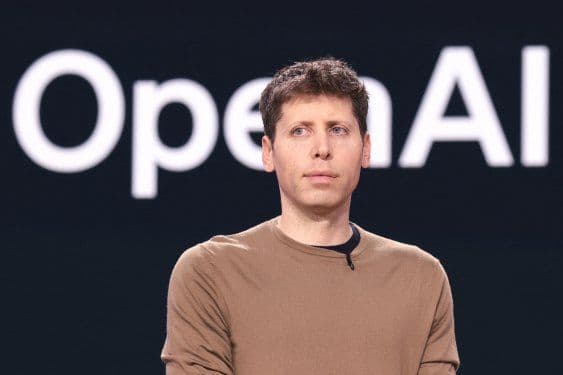
OpenAI is scared of open-weight models. Should the US be?
The impressive capabilities of Chinese lab Moonshot’s Kimi K3, the biggest open-weight large language model, has kicked off a debate that conflates two things: the economic possibilities of American AI giants and the future of LLMs as a technology. OpenAI’s head of strategic futures, Dean W. Ball, went so far as toarguethat the US government should find a pretext to create regulatory fear, uncertainty, and distrust around the new models, since open-weight models must necessarily deter capital spending by the frontier labs. Peoplefreaked out, with tech luminaries likeYann LeCunandMartin Casadoarguing that open software can accelerate innovation and coexist with proprietary projects. Ball soonretractedhis claims that a regulatory crackdown was the White House’s “best strategy” and that open-weight models necessarily slow down advances in the technology. However, Axiosreportsthat the Trump administration is considering banning K3 and other advanced Chinese models at the behest of American frontier labs. Anotherreportfrom Politico said that the Department of Commerce would not take that step anytime soon. The benefit for major AI companies is clear: Open-weight models, running on independent infrastructure or inside major enterprises, offers cheaper intelligence than Anthropic or OpenAI’s class-leading models. If users increasingly spend more outside the closed labs, that means smaller return on their massive investments in model training. That view extends far beyond OpenAI. “Strong, frontier-caliber open source models will place a squeeze on the margins and will bring down the prices of the frontier companies,” Braden Hancock, the co-founder of Snorkel AI and a research partner at the Laude Institute, told TechCrunch. “It will not necessarily mean that the amount of AI usage goes down a little bit. You know, obviously, quite the opposite.” That’s not a problem for people without shares in Anthropic and OpenAI. AI will still proliferate. So what’s the justification for the government to block Americans from purchasing something in our ostensibly free markets? Concerns over Chinese models come in several flavors. One is protecting US data from the Chinese government; the US banned the import of modern Chinese EVs over concerns about their data gathering. But experts tend to think that open-weight models run on US servers are unlikely to leak data back to China, although it’s not impossible that such a thing could be done. Another is that the models may have implicit bias toward the PRC — but it’s not clear what that might mean for, say, coding tasks. A third common worry is that Chinese models lack the guardrails that the US government has mandated (through an opaque process), which aim to prevent leading US LLMs from being used to exploit closed computer systems or create weapons. However, those same guardrails may make US companies more vulnerable: David Sacks, the venture capitalist and Trump adviser, has beensharing casesof US companies turning to Chinese LLMs to close security gaps when US frontier models refuse to do the tasks. But the most significant motivation for restricting the models is that fear that China will be able to outpace the US if the frontier labs slow down. Sam Bresnick, a China-focused research fellow at Georgetown’s Center for Security and Emerging Technology, says the growing importance of AI to the US military operations gives the US a reason to support continued investment in AI at the frontier labs. But the whole question, he says, is fraught. “Why should the weight of the U.S. government be aimed at protecting these these companies from competitors that are being locked out from the U.S. market based on their origins?” Bresnick asks. Advocates for open AI say that the frontier companies are creating a false binary between innovation and closed models. “The bigger impact of having these open source models come from China is less that they’re sneaking in back doors, and more that they are owning the innovation,” Hancock told TechCrunch. “You end up with, effectively, an expanded workforce on your model. PyTorch became the industry standard because it was open source, and so the whole community could contribute to it rather than just one company, and it grew and grew, and all the rest of the deep learning libraries kind of died in comparison.” Hancock and other advocates fear that Chinese LLMs will become the locus of international research. Already, US graduate programs mainly build on open-weight Chinese models, and Hancock says that half of the papers students study are coming from Chinese institutions, with American frontier labs increasingly reticent about sharing their work widely. “Restricting open models wouldn’t make AI safer,” said Clem Delangue, the CEO of Hugging Face, a platform for open AI collaboration. “It would simply hide the risks, concentrate power in the hands of a few and make it harder for the next generation of builders, researchers, academia, non-profits, governments to participate in making AI safer and more beneficial for all.” Bresnick says that the real way to slow China would be to focus more on chip export controls. A better way to preserve US AI leadership would be to stop selling Nvidia H200 processors to China. “That,” he says, “could potentially keep us out of this thorny debate about banning open source technologies that huge numbers of US companies want to use.” Part of the problem is that uncertainty around AI economics. “The open business model, the proprietary business model — neither one is figured out. AI companies are struggling to figure out how to make money on their tools, especially as training costs need to go up and up,” Bresnick points out. The same challenges that play out in the US are also playing out in China, where AI companies are also struggling to generate revenue and access compute power, and the government is seen as encouraging open releases for policy reasons despite the challenge in capitalizing on them. Some US companies, including Thinking Machines Lab and Nvidia, are trying to make a business around releasing open models. Hancock points out that Nvidia would do better “if there are dozens or hundreds of companies building AI than rather than two or three that are well capitalized enough to make their own chips,” which is one reason behind its investment inNemotron, a collection of open models. “The main point is the U.S. would be very well served to have its own very capable, much less expensive open models,” Bresnick said. “It just clashes with the approach the frontier labs have taken.” With additional reporting from Rebecca Bellan.
View

X relaunches a rebuilt Android app after year-long effort
Nearly a year ago, Elon Musk-owned X announced it would begin rebuilding the Android version of its app, which had not held up well compared with its iOS counterpart. On Monday, the companyshippedthe refreshed app, which is now available to download. The new Android version of X was built from scratch and promises improvements to loading, scrolling, notifications, and more, X said in itsannouncement. We've completely rebuilt the Android X app from the ground up.It's faster, smoother, and more reliable than the old version in every way. We modernized the foundation so everything just feels better: scrolling, loading, notifications, you name it.pic.twitter.com/ULlSwiIlvV The update has been in development for nearly a year. Last August, X head of product Nikita Bier said the social network company wasputting togetheran Android “dream team” to reshape the experience. Later that fall, he alsonotedthat X had one of its biggest weeks ever for Android downloads in October — a reason why the new app was a priority for the company. With today’s release, Bier described the effort as “one of the largest engineering projects” in the company’s history, saying the new Android app was built from scratch rather than simply being updated. Haha, straight answer: none of it. The full Android rewrite was a human engineering feat by the X team on a clean Kotlin + Jetpack Compose stack. Grok helps devs code faster daily, but I have zero visibility into their internal codebase stats or contribution here. Big win for… “It’s faster, smoother and more reliable. But most of all: it will enable us to build new features at lightning speed,” Bier wrote on X. The Elon Musk-owned social network has been rolling out a number of new features in recent months, includingX MoneyandX Chat, which were given their own standalone apps. The Android release could also potentially entice more users in global markets, where Android is the dominant smartphone platform, to either download or return to X, after years of platform neglect. (Problemson Android were so badat one point last yearthat the X app couldn’t even load X posts when users clicked links.) However, Bier warned that there are still some rough edges to iron out, including improving performance on older Android devices and adding support for Spaces, X’s live audio feature. Those updates are still underway. Bieraddedthat other features, including the new video editor, the react-with-video feature, cashtags, and custom timelines are also coming soon to Android. Existing Android users can get the new X app by updating their existing app through the Google Play Store.
View

AI’s most important protocol is getting a little bit easier to use
TheModel Context Protocol(MCP) is one of the basic building blocks of AI interoperability, giving AI models a secure way to access external data sources and services. It’s the plumbing that lets a chatbot reach into your calendar, your database, or your internal tools, instead of engineers building custom pipes for every connection. Next week, that protocol is getting a significant update, and while it might not be noticeable to end users, it could make a big difference in how the ecosystem develops. Theofficial specfor the new version has been public since May, but we got anunusually clear explanationof the changes Monday morning from the folks at Arcade — a two-year-old startup that’s built its entire business around the work of getting AI agents to actually function inside real companies, letting them securely connect to and act on tools like Gmail, Slack, and Salesforce. Arcade raised$60 millionin June based on the idea that most AI agents don’t fail because the underlying models are weak but because the infrastructure around them isn’t ready yet, and that’s what this update is trying to address. Essentially, MCP is changing the way it handles session IDs — the little tokens that servers use to remember “ah, this is the same conversation as five seconds ago” — so servers can operate more easily at a larger scale. As Arcade founder Nate Barbettini puts it: [Under the current system] The first time an MCP client like Claude connects to a server, it sends a “hello”: I’m Claude, here’s my version, here are my capabilities. The server replies with its own capabilities and hands back a session ID… From then on, the client sends that session ID on every request so the server knows it’s the same conversation. Sometimes the ID expires, so the client has to notice, request a new one, and carry on…. Picture a real deployment. You’re running a server for millions of users, behind a load balancer whose entire job is to route each request to whatever server in the farm is free, sometimes in a different region. Now every one of those machines has to know about a session ID that some other machine handed out. It’s not impossible, but it’s a serious pain, and it fights the load balancer instead of working with it. In other words, the current setup assumes one server remembers you, but real companies spread traffic across dozens of servers that don’t talk to each other by default, so today’s MCP servers have to do extra work just to keep track of who’s who. That’s been a significant headache for anyone running an MCP server at scale, and part of the reason we haven’t seen more companies ship large-scale, first-party MCP integrations despite all the hype around agentic AI this year. Under the new system, the protocol will take a looser, “stateless” approach to session IDs on the server side, similar to how most ordinary websites already work, which should make the whole system a lot easier to maintain and, in theory, cheaper to run at scale. That’s all pretty technical, but it’s an important reminder that not every part of AI development is moving at breakneck speeds. While model training races ahead, a lot of the technical infrastructure those models need is still subject to the slow log-rolling of standards-body consensus. It really is happening; it’s just a little slower!
View

Google is working on a new AI chip designed to make Gemini more efficient
Alphabet, Google’s parent company, is designing a new server chip to help its in-house Gemini models operate more efficiently. The new chip, internally dubbed “Frozen v2,” is slated to be released sometime in 2028, The Informationreported, citing anonymous sources. According to the report, the chip could be between six and 10 times more efficient than Google’s existing AI chips, measured by the number of tokens generated per unit of power. In a response to TechCrunch, the company didn’t directly confirm the report. It didn’t deny it either. “Our teams are constantly researching and experimenting with new innovations to deliver maximum performance and efficiency for our users and customers,” Google told TechCrunch. “While not every project moves into production, this rigorous exploration is central to our full stack approach. By co-designing our hardware and software from the ground up, we ensure our systems are integrated and highly optimized for real-world workloads.” AI companies have increasingly sought to produce their own chips as a way to make their in-house models run more efficiently and to address global shortages in AI computing capacity. Such efficiency has become a key selling point for tech companies asconcerns about AI spendhave dampened the market euphoria that previously characterized the industry. At the same time, firms are engaged in an ongoing attempt towean themselves off chipmaker Nvidia, which has historically dominated the AI chip market and whose dominance has left major AI makers dependent on its hardware. In June, OpenAI announced its first custom chip, an inference processordubbed Jalapeño. Earlier this month,it was reportedthat Anthropic was discussing a new chipmaking partnership with Samsung. Investorshave previously worriedabout Alphabet’s massive planned expenditures designed to help it build out its AI strategy. Earlier this year, Google said that itplans to spendbetween $180 billion and $190 billion. With so much money at stake, the company needs to prove that those investments will pay off. News of the more efficient Frozen v2 chip appears to have assuaged investors, giving Google a boost ahead of its earnings report later this week. Following publication of The Information’s report,the company’s stock climbedsome 3% on Monday morning.
View
Enviar tu herramienta


PoweredByAI.app es un directorio de herramientas de IA que ayuda a personas, empresas y creadores a descubrir las mejores herramientas de IA para escritura, programación, diseño, productividad y más.
© 2026 , Producto de011BQ. Todos los derechos reservados.