🚀 Zaprep: Your Socials on Steroids. Start free — automate 1,000 DMs/month & turn engagement into leads. with 1,000 automated DMs/month.
BlogHow Great Design and SEO Work Together to Grow Your Brand
How Great Design and SEO Work Together to Grow Your Brand
 Shashank Jain
25 Jul 2026
6 min read
Brand growth in today's digital marketplace requires more than isolated efforts in design or search optimization. When visual presentation and technical discoverability operate independently, businesses miss critical opportunities to convert traffic into loyal customers. The most successful brands recognize that aesthetic appeal and search visibility function as complementary forces, each amplifying the other's impact. Understanding how these elements intersect reveals a strategic advantage that
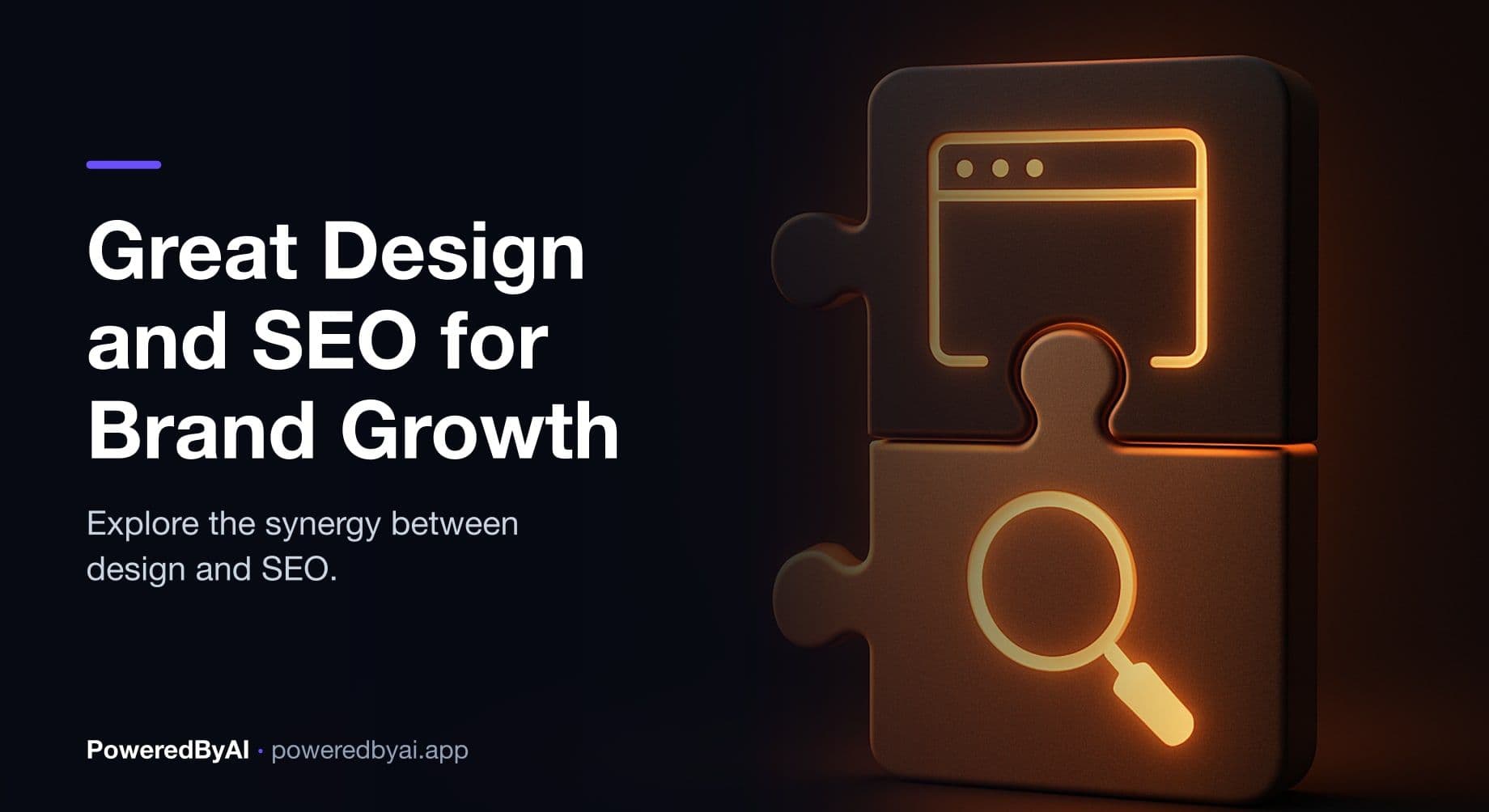
Brand growth in today's digital marketplace requires more than isolated efforts in design or search optimization. When visual presentation and technical discoverability operate independently, businesses miss critical opportunities to convert traffic into loyal customers. The most successful brands recognize that aesthetic appeal and search visibility function as complementary forces, each amplifying the other's impact. Understanding how these elements intersect reveals a strategic advantage that many competitors overlook, creating measurable differences in market positioning and revenue growth.
Understanding the Connection Between Great Design and Search Visibility
While many businesses treat design and SEO as separate disciplines, they function as interdependent elements of digital success. Search engines prioritize user experience metrics including page load speed, mobile responsiveness, and intuitive navigation, all design considerations.
A visually appealing site means nothing if users can't find it, while high rankings won't convert visitors if poor design drives them away immediately. Effective design decisions directly impact search performance. Clean code architecture improves crawlability. Strategic typography enhances readability and time-on-page. Thoughtful image optimization balances visual quality with loading efficiency.
Meanwhile, SEO research informs design choices by revealing how users search, what content they seek, and which pages they value most. This symbiotic relationship creates a foundation where aesthetics and functionality amplify discoverability and engagement simultaneously.
Defining Brand Goals Audience Needs and Growth Priorities
Before implementing any design or SEO strategy, businesses must establish clear objectives that align with their market position and target audience. This foundation determines which design elements and optimization tactics will generate meaningful results.
Successful brands begin by identifying their core audience demographics, behavioral patterns, and search intent. Understanding what customers need, how they search, and what visual experiences resonate with them shapes both design decisions and keyword strategies.
Growth priorities must be specific and measurable. Whether the goal is increasing organic traffic, improving conversion rates, or building brand recognition, these objectives guide resource allocation.
Companies should evaluate their current market standing, competitor positioning, and unique value propositions. This analysis guarantees design and SEO efforts work synergistically toward defined business outcomes rather than operating as isolated initiatives.
Building a Consistent Visual Identity Across Every Customer Touchpoint
A cohesive visual identity functions as the connective tissue between all customer interactions, transforming scattered design elements into a recognizable brand ecosystem. Every touchpoint, website, social media, packaging, email campaigns, and physical locations, should reflect unified color palettes, typography, imagery styles, and design patterns that reinforce brand recognition.
Consistency builds trust. When customers encounter the same visual language across channels, they develop familiarity and confidence in the brand's professionalism. This uniformity also strengthens SEO efforts, as consistent branding increases click-through rates from search results when users recognize familiar visual cues in meta descriptions and featured snippets.
Design systems and brand guidelines guarantee teams maintain visual coherence at scale. These frameworks document precise specifications for logos, spacing, button styles, and photographic treatments, preventing fragmentation as brands expand across platforms and markets.
Working With Vetted Design Agencies to Strengthen Brand Presentation
Partnering with established design agencies accelerates brand transformation by injecting specialized expertise that internal teams may lack. Vetted agencies bring portfolio-proven experience across industries, enabling businesses to avoid costly trial-and-error approaches while implementing design strategies that resonate with target audiences.
Selecting the right agency requires evaluating past work, client testimonials, and industry recognition. Businesses that want to find vetted design agencies should compare relevant experience, communication practices, and proven results before making a final decision. Agencies with demonstrated success in brand positioning understand how visual elements influence perception and conversion rates. They provide fresh perspectives that challenge internal assumptions and identify overlooked opportunities.
Effective collaboration demands clear communication of brand values, business objectives, and performance metrics. Establishing detailed creative briefs guarantees alignment between agency deliverables and company vision. Regular feedback loops maintain project momentum while preventing misalignment. The investment in professional design services yields measurable returns through enhanced brand recognition, improved user engagement, and stronger market differentiation.
Creating a User-Friendly Website Structure and Navigation Experience
Professional design execution proves ineffective without an underlying website structure that supports intuitive navigation and information discovery. Users abandon websites when they cannot locate desired information within seconds, directly impacting conversion rates and search engine rankings.
Effective website architecture organizes content hierarchically, establishing clear parent-child relationships between pages. Primary navigation should feature five to seven top-level categories maximum, preventing overwhelming choice paralysis. Breadcrumb trails enable users to understand their current location within the site hierarchy while facilitating backward navigation.
Search engines reward logical site structures with improved crawlability and indexation. Internal linking between related content pages distributes page authority while guiding users toward relevant information.
Footer navigation provides secondary pathways to important pages, ensuring accessibility regardless of user entry points. Mobile-responsive navigation adapts seamlessly across devices, maintaining usability standards universally.
Using an SEO Service to Improve Rankings Traffic and Conversions
While some businesses attempt extensive SEO implementation independently, strategic engagement with specialized SEO services accelerates measurable improvements across rankings, organic traffic, and conversion metrics.
Professional SEO practitioners conduct thorough technical audits, identifying crawlability issues, page speed bottlenecks, and indexation problems that hinder search visibility. An SEO technical audit service can provide a detailed assessment of these issues, helping businesses prioritize fixes that deliver the greatest impact on search performance. They perform competitive keyword analysis to uncover high-value search opportunities aligned with business objectives.
Advanced link-building strategies establish domain authority through quality backlink acquisition from relevant, authoritative sources. SEO services implement structured data markup, optimize meta elements, and refine content architecture for enhanced search engine comprehension.
Continuous monitoring through analytics platforms tracks ranking fluctuations, traffic patterns, and user behavior, enabling data-driven adjustments. This systematic approach transforms organic search into a sustainable acquisition channel, delivering qualified visitors predisposed to conversion while maximizing return on marketing investment.
Aligning Content Design and Search Intent Across Key Pages
Organic search optimization extends beyond technical implementation to strategic alignment between content presentation and user search intent. Each key page must address specific queries while maintaining visual hierarchy that guides visitors toward conversion goals.
Successful integration requires mapping search intent categories, informational, navigational, transactional, and commercial investigation, to corresponding page layouts. Product pages serving transactional searches need prominent calls-to-action and pricing visibility, while informational content demands scannable formatting with clear headings and supporting visuals.
Design elements like white space, typography, and image placement affect both user engagement metrics and search performance. Pages that match intent expectations retain visitors longer, reducing bounce rates and signaling relevance to search algorithms. Strategic alignment transforms individual pages into cohesive brand experiences that satisfy user needs while achieving business objectives through improved rankings and conversions.
Measuring Engagement Search Performance and Brand Growth
Quantifiable metrics transform abstract optimization efforts into actionable insights that demonstrate tangible business impact. Organizations should track organic traffic growth, keyword rankings, and click-through rates alongside engagement indicators like time on page, scroll depth, and conversion rates.
These combined metrics reveal whether design improvements enhance user experience while supporting search visibility. Brand growth measurement extends beyond traditional SEO metrics to include branded search volume, direct traffic trends, and return visitor rates. Heat mapping and session recordings expose navigation patterns and visual hierarchy effectiveness. A/B testing validates design decisions through concrete performance data.
Establishing baseline measurements before implementing changes enables accurate progress assessment. Monthly reporting dashboards should connect search performance fluctuations with specific design modifications, proving return on investment and guiding future optimization priorities.
Creating a Long-Term Strategy for Design and SEO Collaboration
Sustained competitive advantage requires organizations to embed design and SEO collaboration into their operational framework rather than treating it as a periodic initiative. This integration begins with establishing cross-functional teams where designers and SEO specialists participate in project planning from inception. Organizations should implement quarterly audits evaluating both aesthetic performance and search visibility metrics simultaneously.
Documentation protocols guarantee design decisions account for technical SEO requirements, while SEO strategies consider user experience implications. Investment in shared analytics platforms enables both teams to access unified performance data. Regular training sessions keep designers informed about algorithm updates and SEO specialists current on design trends.
Leadership must allocate resources supporting collaborative tools and establish performance indicators measuring integrated outcomes rather than siloed metrics, creating accountability for joint success.
Related Categories
AI ToolsGet your AI tool featured in articles like this
Reach users actively discovering AI tools on PoweredbyAI and build SEO backlinks that improve your visibility on Google.
Trusted by 25,000+ AI tools and growing startups
Get Your AI Tool Featured in High-Traffic Blogs & Articles
Get featured on PoweredByAI and reach users actively discovering tools like yours. Build powerful SEO backlinks that help you rank on Google and drive consistent organic traffic.
Sponsored blog features with targeted reach
Guest articles with do-follow backlinks
Contextual link placements for SEO boost
Trusted by 25,000+ AI tools and growing startups
Enjoyed this? Talk AI tools with other founders and builders.
Join our Slack communityRecent Blogs


Submit your Tool


PoweredByAI.app is an AI Tools Directory helping individuals, businesses, and creators discover the best AI tools for writing, coding, design, productivity, and more.
© 2026 , Product of011BQ. All rights reserved.