🚀 Zaprep: Your Socials on Steroids. Start free — automate 1,000 DMs/month & turn engagement into leads. with 1,000 automated DMs/month.
BlogCan Artificial Intelligence Replace Traditional Homework Support?
Can Artificial Intelligence Replace Traditional Homework Support?
 Shashank Jain
18 Aug 2026
10 min read
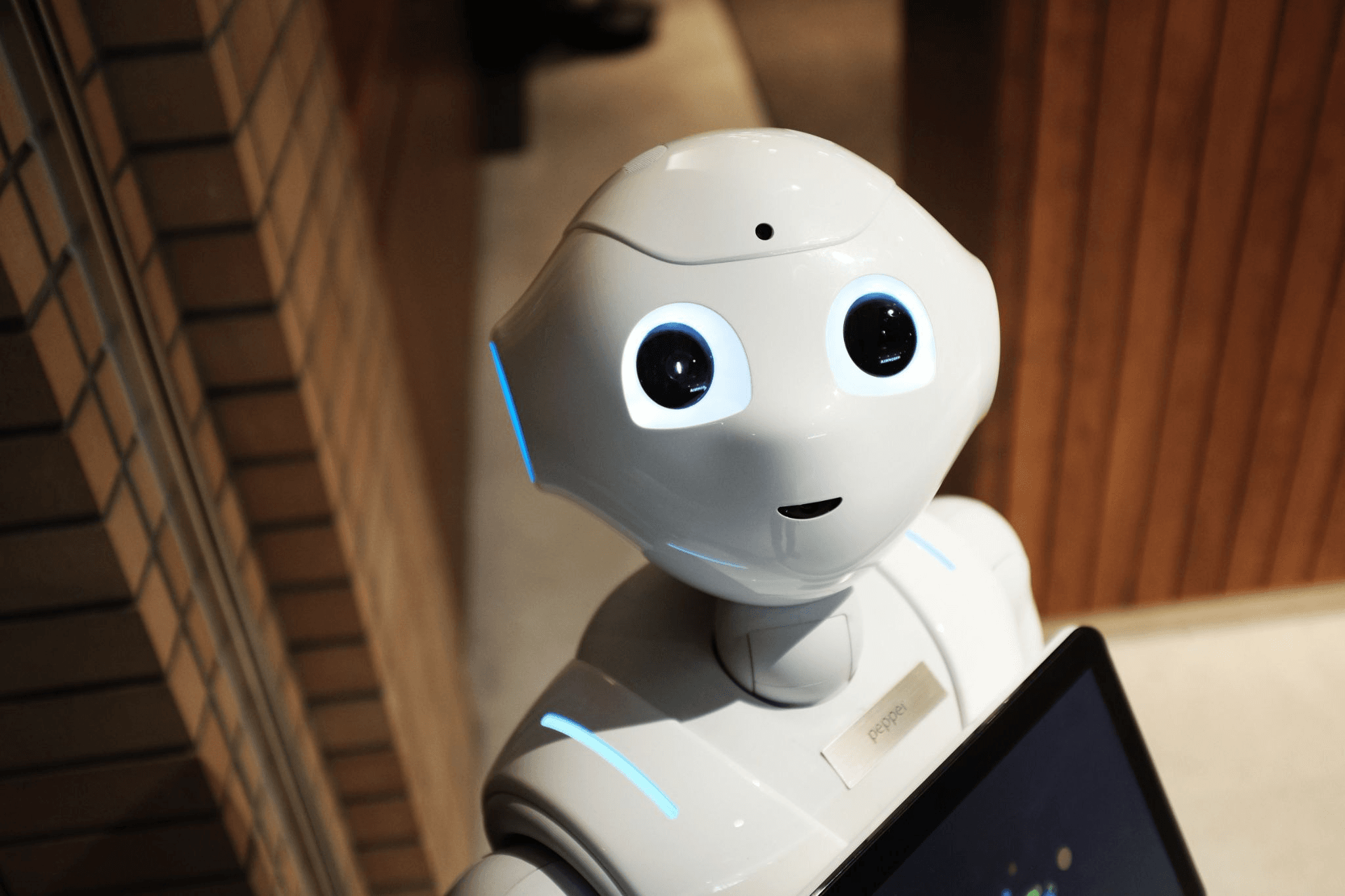
Artificial intelligence is quickly changing the way students learn. A learner can now type a difficult question into an AI tool and receive an explanation within seconds. The tool may solve a math problem, summarize a chapter, correct an essay, or create a study plan. Because of this speed and convenience, many people are asking an important question: Can artificial intelligence replace traditional homework support?
Traditional homework support usually comes from teachers, parents, tutors, classmates, or study groups. These people do more than provide answers. They notice emotions, understand personal challenges, offer encouragement, and help students build good habits. AI homework support, on the other hand, is available at almost any time. It can explain the same idea again and again without becoming impatient.
At first, AI may look like a complete replacement for traditional support. It is fast, affordable, and flexible. However, education is not only about finding correct information. It is also about developing confidence, responsibility, communication skills, and independent thinking.
AI is a powerful tool, but is it powerful enough to take the place of human guidance? The answer is not a simple yes or no. To understand the issue, we need to compare what traditional homework support offers, what AI can do well, and where both methods still have weaknesses.
What Traditional Homework Support Really Offers
Traditional homework support has existed for generations. A parent may sit beside a child and help with reading. A teacher may explain a difficult science idea after class. A tutor may create extra exercises for a student who is struggling. Friends may study together before an important exam.
This form of support is valuable because it responds to both academic and emotional needs. A tutor can often notice confusion before a student puts it into words. When deadlines create extra pressure, some learners may choose to hire paper writer at EduBirdie for additional assistance with challenging assignments. Meanwhile, a teacher can adapt an explanation after noticing uncertainty or concern. A parent may also recognize when stress, tiredness, or fear is affecting a child’s ability to learn.
Human support also provides emotional connection. Imagine that a student has failed several math tests. The student may begin to believe, “I am simply bad at math.” An AI system can explain equations, but a caring teacher can challenge that negative belief. The teacher can remind the student of past progress and show that improvement is possible.
This encouragement matters because learning often feels like climbing a steep hill. Information may show students where the path is, but emotional support gives them the energy to continue walking.
Traditional homework support also teaches social skills. When students ask questions, discuss ideas, and receive feedback from real people, they learn how to communicate. They practice listening, explaining, disagreeing politely, and accepting correction. These skills are useful far beyond the classroom.
Another advantage is accountability. A human tutor may notice that a student has not completed the assigned work. A parent may set a regular homework schedule. A teacher may ask the student to explain how an answer was found. This personal responsibility can stop students from taking shortcuts.
However, traditional support is not perfect. Private tutoring can be expensive. Parents may not understand modern teaching methods or advanced subjects. Teachers often have limited time, especially when they are responsible for many students. Some learners also feel embarrassed when asking a person for help.
These limitations have created space for AI-powered homework tools. AI does not need to travel, follow school hours, or manage a crowded classroom. It can provide support almost immediately, which makes it attractive to students and families.
How AI Is Changing Homework Support
Artificial intelligence has turned homework support into an on-demand service. Students no longer need to wait until the next school day to ask a question. They can use an AI assistant at home, on public transport, or during an evening study session.
AI can support many subjects. In mathematics, it can explain formulas and demonstrate calculation steps. In language learning, it can correct grammar, suggest vocabulary, and create conversation exercises. In history, it can summarize events or compare different periods. In science, it can simplify complex processes and offer practical examples.
The greatest strength of AI homework support is not simply that it produces information. Its real strength is that it can adjust information quickly.
AI as an Always-Available Study Partner
Students do not all study at the same time. Some work best early in the morning, while others concentrate better late at night. Traditional tutors and teachers usually have fixed schedules, but AI tools can be used at any hour.
This availability can be especially useful before a test or deadline. A student who suddenly realizes that they do not understand a topic can ask for help immediately. Instead of remaining stuck, the learner can request a simpler explanation, another example, or a short practice quiz.
AI can also repeat explanations without judgment. Some students avoid asking the same question twice because they fear looking careless or unintelligent. An AI tool does not become annoyed. It can explain the same idea in five different ways.
For example, a student may not understand the water cycle from a textbook definition. AI could explain it as a journey, with water traveling from oceans to clouds and back to the ground. It could then provide a diagram description, a short story, or a simple quiz. This flexibility can make difficult material easier to understand.
AI may also improve access to educational support. Families that cannot afford regular private tutoring can use free or lower-cost tools. Students in remote areas may receive explanations that were previously difficult to access. In this sense, AI can act like a digital bridge across educational gaps.
However, constant availability can create a new problem. When answers are always one click away, students may become less willing to struggle with a question. Yet productive struggle is part of learning. The brain grows stronger when it has to search, compare, test, and correct ideas. A tool that removes every challenge may also remove part of the learning process.
Personalized Learning at Scale
A traditional classroom may contain students with very different abilities. One learner may understand a lesson immediately, while another needs more time. A teacher may want to give each student individual support, but time and class size can make that difficult.
AI can offer a more personalized experience. A student can ask for an explanation at a beginner, intermediate, or advanced level. The learner can request shorter sentences, additional examples, or practice questions based on a specific weakness.
Suppose a student understands multiplication but struggles with fractions. An AI system can focus on fractions instead of repeating an entire mathematics course. It may create exercises that gradually become more difficult. This targeted approach can save time and reduce frustration.
AI can also provide immediate feedback. When students write an answer, they can quickly learn whether it is correct and why. Fast feedback is useful because it prevents mistakes from becoming habits. It is like adjusting the direction of a bicycle before it travels too far down the wrong road.
For writing tasks, AI can identify unclear sentences, grammar problems, weak structure, or repeated words. It can suggest improvements and show alternative ways to express an idea. Used carefully, this feedback can help students become more confident writers.
The danger appears when personalization turns into completion. There is a major difference between helping a student improve an essay and writing the entire essay for them. When AI does the intellectual work, the student may submit a polished assignment without developing the skill behind it.
Therefore, AI personalization is most valuable when it guides the learner rather than replaces the learner’s effort.
Where AI Still Falls Short
Although AI homework support is impressive, it has serious limitations. The first is accuracy. AI systems can sometimes provide incorrect, incomplete, or invented information. The answer may sound confident even when it is wrong.
This creates a difficult situation for younger learners. A student may not have enough knowledge to recognize an error. Because the response is written in a clear and professional style, it may appear trustworthy. In this way, confidence can become a mask hiding weak information.
Human teachers can also make mistakes, but they usually understand the course, the school’s expectations, and the student’s previous work. An AI tool may not know which method the teacher requires. For example, it may solve a math problem correctly but use a technique that the class has not studied.
AI also struggles with emotional understanding. It can produce encouraging words, but it does not truly experience concern, patience, or empathy. It may not recognize that a student’s homework problem is connected to anxiety, family pressure, bullying, or a learning difficulty.
A human educator can respond to the whole person. Sometimes the best homework support is not another explanation. It may be a short break, a conversation, a different learning environment, or professional support.
Privacy is another concern. Students may enter personal details, school information, or private assignments into AI systems without understanding how the data may be handled. Schools and families need clear rules about which tools are safe and what information should never be shared.
There is also the issue of academic honesty. AI can generate essays, solve problems, and complete assignments within seconds. This ability may tempt students to submit work they did not create. In the short term, the student may receive a good grade. In the long term, however, the missing knowledge becomes a hidden crack in the foundation.
That crack may become visible during an exam, a class discussion, or a future course. The student has the result but not the ability. It is like using a lift to reach the top of a mountain and then claiming to have developed climbing skills.
Overdependence can also weaken independent thinking. Students need opportunities to form opinions, make mistakes, and solve problems without immediate assistance. When AI becomes the first response to every challenge, curiosity may turn into dependency.
For these reasons, AI cannot safely replace all forms of traditional homework support. It lacks reliable judgment, genuine emotional awareness, and a complete understanding of each student’s educational situation.
Can AI and Traditional Support Work Together?
The most useful question may not be whether AI should replace traditional homework support. A better question is how AI and human support can work together.
AI can handle many routine tasks. It can create vocabulary exercises, explain basic concepts, check simple grammar, or produce practice questions. This can give teachers and tutors more time for deeper work, such as discussing ideas, identifying learning difficulties, and motivating students.
A teacher might ask students to use AI to generate three explanations of a scientific concept. The class could then compare the explanations, find weaknesses, and improve them. In this activity, AI becomes material for critical thinking rather than a machine that delivers final answers.
Parents can also guide responsible use. Instead of banning AI completely, they can ask children to explain what the tool helped them understand. A simple question such as “Can you now teach this idea to me?” can reveal whether real learning has happened.
Students should learn to use AI through a clear process. First, they should try the task independently. Next, they can ask AI for a hint rather than a complete answer. After receiving help, they should solve a similar problem without assistance. Finally, they should check important information against textbooks, trusted educational sources, or teacher guidance.
This approach turns AI into a ladder. The student uses it to reach a higher level, but does not carry it everywhere or expect it to do the climbing.
Schools also need thoughtful policies. A complete ban may be difficult to enforce and may prevent students from learning how to use an important technology responsibly. At the same time, unlimited use can damage academic honesty and skill development.
Clear rules can explain when AI is permitted, how it should be acknowledged, and which assignments must be completed without it. Teachers can also design tasks that require personal reflection, classroom discussion, drafts, or oral explanations. Such activities make it harder to hide a lack of understanding.
Traditional homework support will continue to matter because students need human relationships. Yet AI can make that support more flexible and efficient. A tutor may use AI to create customized exercises. A teacher may use it to prepare different reading levels. A parent may use it to understand a topic before helping a child.
In each case, the technology supports the human rather than replacing the human.
Conclusion: Replacement or Reinvention?
Artificial intelligence is unlikely to fully replace traditional homework support, and complete replacement should not be the main goal. AI can provide fast explanations, personalized practice, immediate feedback, and affordable access to learning materials. For many students, it can become a valuable study partner that is available whenever help is needed.
However, education is more than the delivery of answers. Students also need empathy, encouragement, accountability, ethical guidance, and real human communication. AI may explain how to solve a problem, but a teacher, parent, or tutor can understand why the student has stopped believing they can solve it.
Browse 10,000+ AI tools across every category — writing, coding, image generation, video, automation, and more. Find the best free AI tools updated daily
The future of homework support will probably be a partnership between people and technology. AI can manage repetition and provide flexible practice, while humans guide judgment, motivation, creativity, and personal growth. Used wisely, artificial intelligence does not need to replace traditional homework support. Instead, it can help reinvent it—making learning more accessible without removing the human connection that gives education its meaning.
Related Tags
AI ToolsRelated Categories
AI ToolsGet your AI tool featured in articles like this
Reach users actively discovering AI tools on PoweredbyAI and build SEO backlinks that improve your visibility on Google.
Trusted by 25,000+ AI tools and growing startups
Get Your AI Tool Featured in High-Traffic Blogs & Articles
Get featured on PoweredByAI and reach users actively discovering tools like yours. Build powerful SEO backlinks that help you rank on Google and drive consistent organic traffic.
Sponsored blog features with targeted reach
Guest articles with do-follow backlinks
Contextual link placements for SEO boost
Trusted by 25,000+ AI tools and growing startups
Enjoyed this? Talk AI tools with other founders and builders.
Join our Slack communityRecent Blogs

Submit your Tool


PoweredByAI.app is an AI Tools Directory helping individuals, businesses, and creators discover the best AI tools for writing, coding, design, productivity, and more.
© 2026 , Product of011BQ. All rights reserved.