Pre-Black Friday Sale is LIVE! Get Up to 85% OFF AI Tool Listings + 50% OFF All Sponsorships.
Grab the DealSubmit your Tool
PoweredByAI.app is an AI Tools Directory helping individuals, businesses, and creators discover the best AI tools for writing, coding, design, productivity, and more.
© 2026 , Product of011BQ. All rights reserved.

Google announced Gemini 4 Hydrogen on Thursday as its latest AI model that brings faster AI assistance to everyday tasks. Instead of extended reasoning, the Mountain View-based tech giant claims it is aimed at coding, research and agentic workflows that require quick execution. Gemini 4 Hydrogen is available across Google's developer tools, enterprise services, Gemini app and Search, while being positioned as a more accessible option compared to the company's other AI models.
View

If you signed up for ChatGPT Go through the 12-month free offer in India, you might be wondering what happens when the free period ends. If you don't want to continue with a paid subscription, it's worth checking your renewal date and cancelling in time. ChatGPT Go costs Rs. 399 per month in India after the offer period. The cancellation process is fairly simple, but the steps differ depending on whether you signed up through the website, Google Play Store or App Store.
View

Google has introduced the Gemini Decisions API, which allows developers to use its new Gemini Decision 1 model to evaluate information and make quick decisions. It can assess up to 1,000 questions in a single request, using text, images, audio, video and PDF files as input. Developers can ask it to make yes-or-no decisions, choose from a list of options or score content against set criteria. The Mountain View-based tech giant sees potential uses in content moderation, AI model routing and deciding which tools an agent should use.
View

OpenAI has expanded availability of its personal finance feature, ChatGPT Finances, to the desktop app. The feature was initially introduced on the web and mobile platforms earlier this year/. It allows users to connect their financial accounts to ChatGPT and get personalised insights into spending and savings. The desktop app integration is rolling out to users in the US.
View

OpenAI launched local AI processing and inference for its API in India on Tuesday. With the latest announcement, the ChatGPT maker allows eligible businesses and developers to process supported AI requests within the country. The new capability is initially available for the GPT-6 Luna model. The new move by OpenAI is likely to help Indian companies deploy artificial intelligence (AI) tools for applications that require data processing to take place within national borders.
View

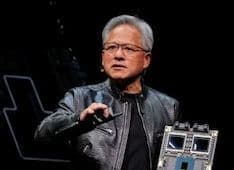
Jensen Huang has resigned as Nvidia's Chief Executive Officer (CEO), President, and member of Nvidia's Board of Directors, effective immediately, the company announced. The Taiwanese-American tech executive has quit the position 33 years after he founded the chipmaker. Huang was caught in the eye of the storm over the past week, with allegations of misconduct and falling prey to an espionage scandal surfaced. Nvidia's Board of Directors has appointed the company's Chief Financial Officer (CFO) as the interim CEO, while also launching the search for the next chief executive. On top of this, the tech giant has also appointed its first Chairman of the Board of Directors.
View

Google is bringing Gemini to Apple CarPlay, letting iPhone users talk to the AI assistant through their car's infotainment system. Drivers can use Gemini Live, check upcoming appointments through Google Calendar, or get a quick summary of emails in Gmail. They can also look for places to eat along their route. Conversations started in the car will appear in the Gemini app on their iPhone, where users can revisit them later.
View

Google announced Gemini 4 Hydrogen on Thursday as its latest AI model that brings faster AI assistance to everyday tasks. Instead of extended reasoning, the Mountain View-based tech giant claims it is aimed at coding, research and agentic workflows that require quick execution. Gemini 4 Hydrogen is available across Google's developer tools, enterprise services, Gemini app and Search, while being positioned as a more accessible option compared to the company's other AI models.
View

United Airlines said it will restrict access to AI agents seeking to book flights and manage reservations on their users’ behalf, citing a risk to cybersecurity and undermining federal regulations. The airline is the latest American corporate giant to prevent customers from using AI agents and autonomous assistants to access their systems. The move comes as airlines and banks are struggling to differentiate between real customers and AI systems operating on their behalf, such as when users share their logins with their AI assistants. Sharing passwords with apps and assistants can create security risks if those credentials get leaked or exposed. United warns that “sharing account credentials with personal, third-party, AI assistants can expose sensitive information, and actions taken by these tools may result in unintended purchases, account changes, or use of MileagePlus miles.” The airline also warns of a risk of violating federal aviation rules, such as requiring that a human completes flight check-ins to acknowledge that their bags do not contain banned substances. “As a result, United is taking steps to restrict access — directly within our digital platforms and indirectly via travel agencies and aggregators — to prohibit use by unauthorized, third-party personal AI agents or assistants,” the airline saidin a statement. “This work includes updates to our booking, ticketing and distribution policies.” The airline’s move follows a warning from banks, including Bank of America, which last week urgedcustomers not to share their passwordswith their AI assistants.
View

Hugging Face CEO Clément Delangue briefly commented on Nvidia CEO Jensen Huang’s departure on Thursday,callingit a “really sad day.” Nvidia had announced its plan to acquire the platform for open source AI models in Septemberfor $12.9 billion,making it the second-largest acquisition in the company’s history, just behind that of chipmakerGroq’s assets for $20 billionin December 2025. “This whole thing sucks, and I wish none of it had happened. It’s a really sad day! But I want to make one thing clear: we’ll keep fighting for open-source AI, harder than ever. This is too important to slow down now. Let’s go!,” Delangue wrote on X. This whole thing sucks, and I wish none of it had happened. It’s a really sad day!But I want to make one thing clear: we’ll keep fighting for open-source AI, harder than ever. This is too important to slow down now. Let’s go! The post is interesting as it implies that Huang’s departure is potentially worrying to open source advocates, and he’s attempting to offer reassurance. As Nvidia’s CEO, Huang was known as a strong advocate for open source AI and open-weight models, which is why there could be concerns about how a company that’s no longer under his leadership will now approach this space. After Nvidia announced its plans to acquire Hugging Face, the U.S. Department of Justice began making inquiries about how the deal would impact competition in the AI market,Reuters reported in October. While Nvidia pledged that the platform would preserve open support, it would also allow the company to control a major distribution channel for AI models. The Hugging Face deal is still scheduled to close in the first half of 2027. Requests for further comment on the deal status and whether Hugging Face has spoken yet with Nvidia’s interim CEO Colette Kress were not returned. Huang’s advocacy for open source and open-weight AI has long extended beyond Hugging Face. In July, the CEO published an AI policy letter as his first-everpost on the social network X. The letter, which was signed by 25 companies, including Microsoft, Meta, Hugging Face, IBM, Palantir, and others, urged the U.S. government not to over-restrict open-weight AI models. It said models that “anyone can download, inspect, modify, and run on their own infrastructure” are an important part of the AI ecosystem because they make AI “more accessible, adaptable, and widely available.” Huang also wrote that open-weight models expand access to the AI economy, strengthen competition, and give customers greater control, as they know they won’t become locked into a single provider. “Open models strengthen safety and cybersecurity, accelerate innovation and diffusion, and enable sovereignty,” his post on X stated. For my first post, I’m sharing a letter@NVIDIAsigned on why open models matter.AI will transform every industry, power every company, and be built by every country.Open models strengthen safety and cybersecurity, accelerate innovation and diffusion, and enable sovereignty.…pic.twitter.com/t02bi51N4C In August, Nvidia also announced a $6 billion deal with the coding startup Poolside to help build out an open AI ecosystem in the U.S. to help the country compete against Chinese companies like DeepSeek and Kimi K3,The Wall Street Journal reportedat the time. Last month, Nvidiaexpandedits Nemotron family of open-weight models with a large 120-billion-parameter model for agents used by the enterprise as well as with two new lightweight Bolt models that run on PCs. Earlier this year, Huang promoted open source AIduring his January keynote addressat the Consumer Electronics Show in Las Vegas, noting that open source models have “really revolutionized artificial intelligence.”

The open source community just lost one of its strongest advocates. Nvidia CEO Jensen HuangresignedThursday after he admitted to an affair with an alleged Chinese spy, raising concerns about U.S. national security and the motives behind the executive’s support for softer chip export controls on China. Huang has been a staunch supporter of open source AI, framing the ecosystem as good for safety, innovation, diffusion, and sovereignty. And as frontier AI labs increasingly move to reduce their reliance on Nvidia and build their own chips, supporting open source is also a good way for the company to diversify its customer base by selling chips to nation-states, enterprises, and any organization that wants to own its own models. Still, Huang’s resignation raises questions about whether Nvidia will carry on his legacy by continuing to support the open model community. Jensen no longer being CEO would be very very bad for the open model cause in the US. Huang’s departure also comes as Nvidia has yet to finalize a deal to acquire open source platform Hugging Face for$13 billion. Hugging Face CEO Clem Delangue said in a post on X that thecompany would continue to fight for open source, whatever happens next. Nvidia also agreed to pay$6 billion for a non-exclusive licensefor open AI coding startup Poolside’s technology. Within Nvidia, Huang pushed for the development of theNemotron familyof open-weight AI models built for long-running agentic AI systems and reasoning workloads — potential competitors to closed frontier models. One company insider told TechCrunch that they don’t expect a change in leadership to have an impact on Nemotron development. Huang also backed companies that would make American open models more competitive, investing in startups like Reflection AI and Thinking Machines Lab. Huang’s influence extended beyond Nvidia’s investments and product roadmap. He also emerged as one of the most prominent voices pushing back against Washington’s efforts to restrict the open AI ecosystem. Earlier this year, Huang wrote an open letter signed by 25 companies, including Microsoft, Meta, IBM, and Palantir, urging the U.S. government not to over-restrict open-weight AI models, many of which come from China. The impetus for that letter was Washington’s debate over how the U.S. should respond to allegations that Chinese AI labs are stealing intellectual property from American counterparts likeAnthropicand OpenAI, both of which havereportedlyappealed directly to Washington on the matter, urging stronger protections. That combination of Huang’s personal visibility and Nvidia’s market power made him the strongest counterweight to arguments from closed-model providers like Anthropic and OpenAI, which have advocated for greater restrictions on advanced AI models due to safety reasons. Without Huang, the concern among open source community members is that whoever takes over will be more cautious. Nvidia has named CFO Colette Kress as interim CEO. It’s not clear how Kress will approach the Hugging Face deal or support for the open model ecosystem, but founder-driven priorities tend to get a downgrade when leadership changes. Huang’s exit could also strengthen the arguments of those in Washington who are arguing for tougher restrictions on Chinese AI companies, particularly as the scandal surrounding his relationship with Alice Huang, the Megaspeed executive and alleged spy, putsrenewed scrutinyon his efforts to loosen chip export controls. Restrictions on open-weight models from China could kneecap competition for American companies, the most powerful of which have kept their models closed. Still, supporting open source isn’t simply a passion project Huang pursued out of idealism. It’s increasingly central to Nvidia’s business strategy. As some of Nvidia’s biggest customers, including Google and OpenAI, develop their own chips, Nvidia has an incentive to cultivate a much broader ecosystem of AI developers and customers. More players training, fine-tuning, and running models mean more GPUs sold, and less dependence on a handful of frontier labs. Huang may be gone, but Nvidia still needs an open AI ecosystem. The question now is whether that commitment can survive without the man who made it a priority. TechCrunch has reached out to Nvidia for comment. This article has been updated with information from an Nvidia employee.

Nectar, an AI-powered operating system for marketing, is launching a new AI agent designed to take a lot of the manual work out of influencer marketing, from finding the right creators to contacting them, managing partnerships, and tracking results. Founded by sisters Misbah and Farah Uraizee, both former Meta employees, Nectar came out of stealth last year and uses AI agents to help brands manage social media, customer conversations, content moderation, creator partnerships, and competitor research. Announced Thursday, its new “Creator Agent” can search for creators, check their content and brand partnerships, send personalized messages, coordinate collaborations, and monitor how campaigns perform. Instead of having marketing teams spend weeks scrolling through social media, building spreadsheets, and sending individual DMs, Nectar wants its agent to handle much of that work automatically. Nectar joins other companies introducing agentic AI assistants designed to automate influencer outreach, includingAspireandGRIN. The launch also comes as more brands turn to creators to reach customers. U.S. spending on creator advertising is expected to reach $44 billion in 2026, according to theInteractive Advertising Bureau. As companies work with hundreds or even thousands of creators, keeping track of relationships and measuring results can get pretty difficult. Nectar says its Creator Agent searches more than 300 million creator profiles to find potential partners, including smaller creators who may not yet have a large following but are gaining traction. The system analyzes videos to understand what creators post about, how their content fits a brand, and whether their previous partnerships are appropriate. It also checks brand safety by reviewing content in context rather than simply searching for specific keywords. Nectar then creates ranked lists of recommendations and adds new matches as creators become more popular. Once it finds a potential match, the agent can draft and send messages in a brand’s voice, create custom landing pages to collect creator information, and help manage contracts, product gifting, and shipping details. It also remembers previous conversations and interactions, so brands can keep track of relationships without relying on spreadsheets. “Brands can share voice guidelines in any format, and Nectar picks up the rest from their history,” CEO Misbah Uraizee tells TechCrunch. “On top of that sits a set of proprietary guardrails that keep every draft on tone and in context. Nectar understands what is being said in a video, reads the tone of the conversation, and knows the difference between a quote post on X and a TikTok comment section. A brand should not sound identical in both, and with Nectar it doesn’t.” Another feature looks for personal milestones in creators’ lives, such as an engagement, a new baby, or completing a marathon. The agent can then suggest a personalized message or gift, helping brands build relationships that feel less like one-off advertising deals. Creator Agent is available today globally and covers Instagram creators and TikTokers. The company plans to make the agent available through its Model Context Protocol (MCP), allowing teams to use it through AI assistants such as Claude, ChatGPT, Gemini, and Copilot, as well as their own custom-built agents. This past May, Nectarraiseda $30 million Series A round led by Menlo Ventures and its Anthology Fund, which is a joint initiative launched with Anthropic.

View
View
View