Pre-Black Friday Sale is LIVE! Get Up to 85% OFF AI Tool Listings + 50% OFF All Sponsorships.
Grab the DealSubmit your Tool
PoweredByAI.app is an AI Tools Directory helping individuals, businesses, and creators discover the best AI tools for writing, coding, design, productivity, and more.
© 2026 , Product of011BQ. All rights reserved.

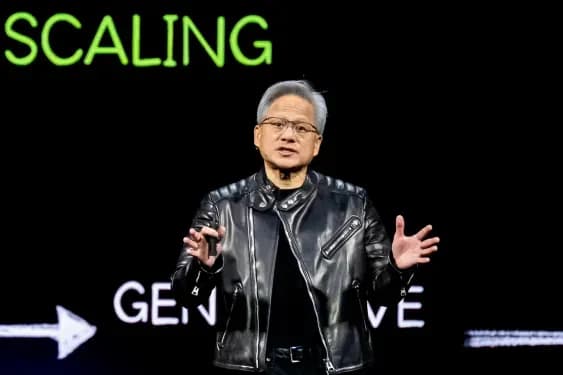
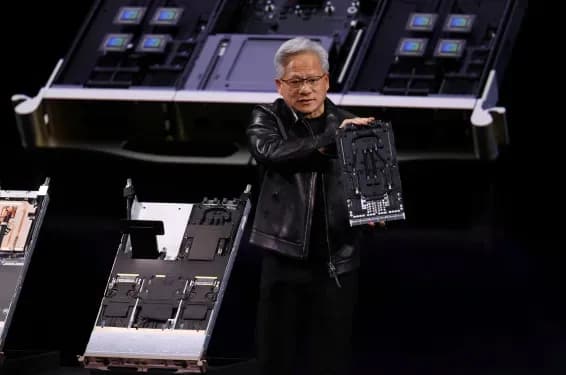
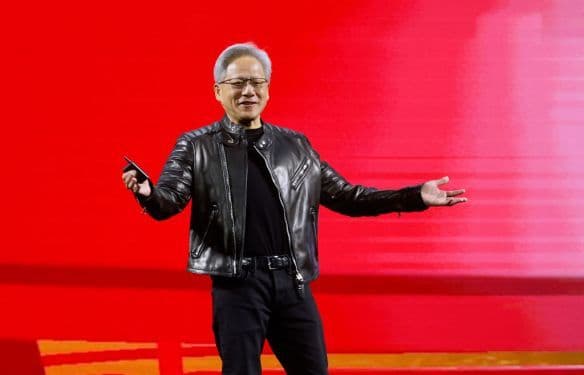
Democrats on Thursday opened an inquiry into how the Trump administration handled Nvidia’s chip sales to China. Earlier on Thursday, the companyousted its CEO Jensen Huang. He also agreed to testify to a different set of Republican-led Congressional committees. Huang was removed from the company he founded afterhe confessed to an extramarital affairwith a woman accused of being a Chinese spy. (He has since been accused of havingmore affairs, with Nvidia employees.) The alleged Chinese spy, Alice Huang, was an executive of Nvidia customer Megaspeed, a Singapore-based company that U.S. officials suspect of helping route advanced Nvidia chips into China. The Democratic inquiry comes from Rep. Richard Neal (D-Mass.), the top Democrat on the House Ways and Means Committee, and Sen. Ron Wyden (D-Ore.), the top Democrat on the Senate Finance Committee. As the minority party, they can ask questions but can’t compel answers. Theirhumdinger of a letterto Commerce Secretary Howard Lutnick asks the department to preserve records about an arrangement they find questionable and, they allege, illegal. “The scheme worked like this,” as the letter describes it. President Trump agreed to sales of Nvidia’s H200 chips to China as long as the chips, manufactured by Taiwan, were first shipped to the United States. On arriving, Trump added a tariff “effectively taking a cut of Nvidia’s sales to China through what appears to be an unconstitutional export tax system,” the letter said. Then the Commerce Department, under Lutnick, issued an export license. By the way, the deal between Trump and Nvidia to share revenue was public. In August 2025, Nvidia and AMD both agreed to share 15% of their revenue from chip sales to China with the U.S. government as part of a deal to secure export licenses, theAP reported at the time. But the letter questions why Lutnick continued to allow Megaspeed to buy chips even after he was reportedly informed by U.S. intelligence of their suspicions of Alice Huang and of Jensen Huang’s relationship with her. It questions why the department reportedly green-lit other Asian companies to buy Nvidia chips “with no physical presence at their listed addresses.” So the inquiry is aimed at the administration, not just at Nvidia and Huang. The letter also questions how Nvidia’s donations to Trump’s projects factored in. It notes that the export deal was approved after Trump learned of “Mr. Huang’s compromised position” in sleeping with an alleged spy, and after Nvidia donated $26 million toward Trump’s projects, including the ballroom. It appears to be asking if Trump used his knowledge of the affair to secure donations from Nvidia. Interestingly, in a “60 Minutes” interview with President Trump that aired on Sunday, Trump mentioned how he and his teamhad threatened an unnamed AI exec with jail, and after that, the exec “totally changed.” This Congressional investigation into Nvidia’s China sales and its dealings with Trump is the second one, so far, since news of the alleged spy affair broke. The Republican-led group involves leaders from the House Select Committee on the Chinese Communist Party, the House Committee on Foreign Affairs, and the House Intelligence Committee. That group has demanded that Huang come to them and testify in a closed-door session. They had threatened to subpoena him if he didn’t voluntarily agree. OnThursday, after his resignation, he agreed.
View

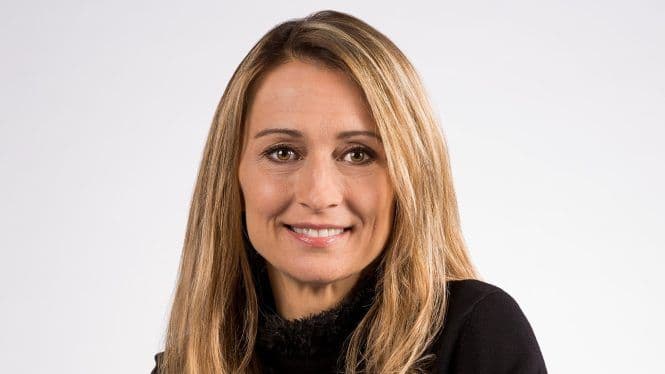
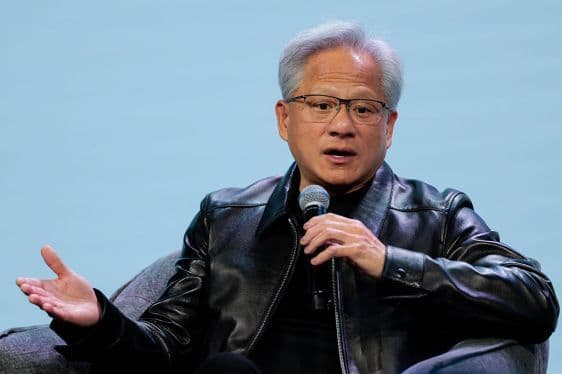
Former Nvidia CEO Jensen Huang described Colette Kress, the company’s CFO who has now replaced him as interim CEO, as “a deer in the headlights” during a presentation earlier in the summer, the Wall Street Journalreported, citing an anonymous source. Huang made the comment during a meeting with Nvidia’s finance team about the company’s plans to provide guarantees worth billions of dollars to data center operators that couldn’t afford to buy its chips up front, according to the report. He reportedly also said Kress was a person who couldn’t help him steer strategy or decision-making. Kress has been with Nvidia forover 13 years now, after serving as SVP and CFO of Cisco’s Business Technology and Operations Finance. The report said she has questioned Nvidia’s program-focused, credit-based deals involving Huang’s son-in-law Nico Caprez, and wanted to know how to decide which deals are beneficial, how to value guarantees, and determine returns. Earlier in the year, she had scaled back on Nvidia’s commitment for OpenAI’s ambitious Ohio data center project. The company was in talks to provide $250 billion in credit to OpenAI but endedup committing $105 billion. Huang resigned Thursday after reports oftwo extramarital affairs, including one with the company’s VP for healthcare, Kimberly Powell. The company is also investigating a possibleChinese espionage plot. After Huang’s resignation, Reuters reported that he was havinga third affair with another employee. Nvidia is currently searching for a permanent CEO to replace Huang, who had the top job for over 33 years.
View

Former Nvidia CEO Jensen Huang’s resignation has beenreceived with worryin Israel, the company’s “second home,” asHuang described itin 2023. The company’s importance flows both ways, as the semiconductor giant has provideda major boostto Israel’s economic forecasts in recent years. Intel, Microsoft, and many homegrown startups also conduct a sizable share of their R&D in Israel. But owing to Nvidia’s stronghold on AI given the centrality of its GPUs for training LLMs and using them, many in the country are wondering how much of a reshuffle will result from the company’s leadership crisis. As with everything at Nvidia, Huang drove the company to acquire Israeli chipmaker Mellanoxfor $6.9 billionin 2019 and use the company as the base for its largest R&D facility outside of the U.S. Nvidia also madeplans to build a multibillion-dollar campusin northern Israel. “Jensen brought Nvidia to Israel with the acquisition of Mellanox, so there is a strong positive sentiment towards Nvidia and Jensen in Israel’s tech community,” Israeli repeat cybersecurity entrepreneur Pavel Gurvich told TechCrunch. Beyond the 6,000 locals Nvidia employs, the bigger question is whether the company will remain as committed to Israel with someone else at the helm. As a result, his line of succession is being observed just as closely by those who hope the company continues to do so as by those who don’t want it to happen. The latter have already gathered that they may be in for disappointment. In a 2023 interview that is now doing the rounds on X, interim CEO Colette Kress haddeclaredthat as Nvidia’s CFO, she typically started her day “with Israel meetings, and only then continue[d] to California.” Kress may not remain in charge in the long run, but the many names floated for the roleinclude two Israelis, Apple’s Johny Srouji and Nvidia’s Michael Kagan — although they’re not at the top of thestill quite tentative list. Regardless of who gets chosen, Huang’s successor will likely have less of a grip on Nvidia and the tech industry as a whole. But investors don’t think that would cause demand for Nvidia’s product to fade away. According to Yanai Oron, a general partner at Vertex Ventures Israel, “slower decisions at Nvidia could give competitors an opening, but if that uncertainty also slows AI spending, they could end up with a bigger share of a smaller opportunity.” Nvidia has been responsible for a vast share of the spending in the global AI industry. Under Huang’s leadership, the company used its cash reserves to massively invest across the spectrum, bothin companiesand in its ownnext-generation chips. Such an empire may not be doomed to fall with its architect’s ouster, but it does seem less likely to become a full-on monopoly. According to Adi Levanon, a founder and managing partner at Selah Ventures, “[Huang’s] departure doesn’t dismantle Nvidia’s technology or ecosystem, but it could give competitors more room to shape what comes next.” And now that companies globally are deploying increasingly demanding AI agents into their workflows, there’s been a lot of interest — and some venture capital — flowing into developers ofAI-specific chipsandinference softwarethat could compete with Nvidia’s. “These challengers now have a window to prove a different approach delivers better economics; a leadership change alone won’t win them the business,” Levanon said.

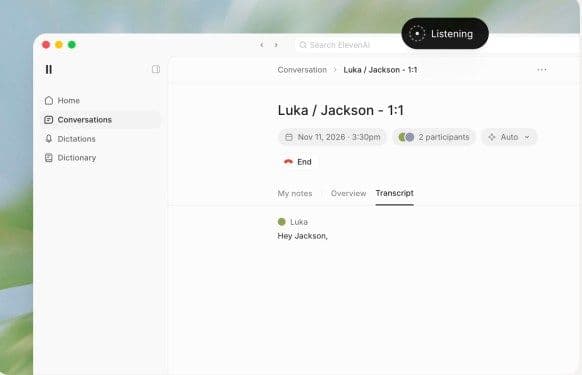
In the last few months,Fireflies,Wispr Flow, andGranolahave all released competing capabilities in the dictation and meeting note-taking space. The newest entrant in that category is voice AI giantElevenLabs, which this week released an experimental app called ElevenAI that combines meeting note-taking, dictation, and agent integration. Launched during its 11/11 Summit in New York, ElevenAI is still in preview, and you have to sign up for early access instead of just downloading an app. ElevenLabs,valued at $22 billion, is very much positioning this as a product that lives within a team as compared to a productivity tool for an individual. ElevenAI packs all the features typically found in other apps in the category. It can take meeting notes across your meetings and notify other participants that the conversation is being recorded. Users can query data across meetings and get live assistance during a chat, helping them recall a key detail from older conversations. ElevenLabs also allows companies to integrate ElevenAgent and take follow-up actions such as writing a draft email based on meeting notes. Plus, there’s a dictation feature, which lets users convert speech to cleaned-up text in any app with support for over 90 languages. The company said that the app is capable of understanding industry-specific terms across dictation and meeting transcription. ElevenAI allows the company to use its own model as a showcase and also utilize its agent platforms for better context funneling. The startup’s positioning might not be to directly compete in the productivity market, but rather to give enterprise teams an option to not buy licenses to a notetaker and use its solution instead. All meeting-related tools are rushing to become central knowledge hubs for companies while aiming to automate knowledge extraction and follow-up actions In the last week, the company also launched itsv3 series of Scribe speech-to-text modelswith live transcription capabilities and the ability for companies to fine-tune models using their own data,a tool to pick the right language model based on use case, and a routine creator that automates tasks based on the transcript.
View

Nvidia co-founder and nowformerCEO Jensen Huang has never been as prone to controversy as AI leaders like OpenAI’s Sam Altman or SpaceXAI’s Elon Musk. But the 63-year-old industry kingpin recently admitted that hecheated on his wifeof 40 years in affairs that could have ramifications beyond Huang’s personal life and U.S. national security. U.S. officials believe that one of Huang’s likely romantic interests, Megaspeed executive Alice Huang, isa Chinese spywho has been feeding information back to Beijing. (Alice Huang, a Chinese citizen, is of no relation to Jensen Huang.) Megaspeed is a Singapore-based AI infrastructure company that reportedlypurchased$4.8 billion worth of Nvidia chips over the last two years. The U.S. and Singapore have both previously investigated Megaspeed over suspicions that the firm was illegally sharing chips with China. The Justice Department has since taken over the federal investigation into the company,The New York Timeshas reported. The story took a sudden turn on Wednesday. Citing five people who worked at Nvidia, the Times reported that Huang alsohad an extramarital relationshipwith Kimberly Powell, the company’s vice president of healthcare, who reports directly to him. Nvidia, Huang and Powell have not confirmed the report. Reached by a Times reporter, Huang reportedly said, “I don’t think you should be talking to me directly,” before hanging up. By early Thursday morning, Huang wasno longer CEOof the company he co-founded 33 years ago. Then, Thursday afternoon, Reuters dropped another bombshell, publishing a report alleging that Huang had yet anotherextramarital affairwith another unnamed Nvidia employee. The U.S. and China are embroiled in a fierce technological arms race to build the most advanced AI infrastructure, which could shape each country’s economic future, military prowess, and capacity for innovation. Nvidia is valuable in this competition as one of the world’s largest makers of AI chips, which are essential for accelerating AI development. But as an American company, Nvidia faces government restrictions on the sale of its most powerful chips to Chinese entities. As the controversy unfolds, we are organizing the most relevant events into a reverse-chronological timeline to keep you up to date. More reports continue to roll out that illustrate the shock and severity of Huang’s resignation from Nvidia. Bloombergreportedthat Huang looked “broken and shattered, his legendary energy depleted” by the time he surrendered his role on Wednesday night, uttering phrases like “whatever” and “I don’t care.” Separately, The Wall Street Journalreportedthat Huang had beencriticalof his CFO and current interim CEO, Colette Kress. Huang is said to have described Kress as “a deer in the headlights” during a presentation this summer, and he had described Kress as someone who could not help him steer strategy or decision-making. In ascathing lettersent to Commerce Secretary Howard Lutnick, Representative Richard Neal (D-MA) and Senator Ron Wyden (D-OR) said they will investigate how the Trump administration handled Nvidia’s chip sales to China, especially after Trump was briefed about Huang’s relationship with a purported Chinese spy. “Although [Lutnick] and President Trump were reportedly briefed on this intelligence, the Administration did not appear to acknowledge this evident national security threat. On the contrary: despite reportedly learning of Mr. Huang’s compromising relationship last fall, President Trump granted Nvidia permission to sell its advanced H200 AI chips to China in December 2025 in exchange for a cut of the export sales,” the letter states. That same evening, Senator Tim Scott (R-SC) requested that Huang and Lutnick both testify before the Senate Banking Committee. “The American people deserve answers,” Scottwroteon X. After Huang was already ousted from Nvidia, we continued to learn more incriminating claims about the former CEO. According to Reuters, Huang had a third affair with an additional, unnamed employee of Nvidia. Nvidia said its board had accepted Huang’s resignation on Wednesday. The company’s current CFO,Colette Kress, will take over as interim CEO while still fulfilling her CFO duties. Nvidia is expected to conduct a larger search to determine a permanent successor to Huang. Harvey C. Jones, a managing partner of Square Wave Ventures and former CEO of Synopsys, was appointed as the company’s first-ever chair of the board of directors. Jones has been on Nvidia’s board since 1993. Later in the day, Huangconfirmedthat he would testify in Congress at some point before Thanksgiving, which falls on November 26. “Jensen and I have been very at odds as some of you already know on export controls, but Nvidia is a very important company to the United States of America,” House Foreign Affairs Committee Chairman Brian Mast said to reporters. “I don’t want to see anything hurt in Nvidia, but he has some very serious questions to answer.” The testimony is expected to take place behind closed doors, but Mast believes the briefing will be recorded and transcribed. After reports of a second extramarital affair, Nvidia’s board reportedly plans to meet to discuss Huang’s future at the company, per The Wall Street Journal. Stock fellabout 8%in after-hours trading on Wednesday and is down 11% in the past five days. Huang famously delegates very little and has about 60 direct reports, hehas said. The company has not had an obvious successor or a succession plan. The New York Timesreportedthat Jensen Huang also had an affair with Nvidia vice president of healthcare Kimberly Powell, who reports directly to the CEO. According to the report, Huang and Powell were captured on film “being affectionate” at a hotel during a conference earlier this year. Huang has not responded to a request from three Republican congressmen to appear for a closed-door briefing for questioning about his affair with an alleged Chinese spy. House China Committee Chairman John Moolenaar said Wednesday on Fox Business that if Huang doesn’t agree to the briefing, he’ll likely besubpoenaed. The Nvidia CEO pulled out ofupcoming speaking engagementsat the ElevenLabs Summit and Anthropic CEO Forum. Alice Huang and her family reportedly built a network of companies in China and Singapore to acquire Nvidia chips, including founding a Chinese company called Shanghai Century Litong. Founded in 2023, it became an Nvidia-preferred cloud partner, giving it priority access to chips,The Information reported. The Information also reported that Shanghai Century Litong facilitated buying $7.5 billion worth of Nvidia’s chips, including banned chips. Nvidia’s head lawyer, Tim Teter, intervened in a 2025 U.S. government probe surrounding the suspected smuggling of AI chips by Megaspeed International,Bloomberg reported. Teter contacted Commerce Under Secretary Jeffrey Kessler asking questions about whether the Trump administration played a role in detaining Alice Huang. In early 2025, Alice Huang and a business partner sought China-based investors for an Asian data center, promising they had no problem in securing GPUs,the Financial Times reported. On Sunday night, President Trumpweighed inon Huang’s controversy and showed support for the Nvidia CEO. “I have not spoken to him about it. I just know he’s a fine person, but you never know what’s going on,” Trump said. When asked if Huangshould remain chief of Nvidia, Trump said, “I think so. Oh yeah, sure.” Jensen Huang wrote in aletterto Nvidia employees — which was also published as a press release — that he cheated on his wife. “I owe my family and all of you an apology,” Huang told his company. “I was unfaithful to my wife. My actions hurt her and our children. There is no excuse for what I did. I am deeply sorry.” Huang did not mention Alice Huang by name in the message, but linked his infidelity to “the national security concerns raised in news reports.” “Nvidia’s Board of Directors has initiated an independent investigation. I support the investigation and will cooperate fully. I love our country and our company. I am committed to protecting Nvidia and supporting America’s national security. I am proud and grateful to be an American,” Huang wrote. Nvidia shares slidover 5%the following day. Three Republican congressmen — Chairman John Moolenaar of the House Select Committee on China, Chairman Brian Mast of the House Foreign Affairs Committee, and Chairman Rick Crawford of the House Permanent Select Committee on Intelligence — sent a request to Huang for a closed-door joint briefing with their three committees. “Recent reports raise significant national security concerns regarding the [People’s Republic of China]’s access to sensitive U.S. technology and information,” the chairmenwrote. “The issue of PRC infiltration and access to cutting-edge U.S. technology is core to the investigative work of our three committees this Congress. It is vital that Congress determines the extent to which U.S. national security has been placed at risk.” U.S. officials had been investigating Alice Huang and Megaspeed for more than a year whenthe New York Timesbroke the story in late October that the two executives also had a close relationship. An Nvidia spokesperson denied that this relationship was something out of the ordinary. “Jensen’s interactions with Ms. Huang are not unusual or unexpected. Meetings with customers are part of a CEO’s job; Jensen talks with thousands of customer executives every year,” Nvidia spokesperson John Rizzo said. He added that “if the U.S. government believes that any person is a threat to American industry, it would let us know.” U.S. officials circulated a secret memo among policymakers that warned that Megaspeed’s Alice Huang, who had a relationship with Jensen Huang, was a spy for China’s Ministry of State Security. This memo was not public knowledge until it was laterreportedby the New York Times. Secretary of State Marco Rubiosupervisedthe drafting of the memo. Around the same time, per the New York Times’report, U.S. President Donald Trump was briefed about intelligence findings that possible Chinese spy Alice Huang had formed a close relationship with Jensen Huang. Trump did not act on this information. The Nvidia CEO, anally of Trump, hasrepeatedly advocatedfor the U.S. government to let Nvidia expand its business in China. Megaspeed wasconfirmedto be under investigation by both the U.S. and Singaporean governments in October 2025. As a customer of Nvidia, Megaspeed wassuspectedof helping Chinese companies get around American embargoes on chip exports. Megaspeed, a neocloud that used Nvidia chips, had been renting computing power to Chinese internet giant Alibaba and other Chinese companies, the Times reported. A Commerce Department official who had visited Megaspeed’s data center in Malaysia in 2024 had found a hoard of Nvidia equipment that was still packed in boxes and the concern was that this equipment was being directly shipped somewhere else, like China, rather than installed and sold as a cloud service. Jensen Huang had been spotted socializing with Megaspeed executive Alice Huang as early as 2024 in Taiwan, where the Nvidia CEO was born. These investigations into Megaspeed highlighted concerns about the degree to which Nvidia is able to track its chip exports. At the time, an Nvidia spokesperson told press that the company did not have “any reason to believe products had been diverted.” “NVIDIA visited multiple Megaspeed sites yet again earlier this week and confirmed what we previously observed — Megaspeed is running a small commercial cloud, like many other companies throughout the world, as allowed by U.S. export control rules,” the Nvidia spokespersonsaidat the time.

ChatGPT can now shop for you. On Friday, OpenAIlaunched a new wallet featurethat lets its agents, calleddots, help you decide what to buy and then complete the purchase on your behalf. The option will initially be available to a limited number of U.S. ChatGPT Pro subscribers, ages 18 and up, with a U.S.-issued Visa, Mastercard, or American Express. OpenAI says that users are fully in control of the purchases, as they’re able to review the items, the total, and the payment card that will be used to complete the transaction before the checkout occurs. In addition, users will approve the purchases directly with a security check like Face ID or a fingerprint, which creates a record of their transaction. The addition comes as consumer-facing AI tools are working to find the right product-market fit, in terms of how they can help people be more efficient as they complete various tasks. While companies likeDoorDashandUberhave so far reported low numbers of orders placed by AI agents, Meta’s Muse, which now has over 10 million users, has seen AI-assistedshopping become a top activity on its app. Other personal AI agents, like Instinct, also supportmaking purchases on users’ behalf. It’s no surprise, then, that OpenAI would want to enter this space more with an agentic shopping feature of its own. To get started, ChatGPT subscribers add their eligible payment cards to the new ChatGPT Wallet, then ask their dot to help with a purchase. (This setup is a one-time thing; users don’t have to re-enter their payment information every time they buy.) When it’s time to transact, ChatGPT’s Wallet charges the selected card using a payment token, which is a substitute for the user’s actual card details, so that information isn’t shared with either the dot or the merchant. The merchant will automatically receive what it needs to fulfill the order from the dot, like the shipping address and contact information, OpenAI says. The company notes that customers who shop via their dots will still be able to earn their credit card rewards and be able to take advantage of protections that typically come with cards, like being able to dispute transactions. The limited availability at launch will allow OpenAI to test and improve the feature and its capabilities before rolling it out more broadly. In the future, the company plans to offer users more control over the feature by allowing them to set spending limits or configure other parameters around purchase categories or time periods, so they can pre-approve purchases that their agent can then handle more autonomously. It also aims to make the agentic shopping feature an option at a broader number of supported retailers. This could be a challenge in some areas, where retailers areblocking AI agents from using their site; on the shopping front, the largest retailer to ban AI agents is Amazon, as it aims to steer users to its own AI agent, Alexa, instead. To help retailers adapt to agentic commerce, OpenAI also published aCommerce Partner Playbookthat offers tools and guidance to sites that want to support customers using agents.

The leading open-weight models developed by Chinese companies were trained on Nvidia chips that the U.S. government restricted from shipping to its largest geopolitical rival, a new research effort claims. The apparently widespread access to Blackwell GPUs among Chinese frontier labs shows the magnitude of the problem facing the leading chip designer. Nvidia CEOJensen Huang left the company this weekafter admitting to his affair with Alice Huang, executive of Megaspeed, a company implicated in smuggling Nvidia chips into China. Alice Huang has also been alleged to be an agent of China’s intelligence service. While Jensen Huang’s relationships with a customer and two employees have drawn the most public interest, Nvidia’s potential corporate liability for export control violations likely factored into its decision to part ways with Huang. U.S. export controls are intended to protect the country’s leadership in AI capabilities against China, but Huang has long sought to open up that market. Blackwell GPUs are banned from export to China or Chinese-owned firms, while the Trump administration allows Nvidia to export the H200, a less powerful chip, provided shipments take a circuitous shipping route that allows the U.S. to claim a 25% tariff. Will DePue, a former OpenAI researcher who leads the nonprofit research group Unemployment Labs,analyzed the weights— the unique structure — of large language models released openly by DeepSeek, Moonshot AI, MiniMax, and Ant Group. The weights still reflect the configurations of the chips used to train them, and DePue was able to find compelling evidence that the most closely watched models, including Moonshot’s Kimi’s K3 releases and DeepSeek’s V4 models, bear fingerprints from training on Blackwell chips. White House technology adviser Michael Kratsiossaidearlier this year that Moonshot had used export-banned Nvidia chips, citing U.S. intelligence sources. Epoch AI, a nonprofit research organization, estimates that about two million advanced chips entered China in 2024 and 2025through schemesdesigned to hide their final destination. That doesn’t mean that these models were trained entirely on Nvidia chips, or that export control laws were necessarily violated; the chips could have been in an offshore data center, which has proven a popular way for Chinese firms to access compute anddriven an industrial revolutionin Malaysia. Epoch’s data estimates that 275,000 Nvidia AI accelerators were imported to Malaysia in 2024 and 2025. However, the ostensible goal of the export bans is to prevent exactly that: Chinese AI labs training on the most powerful chips. China hawks have long called for stronger controls on who uses chips, not just who owns them or where they are installed. “If we care about the U.S. tech edge, it doesn’t make any sense to me that you would not allow Chinese companies to access chips in mainland China or Hong Kong and Macau, but then say, actually, if you just go over to Malaysia, you can do whatever you want,” Sam Bresnick, a researcher at the Georgetown Center for Security and Emerging Technology, told TechCrunch this summer. Megaspeed, the company led by Alice Huang, has been at the center of that trade for several years through its subsidiary Speedmatrix, and has been the subject of investigations by both the U.S. andSingaporeangovernment. Friday, Bloombergalso reportedthat a company with links to Alice Huang was involved in smuggling banned Nvidia chips to a data center in Shanghai. In May, the short-selling research firm Culper published a report arguing that Nvidia had a “China problem” because a significant share of its revenue was driven by Chinese demand, either through remote data centers or smuggling in violation of U.S. law. It detailed Megaspeed’s relationship with Nvidia and alleged that Alice Huang’s companies are backed by Chinese firms that are barred from accessing U.S. chips. Ironically, short-seller Culper’s bet against Nvidia wasn’t driven by the expectation of a U.S. government crackdown. Instead, it was focused on the Chinese government’s response to the bans, which was to recommit to its domestic chip industry. If China succeeds, billions of dollars in Chinese demand for Nvidia chips could dry up. Some 600,000 H200 chips arereportedly stockpiledin Hong Kong, awaiting shipment into China. While Chinese companies might want the chips, observers have no consensus on why they haven’t been cleared for import. Graham Webster, a research scholar at Stanford who focuses on U.S.-China technology policy, said he doesn’t buy the idea that holding the chips back would drive domestic production, since demand for chips is so large. Other theories for the hold-up include preparation for a potential trade deal that would involve importing a large volume of U.S. goods, or concerns about potential surveillance technology in the chips. For now, U.S. companies have limited obligations to track what their customers do with controlled goods like AI chips. However, Jensen Huang’s personal and professional entanglements with Alice Huang create a much bigger problem for Nvidia if government investigators confirm that chip smuggling took place and that he was aware of it. Nvidia and Huang have both vouched for Megaspeed’s data centers, saying Nvidia officials had visited them to confirm they were legitimate. The U.S. government’s treatment of Nvidia and Megaspeed is also under scrutiny. Secretary of Commerce Howard Lutnick, who oversees the agencies that license chip exports, could reportedly lose his job after reports that his investigatorsfailed to uncoversuspicious chip buyers and weretoo cozywith Nvidia officials.

Agent management startupLangChainhas raiseda $300 million Series C at a $3 billion valuation led by CapitalG, with participation from investors, including Singapore’s GIC, DFJ Growth, IVP, and Sapphire Ventures, the company announced on Friday. That’s more than double its $1.25 billion valuation when it raised $125 millionabout a year ago, led by IVP. LangChain began in 2022 as a popular open source project that handled the kinds of tasks that early-stage LLMs found difficult, like searching the web, calling APIs, and interacting with databases. As the frontier AI labs delivered harnesses that now competently do those tasks, LangChain turned its focus toward managing AI agents. It has apparently found its stride in this highly competitive area with a simple message: letting businesses own their own intelligence. With its open source roots, the startup says its agent creation and management software, LangSmith, is not trying to lock users into any particular model, cloud, or ecosystem, unlike the major clouds or frontier AI labs. It also promises that LangSmith will contain agent behavior and is easy to use. True, there are plenty of other startups pitching similar advantages these days and also doing well (case in point is newcomer Mintive). However, LangChain has had a head start and now claims 7,000 LangSmith customers, including big-name startups like Harvey, Rippling, and Clay, and enterprises like Nvidia, Toyota, and Salesforce.
View

It was the resignation heard across the world. Jensen Huang, Nvidia’sembattled CEOwho co-founded and led the company for 33 years,had officially stepped down. “It’s like a bomb went off,” one neocloud founder told TechCrunch when he first heard the news. Over the last several years, Nvidia has been aprolific investor, pouring tens of billions into startups annually and participating in 105 rounds this year alone, often as the largest investor, according to PitchBook. “If that direction changes, it’ll be a big blow to so many young companies,” said Maria Davidson, founder of Relational Capital. Huang’s absence leaves the startup ecosystem without one of its biggest champions and with far less capital for now, investors say, which could have a massive impact on dealmaking, valuations, funding, and even competition. “Nvidia is carrying almost every AI-native startup from application to neocloud,” Dawn Capital’s Shamillah Bankiya told TechCrunch. Most of the significant decisions to invest in startups often came from Jensen himself, according to Umesh Padval, managing partner at Seligman Ventures. Padval has known Huang since serving on the board of Mellanox Technologies, a networking chipmaker Nvidia acquired for approximately $7 billion in 2020. While there is hope that Huang’s eventual successor will resume his dealmaking spree, investors aren’t hopeful that it will happen in the short term. Nvidia’s interim CEO, Colette Kress,is expected to institute some changes, especially when it comes to Nvidia’s investments into AI startups at the crux ofthe billion-dollar data center build-out. Huang’s rampant dealmaking in this sphere has been a source of concern for Wall Street. “She’s much more conservative,” one investor said of Kress. “I don’t think she’s going to commit the same amount of money to keep the early-stage ecosystem going.” Nvidia’s biggest bets were backing neoclouds, inference providers, and open weight models, which are expensive for smaller companies to build. “Jensen’s initiatives are a big reason an ecosystem has emerged despite that,” Zain Javaid, co-founder of the hardware company Ghost, said. For instance, Nvidia backed CoreWeave when it was still private and participated in two of Crusoe’s rounds, including its $1.4 billion Series E. It boughtHugging Face this year for $13 billion(expected to close in 2027) and holds investments in Mistral AI, Lambda, and Black Forest Labs. Nvidia was often the largest investor in the deals. Last year, it wrote an $800 million check into a $2 billion Series B round for Reflection AI, before the open source startup began to earn meaningful revenue, according to theWall Street Journal. “Jensen believed in open source and frankly speaking, Europe,” Bankiya said of how Huang invested so much in AI across the world. The cease of that support in other regions outside of America, like Europe “would be a massive funding and honestly ecosystem gap that no one can fill.” It’s also true that Nvidia was such a dominant player in the ecosystem that at times, it felt like a monopoly. By backing so many companies with such generous checks, Nvidia effectively locked those startups into using its chips, which helped reinforce its dominant market position. If the company does grow more conservative with its startup investments, that could leave more room for rivals and smaller competitors. (Coincidentally, Googleannounced two new chipsthis week amid Huang’s Nvidia fallout.) Some investors with whom TechCrunch spoke hope that large cloud companies and other chipmakers will step in to back startups and fill some of the void that will likely be left by Huang. Dharmesh Thakker, a general partner at Battery Ventures, for example, expects Big Tech rivals to vie for Nvidia’s investment crown, “depending upon who brings the best combination of a great product, an ecosystem and community to compete with CUDA, and the financial power to bankroll the ecosystem,” he said. CUDA is Nvidia’s software platform that enables developers to run AI models on its GPUs. While companies like Google, Amazon, Microsoft, and AMD may back mature startups to drive adoption of their chips and clouds, Thakker doubts they will pour hundreds of millions into pre-revenue infrastructure startups the way Nvidia did. Under Huang, infrastructure companies that needed $100 million to $500 million in GPUs would often raise half of that amount at valuations of $1 billion or more from Nvidia just to get started, one VC said. The chipmaker’s participation gave other investors the comfort in backing these companies at the lofty valuations. Now Nvidia is expected to be more selective in the new companies it backs, while writing smaller-sized checks into its existing portfolio, contributing to a drop in valuations. “When Nvidia was on the cap table, everyone felt safe,” Padval said. Without that backing, investors say traditional VCs are likely to think twice before writing checks into these startups and may even pause certain dealmaking. Even so, few believe that Nvidia’s investment slowdown will by itself halt the broader AI boom. Though everyone agrees that Huang is a massive loss for Nvidia, one of his ex-employees, Amulya Vishwanath, who now runs her own VC fund, said that “founders and leaders must be held accountable,” and that the ecosystem is bigger than one person. “That talent will, and must, continue to thrive.”

Women founders have asked the Karnataka government to make GPUs, hardware facilities, and industry connections more accessible.
View

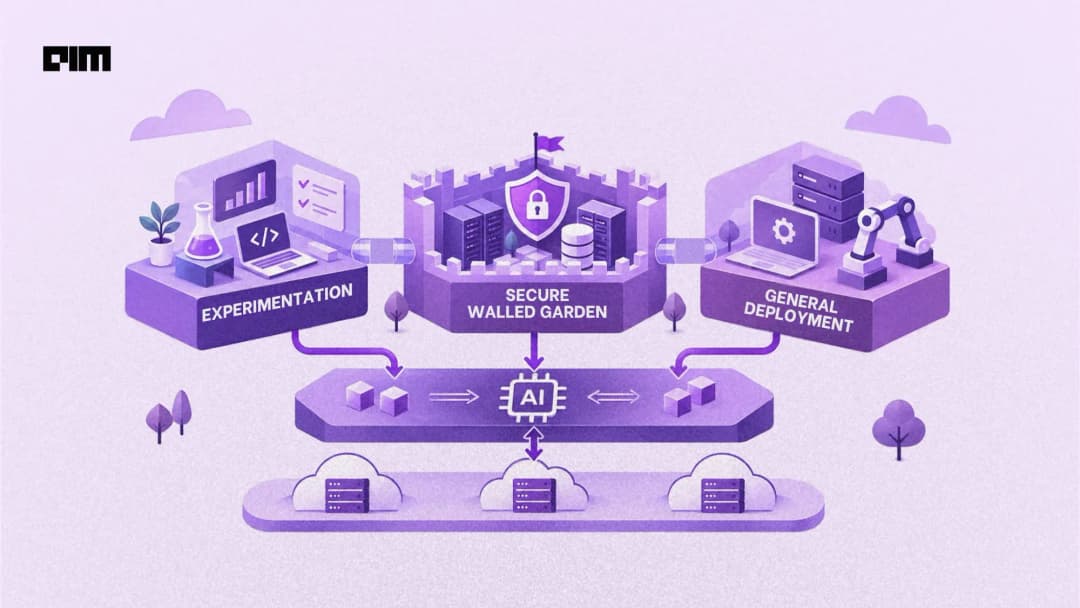
Enterprises must decide where each AI application should run, what information it can use and what it is allowed to do.
View

Adobe will integrate Google's AI models into its creative applications and bring Acrobat and other tools into Google's productivity and AI ecosystem.
View
View
View
View
View
View