Latest AI News

Not All Robots at the India AI Impact Summit were Chinese
Physical AI is finding its way into factories and fields. The emphasis throughout the summit was on usable deployments rather than speculative research.
View

Netflix Achieves 4.7x Faster LLM Post-Training With New Distributed Platform
At Netflix, post-training includes personalisation, recommendation, and search.
View

Macron Urges India to Join France in Banning Social Media for Children Under 15
“I know, Mr PM, you’ll join this club,” he said, calling India’s participation an important step to protect children.
View

Google Cloud’s VP for startups on reading your ‘check engine light’ before it’s too late
Startup founders are being pushed to move faster than ever, using AI while facing tighter funding, rising infrastructure costs, and more pressure to show real traction early. Cloud credits, access to GPUs, and foundation models have made it easier to get started, but those early infrastructure choices can have unforeseen consequences once startups move beyond free credits and into real cloud bills. On this episode of TechCrunch’sEquitypodcast, Rebecca Bellan caught up withDarren Mowry, Google Cloud’s vice president of global startups who is right at the center of those tradeoffs. Together, they discuss what Mowry’s seeing across the startup ecosystem, how Google Cloud is competing for AI startups, and what founders should be thinking about as they scale. Listen to the full episode to hear about: Subscribe to Equity onYouTube,Apple Podcasts,Overcast,Spotifyand all the casts. You also can follow Equity onXandThreads, at @EquityPod.
View
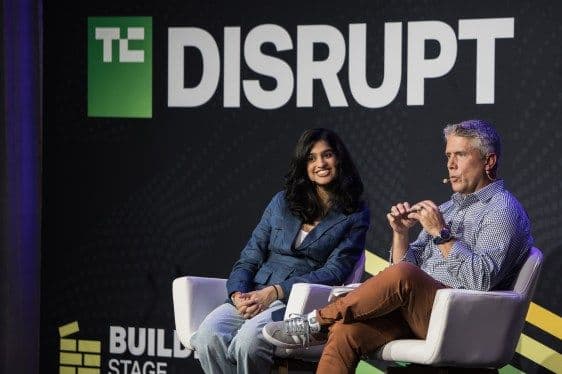
Is your startup’s check engine light on? Google Cloud’s VP explains what to do
Loading the player… Startup founders are being pushed to move faster than ever, using AI while facing tighter funding, rising infrastructure costs, and more pressure to show real traction early. Cloud credits, access to GPUs, and foundation models have made it easier to get started, but those early infrastructure choices can have unforeseen consequences once startups move beyond free credits and into real cloud bills. On this episode of TechCrunch’sEquitypodcast, Rebecca Bellan caught up withDarren Mowry, Google Cloud’s vice president of global startups who is right at the center of those tradeoffs. Watch as they discuss what Mowry’s seeing across the startup ecosystem, how Google Cloud is competing for AI startups, and what founders should be thinking about as they scale. Subscribe to Equity onYouTube,Apple Podcasts,Overcast,Spotifyand all the casts. You also can follow Equity onXandThreads, at @EquityPod.
View

Kana emerges from stealth with $15M to build flexible AI agents for marketers
Marketing is one of the few operations no industry can afford to ignore, which is why we have a veritable host of AI-powered marketing tools being shoved into marketers’ faces today. All the social platforms, from Facebook and Instagram to TikTok, and major incumbents like Microsoft and Google, to content-generation startups like Jasper and Copy.ai, offer AI tools that claim to make marketers’ lives easier in uncountable ways. That was partly why I was confused to see yet another marketing AI startup entering the fray: San Francisco-based Kana just came out of stealth with a suite of AI agents that can do data analysis, audience targeting, campaign management, customer engagement, media planning, and optimizing for AI chatbots. The startup has raised $15 million in a seed funding round led by Mayfield. But Kana has something going for it that most marketing startups today don’t: Its co-founders, Tom Chavez (CEO; pictured above on the right) and Vivek Vaidya (CTO; pictured above on the left), have been building marketing tech for more than 25 years. Kana’s actually their fourth venture afterRapt(acquired by Microsoft in 2008),Krux(bought by Salesforce in 2016), and startup studiosuper{set}, which they incubated Kana in for nine months. Calling this a “wondrous” time to be building, Chavez said there was a clear opportunity to bring their experience and today’s AI tech to bear on this class of problems. “We see a market that’s crying out for solutions that meet this moment […] We understand the space deeply, having wallowed in it arguably a little too long; having really stood in our customers’ pain,” he told TechCrunch. The solution, as Kana pitches it, involves “loosely coupled” AI agents that can be tailored “on the fly,” integrated into legacy marketing software, and can simultaneously work on different operations. So a marketer could, for example, upload a media brief that Kana’s agents would analyze to figure out the campaign goals, search for the audience to target, and pull in data from inventory and market research to further tweak the plan. The platform bakes in autonomous campaign tracking, optimization, and reporting. Alongside agents, Kana offers synthetic data generation to augment third-party data sources for activities like market research and audience targeting. This, Chavez argued, could help companies reduce the costs of using third-party data, fill in gaps in the data, and help marketers run tests on various platforms faster and narrow down strategies. Kana says this is all done while keeping humans in the loop so that marketers can approve the AI agents’ actions, give feedback, and customize what the agents do as their needs change. Chavez and Vaidya emphasized the importance of the platform’s flexibility, arguing that the ability to deploy, tailor, and build new agents in real time would let marketers see results on their campaigns faster than they would with legacy systems. Going forward, the startup sees that very flexibility to customize its platform for customers, doubling as its moat against incumbents and other startups building similar products. “We have the opportunity not to create bespoke solutions, but to highly tailor and configure these solutions to meet customers where they are. Larger companies just are never going to get there,” Chavez said. “We live in a world which allows us to explore a third option [with customers]: not build, not buy, but build with — build with in a way which is supported,” Vaidya added. “We can move with insane speed that these big companies just cannot. And that’s our advantage.” Kana will use the fresh cash to expand hiring across engineering, product, and go-to-market. Mayfield managing partner Navin Chaddha is joining the company’s board.
View

Google adds music-generation capabilities to the Gemini app
Google announced on Wednesday that it’s adding a music-generation feature to the Gemini app. The company is usingDeepMind’s Lyria 3 music-generation modelto power the feature, which is still in beta. To use the feature, you’ll describe the song you want to create, and the app will generate a track along with lyrics. For instance, you could ask Gemini to create a “comical R&B slow jam about a sock finding its match,” and the app will generate a 30-second track along with cover art made by Nano Banana. Google said that you can even upload a photo or a video, and the AI-powered tool will create a song to match the mood of the media file. Loading the player… The company said that Lyria 3 improves onthe previous generation of models, creating more realistic and complex music tracks. Users can also change and control other elements like style, vocals, and tempo. Along with rolling out Lyria 3 to the Gemini app, Google is making the model available to YouTube creators through the Dream Track feature on YouTube,a toolthat helps creators make AI-generated tracks. The option was only available to YouTube creators in the U.S. until now. But with this release, Google is expanding Dream Track availability globally. Google said that you can’t mimic an artist outright, but if you add an artist’s name to your prompt, Gemini will create a track in a similar style or a mood. (It’s not clear if generation will make it easier for others to decode the music style of a particular artist.) “Music generation with Lyria 3 is designed for original expression, not for mimicking existing artists. If your prompt names a specific artist, Gemini will take this as broad creative inspiration and create a track that shares a similar style or mood. We also have filters in place to check outputs against existing content,” the company said in ablog post. Google noted that all songs created with the Lyria 3 model will have a SynthID watermark to identify AI-generated content. The company said that it’s alsoadding capabilities to identify AI-generated musicwith SynthID within Gemini. Users will be able to upload tracks and ask Gemini if it is AI-generated. Music generation is rolling out to all 18+ Gemini users across the world with support for English, German, Spanish, French, Hindi, Japanese, Korean, and Portuguese. AI-generated music has created mixed sentiments among artists and listeners. On one hand, companies like YouTube and Spotify are adopting AI and signing contracts with music labels to monetize AI-generated music. On the other hand, AI model and tooling companies are facing lawsuits from the music industry over copyrights of the training material. Platforms likeDeezer have published tools to mark AI-generated musicto curb fraudulent streams of this kind of music.
View

Amazon halts Blue Jay robotics project after less than six months
Amazon has hundreds of thousands of robots in its warehouses, but that doesn’t mean all of its robotic initiatives are a success story. The ecommerce giant has halted its Blue Jay warehouse robotics project just months after unveiling the tech, as originallyreported by Business Insiderand confirmed by TechCrunch. Blue Jay, a multi-armed robot designed to sort and move packages, was unveiled in October for use in the company’s same-day delivery facilities. At the time, the company was testing the robots at a facility in South Carolina and said it took Amazonsignificantly less time to develop Blue Jay— only about a year— than it did to develop its other warehouse robots, a speed the company credited to advancements in AI. Amazon spokesperson Terrance Clark told TechCrunch that Blue Jay was launched as a prototype — although that was not made clear in the company’s original press release. The company plans to use Blue Jay’s core technology for other robotics “manipulation programs” with employees who worked on Blue Jay being moved to other projects. “We’re always experimenting with new ways to improve the customer experience and make work safer, more efficient, and more engaging for our employees,” Clark told TechCrunch over email. “In this case, we’re actually accelerating the use of the underlying technology developed for Blue Jay, and nearly all of the technologies are being carried over and will continue to support employees across our network.” Amazon also unveiled the Vulcan robot last year, which is used in the storage compartments of the company’s warehouses.Vulcan is a two-armed robot, with one arm meant to rearrange and move items in a compartment while the other is equipped with a camera and suction cups to grab goods. The Vulcan can allegedly “feel” the objects that it touches and was trained on data gathered from real-world interactions. Amazon has been developing its internal robotics program since 2012 when it purchased Kiva Systems, a robotics company whose warehouse automation technology formed the foundation of Amazon’s fulfillment operations. It surpassed1 million robots in its warehouseslast July.
View

India Could Be AI’s Biggest Success Story Yet. Sundar Pichai & Demis Hassabis Explain Why
“For countries like India, AI presents a chance to leapfrog age-old gaps and create new opportunities.”
View
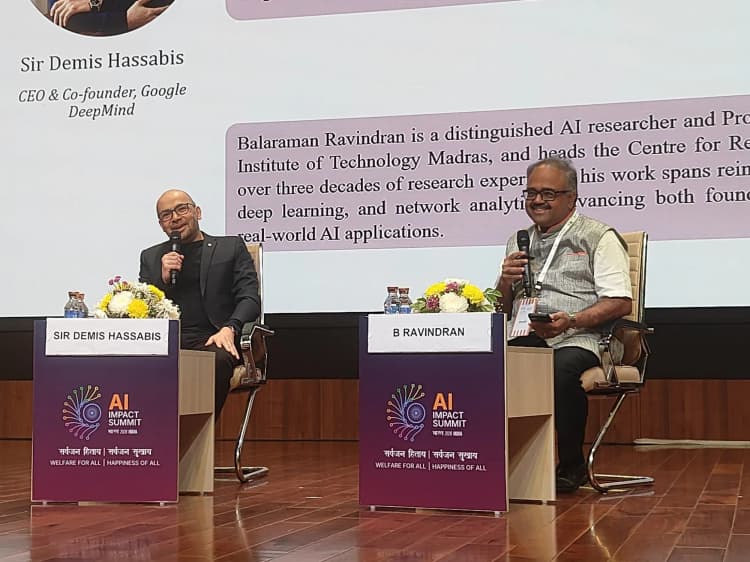
Controversy, Capital, Caution: Day 3 of IndiaAI Summit Packs High Drama and Big Deals
Day 3 of the IndiaAI Impact Summit saw Galgotias controversy, Sarvam AI launches and billion-dollar announcements from global technology giants.
View
OpenAI Announces Collaboration With IITs, IIMs and More Institutes at AI Impact Summit
AI Impact Summit 2026 was kicked off by the government on February 16. The event has brought together AI firms from across the world in one place, along with government representatives, industry leaders, subject-matter experts, and executives. As part of the AI Impact Expo 2026, which began on February 16, several companies and universities have showcased innovations and products. On the third day of the summit, Sam Altman-led AI giant has announced that it is collaborating with multiple higher education institutions in India to extend help and guidance to students.
View
Indian AI lab Sarvam’s new models are a major bet on the viability of open-source AI
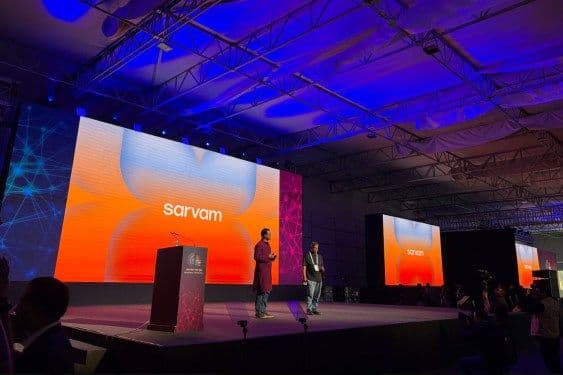
Indian AI labSarvamon Tuesday unveiled a new generation of large language models, as it bets that smaller, efficient open-source AI models will be able to grab some market share away from more expensive systems offered by its much larger U.S. and Chinese rivals. The launch, announced at theIndia AI Impact Summitin New Delhi, aligns with New Delhi’spush to reduce reliance on foreign AI platformsand tailor models to local languages and use cases. Sarvam said the new lineup includes 30-billion and 105-billion parameter models; a text-to-speech model; a speech-to-text model; and a vision model to parse documents. These mark a sharp upgrade from the company’s 2-billion-parameter Sarvam 1 model that it released in October 2024. The 30-billion- and 105-billion-parameter models use a mixture-of-experts architecture, which activates only a fraction of their total parameters at a time, significantly reducing computing costs, Sarvam said. The 30B model supports a 32,000-token context window aimed at real-time conversational use, while the larger model offers a 128,000-token window for more complex, multi-step reasoning tasks. Sarvam said the new AI models were trained from scratch rather than fine-tuned on existing open-source systems. The 30B model was pre-trained on about 16 trillion tokens of text, while the 105B model was trained on trillions of tokens spanning multiple Indian languages, it said. The models are designed to support real-time applications, the startup said, including voice-based assistants and chat systems in Indian languages. The startup said the models were trained using computing resources provided under India’s government-backed IndiaAI Mission, with infrastructure support from data center operator Yotta and technical support from Nvidia. Sarvam executives said the company plans to take a measured approach to scaling its models, focusing on real-world applications rather than raw size. “We want to be mindful in how we do the scaling,” Sarvam co-founder Pratyush Kumar said at the launch. “We don’t want to do the scaling mindlessly. We want to understand the tasks which really matter at scale and go and build for them.” Sarvam said it plans to open-source the 30B and 105B models, though it did not specify whether the training data or full training code would also be made public. The company also outlined plans to build specialized AI systems, including coding-focused models and enterprise tools under a product it calls Sarvam for Work, and a conversational AI agent platform called Samvaad. Founded in 2023, Sarvam has raised more than $50 million in funding andcountsLightspeed Venture Partners, Khosla Ventures and Peak XV Partners (formerly Sequoia Capital India) among its investors.
View
