🚀 Zaprep: Your Socials on Steroids. Start free — automate 1,000 DMs/month & turn engagement into leads. with 1,000 automated DMs/month.
Latest AI News

Anthropic is operating a lab that conducts biology experiments
Anthropic has a wet biology lab in the Bay Area where it can use its AI models to run physical experiments, it has confirmed to TechCrunch. AI leaders have been promising that AI is the key to curing human disease. Dario Amodei opined just last week: “I believe that AI could cure most major diseases in the next 5–10 years.” To do that, an LLM would have to have methods to test its theories in real life. “We believe that to do biology, the final test is still, and will be for a while, in real lab work,” Anthropic’s head of life sciences, Eric Kauderer-Abrams,told Reuters. “We absolutely are doing that today.” He added that the lab operates like most biotech labs: Anthropic conducts some research there while also working with external partners. This news probably shouldn’t be shocking. Anthropicbought Coefficient Bio, a stealth AI biotech, in April. While Anthropic declined to give specifics on what the wet lab is working on, it did say the main focus was fundamental biology, not drug discovery. Anthropic doesn’t want to give the appearance of competing with the pharma industry, where it has numerous major customers and partners (e.g., it just announced a deal to workwith Novo Nordiskon joint drug discovery). Anthropic hasalready faced backlashfor launching products perceived to compete with those of its customers. To that end, Anthropic also launched a Life Sciences Verification Program this week, to givevetted bio researchers accessto its most powerful models. It has also published recent reports on some of the research it’s doing to support drug discovery. This includes one report onaccelerating protein designand one onuplifting bimolecular modeling. But the world is still reeling from the resignation of Anthropic researcher Jacob Coxon, who warned that “the people building AIearnestly believe that it could kill us all by the end of the decade.” Anthropic’s own alignment leadgave the odds at greater than 10%that AI could exterminate humanity within the next decade. The fervor has grown so intense that CEO Dario Amodei published a post last weekend calling on the industry to slow down and institute self-regulation. He has repeatedly called bioterrorism one of AI’s biggest risks. The juxtaposition of these dire warnings and the wet lab has not gone unnoticed in the tech industry. As investorand AI coding startup founderChamath Palihapitiyaposted on X, somewhat tongue in cheek: “The group behind such hits as: ‘We’re All Going To Die’ and ‘Regulate Me Now’ are building a wet lab in SF. I do not recommend this.”
View

A startup that builds other startups raised $100M, and is all-in on physical AI
Four years ago, a startup lab launched that wasn’t quite an incubator, accelerator program, or venture firm. UP.Labs, as it was called then, built startups designed to solve problems for corporate customers such as Alaska Airlines and Porsche, as well as for the outside world. The firm still has the same mission — albeit with a critical addition to its approach, a new name, and a $100 million investment from Silversmith Capital Partners. Vantora, as the firm is now called, continues to work with its corporate customers, including some new ones in industrial manufacturing that it declined to name, and in the oil and gas sector. But now, it’s more focused on building startups solely for its corporate customers, and not for the broader market. Founder and CEO John Kuolt told TechCrunch that Vantora is moving toward a “proprietary M&A pipeline.” This means Vantora will still build startups for its corporate partners, which invest in the ventures and serve as their first customers. But those corporate partners now have the option to fold the startups into their core businesses — and essentially keep them to themselves. That shift has influenced Vantora’s increased focus on physical AI startups, according to Kuolt. In the past, Vantora would end up spiking ideas that were strategic to its corporate partners, but too sensitive to bring to the outside world. “We were missing on the biggest value problems, which had the biggest upside because of that,” Kuolt said in a recent interview. “Imagine you’re a Fortune 100 industrial company and you need to retrofit all of your hardware and machines for autonomy. You need to own that, it needs to be sovereign, and you can’t rely on a third party to go do that for you. You need to own that intelligence layer. They’re never going to let us go sell that to their competitors.” This change has allowed Vantora to “unlock big physical AI use cases,” according to Kuolt, including with its existing customers. For example, the firm came up with an idea to use AI to advance the business of its partner J.B. Hunt. “They said there is no way you can take this out to the world, and so we passed on it,” he said, adding that this proprietary model now allows Vantora to pursue it. The firm launched in 2022 with Porsche as itsfirst corporate partner. Since then, Vantora has launchedseveral startupsfor Porsche and struck deals withAlaska Airlines, J.B. Hunt, Wabash, and TDG, the parent of Ashley Furniture. In its early days, UP.Labs was tied — although never financially — to venture firm Up.Partners. While Vantora still shares office space with the California-based VC, it is its own entity, Kuolt explained, noting that the $100 million from Silversmith is the company’s first outside investment.
View

Automattic’s 33-Hour Coup, and can AI labs police themselves?
A week after an Anthropic researcher’s doomsday warning rattled the AI world, the company’s CEO Dario Amodei hasoutlined his plan to “pace the frontier”of AI development. The proposal leans on independent safety evaluators and coordination between AI labs in democratic countries, and it’s already picked up someindustry support, along with some pointedpushback from Nvidia’s Jensen Huang. On this episode of TechCrunch’sEquitypodcast, Kirsten Korosec, Anthony Ha, and Sean O’Kane dig into whether companies can agree on what slowing down means and who gets to police it. Plus, WordPress parentAutomattic’s boardroom coup, and a couple of the week’s biggest deals. Listen to the full episode to hear more about: Subscribe to Equity onYouTube,Apple Podcasts,Overcast,Spotifyand all the casts. You also can follow Equity onXandThreads, at @EquityPod.
View

Dario Amodei and other AI leaders want to ‘Pace the Frontier’ but…how?
Loading the player… A week after an Anthropic researcher’s doomsday warning rattled the AI world, the company’s CEO Dario Amodei hasoutlined his plan to “pace the frontier”of AI development. The proposal leans on independent safety evaluators and coordination between AI labs in democratic countries, and it’s already picked up someindustry support, along with some pointedpushback from Nvidia’s Jensen Huang. Watch asEquitypodcast hosts Kirsten Korosec, Anthony Ha, and Sean O’Kane dig into whether companies can agree on what slowing down means and who gets to police it. Plus, WordPress parentAutomattic’s boardroom coup, and a couple of the week’s biggest deals. Subscribe to Equity onYouTube,Apple Podcasts,Overcast,Spotifyand all the casts. You also can follow Equity onXandThreads, at @EquityPod.
View

Google’s new ‘CC’ is an AI agent that helps families run their households
Google is testing a new product designed to help families coordinate with the support of an AI agent. This week, the search giantintroduceda new version ofCC, an AI agent designed to work across email, calendar, chats, and tasks. With the update, CC now focuses on keeping families organized, planning for the day ahead, and even handling family-specific tasks, like signing permission slips, creating shopping lists, or crafting weekly meal plans. The move to make CC more family-focused comes as a number of AI startups are experimenting with how to best fit agentic AI into consumers’ lives. Some AI tools, likeOllieandFambot, for instance, have aimed their services directly at helping parents and families. Google’s CC, meanwhile,began its life as a productivity agentthat connected to Gmail, Google Calendar, Google Drive, and the wider web to understand your day, then deliver a “Your Day Ahead” briefing to your inbox. In May, the tool came to the Gemini app as “Daily Brief.” Google said user requests showed that people wanted to use the feature more for household management tasks. They wanted AI to help them keep up with kids’ school schedules, sports practices, bills, meal plans, and more. As a result, Google shifted CC to become an agent for families that helps run their households. Now, CC is getting its own Google account, so it can collaborate with family members on tasks, while also maintaining its own specific set of permissions for accessing data. Google explains that each family member chooses what they want to share — like emails about school events, sports, clubs, birthday party invites, doctor appointments, or anything else. These can be forwarded to CC via its email address, or shared automatically. To automate sharing, users can pick the email senders whose messages they always want to share with CC going forward, like schools, travel companies, clubs, or sports teams. (CC will also suggest email senders to add on a weekly basis.) The company says CC currently supports up to six family members who can share information and collaborate with the agent. Beyond email, CC can also coordinate household activities by tracking important dates and to-dos, and then automatically adding them to the calendar or a shared task list. That means, for instance, every time the orthodontist sends an email confirmation of your next appointment or the school announces a teacher workday, CC can put it on the shared calendar. What’s more, the agent can manage select tasks on a family’s behalf, like filling out permission slips or activity registration PDFs, making school supply shopping lists, planning weekly meals, figuring out drive times between activities, creating shared Docs or Sheets, and more. It will even ask for missing details, as needed, and update its group memory so it can be more helpful going forward. Google notes that CC runs on its own isolated cloud computer, powered by Gemini and Google’s agentic harness, Antigravity. The experiment is only available for U.S. users with a personal Gmail account, who are ages 18 and up. That’s a big drawback for the time being because it means older kids, like tweens and teens, can’t use the service unless they lie about their age on their Google accounts. It also means they can’t use it with their school-provided emails, despite the fact that many attend schools that run everything on Chromebooks and Google apps and have inboxes filled with school-related updates. CC could help larger households, where parents have to coordinate with each other and with other adults, like grandparents, caregivers, nannies, or adult children still living at home, whichtends to be more commonthese days. Existing CC users will be invited via email in the coming days to upgrade their accounts, Google says, while new users can join awaitlistto access the AI agent.
View

Disney’s first CTO led an AI startup it once accused of copying its characters
Disney has hired its first-ever chief technology officer and in a curious twist, the new executive hails from an AI startup that the Magic Kingdom previously accused of infringing on its IP. Karandeep Anand is the former CEO of Character.AI, a company that has weatherednumerous legal problemssince it was founded in 2021. One of those legal problems arose in September 2025, when Disney sent the companya cease and desist letteraccusing it of infringing on its beloved characters. Character.AI allows users to create distinct virtual characters with generative AI and talk and interact with them. Disney previously claimed that the company was hosting copyrighted characters from its franchises. In addition to Disney’s accusations, Character.AIhas also been suedover allegations that the company’s chatbots encouraged users to commit self-harm and suicide. Varietyreports thatAnand was chosen for the role by new Disney CEO Josh D’Amaro, who took over after former company chief Bob Iger stepped down in March. The hiring suggests D’Amaro wants the company to embrace new technologies. Anand formerly served as a board adviser to Character.AI before becoming CEO in May 2025,according to his LinkedIn profile. He also worked at Facebook between 2015 and 2021 and, before that, spent 15 years at Microsoft.
View

A new kind of AI model from a ChatGPT inventor is thrilling developers
ChatGPT broke Diogo Almeida’s heart. Almeida was an OpenAI researcher who helped build the chatbot and then invent reinforcement learning from human feedback (RLHF), the model-training technique perhaps most responsible for our current age of AI. But despite its capabilities, he was disappointed. “We have lightning in a bottle, and yet it is not useful,” Almeida told TechCrunch. “I’ve been battling that problem since then. It took me a while to come to the conclusion: The problem is we are optimizing for human language … We have been super good at human language for four years, but it’s not useful for automation because computers speak a different language.” Two years ago, Almeida left OpenAI to startTypeSafe AI, a startup trying to fix that problem. This week, the company released a new transformer-based model,Jev, that is not a large language model (LLM). It doesn’t output text, but instead produces probabilities, or what the company calls “calibrated decisions.” Eschewing language does a few things: It makes the model incredibly cheap and fast, and because users define the outputs in advance, it cannot hallucinate. Its output tokens are free, and input tokens are metered by the billion, not the million. Developers are taking a great interest in the product; the company briefly lost the ability to serve users from its API because demand was so high. Jev appears most useful for software automation. Thus far, software developers see it as a cheaper and more robust way to incorporate intelligence into their code. For example, Pranit Sharma, a software engineer at Vercel, a company making agentic infrastructure,saidhis company had used OpenAI’s ChatGPT Luna 5.6 to run a classifier to review commands for safety. When Vercel replaced OpenAI’s Luna with Jev, it got results five to 18 times more quickly and with greater accuracy. Another developer, Bryo AI CTO Nikhil Mudholkar,testedJev against Gemini for classifying business emails. In his test, Gemini was slightly more accurate, but 10 to 20 times more expensive. More interesting to Mudholkar were Jev’s confidence scores — “it is the only one that hands back a real probability which makes it ideal for automating workflows!!” Besides replacing LLMs in certain use cases, the new model can also augment them, acting as a smart check on misbehavior. Using agents to monitor agents can quickly become expensive, but using Jev to do so, Almeida argues, makes sense. He sees users deploying Jev to track LLM agent traces and prevent jailbreaks. “At the end of the day, it delegates the hallucination problem a little bit to the user,” explained Armin Ronacher, the CTO of Earendil, which builds the open source model harness Pi. “The user has to say, okay, if this only comes back with 50% probability, maybe this is a coin toss, and I disregard it. But if it’s 95%, sure, then I can do something with it.” Another potential use for Jev is model routing, Ronacher said. Predicting whether a given workload requires a specific model would be useful, but using an LLM for the job would be expensive. Jev’s low cost and speed make that kind of real-time sorting possible. And that’s Almeida’s hope. The model is named after William Stanley Jevons, the 19th-century economist whose eponymous paradox describes how the falling cost of a commodity can lead to it being used more and more. In this case, the falling cost of intelligence should lead to its widespread deployment. “We think that there’s just going to be smart software all over the place in a way that’s emergent and distributed … much more like the early internet than you know like the mega apps that people are trying to build right now,” Almeida said. Almeida is tight-lipped about the model’s architecture, which outside observers suspect is built on top of an open-weight LLM. The company refers to Jev as a “System One model,” focused on intuition rather than reasoning, andspecifically focusedon the right task. Almeida says Jev is trained exclusively on synthetic data using a technique he calls “reinforcement learning from calibrated decisions.” “We made an early bet that we will be making all of our data, and that has been one of the best bets I’ve ever made in my life — better than our launch, in my opinion, better than RLHF,” he told TechCrunch. “Half of [our company] is a lab that basically owns this entire subfield of statistically well-understood synthetic data, and that is now my life joy.” For now, Jev stands alone as this kind of model, but Ronacher expects that competitors will spring up now that its utility is apparent. “We should have seen this earlier in many ways, but presumably because the LLMs are so cheap and subsidized, you often don’t have to be creative yet,” he said. TypeSafe itself will be building more versions of the model, in new modalities. Asked if TypeSafe is a frontier lab, Almeida said, “the main product of frontier labs is fear or hype. I would like our main product to be intelligence…[but we are] not a lab in the sense of, you know, like bet on infinite wealth, or a religion, or building God in a data center, or whatever is the thing of today.”
View
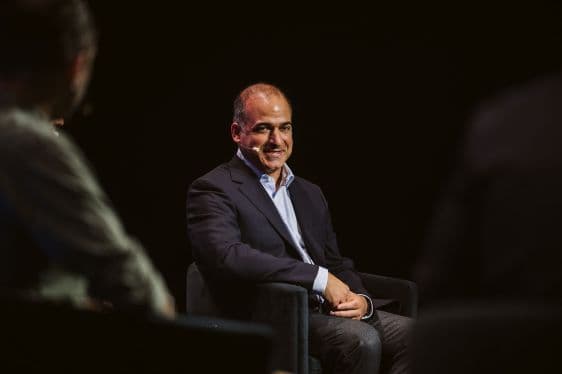
World model companies are keeping a lot of secrets
This week, I moderated a panel on world models at the All In conference (no relation to the podcast), and it gave me a chance to dig into one of the most mysterious corners of the AI world. The big players in the space are Yann LeCun’s AMI Labs and Fei-Fei Li’s World Labs — and while both have accumulated a lot of buzz and funding, they also rank pretty low onthe trying-to-make-money scale. At their core, world models are aboutautomating spatial intelligence, so the field could head in lots of exciting and lucrative directions, from robotics to interactive video to more complex self-driving systems. But when I started to press on where we would actually see the tech commercialized, things got foggy. The closest thing I found to an authority was Michael Rabbatt, a co-founder of AMI Labs and the company’s VP of World Models, who joined me on the panel. But when I pressed him on exactly what the company was working on, he was cagey. “We’ll talk about it when we’re ready to talk about it.” Over email, he clarified, “We’re still in a research and building phase, so we’re not talking publicly about any product plans or timeline.” To be fair, AMI is less than a year old, so it’s fair enough to keep quiet. But this sort of caginess extends to the whole world-modeling space. World Labs’ Marble is probably the most fully developed product in the space, and its demos range from straightforward media creation, building explorable environments for video games, or CGI effects. There are robotics use cases too, but the whole platform seems more designed to demonstrate capabilities. That secrecy even extends to these companies’ suppliers. On the sidelines of the same conference, I spoke to Alex de Vigan, CEO of Physicl — a data supplier for the burgeoning world model business. He says he knows Physicl’s data has been useful for whatever they’re building, but he’s still in the dark about what exactly that is. “I wish they would tell us more. We could build more useful data if we knew what they were working on,” de Vigan told me. Part of the mystery comes from how versatile world models are as an idea. The simplest version is a navigable map of the world, similar to the AI models that power self-driving cars. But the same modeling approach that helps a Waymo weave through traffic could also help a humanoid robot carry boxes, or turn a few minutes of video footage into an explorable environment. AMI has already dipped its toe in manufacturing, biomedicine, robotics, and even AI software for doctors through its Nabia partnership. Surely it won’t pursue all of those — but maybe one or two of them are standing out? No one doubts that there are lots of viable businesses to be built on world model tech — and as long as it’s easy to fundraise, there’s no particular pressure to focus on one. In fact, there’s good reason not to. If AMI announced tomorrow that they had built a humanoid OpenClaw or a next-generation Hollywood rendering system, a lot of other labs would suddenly be very interested in the space. Soon, the lab would face potential competition from the other world model companies, the neolabs and even OpenAI and Anthropic. In some ways, it’s the flip side of all that easy fundraising. Your competitors can fundraise, too — and the same money that lets you build under the radar is also funding lots of potential rivals once the path to market becomes clear. But even if that competition is inevitable, it’s best if you delay it for as long as possible, which means keeping quiet about exactly what you’re building. Cixin Liu fans will recognize this asa Dark Forest scenario: if you don’t know who else is in the woods, it’s best not to attract attention.
View

Don't Ditch React Native Just Because Shopify Did So
React Native isn’t dead, and a billion-dollar company like Shopify can afford to keep two different codebases.
View

TRAI Adds New Rules for Spam Calls, Automated Calls and A2P Communications
TRAI (Telecom Regulatory Authority of India) has tightened its framework for tackling unsolicited commercial communications by adding AI-based methods to identify suspected spam and introducing new rules for automated commercial calls. The revised regulations require telecom operators to share information about numbers linked to suspected spam activity and allow further checks when multiple numbers associated with a sender are flagged. The framework also sets requirements for automated calls, introduces a termination charge for certain A2P calls, gives consumers an appeal mechanism and places new restrictions on call-management applications.
View

The clock is ticking: Final 24 hours to exhibit at TechCrunch Disrupt 2026
Exhibit table bookings close tonight, Friday, September 18, at 11:59 p.m. PT.After that, you cannot add your startup to the Expo Hall. Tables are limited and first come, first served. The startups competing for the spotlight, clients, and investment will be there.Will yours? FromOctober 13–15 at Moscone West in San Francisco, 10,000+ founders, investors, operators, and tech leaders will be atTechCrunch Disrupt 2026looking for startups to back, products to use, and companies to partner with. The Expo Hall gives you three days to demo your product, meet VCs sourcing their next opportunities, generate leads, and start customer and partnership conversations. It’s also your chance to put your company in front of the same audience your competitors are trying to reach. Don’t let another startup get the conversation, the lead, or the investor meeting that could have been yours. Get your product in front of the right people, make your presence impossible to overlook, and leave the competition playing catch-up. Your$12,500 exhibit packageincludes a 6′ x 30″ table for all 3 days, 10 team passes, and: Founders can also access the Deal Flow Café and Investor-to-Founder Networking. Your next customer, investor, or partner could be walking the Expo Hall. So could your next competitor.Make sure they see you first. Final 24 hours. Tonight, at 11:59 p.m. PT.Book your exhibit table now. You can still be part ofTechCrunch Disrupt 2026on October 13–15. Get practical insight from 250+ top-tier tech leaders across 200+ sessions on six industry stages, make more relevant connections through AI-powered matchmaking and interactive sessions, and discover 300+ startups and the Startup Battlefield 200 to find your next product, partner, or investment opportunity. Regular ticket pricing ends September 25.Save up to $200 before prices increase.
View

Researchers used Anthropic’s Claude to hack into OpenAI
In a twist that captures the strange new state of AI security, independent security researchers have used Anthropic’s Claude to break into OpenAI, exposing cracks in the ChatGPT-maker’s defenses, The Wall Street Journalreportedon Thursday evening. A three-person security team at startupHacktron AIcarried out the attack as part of an OpenAI bug-bounty program. Hacktron reported its findings to OpenAI, which gave the startup a $6,500 award. The team managed to chain together two critical vulnerabilities to gain access to multiple OpenAI employee ChatGPT accounts, which gave them entry into the company’s software. OpenAI says it has resolved the issues Hacktron uncovered, which happens to come at a moment when top AI companies are undergrowing pressure over safety. This incident comes several weeks afterOpenAI’s own AI agents broke containmentduring a cybersecurity evaluation and hacked Hugging Face, demonstrating just how capableAI models are getting at making their own decisions. It also highlights how off-the-shelf technology can be used to find vulnerabilities in even the most advanced companies’ infrastructure. “For $200 a month, anyone can use these tools and hack into a company like OpenAI,” Matt Fredrikson, CEO of AI security firm Gray Swan, told TechCrunch. “If it can happen to them — and I don’t think they’ve been slouching recently on cybersecurity hygiene — it could happen to anyone.” Or as one AI punditnotedon social media: “[Hacktron] used Opus 5 to pull off the hack…The question that will be asked is, if these three guys can pull this off, what can a nation state do.” The researchers found a path into OpenAI on July 25 via a flaw in Discourse, the third-party software powering OpenAI’s community forum. According to a blog theresearchers published, the entry point was a mundane image upload. When users posted HEIF or HEIC image files (the format iPhones use by default) to OpenAI’s community forum, Discourse passed them through a chain of behind-the-scenes tools to convert them into standard JPEGs. Its first stop was ImageMagick, a decades-old, open source utility used to resize images. Because ImageMagick’s usual toolkit can’t deal with Apple’s format, it handed the file off to another library called libheif to do the decoding. Buried inside libheif was a memory bug that exposed a path for an attacker to sneak in their own instructions. In this case, feeding the library a specially crafted image caused it to miscalculate where one image was positioned on top of another, which proved enough to hijack the server. What may be uncomfortable for the cybersecurity community is that bug had already been fixed months earlier by libheif’s developers. But the fix was never formally flagged as a vulnerability, meaning it never got a CVE (common vulnerabilities and exposures) number, the industry’s standard way to track known security weaknesses. Hacktron says that may explain why the software used by Discourse was still running the vulnerable version. Notably, the researchers said the Claude model they were using — a special version of Opus 4.8 made available for cybersecurity researchers — couldn’t build a working exploit at first. That changed overnight, when Anthropic released Opus 5. “Opus 4.8 struggled across several sessions to produce a working exploit,” Hacktron wrote in ablog post. “Within hours of Opus 5’s release, we gave it the same problem and it succeeded.” Once inside the Discourse server, the researchers found another flaw that let them take over users’ ChatGPT and Codex accounts, including those belonging to OpenAI employees. “We then took over an OpenAI employee’s account, whose Codex was connected to OpenAI’s GitHub organization,” Hacktron wrote in its summary of the event. At this point, the researchers alerted OpenAI as well as Discourse, which issued a fix on July 27. The incident puts a spotlight on where the line gets drawn for model capabilities. Claude Opus 5, the version that ultimately cracked the bug, hasn’t faced any security export restrictions, unlike newer version Mythos 5, which was temporarilylocked downover concerns about its advanced hacking capabilities. Those are just the closed models.Open-weight models are increasingly catchingup to the frontier in cyber capabilities. For example, AI safety nonprofit SaferAI recently found that Chinese company Z.ai’s GLM-5.2 was only a few months behind OpenAI’s GPT-5.5 and Anthropic’s Claude Opus 4.7. As Hacktron founderMohan Pedhapati put it on X:“AI is reducing the amount of scarce expertise needed to develop exploits. Work that once took months can now take days.”
View
Submit your Tool


PoweredByAI.app is an AI Tools Directory helping individuals, businesses, and creators discover the best AI tools for writing, coding, design, productivity, and more.
© 2026 , Product of011BQ. All rights reserved.