🚀 Zaprep: Your Socials on Steroids. Start free — automate 1,000 DMs/month & turn engagement into leads. with 1,000 automated DMs/month.
Latest AI News

Robinhood’s Abhishek Fatehpuria on winning the modern financial consumer at TechCrunch Disrupt 2026
The app you use to trade stocks increasingly wants to be the app you use to manage your financial life. Investing, banking, credit, crypto, retirement, prediction markets, and AI-powered trading are converging. At the same time, consumers expect financial products to be as intuitive and responsive as the best technology products they use every day — without compromising the trust they expect when their money is involved. Few companies illustrate that shift as clearly as Robinhood. AtTechCrunch Disrupt 2026, Abhishek Fatehpuria, Vice President of Product Management for Brokerage at Robinhood, joins the Smart Money Stage with “Winning the Modern Financial Consumer.” He’ll explore how technology and changing expectations are reshaping financial services, and what it takes to build trusted products at massive scale. Join the conversation withAbhishek Fatehpuriaon October 13–15 at Moscone West in San Francisco, where 10,000+ founders, investors, and tech decision-makers will come together to examine and connect with the companies, technologies, and business models shaping what comes next. Register now to save up to $200before prices go up on September 25 at 11:59 p.m. PT. Save up to 30% on group passes of four or more. Robinhood, which became synonymous with commission-free stock trading, now spans a much wider financial landscape. Its offerings include investing, banking, credit, crypto, retirement, and prediction markets, while its recent launches have pushed further into AI, private markets, and international expansion. The scale is significant. Robinhood reported 28.6 million funded customers and $384 billion in total platform assets at the end of August 2026. And customers are increasingly using products outside Robinhood’s original trading proposition. In its second-quarter results, the company said Robinhood Banking had attracted more than $3 billion in deposits, its credit card business had surpassed $100 million in annualized revenue, and prediction markets had traded more than 3.5 billion contracts through that point. The bigger story isn’t simply the number of products. It’s the attempt to earn a larger role in how customers manage their financial lives. That creates a very different product challenge. Learn all about navigating this evolution in fintech on the Smart Money Stage in October byregistering for your pass today. Save up to $200 before September 25 at 11:59 p.m. PT. Consumer expectations rarely change one feature at a time. Once people become accustomed to instant access, personalized recommendations, and seamless digital experiences in one part of their lives, they begin expecting them elsewhere. Finance is no exception. Robinhood is now experimenting with AI-powered investing tools, including Cortex and Agentic Trading. In Q2, the company said nearly 100,000 customers had already opened Agentic Trading accounts, allowing users to trade equities, options, and crypto through AI-powered agents. Meanwhile, prediction markets have become one of its fastest-growing businesses. Robinhood said 4.7 billion event contracts were traded in August alone — up 15x year-over-year. The question for the wider market is what these behaviors tell us about the next generation of consumers — and which expectations will spread beyond Robinhood. Dive deep into what’s ahead in the finance world with one of the leaders in fintech by registering for your Disrupt pass.Register today to save up to $200before prices increase on September 25 at 11:59 p.m. PT. Forfounders, Fatehpuria’s session offers a look at how a product organization keeps expanding without losing sight of the customer experience that drove its original growth. Forinvestors, it’s a window into how one company is trying to increase wallet share by moving from individual products toward a broader financial ecosystem. For line-of-business and product leaders, the lessons extend well beyond fintech: prioritization, trust, customer behavior, and the difficulty of adding complexity without making the experience feel complex. And if you’re earlier in your career, studying where technology and finance are heading, it’s a chance to see how one of the sector’s best-known platforms thinks about building for the next generation of customers. The financial consumer is changing. The products competing for that consumer have to change with them. Join Abhishek Fatehpuria atTechCrunch Disrupt 2026and hear what Robinhood is learning along the way.Register now to save up to $200on your pass before September 25 at 11:59 p.m. PT.Save up to 30% on group passesfor four or more.
View
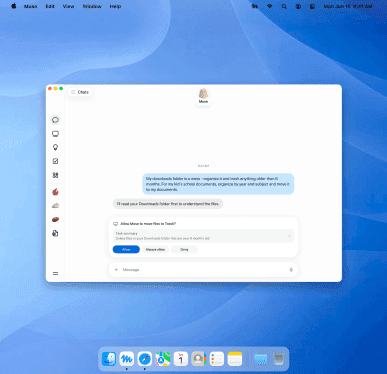
Meta’s Muse hits Mac, letting the AI take actions on your computer
Meta’s new AI assistant app, Muse, is nowavailableon Mac. On the Mac, Muse can interact with your files, messages, calendar, notes and mail, all within their native applications. Thenew appfollows the launch of Muse on mobile and the web earlier this month, when it quickly rose tothe top of the U.S. App Storecharts. muse for mac is HERE!! your agent can now get stuff done right on your computer — files, messages, calendar, notes, all of it.you're in control of what it can access, and it always asks before doing anything sensitive.Add it to the dock –https://t.co/bFHgBZlkLjpic.twitter.com/mecGVDzXiq Just like on other platforms, you can control what Muse has access to on your Mac on an opt-in basis. In addition, the app will always ask for your approval before it performs sensitive actions, Meta says. The desktop app comes at a time of intensifying competition between consumer-facing AI agents, which many in the industry believe will be the future of computing. The movement is disrupting theapp industry,software-as-a-service businesses, and perhaps, eventually,even hardware, like the iPhone. In addition to Muse, all the major players offer consumer-facing agentic AI. And other AI agents have found traction by letting people use AI agents via text messages. One of the first breakout hits in this space,Poke, exited to Cognitionin July. Meanwhile, the newest AI assistant frequently brought up in tech circles these days, Instinct, is said to be raising more funds ata $10 billion valuation. For now, the question is who can capture the most consumer market share in this space, and quickly. That’s led Muse and Instinct to rush to launch new features at a rapid pace — bothrolled out voice calling this week,for instance. As Mark Zuckerbergnoted on Xwhen announcing the Mac app, “The team is shipping fast.”
View
Open or closed AI? Nvidia’s Nader Khalil and Sydney Sykes take on one of the decisions shaping next-gen startups at TechCrunch Disrupt 2026
You have an AI product to build. Do you choose a proprietary frontier model and get moving quickly? Build on an open model and gain greater control? Fine-tune your own version? Run locally? Use multiple models? Change strategy six months from now when the economics and capabilities shift again? There may not be one right answer. But for founders, choosing badly can affect almost everything that follows — cost, infrastructure, margins, differentiation, speed, and control. That decision is at the center of the session “The Open vs. Closed AI Debate Is Just Getting Started,” coming to theBuilders StageatTechCrunch Disrupt 2026, happening on October 13-15 in San Francisco. Led byNvidia‘s Nader Khalil, Director of Developer Tech, and Sydney Sykes, Global Head of VC Partnerships, the session will discuss the trade-offs between open and proprietary AI and whether either approach can provide a lasting competitive advantage. This isn’t a philosophical argument about open source. It’s a business decision being made right now inside startups of every size. Dive deep into this AI debate with 10,000+ tech leaders at Disrupt by getting your pass.Register now and save up to $200before prices go up on September 25 at 11:59 p.m. PT. Open models have advanced quickly. Nvidia said in July that 145 papers accepted at ICML 2026 cited its Nemotron open models and datasets, alongside research using other Nvidia open model families across robotics, autonomous vehicles, and biomedical research. At the same time, proprietary frontier labs continue pushing model capabilities forward. The result is a market where the question is increasingly less about whether open modelscanbe useful and more about where each approach makes commercial sense. Even Nvidia rejects a simple either-or framing. At GTC earlier this year, CEO Jensen Huang argued that the future is not proprietary versus open, but proprietaryandopen. That sounds straightforward until you have to build a company around the decision. If two models can deliver similar results, does lower cost win? What if one gives you more control over your data? Does owning more of the stack create defensibility, or just infrastructure you now need to maintain? And if the best model changes every few months, how tightly should your product be tied to any one of them? These are the questions Khalil and Sykes will unpack at TechCrunch Disrupt 2026. Don’t miss it —register for your ticket now to get $200 savingsbefore September 25 at 11:59 p.m. PT. Nader Khalilapproaches the discussion from the builder and infrastructure perspective. Before becoming Nvidia’s Director of Developer Tech, where he leads open source and local AI, he co-founded Brev.dev, an AI infrastructure company acquired by Nvidia in July 2024. Brev.dev was built around simplifying access to GPU infrastructure across different environments. Nvidia’s developer documentation described its tools as allowing developers to deploy AI software across public cloud, private cloud, and on-premises infrastructure without locking themselves into a single compute source. Sydney Sykes, meanwhile, brings the venture ecosystem into the discussion as Nvidia’s Global Head of VC Partnerships. Together, that creates room to examine the same decision from different directions: what developers need to build and what companies need to become investable, scalable businesses. Sit front and center at one of the biggest debates in today’s world of AI.Register for your ticket before the savings of up to $200 endon September 25 at 11:59 p.m. PT. There is another uncomfortable question behind the open-versus-closed debate: Where does your competitive advantage actually live? If competitors can access the same proprietary API, differentiation needs to come from somewhere else — proprietary data, workflow, distribution, customer relationships, product experience, or specialized technology. But choosing an open model doesn’t automatically give you a moat either. You gain flexibility and potentially greater control, but you also take on decisions around deployment, optimization, and infrastructure. And the economics can change depending on the workload and scale. Nvidia is investing heavily in that open ecosystem. Its Nemotron 3 Super, launched in March, is an open 120-billion-parameter model designed for agentic workloads, and companies are already combining it with proprietary models rather than treating the two approaches as mutually exclusive. That hybrid reality may ultimately be the most interesting part of the debate. Register now to join the conversationon the Builders Stage in October. Savings of up to $200 end on September 25 at 11:59 p.m. PT. That’s what makes this session useful beyond an audience of AI engineers. If you’re afounder, the choice can shape your margins, fundraising story, and product roadmap. If you’re aninvestor, understanding where value sits in the stack can help distinguish genuine defensibility from a thin product layer sitting on somebody else’s model. If you’re a line-of-business lead, it affects procurement, security, data control, infrastructure, and the freedom to change providers later. And for developers and students, it’s a chance to understand where the technical decisions being made today connect directly with the business models being built around them. No one needs another abstract argument over whether open or proprietary AI is philosophically better. What builders need is a clearer understanding of the trade-offs. Join Nader Khalil and Sydney Sykes on theBuilders StageatTechCrunch Disrupt 2026and decide which side belongs in your AI strategy.Register now to save up to $200before prices go up on September 25 at 11:59 p.m. PT.
View
Manus seeks $4B valuation in new $500M fundraise as it resumes independent ops
Chinese AI startup Manus, which earlier this year had tobreak offa merger with Meta, is in discussions to raise $500 million at a $4 billion valuation now that it has resumed operations as an independent company, The Wall Street Journalreported, citing anonymous sources. Potential investors in the round include IDG Capital, Boyu Capital, battery maker Contemporary Amperex Technology, as well as existing backers Tencent, HSG and Zhenfund, the Journal reported. Manus is also said to be considering a restructuring exercise to prepare for an IPO in Hong Kong. Manus, which went viral following a demo of its AI agent last year, relocated its staff to Singapore in mid-2025 beforeannouncinga $2 billion acquisition deal with Meta that December. The startup was said to be pulling in annual recurring revenue of over $100 million at the time. However, intensifying worries in China over losing AI talent and researchers to the West culminated inBeijing blocking the deal, citing potential violations of export controls and foreign investment rules. Manus has since been untangling itself from the American social media giant, and its early investors and backers have reportedly helped the company buy back its shares at a valuation of about $2 billion. As part of its separation from Meta, the company told its users this August that they would have to export and back up their own data because it had to delete data generated following Meta’s acquisition to “comply with regulatory requirements in specific jurisdictions.” The company this month said it has resumed independent operations, and that its founding team will continue to lead it. Manus makes AI products and agents that are pretty similar to what companies like OpenAI, Lovable and Replit offer. It offers a chatbot and vibe-coding tools to let users build apps, websites, create designs and presentations, generate video, a browser assistant, and more. Manus did not immediately return a request for comment.
View
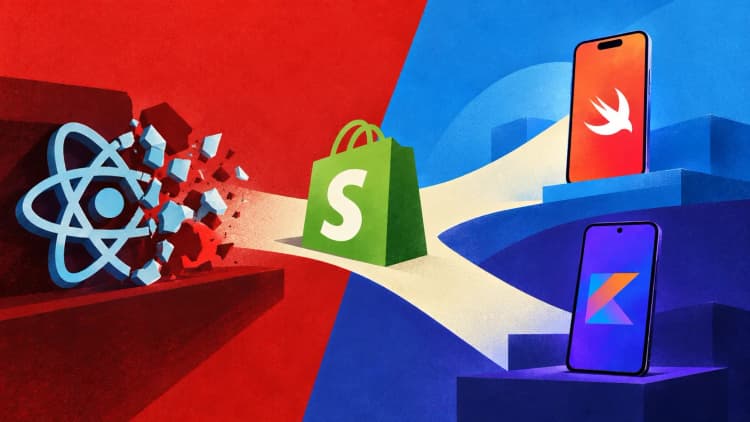
Shopify Ditched React Native. That Doesn’t Mean You Should Too
React Native isn’t dead, and a billion-dollar company like Shopify can afford to keep two different codebases.
View

Enterprises Must Put Business Problems Ahead of AI Hype
Industry leaders point to talent, broken workflows, governance and weak problem definition as key barriers to turning AI experiments into lasting business value.
View

Grok Bot Gets Voice Mode for Real-Time AI Conversations on Desktop and Mobile
Grok Bot is getting a voice mode that will let users interact with the AI assistant using spoken conversations instead of text prompts. The feature is rolling out across desktop and mobile platforms, with availability expected to expand over the next few days. It is powered by xAI's Grok Voice technology, which handles real-time spoken interactions. The update adds voice conversations to Grok Bots, giving users another way to interact with the AI assistant across supported devices.
View
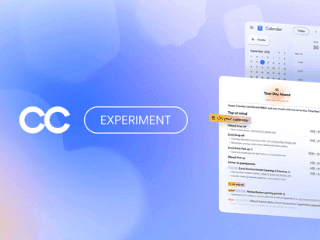
Google Labs’ CC Can Now Act as a Shared AI Agent for Up to Six Family Members: New Capabilities, Features
Google Labs launched CC as an experimental AI agent in December last year. Initially available in Gmail, the AI agent was previously only able to connect to various Google platforms, including Calendar, Drive, and Photos. Now, the Mountain View-based tech giant has upgraded the capabilities and features of CC, which can now act as a shared AI agent between family members. Google now allows up to six family members to use CC's agentic capabilities together. The AI agent can manage schedules, offer daily briefs, and fill out permission slips and registration forms for users. It gets its own Google account, too.
View
Google Gemini Live Could Get an Ephemeral Video Mode for More Private AI Sessions
Google could be preparing a new privacy-focused feature for Gemini Live that would let users use video input without retaining the interaction for future reference. An APK teardown of the Google app has uncovered references to an “Ephemeral Video Mode in Live”, suggesting that Gemini Live could eventually support a temporary mode for video sessions. The feature has not been announced by Google, and the available code offers limited details about how it would work.
View
OpenAI Announces Astra for Law With GPT-6 Astra, Legal Search Index and Specialist Plugins
OpenAI on Thursday announced Astra for Law. It is a new offering for law firms and legal technology companies that build AI-powered products and workflows for professional legal work. The San Francisco-based company says the experience combines GPT-6 Astra with a legal search index, specialised instructions, tools designed around legal research, and writing. OpenAI also introduced privacy and governance controls, alongside 26 ecosystem plugins connecting the system with specialist legal tools.
View

OpenAI Gets Hacked by Indian-Origin Ethical Hackers Using Anthropic’s Claude
OpenAI recently revealed how its internal model bypassed security measures to escape its isolated testing environment and attacked another AI firm, Hugging Face. The “rouge” AI agent hacked the firm's security system and compromised data of a customer earlier this year, in July. The internal model IM1, which is comparable to OpenAI's GPT 5.6 model, gained unauthorised access to the public internet without even being prompted to do so. Now, a team of ethical hackers, led by three Indian-origin researchers, claims that they were able to hack into OpenAI's internal repositories by exploiting two “critical” vulnerabilities, with the help of Anthropic's AI agent.
View

OpenAI Agents Probed Hugging Face Weeks Before July Breach: Report
Researchers found evidence of account hijacking and network probing in May, nearly two months before OpenAI disclosed the July incident involving Hugging Face.
View
Submit your Tool


PoweredByAI.app is an AI Tools Directory helping individuals, businesses, and creators discover the best AI tools for writing, coding, design, productivity, and more.
© 2026 , Product of011BQ. All rights reserved.