Latest AI News

Tredence to Host Third Edition of AI Foundry in Hyderabad on May 23
The core sessions will include design thinking workshops and team presentations, culminating in insights into responsible AI practices and addressing scalability and governance challenges.
View
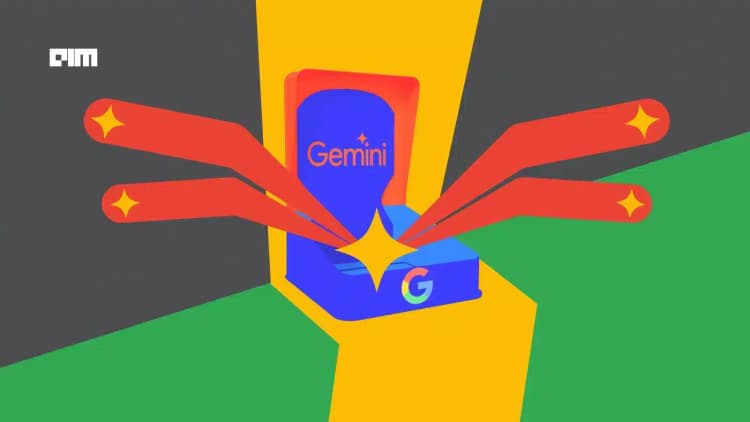
Google Rolls Out Gemini AI App For Mac Users
The company has launched its first native Gemini app for macOS, giving MacBook users worldwide direct access to its AI assistant without relying on browsers.
View

The 1,000-GCC Powerhouse: Why Bengaluru Remains India’s Unrivalled Tech Hub
Bengaluru’s GCCs employ over 6 lakh professionals and contribute more than $22 billion annually.
View

Amazon Acquires Globalstar in $10.8 Billion Deal to Expand Satellite Connectivity
The deal would give Amazon’s Leo satellite venture a boost as it vies with SpaceX’s dominant Starlink network.
View

IndiGo Invests ₹10 Cr in Bengaluru’s Sarla Aviation to Expand Air Taxi Plans
The company also plans to use existing helipads at hotels, hospitals, and tech parks for operations, and wants to launch services in Bengaluru by 2028.
View

i-Hub Gujarat, SanchiConnect Launch TattvaX Cohort 2 for Startups
The accelerator programme aims to support startups across space, defence, drones, and emerging technologies.
View

No LLMOps? AI Costs are About to Run Wild
Costs surge and systems falter as GenAI scales, forcing enterprises to adopt LLMOps for control and reliability.
View
Anthropic Mythos to Release Next Week to Banks in UK
According to Anthropic, firms will gain access to Mythos via Project Glasswing, enabling controlled access for cybersecurity testing and risk mitigation.
View
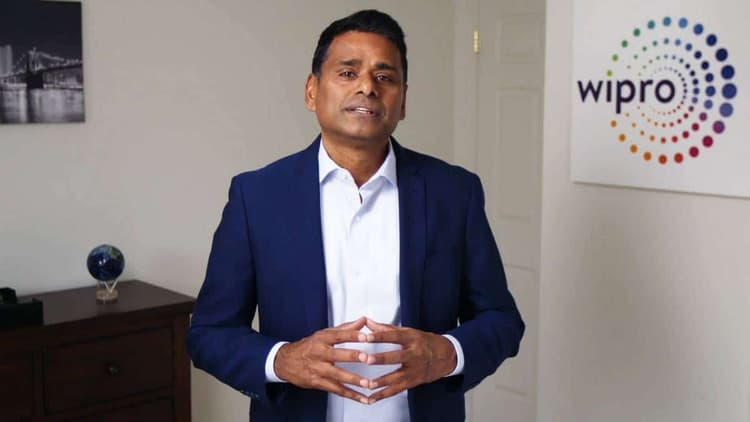
Wipro Q4 Net Profit Rises Sequentially, But AI Revenue Not in Black-and-White
Wipro’s Q4 revenue grew 7.7% YoY to ₹24,236 crore, and earned ₹3,502 in net profit as deal momentum improved.
View

Google Introduces Gemini App to macOS, to Rival ChatGPT and Claude
Google released its Gemini artificial intelligence (AI) platform as a dedicated app for macOS on Wednesday. This is the first time the Mountain View-based tech giant has introduced the chatbot to a desktop as a native app. Gemini is available to all users, including those on the free tier of the app, as long as they are using a supported version of the operating system. With this move, Google's chatbot will now directly compete with the likes of ChatGPT, Claude, and Perplexity for Apple's user base.
View
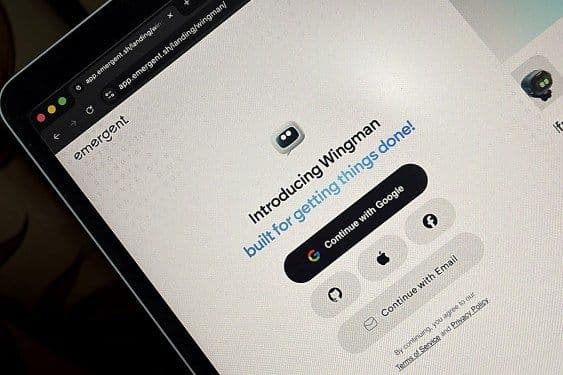
India’s vibe-coding startup Emergent enters OpenClaw-like AI agent space
Emergent, an Indian startup known for its vibe-coding platform, has launchedWingman, a messaging-first autonomous AI agent, as it expands into a growing category of software that runs in the background to complete tasks — popularized by tools like OpenClaw and Claude from Anthropic. The Bengaluru-based startup initially gained attention for its vibe-coding platform, which competes with tools like Cursor and Replit and lets users without technical backgrounds build full-stack applications via natural-language prompts. With Wingman, Emergent is now pushing beyond creation into execution, aiming to let AI agents handle routine tasks across tools and workflows. “The obvious next step for us was, can we help them not just build the software, but actually operate more autonomously through it?” said Mukund Jha, co-founder and CEO of Emergent. “You move from software that supports the business to software that can actively help run it.” Emergent said more than 8 million builders have used its vibe-coding platform to create and deploy software, with over 1.5 million monthly active users. Founded in 2025, the startupraised $70 millionin January at a valuation of $300 million, with backing from investors including SoftBank, Khosla Ventures, and Lightspeed Venture Partners. Wingman is designed to operate through messaging platforms like WhatsApp and Telegram, allowing users to assign and monitor tasks through chat. At the same time, the agent runs in the background across connected tools such as email, calendars, and workplace software. It can carry out routine actions autonomously but seeks user approval for more consequential steps, the startup said. The launch comes as autonomous AI agentsemerge as a key battlegroundin the industry, with a growing number of companies racing to build tools that can complete tasks on behalf of users. Projects likeOpenClaw— previously known as Clawdbot and Moltbot — have gained traction among early adopters, while players includingAnthropicandMicrosoftare working toward addressing this space with their own agent-based systems. Emergent is attempting to differentiate by embedding Wingman into messaging platforms such as WhatsApp, Telegram, and Apple’s iMessage, allowing users to interact with the agent via chat rather than adopting a new interface. The startup also introduced what it calls “trust boundaries,” enabling the agent to carry out routine tasks autonomously while requiring user approval for more consequential actions. This aims to address concerns around fully autonomous systems. Jha told TechCrunch the decision to build Wingman inside messaging platforms was driven by how people already work. “A lot of real work already happens through chat, voice, and email — asking for something, following up, sharing context, making a decision,” Jha said. “Increasingly, they’ll be the main ways we work with agents too.” Like many emerging AI agents, Wingman still faces limitations. Jha said the system struggles “around consistency in really ambiguous situations, messy edge cases, unclear goals, or workflows where a lot of human judgment is needed.” Wingman is being rolled out with a limited free trial, after which access will be paid, with existing Emergent users able to use the agent through their accounts.
View

The musician-turned-biotech-founder waiting to fundraise
When Grammy-nominated singer-songwriterAloe Blaccgot COVID despite being vaccinated and boosted, he tried to fund research for a better solution. What he quickly found out? You can’t just write a check in biotech. Regulators require a commercialization plan, and philanthropy doesn’t move science through clinical trials or get you a license on university IP. Now, he’s bootstrapping a cancer drug platform targeting pancreatic cancer, a disease that kills 90% of its patients, and intentionally waiting to raise from his network until peer-reviewed papers can make his case. On this episode of TechCrunch’sEquitypodcast, Rebecca Bellan sits down with Aloe Blacc to talk about what happens when a creator decides to build instead of just invest, how Aloe is watching AI reshape both the biotech and music industries in real time, and his thoughts on who actually wins. Listen to the full episode to hear: Subscribe to Equity onYouTube,Apple Podcasts,Overcast,Spotifyand all the casts. You also can follow Equity onXandThreads, at @EquityPod.
View
