Latest AI News

GRAI believes AI can make music more social, not replace artists
Today’s AI music startups, like Suno and Udio, offer technology that leverages AI for music generation. But a new company,GRAI, believes that most people don’t want to use AI to generate music from scratch — they’d rather do other things like remix tunes, share them with friends, or play around with tracks by doing things like changing a track’s style, just for fun. Of course, whether or not an artist wants anyone to play around with their tracks, or to what extent, is something they should get to decide. Music lab GRAI, now backed by a $9 million seed round, wants to put that control in artists’ hands, while also capitalizing on the power of AI to transform how consumers engage with music. The company, built by Belarusian founders who previouslysold their video-creation app Vochi to Pinterest, is experimenting with new AI music products. Today, this includes apps like the remixing appMusic with friends for iOSandanother AI music playground for Android. These apps, and others that may ship in the future, will help to inform the company how consumers want to engage with music beyond AI-enabled creation or listening alone. “The idea that we’re building the company around is what the next thing can be in music AI interaction and consumption,” explains GRAI co-founder and CEOIlya Liasun, who is currently based in Poland alongside much of the team. He says the main reason the founders started GRAI is that music has become one of the last major consumer categories that hasn’t gone “creator-first.” “We have problems — discovery is broken, listening is passive, and social context is almost non-existent,” Liasun notes. Meanwhile, he doesn’t think that AI will kill artists and labels, as some fear. Instead, the team at GRAI believes that AI could lead to new ways to engage with music, beyond just creating a tune through generative AI technology. The company intends to aim its products at Gen Z and Gen Alpha users who tend to discover new music through culture, meaning friends, fandoms, and through short-form content, like TikTok. These users don’t want to be creators or music producers; they just want to participate somehow. To power its social apps, GRAI developed its own taste and participation graph as well as its own infrastructure. It’s building a “derivatives pipeline” as well as real-time audio systems that will preserve the identity of original tracks while allowing them to be transformed. As Liasun puts it, the company’s goal is to work with artists and their labels to make this type of activity legal. And the end result isn’t more unwanted AI music. “We don’t want to share new genAI slop with the streaming services. We actually focus on the interaction part,” Liasun says. The idea is that users could play with tracks inside GRAI’s apps, perhaps remixing a favorite tune, or changing its style. Ultimately, those modified tracks could create a new source of royalty payments to the artists and labels. Rather than building first and seeking permission later, the company says it is talking to the labels up front. “The main idea here is that we want to build a future system in which artists will have the ability to opt in and opt out.” That, he says, is a core belief at GRAI: “first, ask owners, and then integrate it.” (Liasun declined to disclose if it already has agreements in place or with what companies.) If this type of music remixing activity becomes popular, GRAI believes it could help people discover new artists and songs outside of larger platforms like Reels, TikTok, or YouTube. With its initial apps, GRAI hopes to receive consumer feedback — even negative feedback — to help it find out what works and what doesn’t. Thecompany, co-founded by CTODima KamarouskiandAndrei Avsievich(president), is now backed by $9 million in seed funding in a round co-led by Khosla Ventures and Inovo VC. Other investors also participated, including Tensor Ventures,Tiny.VC, Flyer One Ventures, a16z Scout Fund, and various angels, such as Andrew Zhai (ML in Cursor, co-founder of Genova Labs, ex-Pinterest); Greg Tkachenko (founder of Unreal Labs, ex-Snap); Rob Reid (Founder of Rhapsody), and Dima Shvets (of MirAI and Reface).
View

YouTube expands its AI likeness detection technology to celebrities
YouTube is expanding its new “likeness detection” technology, which identifies AI-generated content, such as deepfakes, to people within the entertainment industry, the companyannouncedon Tuesday. The technology works similarly to YouTube’s existingContent ID system, which detects copyright-protected material in users’ uploaded videos, allowing rights owners to request removal or share in the video’s revenue. Likeness detection does the same, but for simulated faces. The feature is meant to help protect creators and other public figures from having their identities used without their permission — a common problem for celebrities who find their likenesses have been used in scam advertisements. The technology was first made available to asubset of YouTube creatorsin a pilot program last year beforeexpanding more broadly, to includepoliticians, government officials, and journaliststhis spring. Now, YouTube says the technology is now being made available to those in the entertainment industry, including talent agencies, management companies, and the celebrities they represent. The company has support from major agencies like CAA, UTA, WME, and Untitled Management, which offered feedback on the new tool. Use of the likeness detection tool does not require entertainers to have their own YouTube channels. Instead, the feature scans for AI-generated content to detect visual matches of an enrolled participant’s face. Users can then choose to request removal of the video forprivacy policy violations,submit a copyright removal request, or do nothing. YouTube notes that it won’t remove all content, as it permits parody and satire content under its rules. In the future, the technology will support audio as well, the company says. Related to this, YouTube has also been advocating for similar protections at a federal level, with its support for theNO FAKES Actin Washington D.C. This would regulate the use of AI to create unauthorized recreations of an individual’s voice and visual likeness. The company hasn’t yet said how many removals of AI deepfakes have been managed by the tool so far, but noted in March that the amount of removals was still “very small.”
View
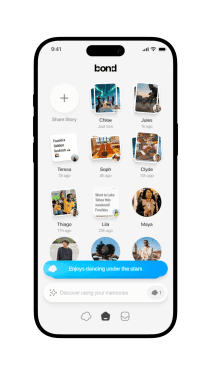
Bond, a new social media platform, wants to use AI to help you kick your doomscrolling habit
Legacy social media sites have been designed to keep us hooked to our devices, eyes glued endlessly to retina-frying feeds of memes and dumb videos in order to create more engaged platforms for advertisements. In recent years, however, a swell of companies have sought to capitalize on users’ burnout, pushing users to engage in IRL experiences, or offering products without addictive features like endless scroll. Bond, which officially launched on Tuesday, is one of those sites. Dino Becirovic, Bond’s co-founder and CEO, says that his site offers an AI-powered solution to Americans’ screen addiction. The site works like this: Much like a normal social media platform, users post about what they’ve been up to lately. Bond allows users to update their profiles, posting what it calls “memories,” via a variety of mediums, including pictures, video, and audio files. Unlike other sites, Bond is designed to act as a kind of idea generator for what the user should go and do in the real world. Experiences stored within Bond become fodder for its AI system, which then gets trained on what kind of personalized, event-based recommendations to make to the user, Becirovic says. For instance, if you’ve been posting a lot about how much you like Pho and how you haven’t had it in awhile, Bond’s system might recommend a nearby Vietnamese restaurant that is getting good reviews. Or, if you’re into heavy metal, Bond might point out that Iron Maiden is coming to your city next week. The more you post about your experiences, the more the system can feed you better recommendations, Becirovic says. In other words, the system is designed to get you off the app and back out into the real world, where you can do more stuff, instead of just “bed rotting” and “doomscrolling,” as the kids these days say. The layout looks a little bit like Instagram, although there is no actual feed. Instead, user profiles are presented in a kind of cluster formation. Clicking on a profile brings up the user’s current stories. These stories disappear from your public-facing profile after 24 hours, Becirovic said, but they then get stored in your private profile. Users can search through their own archive of memories whenever they want. Bond’s team includes people who previously built major social media apps, including TikTok, Twitter, and Facebook,the company says. Becirovic previously worked at Kleiner Perkins and Index Ventures, while Bond’s founding researcher, Arthur Bražinskas, co-led integration of user signals at Google Gemini. What is the revenue path for a company like this? Most social media sites are justgiant vehicles for advertising— and that’s where they make the lion’s share of their revenue. Bond doesn’t have ads, so how’s it going to turn a buck? Interestingly enough, Becirovic envisions a scenario in which — eventually — users can license their own data from Bond’s archives, selling it to companies that want to use it for AI-training purposes. In this scenario, Bond would take a very small cut of the profits via a licensing fee, thus generating ongoing revenue and positioning itself as a data provider to AI companies that are looking to tune up their models. “The idea behind this licensing model is that you can monetize your memories,” he said. “If we become this platform with the right incentive structure to get billions of people to create about their daily lives, we will naturally become a really attractive place for people to want to train GPT six and seven, all the other variants that are going to come future.” In another scenario, Bond would use its accumulated data to act as a product recommendation tool that integrates with e-commerce sites. “Our users would opt into this experience. If we are able to do this, we believe we could capture some value from the transaction with merchants by enabling a better user experience, driving conversion, and/or increasing throughput,” Becirovic told TechCrunch in an email. Becirovic said that Bond would never sell users data for the purposes of advertising, and users can “delete any memories by either deleting them in the Memory tab or using natural language in Memory chat.” He added: “Users can also delete their profile if they are not getting value from Bond. As the product grows, we will introduce more privacy control features to our users for them to manage their data.” Becirovic said Bond will improve its encryption over time, though he is a little vague about the platform’s current protections: “E2EE encryption is a priority for us in the near-future after launch. In the meantime, we store all user data securely in our database and ensure it is protected,” he said. At the moment, Becirovic seems mostly focused on making Bond cool. “Monetization is not a short-term priority,” he said. “Our initial focus is on creating an application users get more value from the more they capture their memories.”
View

AI Dungeon maker Latitude unveils Voyage, a platform for creating AI-powered RPGs
If you’ve ever played a role-playing game (RPG), you know how fun it is to create your character in any way you choose and embark on epic adventures. Now, picture an AI-powered, text-based RPG where every interaction with a non-player character (NPC) is completely unscripted. Latitude, the startup known for its open-ended text adventure games featuring “infinite storylines” generated by AI, recently unveiled its new platform that allows users to step into the role of game designers. This AI-driven RPG platform, calledVoyage, enables players to design their own gaming worlds with the help of AI. Players can describe their settings, including details such as regions, cities, landmarks, main quests, and villains. They can also establish game mechanics like abilities, leveling systems, and combat challenges. For example, if you want to create a fishing village haunted by a sea monster, the AI will generate the necessary code to bring that idea to life. You can customize your world further before sharing it with others to play. For players, Voyage’s platform offers a range of experiences across different genres, from cozy adventures to more hardcore quests. Since it’s text-based, players read along with the story (with audio narration available) and type how they want their character to act. Unlike traditional RPGs, if a character is facing a goblin attack, instead of the typical options to run, fight, or hide, players can choose unique scenarios like becoming a goblin therapist, helping the creatures with their issues instead of resorting to violence. When players enter their desired actions, the AI narrates the outcome, including how the NPCs respond. Because there’s no fixed script, interactions can veer in unexpected directions, often leading to surprising and sometimes weird conversations. For instance, during our testing, a troll who had tied up our character started to unload about his marriage troubles. Character progression, meanwhile, depends on the character’s skills and a little luck, much like rolling dice in tabletop games. Each character can also unlock special abilities as they defeat bosses or finish quests, such as using “Counterspell” to stop an enemy from using magic. (Several abilities in Voyage draw inspiration from classic Dungeons & Dragons spells, which is fun!) And, if players ever find themselves stuck, there’s a chatbot available to suggest actions or even skip to different parts of the story. At the core of Voyage is Latitude’s World Engine, a system that took the company five years to develop. This engine leverages multiple AI systems that can narrate actions, manage gameplay, track characters and objects, and remember backstories and relationships, ensuring continuity throughout the game. So, instead of generic NPCs with repetitive lines, players encounter characters who remember previous interactions. For instance, if you betray a character’s trust, they may choose to avoid you or become a rival in future encounters. “Characters aren’t just reactions to you, but have their own personality backstory, that react to you in ways that feel like real, and that’s really part of the magic of the engine,” Latitude CEO and co-founder Nick Walton told TechCrunch. Latitude first made waves in AI-native gaming with the launch ofAI Dungeonin 2019, which attracted millions of players. “It exploded on the internet as one of the first times people interacted with generative AI,” Walton said. “It sort of established that initial promise of what would happen if we could have games and worlds that aren’t all predefined in advance, that aren’t all scripted… Voyage takes that core concept and blows it up 10x farther from a single AI model to a full-blown world that you have deterministic systems, challenges, progression, and persistence, and solves all the problems that I think AI Dungeon alone couldn’t fully get to.” Voyage is currently in expanded beta testing, with an open beta scheduled for later this year. The platform has seen early testers interact with over 160,000 unique AI-generated characters, each with distinct personalities. The average player has made nearly 3,000 gameplay choices. Alongside the launch announcement, Latitude announced a partnership with Google’s AI Futures Fund. The platform combines its proprietary models with third-party models like Google’s Gemini Flash for image generation and Gemma for text, audio, and video. Additionally, former Roblox Chief Business Officer Craig Donato has joined as an investor and board member. Other notable investors include Album VC, Griffin Gaming Partners, Midjourney, and NFX. Voyage is free to play but will soon offer subscription plans priced at $15, $30, and $50. These plans will provide advanced AI features and remove limitations on the number of actions players can take. It’s also important to note that, while the platform is suitable for all ages, some experiences include mature content, which Walton says is similar to what you might find on Steam. He adds that Voyage implements safety measures and parental controls to help users filter out inappropriate material.
View
Snowflake Expands AI Tools to Drive Enterprise Automation
The company added new capabilities to Snowflake Intelligence and Cortex Code to help businesses deploy AI agents at scale.
View

Can Carbon Nanotubes Be Manufactured in India? A Bengaluru Startup Thinks So
NoPo Nanotechnologies is betting on carbon nanotubes, but commercial scale and demand remain a work in progress.
View

AI Remains Key to HCLTech in FY26, But Weak Software Services Drags Profit
HCLTech boasted AI integration and a $9.3 billion deal pipeline, but weak discretionary spend and delays drag near-term growth outlook.
View

Deezer Claims 75,000 AI-Generated Songs Are Being Uploaded to the Platform Daily
Deezer, a Paris-based music streaming platform, has claimed that 44 percent of the daily uploaded tracks are generated using artificial intelligence (AI). The French independent streaming company has also found that the number of AI-generated songs uploaded to the platform per day have increased from 10,000 to 75,000 in just a little over a year. Deezer has also found a sharp increase in fraudulent streams of these fully AI-created tracks, likely done to drive illegitimate monetisation on these songs.
View

AWS, SHI India Partner to Boost AI Infrastructure Under IndiaAI Mission
The partnership will make AWS’s AI and cloud infrastructure services available to government departments, startups, enterprises, academic institutions, and research organisations.
View

Alkami Turns to Delhi-NCR for AI-Led Banking Reinvention
The region is now home to nearly 280 GCCs.
View

Blackstone-Backed AirTrunk Enters India with Lumina CloudInfra Acquisition
The hyperscale data centre giant makes its long-awaited move into one of the world’s fastest-growing digital markets
View

Xebia Partners with NVIDIA, Anthropic to Scale Enterprise AI
Xebia has launched an enterprise GenAI ecosystem and infrastructure stack to move firms from pilots to production AI systems.
View
