Latest AI News
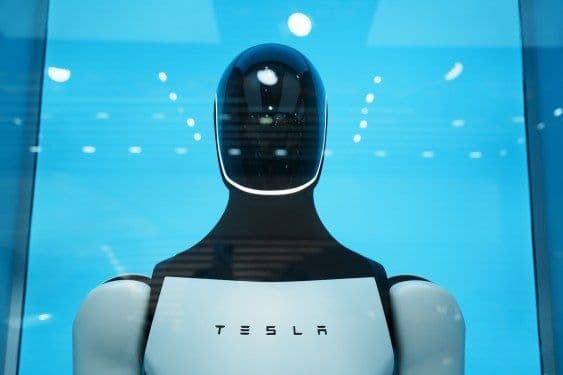
Tesla just increased its capex to $25B. Here’s where the money is going.
Tesla CEO Elon Musk kicked off the company’s first-quarter earnings call with a monetary heads-up — or depending on the mindset of the investor, a warning. Tesla’s capital expenditures will skyrocket to $25 billion in 2026, far outpacing its previous annual spend as it races to stay ahead of the competition and transitions to an AI and robotics company, according to itsfirst-quarter earnings report. That figure, which covers what Tesla plans to spend on physical assets outside of its day-to-day operating expenditures, is three times higher than its annual capex budget in previous years. For comparison, Tesla’s annual capital expenditures were $8.5 billion in 2025, $11.3 billion in 2024, and $8.9 billion in 2023. Tesla had announced in January that it expected capital expenditures to be in excess of $20 billion in 2026, already a substantial increase meant to cover its AI initiatives, including investments in compute infrastructure and data centers, and the expansion and ramp of its manufacturing and R&D production lines, among other items. This $5 billion uptick suggests these initiatives will require more money than previously planned. But so far, its quarterly capital expenditure, which was $2.5 billion, was in line with previous quarters, the report shows. Of course, Musk views this as a positive, a sentiment many other shareholders will likely also share since it positions Tesla as a company investing in its future, namely AI and robotics. “With 2026 we’re going to be substantially increasing our investments in the future,” Musk said in the earnings call Wednesday. “So you should expect to see significant, a very significant increase in capital expenditures, but I think well justified for a substantially increased future revenue stream.” Musk was quick to note that Tesla isn’t the only company raising its capital expenditure budget. Amazon, for instance, has projected$200 billion in capital expendituresin 2026, across “AI, chips, robotics, and low earth orbit satellites.” Google is slated to spend between $175 billion and $185 billion in capital expenditures in 2026, up from $91.4 billion the previous year. The increase in Tesla’s capital expenditures is linked to Musk’s desire and ambition to evolve the company beyond building and selling EVs, solar, and energy storage. Some of the capex spend will go towards Tesla’s core technologies such as its battery and AI software, according to Musk. The company plans to invest in AI training, chip design, and “laying the groundwork” for increasing manufacturing production, as well as invest in its robotaxi operations and its new semiconductor research fab in Austin. The Fremont, California factory will likely suck up some of that capital as the company ends production of the Tesla Model S and Model X and begins building its Optimus humanoid robot at scale. The company said Wednesday it has also cleared ground outside its Austin factory for a dedicated Optimus manufacturing facility. Tesla plans to increase its internal production of Optimus for testing and then “probably” make Optimus “useful outside of Tesla sometime next year,” he said. Tesla is also putting money towards strengthening its supply chain “across the board,” Musk said, adding that this covers batteries, energy, and AI silicon. All of this spending, which CFO Vaibhav Taneja said will last a couple of years, comes with a literal cost. The company, which enjoyed a brief 4% share price bump due, in part, to an unexpected$1.4 billion in free cash flow, will head into negative territory later this year, Taneja said. Tesla shares erased their gains in after-hours trading as Musk and Taneja laid out these plans to investors. Still, Tesla is still on loads of cash. At the end of the first quarter, Tesla reported $44.7 billion in cash, cash equivalents, and short-term investments. “While this may seem like a lot, and we will have the impact of negative free cash flow for the rest of the year, we believe this is the right strategy to position the company for the next era,” Taneja said.
View

AI Overviews are coming to your Gmail at work
During its Google Cloud Next conference on Wednesday, the company announced a slew of Workspace-focused updates, including the addition of its AI Overviews feature to Gmail. The feature, which today uses AI to summarize Google Search results, will now do the same for Gmail users in the workplace. According to Google, this will allow Gmail users to ask questions in search using natural language and then get concise answers without having to open and read different emails. The company suggests the feature could be used to ask business-related questions about topics typically shared in emails, like those about performance improvements, project milestones, invoices, comments on decks, trip details, and more with straightforward answers. The AI Overview will create an instant summary pulled from across multiple emails and conversations. While not everyone prefers to have AI as their first step to finding an answer, it is rapidly becoming the norm, both within Google’s products and elsewhere on the web. In this case, Google says the AI Overviews in Gmail will be the default setting if the company hasGemini for Workspace in Gmail enabled,and ifWorkspace Intelligence access to Gmail is enabled. (End users must have “Smart features in Gmail, Chat, and Meet” and “Google Workspace smart features” enabled, too.) The feature was previously available to consumers with Google AI Pro and Ultra subscriptions. Google says it will also now come to business, enterprise, and education customers as well through the following products: Alongside the launch, Google said it’s also making AI Overviews in Drive broadly available toeligibleWorkspace and Google AI plans. It was previously inbeta.
View

Google makes an interesting choice with its new agent-building tool for enterprises
Google CEO Sundar Pichai opened the Google Cloud Next conference on Wednesday with a video in which he announced one of the company’s biggest new products:Gemini Enterprise Agent Platform. Google’s tool is intended for building and managing agents at scale. This is Google’s answer to Amazon’s Bedrock AgentCore and to Microsoft Foundry. Given that AI, and agents in particular, are furthest along for technical tasks like coding, and that the tech is so new to the enterprise that security remains a real concern, Google has made an interesting choice with this tool. Agent Platform is particularly geared at IT and technical teams. The business folks, meanwhile, are directed toward what Google calls its Gemini Enterprise app, introduced in the fall. They can work with agents built by IT or build their own for tasks like scheduling meetings, performing trigger-based processes, creating shortcuts for repetitive tasks, or creating and editing files without needing to switch apps, Google says. Google also underscored that the underlying models these tools tap into include Google’s own Gemini LLM and Nano Banana 2 image generator, as well as Anthropic’s Claude. The company announced support for Claude Opus, Sonnet, and Haiku — in other words, flagship, reasoning, and lower-cost models, including the new Opus 4.7 that launched last week.
View

Google turns Chrome into an AI co-worker for the workplace
As part of its slate ofGoogle Cloud Nextannouncements on Wednesday, the company shared plans to bring “auto browse” agentic capabilities to Chrome users in the enterprise, along with enhanced security measures. With auto browse, Chrome users can take advantage of Gemini to understand the live context in their open browser tabs, and then use the AI to handle various tasks like booking travel, inputting data, scheduling meetings, and others related to web-based work. Google suggests the tool could be used for things like inputting information in the company’s preferred CRM system based on content in a Google Doc, comparing vendor pricing across tabs, summarizing a candidate’s portfolio before an interview, pulling key data from a competitor’s product page, and more. The company notes that its workflows will still require a “human in the loop,” meaning that the user will have to manually review and confirm the AI’s input before any final action takes place. However, the idea is to help speed up these types of more tedious tasks to free up people to focus on what Google refers to as more “strategic work.” This is the larger promise from AI advocates: that you’ll get your time back by using this new technology. But in practice, studies have shown thatAI isn’t reducing work — it’s intensifying it.It remains to be seen how this will play out at the enterprise level as AI becomes a standard part of the workflow. Presumably, that could mean managers will expect that people can get more tasks done in less time. Google says the new feature will initially be available to Workspace users in the U.S., as a part of Google’s push to infuse its AI into one of its most-used apps in the workplace, the web browsernearly everyoneuses. It can be enabled via apolicy, and Google states that an organization’s prompts won’t be used to train its AI models. (A disclosure that is increasingly necessary these days, given thatMeta is even using its own employees’ keystrokesto train its AI.) Like theconsumer-facing version of the feature,Workspace users will be able to save their most common workflows for later use. These “Skills,” as they’re called, can be pulled up by either typing a forward slash (” / “) or by clicking the plus sign to access the needed Skill. In addition to the infusion of AI into Chrome, Google is touting its ability to detect unsanctioned AI tools in the workplace viaChrome Enterprise Premium. Now, it’s expanding those capabilities to help IT teams look for compromised browser extensions or other AI services — specifically “anomalous agent activity.” Google is correct to position this as a security feature, but it has another advantage, too. The tech giant is essentially leveraging corporate IT to shut down any other AI agents that could be taking root in the enterprise world organically. Years ago, this was how many web services established themselves in the workplace, amid an employee-driven “Enterprise 2.0” rush to adopt new technology like cloud storage, collaborative docs, or file sharing. This new feature, which Google somewhat ominously dubs “Shadow IT risk detection,” will give IT teams visibility into the usage of both sanctioned and unsanctioned GenAI and SaaS sites across their organization. IT teams will also receive a “Gemini Summary” of the Chrome Enterprise release notes and other AI-powered suggestions. This will surface critical changes, new policies, and upcoming deprecations, along with recommendations about things like configuring new settings or reviewing managed browsers. The company also announced an expanded partnership with Okta to secure the agentic workplace with added features to reduce session hijacking and other protections. It’s also upgrading its security controls for extensions and introducing Microsoft Information Protection (MIP) integration to help organizations enforce consistent security policies.
View
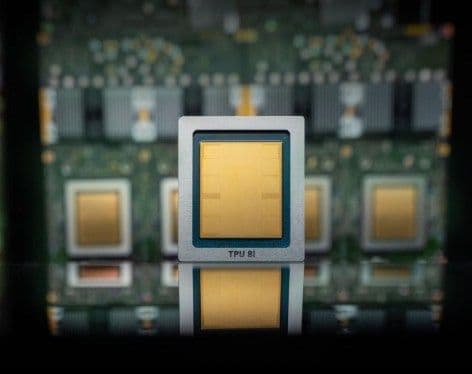
Google Cloud launches two new AI chips to compete with Nvidia
Google Cloud on Wednesdayannouncedthat its eighth generation of custom-built AI chips, or tensor processing units (TPUs), will be split in two. One chip, named the TPU 8t, will be geared for model training and another, the TPU 8i, is aimed at inference. Inference is the ongoing usage of models, aka what happens after users submit prompts. As you might expect, thecompany toutssome impressive performance specs for these new TPUs compared to the previous generations: up to 3x faster AI model training, 80% better performance per dollar, and the ability to get 1 million+ TPUs to work together in a single cluster. The upshot should be a lot more compute for a lot less energy — and cost to customers — than previous versions. It calls these chips TPUs, not GPUs, because its custom low-power chips were originally named Tensor. But Google’s chips are not a full frontal assault on Nvidia’s future, at least not yet. Like the other giant cloud providers, including Microsoftand Amazon, Google is using these chips to supplement the Nvidia-based systems it offers in its infrastructure. It is not flat-out replacing Nvidia. In fact, Google promises its cloud will have Nvidia’s latest chip, Vera Rubin, available later this year. One day the hyperscalers building their own AI chips (which includes Amazon, Microsoft, and Google) may grow to need Nvidia less, as enterprises move their AI needs to their clouds and port their apps to these chips. Still, as things stand today, it’s not profitable to bet against Nvidia. As notable chip market analystPatrick Moorhead jokingly posted on X, he had predicted that Google’s TPU could be bad news for Nvidia (and Intel) back in 2016 when the search giant launched its first one. Nvidia is now a nearly $5 trillion market cap company, meaning that prediction didn’t exactly hold up to the test of time. If all goes according to Nvidia’s plan, Google’s growth as an AI cloud provider would result in more business for the chip maker not less, even if many a workload runs on Google’s chips. In fact, Google also says it has agreed to work with Nvidia to engineer computer networking that allows Nvidia-based systems to perform even more efficiently in its cloud. In particular, the two tech giants are working to beef up the software-based networking tech called Falcon,which Google created and open sourced in 2023under the godfather of all open source data center hardware organizations, theOpen Compute Project.
View

How SpaceX preempted a $2B fundraise with a $60B buyout offer
Until a few hours before SpaceX announced its deal, giving it the option to acquire Cursor — the maker of AI-powered coding software — for$60 billion, Cursor was on track to close a $2 billion funding round later this week, according to a person familiar with the matter. The round would have valued the company at $50 billion. SpaceX said it would either buy the company at some point later this year or pay $10 billion to Cursor to collaborate on AI development. Cursor was apparently running a parallel process, negotiating a potential acquisition by SpaceX while simultaneously finalizing a private funding round with investors that include Andreessen Horowitz, Thrive, Nvidia, and Battery Ventures, details of which were firstreported by TechCrunchlast week. It is not uncommon for startups to engage in acquisition discussions while simultaneously raising new capital. While many private companies prefer to remain independent, Cursor’s $2 billion raise would have fallen short of the capital needed to reach cash-flow breakeven, likely forcing the company to raise substantial funding later, the person said. SpaceX, which recently merged with xAI, has been aiming to beef up its AI capabilities to better compete with leaders like Anthropic and OpenAI. Acquiring Cursor gives Elon Musk’s company a better chance of challenging rivals in AI coding, currently the most lucrative application of the technology. However, SpaceX is delaying the potential acquisition of Cursor until after its IPO this summer. This is largely because the company wants to avoid updating its confidential financial filings before the listing, and it will be easier to finance the $60 billion purchase using its new, publicly traded stock. The deal appears to benefit both sides for several reasons. Despite fast revenue growth, Cursor is facing fierce competition from Anthropic’s Claude Code and OpenAI’s Codex. Given that threat, the startup could face challenges in continuing to raise private capital to finance its massive computing needs. Even if SpaceX doesn’t go through with the acquisition, Cursor is receiving a $10 billion capital injection paid out over time from Elon Musk’s company. Additionally, if SpaceX goes through with the acquisition, the space giant will likely keep the entire Cursor team intact. Unlike Google’s purchase of Windsurf, which was structured as an acqui-hire of key individuals, SpaceX currently lacks a meaningful AI workforce and is widely seen as not having a significant AI business. Meanwhile, SpaceX has access to vast computing capacity at its data centers in Mississippi and Tennessee, which it can offer Cursor, potentially in lieu of part of the $10 billion “collaboration” payment promised the coding startup. The company would also like public investors to value it as more than just a space and satellite business. By promising to potentially acquire Cursor, SpaceX positions itself as an AI company, giving it a chance to garner the much higher valuation multiple that Wall Street currently assigns to AI companies.
View
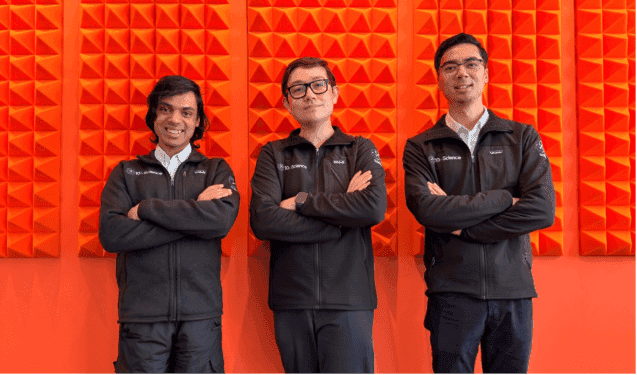
AI is spitting out more potential drugs than ever. This startup wants to figure out which ones matter.
AI’s biggest impact in science is Google DeepMind’s use of a deep learning modelto predictthe complex structures of proteins — the molecules that drive virtually every process in living cells. But as AI models continue to spit out more candidates for potential treatments, there’s an emerging bottleneck: actually characterizing all those candidates in practice, for testing and mass production. That’s the goal of10x Science, a startup founded in December 2025 that announced a $4.8 million seed round today, led by Initialized Capital and with backing from Y Combinator, Civilization Ventures, and Founder Factor. Its three founders are David Roberts and Andrew Reiter, experienced biochemists, and Vishnu Tejas, a serial founder with expertise in computer science and AI models. “When biopharma tries to create a drug candidate, they have all of these really nice prediction tools,” Roberts told TechCrunch. “You can add as many candidates as you want to the top of the funnel, but they all have to pass through this characterization process. Everything needs to be measured.” Understanding the structure of proteins is key for researchers developing biologic drugs, which are produced in living cells and use sophisticated design to specifically target diseases and conditions. For example, they can be designed to target specific cells, like Keytruda, a popular drug sold by Merck that helps the immune system identify and attack cancers. 10x’s three founders worked together in the Stanford lab of Nobel laureate Dr. Carolyn Bertozzi, where they studied the interactions between cancer cells and the immune system, and were frustrated by their inability to understand precisely what was happening on a molecular level. The most accurate way to assess molecules is through a complex technique called mass spectrometry, a way of determining their atomic structure by measuring them in an electric field. The relatively new technique generates complex data that requires significant expertise to interpret, and analyzing it takes up a lot of time. 10x’s platform combines deterministic algorithms rooted in chemistry and biology with AI agents that can interpret that data. The team had to do significant work to train the models on spectrometry data and make its analyses traceable, a key requirement for a tool that will be used to help companies achieve regulatory compliance. Matthew Crawford is a scientist at Rilas Technologies, a firm that runs chemical analyses for other companies — saving clients like biotech startups from having to invest several million dollars in their own spectrometry equipment and the experts to operate it. Crawford has been using the 10x Science platform for several weeks and says it is speeding up his work. Crawford said the model surprised him with its ability to explain its conclusions, find the right data for analyses on its own, and adapt to evaluating different kinds of molecules. While some AI tools he has experimented with in the past over-promised or suffered accuracy issues, he says this one makes reasonable assumptions, something he attributes to the deep domain expertise of its creators. “I ran a particular protein through it, and it just kind of figured out, from what I named the file, what the protein probably was,” Crawford said. “It then searched databases online for the sequence for that protein, so I didn’t have to program in the sequence.” 10x executives say they’re also working with multiple major pharmaceutical companies, as well as academic researchers. The plan is to use this seed funding to hire more engineers and continue to refine the model and offer it to new customers. If they are able to gain traction characterizing proteins, Roberts hopes the company will expand to offer a new kind of understanding of biology, combining protein structure with other data about cells. “The deeper thing behind what we’re building is actually a new way to define molecular intelligence,” Roberts said. For its investors, 10x offers a useful way into the biotech space that isn’t dependent on a specific drug succeeding and winning regulatory approval. If the company works out the way its founders hope, it will become an important tool for drug development, whether or not the eventual products succeed in the marketplace. “This is a SaaS platform that pharma has to pay for, every single month, to go through all of these potential candidates,” Zoe Perret, a partner at Initialized, said. She’s counting on the deep experience of the founders to protect the company from competitors; there simply aren’t that many people who understand these methods and the data they produce. What the platform could do, Crawford says, is help unlock the techniques for researchers who could benefit from these methods but lack the time or resources to deploy them. “Groups here are trying to make a new drug,” he told TechCrunch. “They just want to get a quick, simple answer out of mass spec, and then it opens up a whole can of worms. This software is going to help keep that can of worms closed and just get them the answer they actually need to then do the next thing in their research.”
View
OpenAI teams up with Infosys to bring AI tools to more businesses
OpenAI has partnered with Infosys to integrate its artificial intelligence tools, including coding assistant Codex, into the Indian IT giant’s Topaz AI platform. Infosys said the integration will be used to help its clients modernize software development, automate workflows and deploy AI systems at scale, initially focusing software engineering, legacy modernization, and DevOps. India’s IT services firms face mounting pressure from a mix of slowing client spending and rapid advances in generative AI. Shares of Infosys have fallen over 22% this year amid abroader sell-offtriggered by weak forecasts, investor concerns that AI tools could automate parts of traditional outsourcing work, and macroeconomic turmoil due to the U.S.-Iran war. The move also reflects a broader trend of AI firms teaming up with global IT services providers to scale adoption in large enterprises. OpenAI has previouslypartnered with HCLTech, and Infosys has strucka similar deal with Anthropic. OpenAI gains a distribution channel into large enterprises through Infosys’ global client base and delivery capabilities across more than 60 countries. The companies said the deal is aimed at helping enterprises move from experimentation to large-scale deployment. Infosys has been ramping up its AI business. The company said earlier this year that AI-related services generated ₹25 billion (about $267 million) in revenue in the December quarter, or roughly 5.5% of its total. The deal is part of a broader push by OpenAI to expand its enterprise footprint through initiatives such asCodex Labs, announced on Tuesday, which involves engineers working with clients to help deploy its tools. Initial partners include Accenture, Capgemini, CGI, Cognizant, Infosys, PwC and Tata Consultancy Services, as OpenAI aims to build a distribution network to scale adoption of Codex, which now hasmore than 4 million weekly active users. The companies did not disclose financial details of the deal.
View

Tech Mahindra Q4 Profit Grows 16% as AI-Led Deals Lift Margins
Tech Mahindra scored deals worth $1.07 billion in Q4 FY26, up 34.5% YoY, driven by large transformation contracts.
View

Investors Sour on Indian IT as AI Demands Structural Reset, Not Just New Deals
Indian IT stocks are under pressure from investors. The Nifty IT index slid nearly 4%, triggered by HCLTech’s earnings rout.
View
Deepseek ‘In Talks’ To Raise Funds at $20 billion Valuation
Fresh capital would let DeepSeek invest more in infrastructure and pay competitive salaries to retain top engineering talent.’
View

OpenAI Unveils ChatGPT Images 2.0 With Improved Image Generation, Reasoning Capabilities
OpenAI on Tuesday launched its next-generation image generation model. Dubbed ChatGPT Images 2.0, it is claimed to deliver more precise, usable, and context-aware images, based on prompts entered by the user. The new model introduces improvements in instruction following, multilingual rendering, and composition. The San Francisco-based artificial intelligence (AI) giant says it also adds reasoning capabilities for more complex tasks. ChatGPT Images 2.0 is being rolled out across ChatGPT, Codex, and the API.
View
