Latest AI News
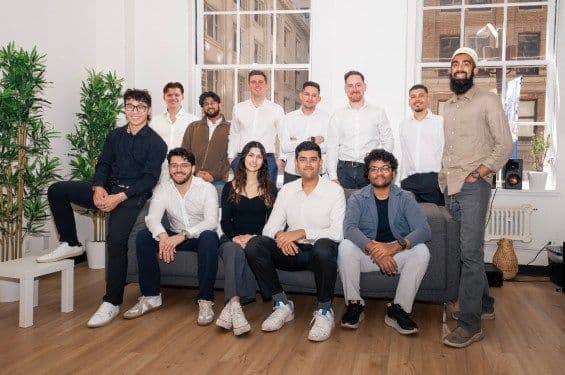
Another customer of troubled startup Delve suffered a big security incident
The story of embattled compliance startup Delve keeps hitting twists and turns. TechCrunch has confirmed that Delve was the compliance company that performed the security certifications for Context AI, the AI agent training startup that last week disclosed a security incident whichled to a data breach at popular app and website hosting giant Vercel. On the other hand, Lovable, which had its own security incident, is no longer a Delve customer. To recap: Last month, Delve came under fire when an anonymous whistleblower alleged thatthe startup was faking customer dataand using rubber-stamping auditors in its compliance and certifications processes. Delve has denied those allegations. Soon afterwards, hackers attackedone of Delve’s security certification customers, LiteLLM, and planted malware in its open source code. After the incident, LiteLLM told TechCrunch it was dumping Delve and getting re-certified. Delve was alsoaccused of taking an open source tooland passing it off as its own work without proper license attribution. The startup’s reputation grew shaky, promptingY Combinator, where Delve graduated from, to sever ties. Fast-forward to last weekend, Vercel said hackers hadbreached its internal systems and accessed some customer data. The company said hackers broke in after an employee downloaded an app made by Context AI and connected that app to Vercel’s corporate account hosted by Google. The hackers abused that employee’s access to their Google account to break into some of Vercel’s internal systems. After Context AI was named in the Vercel attack, Gergely Orosz, author of the engineering newsletter The Pragmatic Engineer, saidin a post on Xthat Delve was the company that handled Context AI’s security certification. Context AI has now confirmed to TechCrunch that it did use Delve, but it has since ditched the startup and is in the process of getting re-certified. “Yes, Context was previously a Delve customer,” a spokesperson for Context AI told TechCrunch. “Following the reporting surrounding Delve in March, we transitioned our compliance program to Vanta and engaged Insight Assurance, an independent audit firm, to conduct new examinations. As part of the re-examination, we began updating our public materials, and we’ll share the new attestation when it is complete,” the spokesperson added. Security certifications on their own don’t stop security issues. They are intended to verify that a company has policies and processes in place to hinder attacks and reduce the likelihood of customer data being compromised. Case in point: Lovable was a Delve customer, butafter the whistleblower’s allegations came out,the vibe-coding platform said it had ditched the startup back in late 2025. The company has already re-completed one security certification, and is in process of redoing others, it said. Still, Lovable onMonday admittedthat it had inadvertently shared access to customer chat data publicly. The company also said it had dismissed vulnerability reports that alerted the company to the problem months earlier. Lovable apologized for initially denying there was a data breach, though it said the issue was caused by a configuration error, rather than a hack. There’s even weirder news swirling around Delve. The anonymous whistleblower, DeepDelver, haspublished another postalleging Delve was denying refunds to customers, but still took its team of more than 20 people to an offsite meeting in Hawaii between April 15 and April 19. The whistleblower shared some compelling receipts with TechCrunch that lend credence to the alleged Hawaii trip, but TechCrunch could not confirm other claims. After publication, Delve declined comment.
View
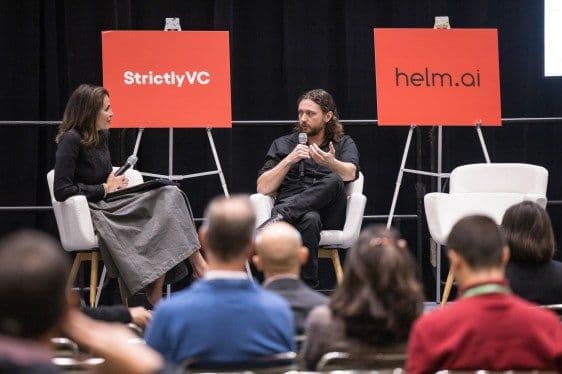
Grab a ticket today: The first StrictlyVC of 2026 kicks off in just a week in San Francisco
StrictlyVC’sfirst San Francisco event of the year is nearly here, and with just a week to go,now’s the time to grab yourself a ticket. The venture and founder communities will be gathering at the Sentro Filipino Cultural Center on April 30 for an evening packed with what StrictlyVC does best: engaging in enlightening conversations with excellent speakers, with ample opportunity for networking that drives outcomes. And we’re excited to announce one more speaker is joining our lineup:Eclipsefounder and CEOLior Susan, who has recently raised $1.3 billion to solely back “physical AI” startups. That extensive investment will be explored in detail in our discussion with him, as he shares his vision for what autonomy in the real world could look like as the convergence between the digital world of AI and our physical world evolves. Susan is well-versed in that space, having served in the military and leading Flex’s hardware investments. He’s seen firsthand the kinds of opportunities that lie in improving the industrial systems underpinning the modern world and using new technologies, supported by operators fueled by vision, capital, and innovative new technologies. And he’ll be interviewed by ourventure reporter Marina Temkin, so no follow-up opportunity will go unaddressed. Susan is joining the rest of our speakers for a particularly timely series of conversations.Replitco-founder and CEOAmjad Masadwill talk about the AI-driven shift in software development and what the next era of programming may look like, amid continued shifts in practices and employment within the industry. TDK VenturespresidentNicolas Sauvage, whose firm is also sponsoring the event, will joinTechCrunch editor-in-chief and StrictlyVC founder Connie Loizosfor a conversation about the ins and outs of corporate venture capital, early-stage investing, and key lessons founders must learn about raising from strategic backers. In addition,Campbell Brown, co-founder and CEO ofForum AI, will bring her perspective on building more trustworthy AI systems amid an increasingly skeptical environment around the accuracy of any information coming from any number of sources. All of which is informed by her tenure as Meta’s head of media partnerships and as a CNN host. And she’ll be interviewed by our newestsenior reporter, Tim Fernholz. And if you’ve never been to a StrictlyVC event before,this is a great one to start with. These meet-ups are a more intimate, informal affair that allow for candid and particularly instructive conversations that founders and VCs can use to get a head start on the competition immediately. You get the chance to actually connect with speakers, fellow investors, and founders, plus anyone else interested in learning more about the trends shaping Silicon Valley and beyond. Don’t wait to snag one of the few tickets still available. Block off your Thursday evening, and come to San Francisco on April 30 to join the StrictlyVC community.
View

Era raises $11M to build a software platform for AI gadgets
Earlier in April, the startupEraheld a gathering of artists who had received its developer kit in New York. The artists showed off the various mini gadgets they had built, like a souvenir that tells youfacts and jokes about France, a phone-like device that looks at your stocks and tells iftoday is the day you can quit your job, ora gadget that tells you about air quality. While all these devices are experimental, the common thread is Era’s platform, which allows hardware makers to create AI agents and orchestrations for AI devices. The company doesn’t want to create devices itself, but aims to enable others to do so by providing a software layer that could handle tasks like customized voice creation or adding intelligence to a classic device, such as headphones. The startup has raised $11 million in funding to date. This includes a $9 million seed round led by Abstract Ventures and BoxGroup, with participation from Collaborative Fund and Mozilla Ventures. Previously, the company had raised $2 million in pre-seed funding from Topology Ventures and Betaworks. Individual angel investors include Flickr co-founder Caterina Fake, iPhone keyboard creator Ken Kocienda, OAS founder Tony Wang, Little Guy co-founder Daniel Kuntz, Sandbar co-founder Mina Fahmi, ex Rabbit CPO ShaoBo Z, and Poetry Camera creator Kelin Zhang. Era was founded last year by CEO Liz Dorman, CTO Alex Ollman, and CPO Megan Gole. Dorman worked at Humane on AI orchestration andtransitioned to HP as part of the company’s acquisition. Ollman worked at HP on agentic frameworks for enterprises. Gole Sutter Hill Ventures on the Jony Ive and Sam Altman’s io project, and then later transitioned to Era. Era investor Casey Caruso, who is a founder and managing partner at Topology Ventures, said that the startup’s orchestration platform stands out because of its dynamic routing across models and managing real-world constraints like connectivity. Dorman said that the core idea behind Era was to build a platform that could power the next generation of devices, which might ditch the app model. “I think one of the incredible things that we can do with these AI models today is that you can replace that app layer. So what we’re building is the intelligence layer to allow anyone to create these types of intelligent objects, intelligent devices. And what we really believe is that the future of tech should not be made by people in San Francisco…It should not be people in their high fortresses who are so out of touch with reality, making devices and forcing them onto everyone. I want a choice over my devices again,” Dorman said. Currently, the company provides over 130 LLMs from more than 14 providers to enable different AI gadget form factors such as glasses, jewelry, and home speakers. Era thinks that as more form factors come to the forefront, hardware makers will need a software layer that can handle multimodal inputs and inference for them to power intelligent functions. “You can imagine this intelligence layer going to many different types of hardware. So we believe it’s not gonna be just glasses or rings or just bracelets. We’re gonna have a Cambrian explosion of what’s possible, and this is because tech is commoditized,” she said. Dorman noted that the startup’s platform is set up to scale across millions of devices. Plus, it can cater to custom AI device experiments that brands might do to appeal to certain users. The startup’s vision is that as more users adopt AI gadgets, it wants to enable users to choose their own memory and model providers in a privacy-preserving way. Just like it held a showcase with artists, it plans to make its platform available to the open source and maker community to show how its platform can power different kinds of devices. A big challenge in the AI hardware space is that there isn’t a model of a company that has found success. Humane was sold to HP, and Rabbit has been silent.Plaudhas found some success in meeting note-taking space, while startups likeSandbarandTayaare early. However, Era feels that as users see more use cases of AI devices, some will stick with them.
View

Muted Guidance Overshadows Infosys’ $20 Billion Revenue Milestone
Infosys reported $14.9 billion in large deal wins for the year, including $3.2 billion in Q4.
View

Infosys to Hire 20,000 Freshers in FY27
The hiring push comes despite a drop of over 8,000 employees in the March quarter.
View

Infosys CEO Sees ‘Mythos’ Risk As Opportunity
Parekh framed this as a potential growth area for Infosys.
View
Infosys Grows Q4 Profit By a Fifth as AI Dominates Deal Wins
Infosys grabbed $14.9 billion in large deal wins in FY26, with AI dominating the partnerships.
View

This 5-Member Startup Helped Wipro Cut Hiring Effort by 97%
In 2022, Y Combinator-backed Equip raised $400,000 to build an AI-first hiring marketplace.
View

Beehiiv rolls out new creator tools, including webinars and customizable paywalls
It’s been clear for a while that Beehiiv wants to be more than just a newsletter platform. The L.A.-based company announced a slew of updates on Thursday that make that ambition even more obvious. The new features include webinars, AI analytics for podcasts, metered paywalls, and paid trials. Taken together, the announcement is a clear sign that the nearly five-year-old company is trying to become an all-in-one hub for creators, reducing the hassle of juggling various tools and services to run their businesses. With these additions, Beehiiv is positioning itself against platforms spanning newsletters, webinars, and podcasting — including Patreon, Substack, Zoom, Kit, and Ghost. The webinar launch is probably the biggest signal of where things are headed. Creators can now host live events for up to 10,000 people directly inside Beehiiv, complete with video, screen sharing, and chat. They can charge for access in multiple currencies or just use it as a free offering to grow their audience. The feature opens up new use cases for educational content, product demonstrations, and community building. On the monetization side, Beehiiv is making it easier to turn new readers into paying subscribers without alienating them immediately. The new metered paywalls let creators decide how much content to give away before asking for money — one post or ten before a subscription prompt appears. Creators can also control the reset period: daily, weekly, monthly, yearly, or never. Paid trials are another widely used tactic for enticing new subscribers. Creators can control the trial length, price, and billing cycle — for example, $1 for 30 days, or $5 per month for 3 months. Podcasts have exploded in popularity, and Beehiiv is betting its new tools will make it easier for creators to stand out in the crowded space. Last month, the platform addednative podcast hosting, allowing creators to handle everything from hosting and distribution to monetization. The company has seen positive results so far. It reports that 50% of existing users have migrated existing podcasts to the platform, and 25% of existing users have launched entirely new podcasts. Now, the platform is layering in AI analytics, giving creators the ability to dig into their audience metrics and ask questions about their data, like how an episode performed or where listeners are coming from, and get answers without digging through dashboards. Creators have to opt in and can choose which AI tools they connect, including Claude and ChatGPT. More features are coming. The company tells TechCrunch it’s working on adding video support for podcasts, due to launch in Q2. Ads are also expected later this year. Separately, Beehiiv touted its first-quarter results, which it calls the best quarter in the company’s history. The company said it reached 400 million unique readers, crossed 50,000 active users, and sent 10 billion emails. The outfit also said it surpassed $28 million in annual recurring revenue (ARR) this month.
View

Why the Future of AI Will Go Beyond Transformers
There is a growing realisation that while AI models have been scaling, they no longer deliver transformative leaps.
View

Swiggy Launches Builders Club, Opening AI Commerce Infra to Developers and Enterprises
Built on Amazon Web Services, the Builders Club programme is powered by Amazon Bedrock, which offers unified API access to foundation models from Anthropic, Meta, Mistral AI, and others.
View

OpenAI Launches Workspace Agents in ChatGPT to Automate Team Workflows
OpenAI said workspace agents are an evolution of its existing GPT-based tools and are powered by Codex.
View