Pre-Black Friday Sale is LIVE! Get Up to 85% OFF AI Tool Listings + 50% OFF All Sponsorships.
Grab the DealSubmit your Tool
PoweredByAI.app is an AI Tools Directory helping individuals, businesses, and creators discover the best AI tools for writing, coding, design, productivity, and more.
© 2026 , Product of011BQ. All rights reserved.

Airbnb reported its third-quarter (Q3) 2026 financial results Thursday. Along with its financial health, the platform also shared its plans and products it plans to introduce soon. The company has revealed that it has started developing a dedicated AI agent that will help users plan their trips. Airbnb plans to start rolling out the AI travel agent next year. Airbnb says that its upcoming AI travel agent will use data from different travel-specific libraries. The company has already deployed an AI agent for customer support. The platform also features AI Search, AI Filters, AI Listing Descriptions, and AI Companion, with each tool offering a specific functionality.
View

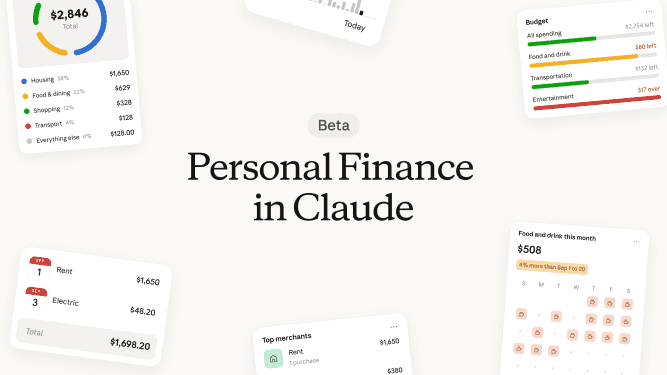
Anthropic announced Thursday that Claude is getting a new tool called “Personal Finance,” designed to help users keep track of their money. With it, users can connect their bank and credit card accounts through Plaid and ask Claude questions about their finances. Anthropic says access is read-only, meaning Personal Finance can’t move, manage, or invest users’ money. By letting Claude connect directly to bank and credit card accounts, Anthropic is positioning its chatbot as a financial companion that can help people understand their spending and make sense of their money, rather than simply offering them generic advice. With the launch, Claude is playing catch-up to OpenAI’s ChatGPT, which introduced similarpersonal finance toolsin May that also let users connect their financial accounts and ask questions about everything from spending patterns to long-term financial planning. “Claude gives you answers in everyday language, from your balances and transactions, and explains any term that’s new to you,” Anthropic wrote in a blog post. “Like the rest of Claude, Personal Finance has no ads or sponsored recommendations, and it doesn’t offer credit cards, loans, or savings accounts of its own, so your money questions get a straight answer.” For instance, at the end of the month, a user could ask Claude, “Where did my money go this month?” The chatbot will then add up spending across the connected accounts and sort it by category, such as rent and utilities, food and drink, and shopping. Users can choose to go deeper by following up with questions like, “Is that more than usual?” or “Anything else I’m missing?” Anthropic says the tool goes beyond basic spending summaries by analyzing transactions across connected accounts to flag potential issues, such as duplicate charges, unexpected fees, and steadily increasing bills. Users can also ask broader questions about their finances, such as whether they’re spending more than they earn. The tool can also explain financial concepts like APR (annual percentage rate), while providing calculations that show users how much they’ve paid in interest over the past year. Of course, some people will have reservations about connecting their financial accounts to an AI chatbot. Anthropic says Claude’s access is limited to each connected bank’s name, account name and type, the last four digits of the account number, balances, credit limits, and up to two years of transaction history. Additionally, the company notes that when users chat with Claude in the Personal Finance hub, those conversations aren’t used to train its models. Personal Finance starts rolling out in beta this week to users on the Pro, Max, and Ultra plans in the U.S. The launch of the new tool comes as Anthropic has been expanding Claude into new verticals. For instance, Anthropic launchedClaude for LegalandClaude for Financial Servicesearlier this year.
View

OpenAI co-founder and president Greg Brockman said the company would be ready for an IPO in 2027, noting that its enterprise revenue has been growing. Speaking at aWall Street Journal tech conferenceon Wednesday, the executive touted how the company had been gaining ground in the enterprise market, where rival Anthropic had already successfully made inroads. In response to the interviewer’s question about being IPO-ready next year, Brockman replied, “I think so. Yes.” “We’ve been very clear this year that we want to go public when we feel is the right time for us, and I feel extremely good about the business. I feel like we’ve made so much progress this year, and I’ve honestly never felt more confident in what we’re doing,” Brockman said. He detailed how OpenAI’s trajectory as an enterprise had changed over the course of 2026, noting that the first and second quarters were “pretty rough.” He also admitted that OpenAI “wasn’t even in the conversation” when it came to agentic coding — an area where Anthropic’s Claude Code has gained market share. “We had Codex, but no one was talking about it,” Brockman continued, “and I think that we just kept our heads down and executed.” By the third quarter, activity picked up, as OpenAI saw 70% quarterly growth in its annualized revenue — something Brockman attributed to the enterprise side of the business doubling. He explained that the growth wasn’t simply the result of something that happened in the quarter itself, but rather the culmination of investments the company had been making up to that point. Now the majority of OpenAI’s revenue is coming from the enterprise business, which previously accounted for only around 30% of its total revenue. “And it’s not that consumer [revenue has shrunk] … It’s been growing, but it’s the enterprise segment has really taken off,” he said, pointing to a recent partnership with JPMorgan Chase as one example of the type of client it’s now winning deals with. Brockman also spoke more broadly about the lessons OpenAI learned from selling into the enterprise market as well. He said the company had come to understand that its job was to help businesses identify the most important milestones they could achieve with its AI technology, build trust with clients, and demonstrate that it was a reliable partner for the long haul. “A year ago, we weren’t even really in the enterprise game, right? We were really perceived as a consumer company, and a lot of the companies we’d start talking to would say, ‘Is OpenAI really committed to the enterprise?’” Brockman said. “But it’s so different today.”

Max Justicz, the chief technology officer and co-founder of the startup Charge Robotics, used an OpenAI model to finda severe vulnerabilitythat — if exploited — could allow hackers to take control of servers running Ubuntu, a widely used open source Linux-based operating system. Justicz, who has a hobbyist’s interest in cybersecurity and previously found a vulnerability in the same codebase, told TechCrunch that he found this issue using GPT 5.6 Sol, released in July, through the AI maker’s Daybreak Blue, a program that gives cybersecurity defenders access to powerful frontier models. “I literally just aimed ChatGPT at the same body of code and said ‘I found this bug previously that was fixed several years ago, please find bugs as bad or worse,’ and it came back in two hours with this,” Justicz said. “It’s extremely convoluted and hard for a human to find, but it works!” He reported the issue to the Debian Project, which maintains the software in question and issued a patch to fix the vulnerability. There has been no known evidence of exploitation. Still, the ease with which he found it suggests that we’ve only seen the tip of the iceberg when it comes to potential exploits that even novice hackers can utilize with the help of AI models. “I can only imagine what one could do with more time and access to less neutered models. We should expect some extremely crazy bugs to be found and exploited over the next few months,” Justicz wrote in asocial media threaddiscussing his finding. “This might be obvious to most folks here, but there is currently huge alpha in taking some code or binary someone has not audited yet and just aiming a powerful AI model at it.” OpenAI appears to have noticed. Today, the AI giantannounceda new model focused on cybersecurity, ChatGPT Cyber, would be made available to the highest tier of users in the cybersecurity program, Daybreak Red, which allows offensive cybersecurity researchers tools for vulnerability hunting and development. Yesterday, OpenAIsaidthat the same model had been used to scan and prepare patches for vulnerabilities in the Linux kernel, finding 948 potential issues. OpenAI also found 81 “novel” vulnerabilities in Firefox, the web browser. “Our goal is to dramatically expand Daybreak, bringing advanced security research to organizations of every size, independent researchers, and open-source maintainers,” the frontier lab said in a statement. OpenAI has insisted that there is a narrow window of time for the people who safeguard digital infrastructure to take action before AI models become even better at hacking and easier to access. For cyber defenders, however, it can feel like the frontier labs have unleashed a mountain of new work that outstrips their resources. Justicz said that he personally spent about $5,000 on subscriptions and tokens to find several exploits. Besides Daybreak’s model access, OpenAI hasalso announceda $1 billion initiative to support cybersecurity professionals in the program who work on critical infrastructure like the electrical grid or water systems. The Daybreak program has its own critiques. Justicz notes that the frontier lab appears to have recently “nerfed” Daybreak Blue to make it less useful at finding vulnerabilities. On one hand, it may be good to limit access from potential bad actors — Justicz said he just uploaded a photo of his driver’s license to join the program. On the other, cybersecurity professionals say they have one hand tied if they can’t use frontier technology while bad actors can deploy open-weight models withabliterated guardrails. Still, OpenAI says just “thousands” of cybersecurity professionals are participating in the Daybreak program, versus a far larger number of potential hackers. It’s unclear if frontier labs are devoting enough of their resources to this issue. Eric Wallace, a researcher on OpenAI’s technical staff, said that “we are now allocating a significant amount of our frontier compute towards discovering and patching vulnerabilities in open source codebases, fully pro bono.” But the Linux bug hunt cost $1.2 million, which is significantly less than the approximate $6 million token spend the company invested in finding a potential solution to a famous problem of fluid dynamics. If there is a narrow window of time to patch the digital infrastructure the world depends on, more urgency may be required.

Meta president Dina Powell McCormick said that the Democratic wins in the midterm elections are going to make it a lot harder for companies to build data centers, adding that the industry has “not done as good a job as we needed to explain the benefits of these investments.” Speaking at theWSJ Tech conferenceon Wednesday, the Meta exec pointed out that the backlash against data centers — which wasvery much on the ballot during this election season— was also tied to people’s feelings about AI technology overall. “The visible sort of manifestation of AI is a data center, and it’s something that people can say, ‘I don’t want this in my community,’” she explained. “I think there’s an underlying bigger issue, which is how people feel about AI in general.” Meta believes it could turn around the negative consumer sentiment around AI if it’s able to demonstrate the value, not only of the data centers coming to local communities, but also in the technology itself. “The stakes of who builds the technology that cures cancer, that gives access to education, that is also a very fundamental difference … Mark [Zuckerberg, Meta CEO] is very ‘long human,’ and he’s betting on humans more than machines,” Powell McCormick explained. “And that’s what we mean when we say the future is for everyone. That people should not be left behind. But the way to ensure that is that this technology is democratized, that people have access to it in a very fair and transparent way,” she said. The exec also touted Meta’s experience in building data centers, saying that the company has been doing so for 20 years, as it takes a lot of compute power to offer the products it does in the social networking space. Today, the company has data centers in 23 states, she said, and five of them, including one in Texas, are planned as projects of 1 gigawatt or more. But Meta is now worried that it could lose some of its investments after politicians ran on anti-data-center platforms during the midterms. “I think it’s going to be harder,” Powell McCormick said, describing what the future of building data centers looks like. “It has been hard, I should say, but I also think that it’s becoming clear what models work, and the states want those models that work.” Specifically, communities only want data centers when it benefits them in some way, she explained, laying out the approach that Meta today uses to close its data center deals in local communities. Successful projects see Meta paying for its own electricity, directing any tax surpluses as a result of the data centers toward teachers and first responders, keeping the labor force local, and getting bipartisan support for the project, among other things. Going forward, she expects data center projects to come under more review and be weighed against whether the constituents actually want them. Meta has pinned its hopes on its AI investments, particularly its consumer AI agent Muse scaling far beyond the 10 million users it has today, to become a business that one day serves billions. But even if that’s not the case, it believes that its investments in data centers will not be for nothing, as the compute itself will be valuable. “We’re getting calls every day to lease that compute [we’ve built], and so one way or another, we’re seeing a path to monetization,” Powell McCormick said.

Muse Voice, a feature that lets users call and video chat with Meta’s consumer AI agent, Muse, is now available to everyone in the U.S., the company announced on Thursday. Firstintroducedat Meta’s Connect developer conference in September, the video-chatting feature involves new AI models,Muse Realtime Avatarand Muse Realtime Voice technology, which help power the digital avatar that chats with the user. While other AI competitors offer voice chat features, Meta’s Muse offers a cute, animated avatar (nicknamed Jolly), which users interact with as they ask questions or request tasks to be handled on their behalf. Users can also customize the avatar as they choose, changing it to something that looks more like a person, animal, or some other character. The company believes that anthropomorphizing Muse in this way could make consumers feel more connected to their AI agent — a connection that could grow even stronger as they begin to engage in live conversations with it. As the Muse avatar speaks, Meta says it will use “subtle expressions and gestures” that match the tone of the conversation. (Muse doesn’t actually “see” the user, but it hears them and reacts based on their conversations.) The news of the rollout was announcedvia blog postandon Xby Meta’s chief AI officer, Alexandr Wang, who shared a demo of his Muse in action. The video saw Wang joking around, referencing his love of posting memes on X, which he told his Muse may have gotten him in trouble with his boss. His Muse, a fluffy white dog, responds with a suggestion to add disclaimers to those memes that could be misinterpreted as Meta endorsing anything risqué. (Ha!) The added support for video chats and calls comes just before Meta’s plan to launcha Tamagotchi-like wearable device for its Muse AI agentbefore year-end. When the device arrives, the digital avatar will appear on its small screen, letting users talk to the agent, which can then reply or carry out tasks for them. Meta says the real-time conversations are supported on mobile, web, and Mac and will later come to its AI Glasses and the upcoming “Muse Charm” hardware device.
View

Airbnb hasteasedits plans to build its own AI travel agent before, but on Thursday the company announced that the new AI feature will launch in the first half of 2027. In the company’sQ3 shareholder letter on Thursday, Airbnb also provided more detail about how the agent will work, what it will actually do, and how it’s different from a typical AI chatbot. In prior interviews, CEO Brian Chesky sketched out the travel company’s approach to AI,describing a plan to build an AI agentthat has a richer interface than a conventional chatbot. He also expressed his opinions about how chatbots aren’t the right interface for travel, noting that people take pleasure in the planning process and in anticipating a trip. Any agent that it built, then, shouldn’t take away from the inspiration and the browsing,he told TechCrunchin an interview last month. Chesky today reiterated that belief, telling analysts on the earnings call that people won’t use one AI agent for everything. “Today’s AI agents like Muse and Instinct are good at simple routine tasks like making a restaurant reservation or scheduling an appointment. But planning a trip is different,” he said. “Travel is aspirational. Discovering where to go and where to stay is part of the experience. In fact, 80% of travelers say they enjoy spending time researching trips. People want to look at photos. They want to compare homes. They want to make decisions with people they’re traveling with,” he continued. “And I don’t think the general-purpose agents are the best to do that. So that is why we are building our own AI agent,” Chesky said. Airbnb described its agent as having a personalized interface that’s designed specifically for travel, where it will “build an interface” around a user’s question instead of simply responding as a chatbot would. “What we are doing is developing a custom-designed AI-native experience that responds to what guests are looking for,” Chesky said. “So instead of relying on traditional chat alone, which is very text-heavy — which, again, is definitely not the way you should plan travel, our agent draws from a library of hundreds of travel-specific interface components — maps, photos, comparisons, calendars, itineraries — and composes them in real time to match what they’re looking for.” The exec said the agent will feel “a little bit like generative UI” as it’s designed to offer up “the right interface at the right time” for someone’s specific travel needs. In its shareholder letter, the company touted that its nearly 20 years of experience in bringing hosts and guests together is informing how the agent is built, as it incorporates insights about how people both book and host on its platform. The agent will also be able to help travelers beyond the booking itself. “Our agent will be able to help guests throughout their trip — from changing a reservation or resolving a payment issue to getting help with refunds, rebooking, or 24-hour safety support. These are things an outside agent can’t easily do on its own,” the company wrote. Over time, Airbnb expects the agent will be able to help travelers with other aspects of their trip, including not only homes and hotels, but also services and experiences. Services and experiences are two areas that have become a bigger focus for the company followingits redesign last year. While the company previously said to expect its AI agent sometime in the next year, it’s now more specifically committing to roll out the new technology to consumers in the first half of 2027. The news of the agent’s release was delivered alongside strong third-quarter earnings, with revenue growing 19% to $4.87 billion, topping Wall Street estimates. It also raised its 2026 revenue growth forecast, which it now predicts will be in the high teens, instead of the mid-teens. “Airbnb is back in growth mode,” Chesky told analysts on the Q3 earnings call on Thursday. “It’s rare for a marketplace of our size to reaccelerate growth, but that’s exactly what we’re doing. Q3 was our fastest revenue growth in more than three years,” he added.

Palo Alto Networks is in talks to acquireClutch Security, a startup that secures AI agents’ access to company systems, for $500 million in cash plus additional milestone-based payouts, according to a person familiar with the discussions. Three-year-old Clutch was last valued at $85 million when it raised a $20 million Series A round in January 2025, led by Lightspeed and SignalFire, according to our source. The startup is currently approaching $10 million in annual recurring revenue (ARR). That means the acquisition, if completed, would value Clutch at about 50 times its ARR, a standard way of pricing software companies. Palo Alto Networks and Clutch Security did not respond to a request for comment. The Information was the first to report the acquisition discussions. The high valuation is not an anomaly in a market increasingly focused on securing software against bad actors using AI to breach systems more easily. Upwind, a startup using AI to secure cloud infrastructure, recently turned down an acquisition offer from DataDog that valued it at roughly 40 times ARR, TechCrunchreportedlast week. If the deal happens, it would be Palo Alto Networks’ seventh acquisition this year, according to PitchBook. The cybersecurity giant has a history of buying innovation rather than building it in-house, and it has ramped up dealmaking this year in response to rising AI-driven cyberattacks. In September, Palo Alto Networks acquired Console, a two-year-old startup that uses AI agents to automate routine IT help desk tasks. The transaction valued Console at $500 million in stock and cash, TechCrunch reported. Other VC-backed companies that Palo Alto Networks has scooped up this year include NEA-backed Embrace, for$325 million; Chronosphere, an observability platform backed by Greylock and Lux Capital, for$2.95 billion; and Koi, a cyber startup backed by Battery and Team8, for$231 million, according to regulatory filings. Several of Clutch’s competitors have also been acquired. Cyera, a cybersecurity startup valued at $12 billion earlier this year, acquired Oasis Security, which, like Clutch, focuses on managing AI agents’ access to systems, for$1 billion. Meanwhile, Cisco bought Menlo Ventures-backed Astrix for roughly$400 million, Calcalist reported.
View

Alex de Vigan’s last business got swamped by the rise of generative AI, but now he’s betting the tech that team had built, a platform for creating tempting product renderings for e-commerce, can be re-purposed to make robots more useful. His new venture,Physicl, has raised $10 million in seed funding led by Inovia Capital to help world model designers and robot builders solve thorny training problems with more realistic simulations. Founder and CEO de Vigan spent the last decade building nfinite, which made it easy for brands and retailers to create 3D models of their goods and display them online. The arrival of transformer-based AI models led that company to focus more on generative imagery, but de Vigan saw a new purpose for his team and the tech stack they’d built to faithfully render 3D environments. “What we were super unique about doing in 3D, AI was going to replace, but something was missing in AI: its ability to understand, interact, and manipulate space and objects,” de Vigan says. Researchers developing physical AI models to make robots more capable of tasks like handling diverse, small objects have been frustrated by the returns of training them on video, and the expense of gathering data through remote operations. Simulations in digital worlds are seen as a promising solution, but ensuring that these simulated worlds are faithful to real-world physics has proven difficult. de Vigan believes that the pipeline his previous company built to “transform unstructured, incomplete, heterogeneous real-world information into a high-fidelity physical representation… with correct geometry, materials, and physics” can now be used to make physical AI models more effective. Physicl is entering a crowded category of startups vying to provide data and tooling to foundation model builders and robot operators. “The space is very young and very blurry sometimes,” de Vigan admits. There are a variety of companies collecting, labeling, or generating data in different modalities as their customers try to figure out the secret sauce that will make robots live up to their promise. In particular, Physicl wants to focus on post-training models on difficult edge cases. The startup is releasing a product called Studio with 10,000 3D environments and 100,000 assets that represent various objects. It lets users create scenes to generate synthetic data for training robots on specific problems. For example, Studio could be used to generate training data to help a robot that has trouble discerning a cup on a cluttered counter-top, or while the cup is in shadow. Loading the player… SpAItial, a world model builder, collaborated with Physicl as an early customer to improve the fidelity of its products, the latest of which, Echo-3, was released last week. SpAItial’s tool generates 3D simulations from 2D imagery, and to do that effectively, its CEO and founder Matthias Niessner said they needed to train on the kind of high-fidelity synthetic data Physicl offers. However, Physicl wants to be more than a data provider; it sees itself as the tooling for ongoing synthetic data generation. “What we created 10 years ago, without knowing it, was basically an agentic workflow to transform unstructured information into high fidelity 3D,” de Vigan said. He imagines customers bringing trillions of images or millions of hours of LIDAR capture data to feed into his platform and turn them into high-quality 3D representations that can be used to generate billions of permutations to train their models. “The real challenge is, you have to curate the data by hand, and this is a very long cycle,” Niessner, also a professor of robotics at the Technical University of Munich, told TechCrunch. “To us what seems very attractive is you can just do this on the fly […] You’re running Claude, and it checks, ‘Oh, I need more data of this in my training,’ and then it auto generates that data, depending on the training state. That, to me, is super exciting, and this is exactly what Physicl is offering.”

AI companies across the world are racing to make bigger and better models, but the problem is all of them need massive amounts of processing power. On the other end, some researchers and startups are creating smaller models that can run on edge devices, like your phone or computer. One such startup, Underdog, has releaseda gamebuilt with its new voice model called Woof that’s only 32MB large. The game features a room with a retro tech theme, a typewriter, and a CRT monitor. There is a desk lamp, which makes a sound when you click its switch. The intro warns users about “intrusive” cloud providers in the town — ostensibly a jab at cloud-based models. You can interact with the typewriter and music tuner. We made a game for our new frontier text-to-speech model, Woof. 31.7 MB, so small that it runs in your browserPlay the game on X… all voices are Woof. Defeat Darkcloud for an invitehttps://t.co/ImUFYDCBQGpic.twitter.com/tthHx7ZGBK You can type anything on the typewriter using your keyboard, and the game will speak it back. You can also rotate the tuner to generate different kinds of music. All of this works within the browser through Underdog’s speech generation model, which, the company says, can run on most devices without any internet connection. The model has 31 million parameters and is open for everyone to download. While such a small model likely won’t replace bigger models, it may still be enough to drive local assistant experiences or create personalized podcasts. This demo comes weeks after Underdog launchedBark, a 167 MB speech-to-text model also designed to run on edge devices for transcription and dictation. Sigil Wen,the founder of Underdog, told TechCrunch that he started building the app because, instead of using notetakers like Granola, he wanted to build his own system with AI models that can run on users’ devices and let them own their data. “I think we will be able to run most capable models of today on the devices you already own within months. We just want to train the best open models that are American-made, that are open, that are capable and allow people to have private AI,” he said, referring tohis manifesto. In addition to the two voice models mentioned above, Underdog has also releaseda 27-billion-parameter modelthat can run on laptops, along with a waitlisted app that the company is positioning as a locally-hosted alternative to Muse and Instinct.

Amazon is jumping on the currently most popular bandwagon for interacting with AI agents: texting. The company on Friday said it is launching a feature that lets customers chat with its Alexa AI agent over text messages to help them shop, much like you can with AI agents like Muse or Instinct. The move comes after Amazonblocked Meta’s Muse from querying its site in September.The company is rolling the features out just before the start of the holiday shopping season. The e-commerce giant said select U.S. customers will get a text asking them to enable the shopping feature. Those with access can text Alexa to shop on Amazon using natural language queries, spanning everything from searching for items, adding them to cart, and purchasing. The text agent builds on the recent shopping-focusedupgrades to Alexa, and so can manage lists, keep tabs on prices, search for items across the web, compare products, and check the status of orders. Users can also share a picture of an item or someone wearing an outfit to search for similar listings on Amazon. The company said over time, Alexa will learn users’ preferences and suggest items accordingly. The company said users who don’t get invited to use this feature cansign up to a waitlist. The feature will be rolled out more broadly in the coming weeks. As the market for consumer-focused AI agents balloons, platforms like Amazon are building their own to tap this new avenue of user interaction. Last month, delivery company DoorDash said that third-party agents had so faronly placed hundreds of ordersin total on its platform, and that it plans to concentrate on developing its own text-based agent,launched in September, further.
View

Their departures come as Claude Code expands its role in Anthropic’s AI coding business.
View
View
View
View
View
View
View