🚀 Zaprep: Your Socials on Steroids. Start free — automate 1,000 DMs/month & turn engagement into leads. with 1,000 automated DMs/month.
Latest AI News

OpenAI limits GPT-5.6 rollout after government request, says restrictions shouldn’t be the norm
OpenAI is limiting the release of its newest AI models to a “small group of trusted partners” at the behest of the U.S. government, the company said Friday. The next generation GPT-5.6 lineup includes Sol, its flagship model; Terra, a more balanced model for everyday use; and Luna, a faster, lower cost option. Although Sol is the company’s most powerful mode, the Trump administration has restricted the release of all three. OpenAI said the preview is limited to partners “whose participation has been shared with the government.” The administration’s requestcomes as the US government puts new pressure on AI companies to restrict their most advanced systems. After Anthropic released its most powerful public model Fable 5, the administration ordered the company to remove access for any foreign national, prompting Anthropic to take the model down entirely. The incident has brought up questions of how much power the government should have over AI model releases. Dean Ball, a former White House AI advisor andsoon-to-be OpenAI employee, says President Trump’srecent executive order— which asks certain AI companies to voluntarily submit their most advanced models for government review up to 30 days before release — has created ade facto involuntary licensing regimefor frontier AI, leading to heavy-handed restrictions. The problem compounds, Ball argues, when the government doesn’t have clearly defined safety standards, which could lead to endless launch delays that might not only give a hand to China in the AI race, but also jeopardize the billions of dollars going to AI infrastructure buildouts. And while OpenAI did as the administration asked this time around, the AI firm made it clear it wasn’t happy with the arrangement. “We don’t believe this kind of government access process should become the long-term default,” reads a Fridayblog post.“It keeps the best tools from users, developers, enterprises, cyber defenders, and global partners who need them.” OpenAI called the preview a “short-term step” that will put GPT-5.6 on the path to broader availability in the coming weeks, as the company works with the administration to develop a new executive order framework on cybersecurity, as well as a “repeatable process for future model releases.” OpenAI says GPT-5.6 Sol is its strongest model yet, with improved agentic capabilities in coding, biology and cybersecurity. Sol introduces a “max” reasoning effort mode and an “ultra” mode that uses coordinated subagents to solve highly complex tasks (just the sort of neat trick that sends your token usage skyrocketing). GPT-5.6 excels at several benchmarks, says OpenAI, including being slightly better at coding workflows than Anthropic’s Claude Mythos 5, which the Trump administration also effectively banned this month. OpenAI says GPT-5.6 Sol is also competitive with Mythos preview, but uses a third of the output tokens. To assuage any fears of its powerful models being unsafe, OpenAI says Sol includes its most robust security stack yet. It is, OpenAI says, heavily hardened against adversarial attacks and intentionally optimized to favor defensive cybersecurity work over offensive exploits. In other words, it’s designed to be hard to jailbreak, while prioritizing showing users how to defend against exploits, rather than how to hack into systems. OpenAI also says its safety guardrails are built directly into the core model’s behavior, rather than relying on a separate filter on top of it. The firm is likely trying to avoid the trap that caught Anthropic with Fable 5. In the brief moments when Fable 5 was available, whenever the model’s classifiers detected a high-risk topic— like cybersecurity, biology, or chemistry — it wouldn’t just block the prompt; it would route the request to an older model. The whole over-cautious flow and invisible downrouting led to many false positives and user backlash. While the GPT-5.6 models are initially available only to a select group of partners, OpenAI plans to make them more broadly available to people using ChatGPT, Codex, and the API soon. GPT-5.6 comes in three sizes with tiered pricing: Sol costs $5 per million input tokens and $30 per million output tokens; Terra costs half that; and Luna costs $1 and $6, respectively. OpenAI says it has also improved prompt caching to make repeated prompts cheaper and more predictable.
View

OpenAI Appoints Uber Veteran Prabhjeet Singh as India Managing Director
He will oversee consumer growth, enterprise partnerships, regulatory engagement, and operations across the country.
View

Early Bird pricing ends tonight for TechCrunch Founder Summit
Tonight is your last chance to save up to $190 on your pass toTechCrunch Founder Summit 2026. Early Bird pricing endstoday, at 11:59 p.m. PT, after which rates increase. Founders rarely scale alone. The fastest path to growth comes from learning from founders who’ve already done it, connecting with peers tackling similar challenges, and building relationships with investors who can help accelerate your next stage of growth. OnNovember 4 in Boston, more than1,000 founders and investorswill gather for a highly curated day of tactical learning, candid conversations, and meaningful networking designed to help founders make smarter decisions and grow faster. Don’t wait until prices increase.Register before 11:59 p.m. PT tonightto save up to $190. Bringing your team? Groups of four or more can save up to 30%. Every session, discussion, and networking opportunity is designed around the real challenges founders face as they build, fund, and scale their companies. You’ll connect with: Whether you’re preparing to raise capital, refining your go-to-market strategy, or planning your next growth milestone, Founder Summit creates opportunities for conversations that can change the trajectory of your business. Founder Summitfocuses on the decisions that define a startup’s future. Through breakout sessions and roundtable discussions, you’ll gain practical guidance on topics including: These founder-led conversations deliver practical takeaways you can apply immediately. Past speakers have included: Additional speakers have represented Sequoia Capital, NFX, Glasswing Ventures, Wing Venture Capital, Construct Capital, Greylock, Precursor Ventures, and more. The 2026 agenda is coming soon, with additional founders, operators, and investors to be announced.Check the event page for agenda updates. Interested in leading a discussion?Submit a roundtable or breakout session topicfor a chance to be voted onto the agenda by the TechCrunch audience. The deadline is in less than 24 hours.Early Bird pricing ends tonight at 11:59 p.m. PT.Join the founders, operators, and investors shaping the next generation of startups. Gain practical insights, build valuable relationships, and leave with strategies you can put into action immediately. Registerbefore 11:59 p.m. PT tonight to save up to $190 on your pass and up to 30% when registering as a group. Interested in exhibiting at TechCrunch Founder Summit 2026?Reserve your exhibit tableand connect directly with founders, investors, and startup decision-makers.
View
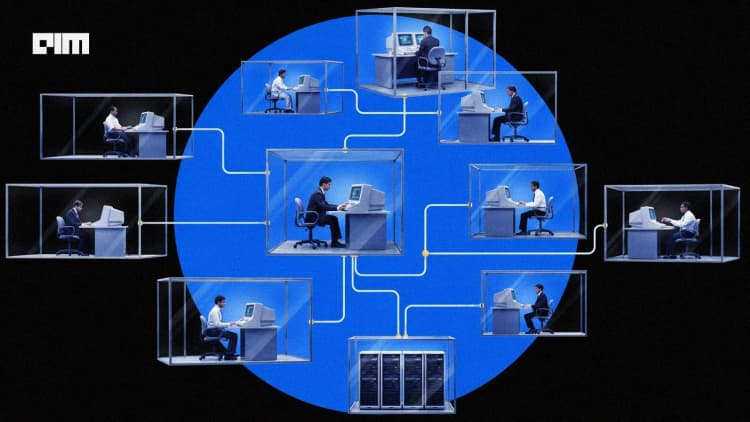
AI Labs are the New Battleground for Enterprise AI
AI labs are increasingly functioning as co-creation hubs where solutions are prototyped, tested, and refined before deployment.
View

Inside SpaceX’s Thin Float Sinking the IPO Rally
SpaceX went public with an incredibly thin public float, with only a tiny fraction of its total shares available to trade. When the buyers rushed in, the floor fell out.
View

Google Finance App for Android Announced With AI Portfolio Tools, Real-Time Market Updates
Google on Thursday announced the Google Finance app for Android. It allows users to track watch lists, monitor real-time market data, and receive AI-generated insights. The company will also expand its capabilities to bring features like live earnings calls and today's new portfolio in the coming months. Alongside, the web experience has been upgraded with new portfolio management tools. Google says users can now access scheduled market briefings powered by AI.
View

Gnani.ai Launches New Speech-to-Text Model, Claims to Outperform Global Rivals
Gnani.ai said Prisma v2.5 delivers lower word error rates for rural Hindi and noisy Dravidian speech than competing models.
View
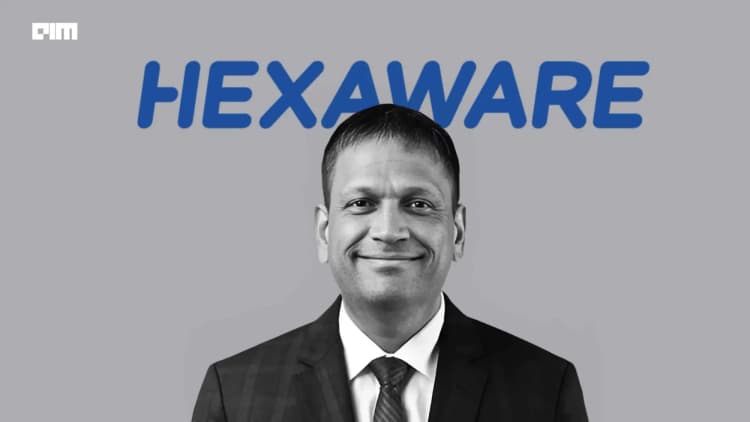
Anthropic Selects Indian IT Firm Hexaware as Authorised Reseller for Claude AI Models on Amazon Bedrock
Hexaware can now sell, integrate, and support Anthropic's Claude models for enterprise customers globally.
View

India’s Sovereign AI Debate is Stuck. BharatGen’s Trillion-Parameter Plan Isn’t
Prof Ganesh Ramakrishnan says BharatGen's real north star is making its AI models affordable to as cheap as ₹5 per million tokens.
View

Low-Code Platform Pegasystems Opens New Bengaluru Hub With ₹60 Cr Investment
The new facility will house an executive briefing centre to host customer engagements, product demonstrations, and strategic partner collaborations.
View
Can Haryana Build GCCs Outside Gurugram? It All Comes Down to Execution
Haryana aims to attract more than 100 new GCCs and create 30,000 new jobs over the next five years.
View

Reserve Bank of India Proposes Risk Management Framework For AI Models
The Reserve Bank of India proposes a risk management framework for AI models within institutions of finance and banking.
View
Submit your Tool


PoweredByAI.app is an AI Tools Directory helping individuals, businesses, and creators discover the best AI tools for writing, coding, design, productivity, and more.
© 2026 , Product of011BQ. All rights reserved.