🚀 Zaprep: Your Socials on Steroids. Start free — automate 1,000 DMs/month & turn engagement into leads. with 1,000 automated DMs/month.
Latest AI News
Cognizant Launches Governance Platform to Manage Agentic AI Risks in Enterprises
Cognizant has launched Neuro AI Trust, a governance platform that provides real-time monitoring and policy enforcement across AI models and agents.
View

MeitY Directs WhatsApp to Halt Username Rollout in India
WhatsApp said the feature is not yet live and includes safeguards against impersonation, but the government wants further consultations before any launch.
View

Indian tech tycoon bets $30M of his own money to build AI alternative to Microsoft Office
Indian serial entrepreneur Bhavin Turakhia is making a $30 million personal bet that there is still room for another enterprise AI company. His new venture,Neo, is built on a simple premise: workplace software designed before the AI era cannot simply be upgraded with chatbots — it has to be redesigned from the ground up. Turakhia, 46, is no stranger to ambitious enterprise technology bets. Over the past two decades, he has co-founded companies including Directi, Radix, Titan, and banking software firm Zeta, largely backing them with his own cash before bringing in outside investors. He’s doing the same with Neo. Turakhia told TechCrunch he is bootstrapping this much money because he believes AI marks a technology shift significant enough to justify rebuilding workplace software from scratch. “If you want to build an iPhone, you can’t take the parts of a Nokia and somehow convert it into an iPhone,” he said. Launched internally in April this year, Neo is an enterprise work platform that combines project management, documents, file storage, and AI into a single product. The goal, Turakhia said, is to make AI an active participant in day-to-day work rather than just another assistant employees turn to separately. Turakhia argued most incumbents face a structural disadvantage when adding AI to products designed before generative AI. Neo, he said, was designed from the ground up for AI and is model-agnostic, allowing enterprises to switch between AI models rather than being tied to a single provider. He’s not alone in thinking this way. Investor Chamath Palihapitiya initially launched enterprise AI coding venture 8090 with his own capital beforeraising a $135 million funding roundthis week. Still, Turakhia’s bet comes as enterprise AI has emerged as one of the most competitive areas in technology. Microsoft, Google, and Salesforce are embedding AI across their workplace software. Meanwhile every startup from the giant labs like Anthropic and OpenAI, to the productivity companies like Notion and Superhuman are racing to reshape how businesses use AI in their daily workflow. Turakhia argued enterprise software has never been a winner-takes-all market, saying even a small share of global enterprise AI spending would represent a sizeable company. “Even if we end up with 2% to 5% market share, that’s larger than anything I’ve built so far,” he said. For the past few months, Neo has been in internal use across Turakhia’s companies, including Zeta. The company plans to begin rolling out the software to mid-sized businesses in the coming months, initially targeting knowledge workers across technology, consulting, and professional services firms. Turakhia said Neo’s initial platform was built in three months, with AI extensively used in the development process, work he estimates would have taken more than a year with a much larger engineering team before generative AI. The Bengaluru-based startup currently employs about 45 people, including 18 engineers. Turakhia told TechCrunch that it expects to grow to around 100 employees by the end of the year, with most new hires focused on AI and software engineering.
View

Exclusive: Ex-GitHub CEO’s $300 Mn Startup Appoints India-Based Field CTO
Karthik Rameshkumar’s appointment places India at the core of Entire's product strategy.
View
Meta Plans AI Cloud Business to Challenge AWS, Azure, Google Cloud: Report
Meta is weighing both hosted AI model APIs and raw compute services for developers and enterprises.
View

SpaceX has an AI device prototype, and it sure sounds phone-ish
Elon Musk’s SpaceX has shown investors a prototype of a “handset-like” AI device,reports The Wall Street Journal. The prototype is reportedly sleeker and slimmer than an iPhone, making us wonder if it’s something between a small touchscreen phone and aRabbit R1. SpaceX reportedly showed the device to investors and stakeholders before it went public, and told them it’s at an early enough stage that the design could still change. Musk has denied the reporting, calling it “utterly false.” SpaceX, alongside sister company Tesla, does have the manufacturing expertise to pull off mass-producing a bunch of AI devices — not to mention access to the chips needed to power any on-device compute. SpaceX has also signaled that it’s keen to expand into wireless, with Starlink Mobile as a potential competitor to Verizon and AT&T. One analyst even went as far as to speculate thatT-Mobile or AT&Twould make fine acquisition targets for the rocket builder, though such a purchase would, undoubtedly, be pricey. It’s also not clear if SpaceX is just throwing spaghetti at the wall or if it will attempt to really mass-produce and market such a device. But one thing that seems clearer is that if OpenAI is doing it, Musk would, perhaps, want to try to do it better. As we know, OpenAI is working with Apple’s former chief design officer Jony Ive on an AI device that CEO Sam Altman has claimed will bemore peaceful than an iPhone. Reports from last autumn suggest the company has been struggling to get the details right, and OpenAI recently brought on another Apple executive to potentially help move things along. News dropped last week that Paul Meade, Apple’s VP in charge of the Vision Pro headset,has joined OpenAI’s hardware team. Like OpenAI, SpaceX’s prototype is reportedly designed to run on a proprietary operating system and integrate technology from xAI, Musk’s AI company that SpaceX acquired earlier this year. This would prevent these new devices from being trapped inside another company’s platforms (like Google’s Android). But the intent also appears to be to create something new, with native AI interfaces. That said, the graveyard is crowded with the unsuccessful launches of AI devices from companies like Humane and Rabbit. A company wanting to sell an AI device does not equate to consumers wanting to buy such a thing. Yet.
View
Cloudflare’s new policy pushes AI companies to pay for publishers’ content
Cloudflare has just issued the AI industry a new deadline to separate the web crawlers used for traditional search purposes, like Google Search, from those used for AI agents and training. Starting on September 15, 2026, Cloudflare’s default settings will block “mixed-use” crawlers from any pages that host ads, the company announced on Wednesday. That means that the crawlers that blend search, agent use, and training will be blocked from crawling these sites by default, unless the site owner adjusts the settings otherwise. These changes to the defaults will apply to new Cloudflare customers, new sites set up by existing customers, and all existing free customers, the company says. The move could impact how AI model providers are able to access web content for training purposes and to help power their agentic services. Cloudflare points out that most website owners want their content to be discoverable via search and often through AI services as well, but they want protections against having their intellectual property given away for free. Cloudflare specifically calls out the “world’s largest search engine” (clearly a Google reference!) as having access to about “2x more information” than other AI companies because the search giant makes it difficult for customers to remain discoverable without being used for AI. Google has pushed back against this generalization in the past, noting that it provides a bot calledGoogle Extendedthat lets site owners opt out of having their content used for training and AI products and services like Gemini Apps and Vertex API. Its use doesn’t impact a site’s inclusion in Google Search. However, the tech giant’s flagship Googlebot crawls for Search, including AI features like AI Overviews and AI Mode. “Now that the majority of traffic on the Internet is non-human, we must go further and act faster so that a sustainable ecosystem can emerge,” said Cloudflare co-founder and CEO Matthew Prince in his announcement of the news, referring to the recent milestonewhere bots surpassed human traffic onlinefor the first time. That shift was not expected to occur until next year. “Cloudflare’s new tools and partnerships give website owners increased visibility and commercial opportunities and benefit AI companies that have bots with clear and transparent intent. We hope that our proposed default changes encourage mixed-use crawlers to separate out search from agent use and training,” Prince said. While Cloudflare offers a number of products to help userslaunch their own AI systems, the company has also released a range of tools to give publishers more control over their content in the AI era. In recent years, Cloudflarelaunched tools to combat AI bots, including amarketplace that lets websites charge AI bots for scraping, dubbed Pay Per Crawl. The latter is now also evolving into “Pay Per Use,” the company said, which will allow publishers to charge AI companies when their content creates value, not just when it’s fetched. The change could also help conserve publishers’ bandwidth and compute resources for AI model providers, as Cloudflare’s data suggested that over 50% of crawl traffic from AI crawlers is spent re-fetching unchanged pages. To put this into action, Cloudflare is initially working with two partners, Ceramic.ai and You.com. When a publisher opts in, they’re paid when their content appears in Ceramic’s AI search results or when You.com accesses a piece of their premium content. Other AI companies can customize this model for how they work, Cloudflare says.
View
Ashton Kutcher leaving Sound Ventures to launch new VC firm with Morgan Beller
Ashton Kutcher is stepping away from Sound Ventures — the firm he co-founded with Guy Oseary 11 years ago — to start a separate VC fund, the Wall Street Journalreported. TechCrunch had separately heard that Kutcher was preparing to leave; the WSJ’s report confirms it and adds new detail on his plans with Beller. The actor and investor’s new firm is being co-founded with Morgan Beller — its name hasn’t been made public yet — who until recently was a general partner at seed-focused VC outfit NFX and previously co-led cryptocurrency project Libra at Meta. Beller also spent nearly three years as a partner at Andreessen Horowitz. Kutcher’s exit doesn’t appear to be a sign of trouble at Sound Ventures — investors more often leave firms that are underperforming, and that’s not the case here. The firm, which has backed companies like Brex and Gusto, was also an early investor in OpenAI, Anthropic, and Fei-Fei Li’s World Labs. The split is also notable for what it signals about where AI money is heading next: Sound built its reputation on concentrated, high-conviction bets in category-leading AI labs, while Kutcher’s new fund appears to be chasing the layer underneath those companies — the infrastructure and energy that power them. “He and his fund consistently make it onto [my] rankings of top unicorn investors. An interesting case!” Stanford finance professor Ilya Strebulaev, who tracks top-performing VCs,wrote on X. The actor hasknown OpenAI’s Sam Altmansince Altman founded Loopt — years before the launch of the ChatGPT maker. Kutcher’s departure was partly due to different views on which startup stages to target for investments, with Sound leaning toward backing companies that are already more established, rather than betting on very early-stage startups, according to WSJ. Kutcher and Beller are focused on making early-stage investments in AI infrastructure, energy, and deep tech startups — startups built around hard science and engineering breakthroughs rather than software alone. Despite leaving Sound Ventures, Kutcher will continue to serve as an advisor to the firm. Meanwhile, Oseary and Sound general partner Effie Epstein will advise Kutcher and Beller’s new firm.
View
Anthropic Introduces Claude Sonnet 5 With Enhanced Agentic Capabilities; Confirms Return of Claude Mythos 5, Fable 5
Anthropic has released its latest Claude Sonnet 5 AI model. The new AI model is claimed to bring enhanced agentic capabilities compared to the Claude Sonnet 4.6 model. Moreover, the new AI model is claimed to offer agentic search capabilities at par with the Opus 4.8 model. Along with improved performance, the AI model focuses on cost efficiency. It is claimed to offer similar performance as more capable AI models at lower costs. Separately, the AI giant has announced that the US government has lifted export restrictions on its Claude Mythos 5 and Mythos-class Fable 5 AI models. This comes weeks after the company was asked to restrict the availability of the two AI models for foreign nationals.
View
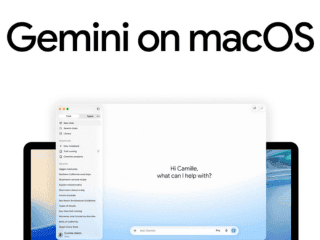
Google Expands Gemini Spark to macOS for AI Desktop Automation Across Files, Apps
Google on Tuesday announced the rollout of Gemini Spark to the Gemini app on macOS in beta. First unveiled at Google I/O 2026 in May, the personal AI agent can automate multi-step tasks across apps and services. The Mountain View-based tech giant says users can interact with desktop files and apps on Mac computers to eliminate repetitive workflows, including organising documents, creating spreadsheets, and managing schedules. Alongside, Google also introduced new connected app integrations, support for custom Model Context Protocol (MCP), and proactive monitoring capabilities for Gemini Spark.
View
Meta, like SpaceX, looks to turn excess AI compute into cash
Meta has spent billions of dollars developing AI and building out data centers to support it. But now, the company may be preparing to put those data centers to a more immediately profitable purpose. On Wednesday,Bloomberg reportedthat Meta is developing plans for a cloud infrastructure business, selling access to both AI compute power and models. The move would pit it against the big cloud providers like Amazon Web Services, Google Cloud, and Microsoft Azure. Meta’s decision to sell off excess compute comes weeks after SpaceX, viaxAI, announced similar plans. In early May, SpaceX signed a deal with Anthropic to buy out all of the compute capacity at SpaceX’s Colossus 1 data center. SpaceX has signed similar leases since with Google and Reflection AI. The fact that Meta is doing the same is a signal that the winners of the AI race may not be the ones providing the best models and services, but rather the ones who own the data centers. That is, if the demand for compute continues to hold, and if data centers retain their value. Some skeptics have warned the race to build out AI infrastructure is creating a bubble that leansheavily on rapidly depreciating chips.Othershave questioned whether AI companies can generate enough end-user revenue to justify the trillion-dollar bets. Those concerns haven’t stopped Meta from investing heavily in infrastructure for AI compute. As of the end of the first quarter, Meta hadcommitted to spending $182.9 billionon AI infrastructure in the coming years, including massive ongoing projects inLouisianaandOhio. The Ohio project, which Zuckerberg said would bethe size of Manhattan, is expected to come online this year. Unlike Google and OpenAI, Meta hasn’t seen significant demand for its own AI models and services. Meta doesn’t break out its revenue from Meta AI or from Llama, its open-weight AI model family, in its earnings, and executives have mostly emphasized the internal corporate uses of AI in public statements. That could mean that Meta’s AI endeavors don’t yet represent a material standalone revenue line. To get a return on some of its own colossal spend, Meta may copy CoreWeave’s business model and sell access to “raw” compute capacity, according to Bloomberg. The outlet also reported Meta is considering following AWS’s lead and selling access to various AI models — including its recently launched closed-weight model,Muse Spark— hosted on its AI infrastructure. The new business line will be part of a new initiative reportedly dubbed Meta Compute, which is led by head of infrastructure Santosh Janardhan, Meta Superintelligence Labs leader Daniel Gross, and president Dina Powell McCormick. The report confirms Zuckerberg’s May statements that a Meta cloud computing business is“definitely on the table”as a way to get a return on some of the massive investment into its strategy to develop AI “superintelligence.” TechCrunch has reached out to Meta for comment.
View
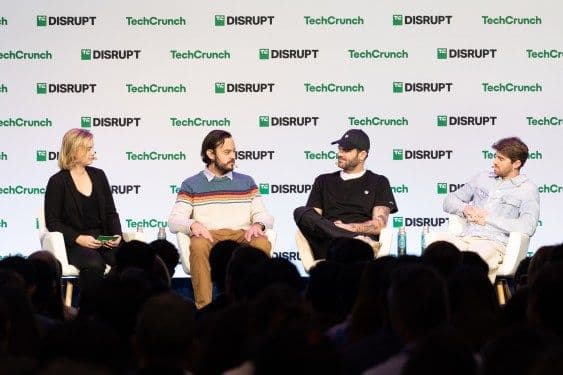
Builders Stage agenda revealed: Practical strategies for scaling startups at TechCrunch Disrupt 2026
The Builders Stage is returning toTechCrunch Disrupt 2026, bringing together founders, startup operators, and investors for practical conversations on what it takes to build and scale successful companies. Hear from startup and venture leaders shaping the tech ecosystem, including Grant Lee, CEO and co-founder of Gamma; Leah Solivan, founder and general partner at Precedent.vc; Robby Stein, VP of Product at Google;and more. Through candid conversations and real-world case studies, speakers will share actionable insights on fundraising, hiring, go-to-market strategy, AI, and the operational decisions that fuel startup growth. Join more than 10,000 founders, investors, startup operators, and technology leaders at Moscone Center in San Francisco on October 13-15.Register today and save up to $330before ticket prices increase. Building a startup is one thing. Building a company that can scale is another challenge entirely. The Builders Stage isone of six industry-focused stages at Disrupt 2026, dedicated to helping founders navigate the challenges of growth, from raising capital and hiring top talent to building go-to-market engines and preparing for the jump from Seed to Series A. Every session delivers practical strategies you can put to work immediately, plus opportunities to engage directly with speakers during live Q&A.Secure your pass to Disrupt 2026 todayand save up to $330 before rates increase. Without further ado, here’s your first look at the Builders Stage agenda, withmore speakersand sessions to be announced as we get closer to the event. How to Win When You’re Not Building AI WithShan Shan, Investment Manager, Baillie Gifford and more speakers to be announced AI may dominate the world of venture, but many enduring companies won’t be those that sell AI models or agents. This session is for founders competing for attention in an AI-obsessed market. Panelists break down what actually matters now: efficient growth, retention, revenue quality, and disciplined execution, and why fundamentals, not hype, still build breakout businesses. What Happens When OpenAI Ships Your Roadmap WithMichel Tricot, CEO and Co-founder, Airbyt;Rob Toews, Partner, Radical Ventures; andLinda Tong, CEO, Webflow Nearly all AI founders have the same worry these days: what if OpenAI or Anthropic launches a product that competes with mine? Even strong products are at risk of becoming features of the larger players. This session explores where defensibility exists and what founders can do if they do face competition from rapidly evolving AI giants. Winning Pre-Seed Without a Product With Puneet Agarwal, Managing Partner, True Ventures;Austin Clements, Managing Partner, Slauson and Co; andSandhya Venkatachalam, Founder and Managing Partner, Axiom Partners Founders are increasingly expected to compete for capital before they even have a product. At the pre-seed stage, investors are betting on story, conviction, and founder-market fit. This session breaks down how to build credibility before revenue exists so investors will cut that first check. From MVP to Billions of Users: How Product Decisions Must Change at Scale WithRobby Stein, VP, Product, Google The instincts that win when building your first minimum viable product can break you at a billion-user scale. In this fireside, Robby Stein shares how product decision-making changes when every update impacts billions of users. Hear how teams balance speed with trust and innovation with reliability at one of the world’s largest product organizations. Hiring When AI Is a Co-Founder WithJosh Reeves, CEO and Co-founder, Gusto and more speakers to be announced Early-stage companies are no longer just building with AI; they’re hiring it. As AI agents take on engineering, support, and operations, the definition of an early team is being rewritten. This session explores how founders decide what humans should own versus what gets delegated to AI, and how high-growth startups are building hybrid teams without losing speed, accountability, or culture. M&A Is Now an Early-Stage Strategy WithKarl Alomar, Managing Partner, M13;Aklil Ibssa, Head of Corporate Development and M&A, Coinbase; andLindsey Mignano, Founder, Mignano Law Group The smartest founders today aren’t just building for IPOs; they’re also building with possible acquisitions in mind from day one. As exits shift and capital tightens, understanding M&A early has become a competitive advantage. This session breaks down how founders can create the possibility of such an option through product strategy and partnerships. It delves into how big-dollar startup outcomes actually happen, even for small companies. The Series A in 2027 Jahanvi Sardana, Partner, Index Ventures;Shailendra Singh, Managing Director, Peak XV; and Janelle Teng Wade, Partner, Bessemer Series A is getting harder, with VCs growing more demanding. For founders planning to raise in the next 1–2 years, this session breaks down what “fundable” will actually mean in 2027. Hear how top investors are redefining the metrics, teams, and traction that matter now, what outdated fundraising playbooks no longer work, and how companies can separate from the pack in the next funding cycle. The 90-Day GTM: Why $0–$10M ARR Is the New Baseline (And How to Actually Get There) WithRyan Meadows, Chief Revenue Officer, Lovable; Tomasz Tunguz, General Partner and Founder, Theory Ventures; and more speakers to be announced The definition of traction has changed. What once took years is now expected in months, and $0–$10M ARR is increasingly becoming the new early-stage baseline. This session breaks down how AI-enabled execution, faster distribution, and shifting investor expectations are compressing GTM timelines, and the tactical levers founders need in the first 90 days to accelerate revenue and stand out fast. The real Tokenmaxxing: How the Best AI Companies Navigate a Multi-Model World WithMo Jamma, Partner, Capital G;Zuzanna Stamirowska, CEO and Cofounder, Pathway; and more speakers to be announced The frontier is moving faster than any single model can keep up with, and the teams building the most successful AI products are increasingly orchestrating across many models rather than betting on just one. This panel brings together founders and operators at the center of that shift to discuss how they evaluate new models, manage cost and reliability at scale, and architect products that can evolve as quickly as the underlying technology. PMF Red Flags: How to Tell If You Really Have It WithRajeev Dham, Partner, Sapphire Ventures;Rahul Vohra, Founder & Head of Superhuman Mail; and more speakers to be announced In an AI hype cycle, product-market fit signals are easier to fake and harder to trust. Founders are mistaking early excitement, usage spikes, and pilot wins for durable traction. This session breaks down what false PMF actually looks like, how investors and operators separate real retention from hype driven adoption, and the signals that indicate whether a company has true pull or just temporary momentum. The Zero-to-1K Playbook: How to Get Your First 1,000 Customers Without a Marketing Budget WithGrant Lee, CEO and Co-Founder, Gamma and Leah Solivan, Founder and General Partner, Precedent.vc Early customer acquisition is not about marketing spend; it’s about founder-led distribution and relentless execution. Most startups at zero to one do not have budget, brand, or scale, only urgency and creativity. This session breaks down how founders are landing their first customers through community building, product-led growth, founder-led sales, strategic outbound, and word-of-mouth momentum. Yes, It’s Hard to be a Founder: An Honest Conversation WithNell Daly, Co-Founder and Managing Partner, Revenge Capital;David H. Rosmarin, Associate Professor, Harvard Medical School; andJack Withinshaw, Co-founder and Chief Commercial Officer for Airspeeder Company building is as psychologically demanding as it is strategic, and most founder narratives understate that reality. In this candid conversation, founders and mental performance experts unpack the hidden costs of high growth environments, from burnout and decision fatigue to the identity strain of sustained pressure, and share the systems, habits, and mental frameworks that help leaders endure and perform at a high level. So You’ve Got a Hit Product. How Does Your Company Do It Again? WithFilip Kaliszan, CEO and Co-Founder, Verkada; and more speakers to be announced Most startups stall out because they build a single great product instead of a repeatable multi-product engine. Join a venture capitalist and two founders as they reveal the precise operational playbook for capital allocation, systemizing internal innovation, and engineering a compounding “Second Act” before the core product’s growth curve flattens. Hiring, Compensation and Culture in the Most Competitive Market Ever WithMatt Birnbaum, Founder, Wylder.co;Atli Thorkelsson, VP, Talent Network, Redpoint Ventures; and more speakers to be announced No question about it, the growth of AI startups has made hiring and retention for all tech companies more difficult. From competing for AI talent to secondary sales, founders are rethinking the human infrastructure of their startups. As hiring, incentives, and employee expectations rapidly evolve, this session explores how companies are adapting compensation, culture, and team-building strategies to attract and retain top talent in a fundamentally changed startup environment. How To Create Viral Growth and Capitalize On It WithZach Yadegari,Founder, Cal AI Startups can go from zero to viral overnight, but sustaining that momentum is a completely different challenge. In this fireside, Zach Yadegari shares how Cal AI navigated rapid growth, product pressure, and the realities of building in a distribution-driven market. Hear the lessons behind turning breakout attention into durable retention and long-term company building. The High-Conviction Filter: What We Learned from the Battlefield With Alexa Von Tobel, Inspired Capital and more speakers to be announced What separated the breakout companies from the rest at Disrupt 2026? In this candid debrief, Battlefield judges unpack the trends and founder qualities that stood out in real time, from shifting investor expectations to the narratives that resonated most this year. The conversation will also explore how startup storytelling is evolving and what happens after the spotlight, including the realities of maintaining momentum and surviving the critical 12 months after a major launch, funding round, or Battlefield appearance. If you’re ready to build smarter, scale faster, and learn from the leaders shaping the future of startups,secure your pass to TechCrunch Disrupt 2026 todayand save up to $330 before rates increase.
View
Submit your Tool


PoweredByAI.app is an AI Tools Directory helping individuals, businesses, and creators discover the best AI tools for writing, coding, design, productivity, and more.
© 2026 , Product of011BQ. All rights reserved.