🚀 Zaprep: Your Socials on Steroids. Start free — automate 1,000 DMs/month & turn engagement into leads. with 1,000 automated DMs/month.
Latest AI News

ChatGPT mobile app gets voice-based agentic features
OpenAI announced on Wednesday that it is bringing voice-based agentic features to mobile, allowing users to trigger workflows like drafting documents or summarizing emails. Plus and Pro users will be able to use the Work tab on their phone to create a document, draft an email, or summarize Slack messages, for instance. These subscribers can do things like build sites, create presentations, use the cloud browser, and also access other areas like finances in ChatGPT. Free and Go users, meanwhile, will get to work with plugins and connected apps. OpenAI said ChatGPT’s voice conversations will have richer text output. Plus, users will be able to switch between text and voice easily. They can also start working on a conversation on the go and resume it on desktop. The feature arrives as an increasing number of users are turning to voice to issue commands to AI assistants for complex tasks. In July, OpenAI launched its newconversational model GPT-Live, and later the company integrated it with the desktop appto let users use their voice to complete tasks in the Work tab or build apps in the Codex tab. The new rollout brings similar capabilities to the mobile app. Recently, Anthropic made the handoff between mobile and desktop easier and alsomerged its Cowork and Chat interface. But OpenAI is still keeping chat and workspaces separate.
View

Enveda secures $311M to bring more nature-derived AI drugs into clinical trials
Enveda, a biotech startup that uses AI to discover new drugs in the natural world, has raised a $311 million Series E at a $2 billion valuation. The fresh funding, which was led by Catalio Capital Management, with participation from Iconiq and others, doubles the valuation Enveda achieved 12 months ago. The idea behind Enveda is that powerful medicines could be harnessed from plants and microbes, rather than synthesized from scratch in a lab. Viswa Colluru, an early employee of Recursion Pharmaceuticals, founded Enveda in 2019 to speed up the process of discovering these new drugs using AI and other techniques. While AI hasn’t yet produced any FDA-approved drugs, Enveda is among the wave of companies advancing AI-discovered candidates into human clinical trials. The startup is currently testing several drugs in patients, including one targeting severe skin conditions and another designed to help maintain weight loss after stopping GLP-1s.
View

Tecno EllaClaw Gets Customised Workflows for Research, Scripts and Social Media
Tecno has showcased customised workflows for EllaClaw, its mobile AI agent, in collaboration with Digital Trends. The workflows are said to target journalists and content creators and cover tasks such as researching and developing stories, planning scripts, adapting content to a user's writing style, and checking social media posts. The showcase highlights how EllaClaw can be configured for different professional tasks rather than offering only a fixed set of functions. Tecno has also detailed how users can review and approve AI-generated content before publication.
View

OpenAI Launches GPT-6 Sol and GPT-6 Luna With Lower Prices, Improved Performance
OpenAI has launched GPT-6 Sol and GPT-6 Luna, two new models that extend some of the capabilities of its GPT-6 Astra model to lower-cost tiers. The models are aimed at professional work, coding, computer use and other tasks that require sustained AI assistance. OpenAI has also cut their API prices by 50 percent compared with the promotional pricing of their GPT-5.6 predecessors. GPT-6 Sol and Luna are available across Work, Codex and the API, while Luna is also available to Free and Go users through the desktop app.
View
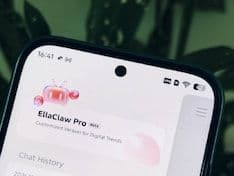
Tecno EllaClaw Gets Customised Workflows for Research, Scripts and Social Media
Tecno has showcased customised workflows for EllaClaw, its mobile AI agent, in collaboration with Digital Trends. The workflows are said to target journalists and content creators and cover tasks such as researching and developing stories, planning scripts, adapting content to a user's writing style, and checking social media posts. The showcase highlights how EllaClaw can be configured for different professional tasks rather than offering only a fixed set of functions. Tecno has also detailed how users can review and approve AI-generated content before publication.
View

3 days left to save up to $200 and make impactful connections at TechCrunch Disrupt 2026
There are now three days left to save up to $200 on yourTechCrunch Disrupt 2026ticket before prices increase. As we continue our countdown of the five reasons why you should attend, we arrive at a key reason that brings 10,000+ founders, investors, and operators together at San Francisco’s Moscone West, October 13–15. Don’t miss out on securing your ticket savings before they vanish on September 25 at 11:59 p.m. PT.Register to grab yours and get a second pass at 50% off. The right introduction can change what happens next for a company. It might lead to your next investor. A customer you’ve been trying to reach. A future hire. A technology partner. Or simply someone solving a problem close enough to yours that the conversation changes how you think about it. At TechCrunch Disrupt 2026, those people are concentrated in one place. Big events create possibilities. The trick is making them useful. At Disrupt, you can schedule 1:1 meetings, powered by AI-powered matchmaking through the TechCrunch Events app, and use the dedicated Networking Lounge across all three days. Alongside that are industry meetups,roundtable sessions, and the conversations that happen when thousands of people building, funding, and scaling technology companies move through the same space. Plus, the countless impromptu meetings that happen from running into the right person, anywhere in the venue. Register here to start making intentional connectionsand save up to $200 before your savings disappear on September 25 at 11:59 p.m. PT. There’s a difference between knowing who someone is and actually having a conversation with them. A 15-minute meeting can tell you more about a founder than weeks of following their company online. A conversation with an investor can help you understand what they are really looking for. Meeting another operator can surface an answer to a challenge you assumed was unique to your team. And sometimes the useful conversation is the one you didn’t schedule. The founder sitting next to you before a session. The investor asking the question you were thinking about. The person you meet after a roundtable because you’re both trying to solve the same problem. That proximity matters. You could spend months trying to arrange the individual conversations that become possible over three days at Disrupt. So don’t just build a session schedule. Build a networking schedule. Identify who you want to meet using the event app. Book your 1:1s. Leave space for the unexpected. Walk theExpo Hall. Stay for the meetups. Talk to the person standing next to you, because one useful conversation can outlast the entire event. CurrentTechCrunch Disrupt 2026ticket savings end September 25 at 11:59 p.m. PT. Register now to save up to $200on your ticket andget a second ticket of the same type at 50% off. Or bring a group of four or more to save up to 30%.
View

StrictlyVC at TechCrunch Disrupt 2026: Inside the changing rules of venture capital
Thanks largely to AI and the rate at which startups are scaling, venture capital is in a state of flux, from who provides the money to how it gets deployed and what happens when companies are finally ready to go public.StrictlyVCatTechCrunch Disrupt 2026, happening at San Francisco’s Moscone West on October 13-15, will bring together investors, institutional LPs, family office managers, and market experts for an afternoon of candid conversations about where capital is moving, how the money managers behind those venture dollars feel about the feverish dealmaking out there, and what founders and VCs need to understand about the new funding landscape. The only way to lean into these exclusive deep-dive sessions is with a DisruptInvestor Pass. Built for investors, the StrictlyVC sessions offer a closer look at the fast-changing landscape and the forces shaping what’s next.Register by September 25 at 11:59 p.m. PT to save $200 on your Investor Pass. October 143:00–3:45 p.m. PT | Networking, Drinks & Light Bites3:45–4:50 p.m.PT | StrictlyVC Conversations4:50–6:00 p.m. PT | Drinks & Networking Join us at 3:00 p.m. PT for drinks and light bites, with 45 minutes to connect with fellow investors, founders, and venture leaders before the conversations begin. After the program wraps, stick around for more drinks and more mingling. Visit theDisrupt agendato learn about all the sessions and speakers for StrictlyVC, plus the 200+ sessions across all six industry stages, roundtables, and breakouts. Ryan Flanagan, ICR The IPO window is reopening, but the playbook has changed. Founders and investors face a tougher path to the public markets, with higher expectations around growth, governance, and credibility. JoinICR‘s Ryan Flanagan for a candid conversation on what makes a company IPO-ready today, the decisions that matter years before a listing, and how to position a business for a successful exit in a more disciplined market. Bruce K Lee, Keebeck Capital Management; andDave Sachse, Sachse Family Fund Family offices have become one of the fastest-growing sources of startup capital, often moving faster and investing with greater flexibility than traditional institutions, but also, at times, piling in at the wrong times. Join prominent family office investors as they discuss how they’re approaching venture today, where they’re placing long-term bets, how they work alongside VCs, and why founders increasingly see them as strategic partners. Amit Bhatti, TrueBridge Capital Partners; andBeezer Clarkson, LGT Capital Partners Venture firms are competing harder than ever for institutional capital, while limited partners are rethinking everything from manager selection to concentrated AI exposure and liquidity expectations. Hear from leading LPs as they discuss what they’re looking for in today’s market, how they’re evaluating emerging managers versus established firms, and where they believe the next generation of venture returns will come from. TechCrunch Disrupt 2026brings together 10,000+ founders, VCs, and operators from across the global tech ecosystem to make connections that can shape what’s next, discover emerging breakthroughs, and hear from leaders driving the industry forward. This is where big ideas converge and new opportunities take shape.Register for your Investor Pass now to save up to $200before September 25 at 11:59 p.m. PT. Join Disrupt in San Francisco on October 13-15.
View

YouTube releases new AI features for creators within its Studio app
At itsMade On YouTubeannual event, YouTube announced new tools for YouTube Studio, the app creators use to manage their channels, aimed at helping them analyze their videos and grow their audiences. The updates include expanding Ask Studio, its AI-powered Q&A feature, to iOS and Android, as well as new features that provide feedback on drafts and create dynamic thumbnails. The draft-feedback feature uses AI to look at a creator’s unpublished video and provide suggestions about pacing, structure, and storytelling. YouTube is also debuting a new research feed in the Studio app that shows creators what kind of content is working on the platform, so they can apply their own take on it. Creators are typically picky about the preview images and titles they use for their videos. The Studio app will now let them generate thumbnails and titles based on a video’s content and matched to their style. Creators can also use a new dynamic thumbnail feature to generate three options and show each one to a different segment of their audience. YouTube said creators have used its A/B testing feature to run more than 40 million tests on titles and thumbnails. Soon, the company said, users will be able to test up to three video cuts to see which opening hook works best. Later this year, YouTube Studio will also automatically monitor thumbnail performance and change one proactively if it doesn’t perform well. YouTube also said it’s updating its analytics to go beyond raw numbers, explaining why videos perform the way they do and providing advice about how to make content more engaging. Besides the Studio app revamp, YouTube also introduced other tools for creators, including conversational editing in Shorts and the YouTube Create app.
View

YouTube will let you build your own algorithm with AI
YouTube says it’s going to let you build your own algorithm — well, kind of. The company on Wednesday announced a new feature called custom feeds that allows you to describe, in your own words, the kinds of videos you’d like YouTube to recommend to you. To create one, you type a description of what you want the feed to be about into a prompt box on YouTube, whether that’s a feed dedicated to a particular interest or one that serves some other purpose. For instance, YouTube suggests you could build a feed of video podcasts to watch during your 30-minute train commute, or you could request videos for a particular mood, like “relaxing commentary videos to unwind with.” The prompt-based feature leverages Google’s Gemini AI model to build the feed around your request, and the resulting feed is then pinned to the top of your YouTube home page in its own tab. Because the feed’s creation is AI-powered, the request can be described in lengthy terms, as you share detailed information about how you want to curate the feed, what it should feature or exclude, what content to prioritize, and more. The addition follows similar moves by a number of other social networks that have created tools that essentially allow users to build their own algorithms by describing what they want their feed to include and how to present that information to them. Decentralized social networkBluesky began popularizing this ideayears ago as a way to differentiate its service from rivals like X. This year, itrolled out an AI tool, Attie,that makes feed-building even easier. Other services, includingMeta’s Threads,Instagram,X, and, more recently,Spotify, have also launched their own feed-building features, many of which are also AI-powered. YouTube believes custom feeds will help users better explore the vast number of videos now hosted on its platform. “One of the amazing things about being on YouTube is that the world is always at your fingertips,” noted Emily Moxley, VP of Product Management for Viewer AI, in a pre-brief with reporters ahead of theMade On YouTube eventon Wednesday, where custom feeds were introduced to the public. “There’s over 20 billion videos in the YouTube corpus, so you’re always one search away from a treasure trove of topics.” The new feeds, however, will not replace YouTube’s main feed, which features all your recommendations. Instead, you will now be able to easily hop right into whichever feed best suits your purposes when you open the YouTube app. Support for creating multiple custom feeds will roll out across YouTube on web and mobile, starting next month, the company said.
View

YouTube Music gets more conversational with new AI features
YouTube is adding new AI-powered features to YouTube Music that aim to make it easier for listeners to discover music, explore artists, and find podcasts they may otherwise miss. Announced at this year’sMade On YouTubeevent, theupdatesinclude “Ask Music,” a conversational tool for music and podcasts, and “Your Podcast Lineup,” a personalized audio guide designed to help listeners discover new shows. Built directly into the YouTube Music app, Ask Music lets users describe what they want to hear in everyday language rather than searching for individual songs or artists. The feature works across YouTube Music’s catalog of more than 300 million songs, including official recordings, remixes, live performances, covers, and DJ sets. Users can use it to build custom listening queues, explore an artist’s motivations, or dig deeper into music history. YouTube explains that, instead of manually searching, the user simply types the request as if they were asking a friend. For instance, someone could ask Ask Music to create a mix based on the tracks that inspired a particular song. Users can also ask other questions, such as who played bass on a particular song or other details about its creation. YouTube Music is also introducing Your Podcast Lineup, a personalized AI-generated audio guide for podcast discovery. The feature is designed for a familiar problem: There are more podcasts than most people have time to listen to. Even listeners who already have a list of favorite shows can struggle to keep up with new episodes, let alone find new ones. Your Podcast Lineup will appear on the podcast page in the YouTube Music app. Each week, it will provide a short spoken preview of recommended shows and explain why they might appeal to the listener. It can then move directly into suggested episodes. Spotify recentlyintroducedan AI-powered feature that follows a similar direction. Its personal podcasts feature uses AI to generate podcast episodes based on their interests and prompts. The new features are part of YouTube’s broader push to use AI throughout its services. Last year, YouTube Musicexperimentedwith AI-powered music hosts that provide stories, fan trivia, and commentary related to what users are listening to. Both updates are coming soon to YouTube Music and YouTube Premium subscribers worldwide.
View

Even Americans who use AI every day are worried about it
People across the world are increasingly turning to AI for everyday tasks, from looking up recipes and doing their homework to researching work projects or making presentations. But using AI every day doesn’t necessarily mean people are feeling comfortable with its implications for the world: About 68% of Americans who use AI daily are worried about it, according to a new survey conducted by opinion research firm Gallup, and concern about the tech skews even higher among people who use it less frequently. Coming at a time ofintense debatearound thedangers of AI, quickdevelopments around AI safety, the implications ofAI going rogue, and accusations ofanti-competitive behavior, these findings complicate the notion that adoption can serve as a straightforward measure of public enthusiasm for AI. Commissioned by Microsoft, the Gallup study currently has results from 37 countries, where researchers polled about 1,000 people in each country between April and July. The project will eventually span 140 countries. Notably, India, a large population of tech users, is not currently part of the reported results, nor is Australia and Malaysia. The findings appear to put the U.S. at the anxious end of an international chart even as people in other parts of the world expect the technology to improve their lives. According to Gallup, Western countries are most concerned about AI, with the United States leading in anxiety — 74% Americans reported feelings of worry, and only 36% expect AI to mostly help the country. Other wealthy Western countries showed a similar mix of relatively frequent use and concern. In Canada, for example, 29% of those surveyed reported using AI daily, and of those, more than half expressed concerns about the impact of the technology. Overall, 64% of Canadians aware of AI said it worried them. They’re likely not imagining it. There’s certainly been a growing wave ofdiscontent around AI, with tech companieslaying off hundreds of thousands of employeesin order to invest in AI,shrinking entry-level openings, life-endingcases of AI psychosis, and dire warnings from AI leaders like Anthropic CEO Dario Amodei, who havewarnedthat the tech will wipe out jobs en masse. The survey paints a different picture in the rest of the world, however. In Singapore, which had the highest portion of daily users in the study (46%), more than 80% of those aware about AI expect the tech to improve their everyday lives, and 77% think it’ll help the country. China, where 35% of people report using AI daily, most people expect it to help the country. The story is similar in Israel. Still, optimism about AI doesn’t necessarily appear to translate to trust in the tech’s accuracy. According to Gallup, people who use AI daily were generally more trusting of its results, especially in high-adoption countries like Singapore, Israel and China, while less frequent users remain skeptical across the board. In the U.S., only 45% of daily users expressed that level of confidence. Altogether, only 36% (median) of the people surveyed said they trust AI’s results a lot. Overall, though, Gallup reports that positivity about AI outweighs negative sentiments: In 34 of the 37 countries surveyed, people mostly reported feeling curious about the tech, with a fewer number saying they felt happy or excited. Only about 32% of those surveyed said they felt worried about AI. Positive emotions seem to be most common in China (90%), Singapore (89%) and Kenya (87%). It’s not clear how much sentiment in some countries, especially China, might have changed since the survey ended in July, as the pace of AI development has lately burgeoned into a matter of international importance. AI safety is one of the major topicson the table for discussionwhen U.S. President Donald Trump and Chinese Premier Xi Jingping meet on Thursday. Notably, China’s head of the Ministry of State Security, Chen Yixin, wrote in arecent articlethat AI will have “a systemic impact on the political and security environment,” and could threaten China’s “political security, institutional security, and ideological security.” “One of the clearest findings is that attitudes toward AI are multidimensional. People can be curious about AI, expect it to be beneficial and use it frequently while still being worried about it. Similarly, they can see considerable potential in AI while remaining skeptical about whether the information it provides is accurate,” Pablo Diego-Rosell, senior scientist at Gallup, told TechCrunch. While the report paints a picture of optimism colored by some concern, it’s nevertheless true that AI worries are increasingly becoming part of public discourse. People who rely on AI for day-to-day tasks may end up supporting tougher rules or resisting its use in hiring, healthcare, education or government. And there’s certainly an argument to be made that training and serving AI models can harm the climate, and their unregulated use can disrupt cybersecurity, diminish content ownership, upset the creative arts fields, or harm data privacy. At the end of the day, the report suggests that greater exposure alone will not resolve the unease around the technology. Still, given the amount of money that’s being invested, AI will likely continue proliferating even as disputes rage around where it belongs and what limits should be placed around it.
View

Forget Propreitary LLMs, Open Networks Can Unlock Health AI's UPI Moment
From a COVID-19 war room to 206 ICUs across 10 states, OHCN is building an open-source, model-agnostic healthcare platform.
View
Submit your Tool


PoweredByAI.app is an AI Tools Directory helping individuals, businesses, and creators discover the best AI tools for writing, coding, design, productivity, and more.
© 2026 , Product of011BQ. All rights reserved.