AI NewsWhy Garry Tan’s Claude Code setup has gotten so much love, and hate

Why Garry Tan’s Claude Code setup has gotten so much love, and hate

5:10 AM IST · March 18, 2026
Why Garry Tan’s Claude Code setup has gotten so much love, and hate

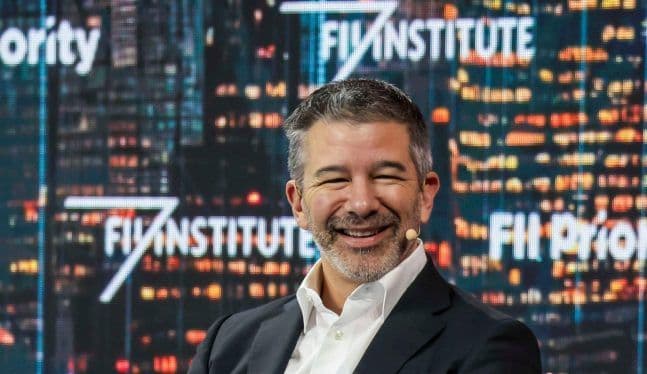
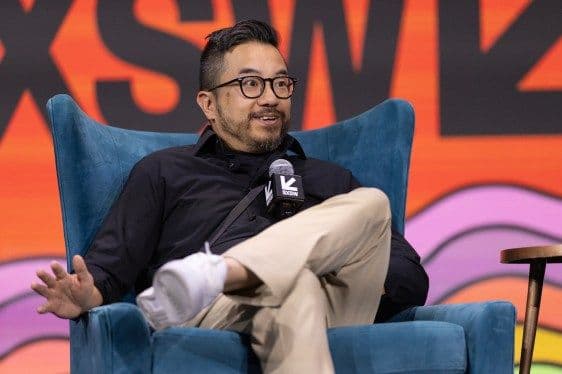
Y Combinator’s famed CEO Garry Tan told aSXSW audiencethat he’s got “cyber psychosis” and is barely sleeping because he’s so excited to be working with AI agents. “I sleep, like, four hours a night right now,” he told his interviewer, fellow VC Bill Gurley, during an onstage interview Saturday. “I have cyber psychosis, but I think a third of the CEOs that I know have it as well,” he joked about his current AI obsession. (At least, we hope he was joking. AI-induced psychosiscan actually be a dangerous condition.) “Once you try it, you’ll realize: It’s like I was able to re-create my startup that took $10 million in VC capital and 10 people, and I worked on that for two years, and I took anti-narcoleptics — I remember, you know, sort of being on modafinil,” he described, referencing thesleep-preventing drug that’s popular with the startup hustle-culture crowd. (Tan sold his Y Combinator-backed blogging startupPosterous to Twitter back in 2012.) But now, his psyche is so amped working with AI agents, it’s a natural insomnia. “I don’t need modafinil with this revolution. Like, I’m up. I slept at 4 a.m. I woke up at 8 a.m.,” he said. “I wanted to sleep more, but I couldn’t because: Let’s see what’s going on with the 10 workers. I’ve got like three different projects going right now.” He’s so excited about his agents that on March 12, just two days before the interview, he proudly, freely shared his Claude Code (CC) setup on GitHub under an open source license. The setup included six “opinionated” Claude Code skills he developed. Skills are reusable prompts stored in special “skill.md” files that instruct the AI how to behave in specific roles or tasks. “I’ve been having such an amazing time with Claude Code, I wanted you to be able to have my *exact* skill setup,” heposted on X. He called his Claude Code setup “gstack.” gstack is available now athttps://t.co/VPvWDzV5c0Open source, MIT license, let me know if it works for you. It's just one paste to install it on your local Claude Code, and it's a 2nd one to install it in your repo for your teammates. Since then he’s added several more skills. The gstack GitHub repository currently lists 13, but it seems like every hourTan tweetsabout something new. In one post, he gave an example of how his setup works. First, he gets Claude’s opinion on whether a startup idea or feature is a good idea using a skill where Claude acts like CEO. He uses another skill to have Claude write the feature as an engineer, and another to review its own work for bugs and security issues as a code reviewer. Other skills cover design, documentation, and so on. The love for gstack began immediately: His tweet went viral on X and trended onProduct Hunt. It’s accumulated nearly 20,000 stars on GitHub with 2,200 “forks,” meaning people who have taken the files to modify for themselves. But shortly after releasing gstack, Tan posted a tweet that caused a heap of hate, too. He wrote that a CTO friend told him gstack was “god mode” that instantly found a security flaw in his company’s code and predicted it will be widely used. My CTO friend texted me: "Your gstack is crazy. This is like god mode. Your eng review discovered a subtle cross site scripting attack that I don't even think my team is aware of. I will make a bet that over 90% of new repos from today forward will use gstack."https://t.co/P7aOFu5wFM To quote just a few of the many hater comments that followed: One founderposted to X: “(1) Garry should be embarrassed for tweeting this. (2) If it’s true, that CTO should be fired immediately.” Vlogger Mo Bitar did a takeon gstack called“AI is making CEOs delusional” in which he pointed out that the project was essentially “a bunch of prompts” in a text file. The vlogger summarized the common complaint: Developers who use Claude Code already have their own versions of this. Added one person onProduct Hunt, “Garry, let’s be clear and honest: if you weren’t the CEO of YC, this wouldn’t be on PH.” So who’s right? Is gstack a uniquely useful way to work with Claude Code? Or unremarkable? To find out, I asked the experts, including Claude (which, not surprisingly, absolutely loved it). I also queried ChatGPT and Gemini, both of which were surprisingly positive. Gstack is a group of “reasonably sophisticated prompt workflows, but they’re not ‘magical,’” ChatGPT opined. “The real insight here is that AI coding works best when you simulate an engineering org structure. Not when you just ask: ‘build this feature.’” Gemini called the setup “sophisticated,” adding that “gstack is essentially a ‘Pro’ configuration. It is less about making coding easier and more about making it correct.” Claude called gstack “a mature, opinionated system built by someone who actually uses it heavily,” adding, “It’s one of the better examples of Claude Code skill design out there.” We’ll take that as a thumbs-up from an expert on the topic. On Monday, Tan explained in anotherX post, “I took modafinil just to stay awake longer to be able to turn the momentary crystalline structures I had in my brain into lines of code before sleep or human distraction turned it to grains of sand. I love coding but I love coding with AI even more. I speak it listens and we create. I see the structure and it is built. There is no more powerful an experience to me than that.” Tan did not respond to multiple requests for comment.

read more

Latest AI News

View All News →
Riding an AI rally, Robinhood preps second retail venture IPO

Riding an AI rally, Robinhood preps second retail venture IPO

Just two months after listing its first venture fund on the stock market, Robinhood is preparing to launch a second. The company hasfiled aconfidential registrationfor RVII, a standard regulatory step that allows it to work through the approval process before making details public. Unlike its first fund, which currently holds stakes in10 late-stage companies— Airwallex, Boom, Databricks, ElevenLabs, Mercor, OpenAI, Oura, Ramp, Revolut, and Stripe— RVII will cast a wider net, investing in growth-stage and early-stage startups.It’s a meaningful distinction, given that early-stage startups are younger and carry more risk but also offer the potential for greater returns. The fundraising target for RVII has not yet been set, the company said in ablog post. For its inaugural fund, Robinhood sought to raise $1 billion but ultimately fellseveral hundred million shortof that goal. Despite the shortfall, the first fund has performed strongly. RVI — the ticker for Robinhood’s first fund, which trades on the NYSE (New York Stock Exchange) — debuting on the NYSE at $21 a share in early March and has since more than doubled, closing on Monday at $43.69. Market enthusiasm for the AI prospects of the fund’s underlying startups has likely fueled the stock’s rise. The premise behind both funds addresses a longstanding gap in who gets to invest in startups. Under federal rules, only “accredited” investors — those with a net worth exceeding $1 million or annual income above $200,000 — can put money into private companies. That has historically locked ordinary investors out of the earliest and most lucrative stages of a company’s growth. RVI and now RVII, are designed to change that, letting anyone invest in a portfolio of private startups through a regular brokerage account. “You can think of [Robinhood Ventures] as a publicly traded venture capital firm with daily liquidity. No accreditation requirements and no carry,” Robinhood CEO Vlad Tenev said in aninterviewat The Wall Street Journal’s Future of Everything conference last week. Daily liquidity means shares can be bought or sold any day the market is open, unlike traditional VC funds, where capital is locked up for years. No carry means Robinhood doesn’t take a percentage of investment profits, as conventional venture firms typically do. Over the past few years, the most valuable AI startups have gone from early bets to companies worth tens or hundreds of billions of dollars, and almost all of that appreciation has happened in the private markets, out of reach for most investors. Tenev's longer-term vision goes further still. “The aspiration is, if you’re a company raising a seed round and a Series A round — so, just first capital — retail should be a big chunk of that round, much like it now is in the public markets,” Tenevsaid at the conference. “And we should let those people in at the ground floor, so that they can actually benefit from this potential appreciation that’s increasingly happening in the private markets.” If that vision takes hold, it could fundamentally change how startups raise their earliest capital, with retail investors eventually sitting alongside venture firms, including in the earliest rounds, where the biggest returns are often made, a whole lot of money is lost, as well.

2 hours ago

View

There aren’t enough rockets for space data centers — Cowboy Space raised $275M to build them

There aren’t enough rockets for space data centers — Cowboy Space raised $275M to build them

The apparently insatiable demand for AI compute has data center entrepreneurs looking to the stars. There’s a key problem: There aren’t enough rockets to put data centers in orbit around Earth, and they’re too expensive. Most of the players are hoping that SpaceX’s Starship — expected to make its twelfth test flight as soon as this weekend— will solve the problem. But once the vehicle is operational it may be years before it is commercially available, given SpaceX’s internal satellite business. Thesame is truefor Blue Origin’s New Glenn rocket, which failed to deliver a satellite during its third launch in April. That leaves space data center schemes either targeting the mid 2030s, like Google Suncatcher, or preparing to start off doing edge processing tasks for space sensors, likeStarcloud. In theory, there’s a third way: “We’re standing up our own rocket program,” Baiju Bhatt, the CEO and founder of Cowboy Space Corporation, told TechCrunch. He expects the first launch before the end of 2028. Today, the company announced the closure of a $275 million Series B round at a post-money valuation of $2 billion, led by earlier backer Index Ventures, as a downpayment on that work. Breakthrough Energy Ventures, Construct Capital, IVP, and SAIC also participated. The company had previously raised $80 million from investors, including Index, Breakthrough Energy Ventures, Andreessen Horowitz, and New Enterprise Associates. Bhatt, a co-founder of online stock platform Robinhood, launched this startup in 2024 as Aetherflux, with plans to collect abundant solar energy in space and beam it down to Earth. The idea of space data centers led the company to pivot towards using its electricity while in orbit. Thepractical realitiesof that effort, in turn, led him to a rocket development program, and the company’s new name. Bhatt said he spoke to multiple launch providers to try and find a path where his company would only build satellites, but he couldn’t find enough launch capacity to truly scale an orbital data center business, or do so in a way where the unit economics could compete with terrestrial alternatives. "There's a lot of new rockets that are coming online, but as we look three, four years out, it's still very, very scarce, and I think that you're going to see a lot of the first party rocket providers actually specialize into their own payloads," Bhatt said. Of course, while bringing the rocket in-house is logical, it's also nuts. Only a handful of private companies in the West, mainly SpaceX, Rocket Lab and Arianespace, are consistently launching commercial rockets. Two others, Blue Origin and United Launch Alliance, have been struggling to drag their vehicles out of development hell for years. A number of startups, including Stoke Space, Firefly Aerospace, and Relativity Space, have worked for years and are still waiting to deliver operational systems. This evolution of the company will also bring Cowboy Space Corporation into direct competition with SpaceX and Blue Origin, the most advanced and well-funded players in the market. "The prize here, and the size of this market, is big enough that there's room for many players to succeed," Bhatt said "I see the demand for AI getting more and more acute, and I see the options on Earth getting more and more limited." One advantage, Bhatt argues, is the company's focus on this single market (data centers), and its unique design. Orbital rockets typically have a booster stage that flies the vehicle to the edge of space, and a second stage that carries the payload and delivers it to orbit. Cowboy Space plans to build its data centers directly into the second stage of its rocket. It's actually a bit of a throw-back: The first US satellite, Explorer 1, was built as the final stage of a rocket, filled with radio equipment and a few scientific instruments. Making the rocket purpose-built only to launch its data-center satellites should simplify the design process. The company expects each satellite to have a mass of 20,000 to 25,000 kilograms and to generate 1 MW of power for just under 800 onboard GPUs. That means its rocket would be slightly more powerful than the SpaceX's workhorse Falcon 9, though still smaller than its under-development Starship. Eventually, Bhatt says, he expects the booster to be reusable. Cowboy Space has hired veterans of the space industry, including former Blue Origin propulsion engineer Warren Lamont and former SpaceX launch director Tyler Grinne. The company also plans to build its own rocket engine, the most complex and expensive part of any launch vehicle. Cowboy Space is still working through key development needs, like facilities to test, manufacture and launch its rockets. The new vision comes with a new name for the startup, to emphasize its mission to "power humanity from the high frontier," although Bhatt admits "it gives me a reason to wear a cowboy hat and also grow this sick mustache."

10 hours ago

View

Digg tries again, this time as an AI news aggregator

Digg tries again, this time as an AI news aggregator

Digg is back from the dead. Again. Just months afterlaunching, therebootof Kevin Rose’s once-popular link-sharing siteshut down in March, as the company shifted course. Originally redesigned as acompetitorto the massive community forum site Reddit, the new Digg found that it wasn’t able to effectively manage the bot traffic invading its platform and hadn’t differentiated itself enough from the competition to make an impact. The startup laid off staff and said it was time to go back to the drawing board. Rose, a partner at True Ventures, returned to work full-time on a new version of Digg in April. On Friday evening, the founderprevieweda link to the newly redesignedDigg, which now looks nothing like a Reddit clone and more like the news aggregator it once was. a little project i've been hacking on:https://t.co/zTuwWy44lybugs expected. more topics soon. This time around, the site is focused on ranking news — specifically, AI news to start. In an email to beta testers, the company said the site’s goal is to “track the most influential voices in a space” and to surface the news that’s actually worth “paying attention to.” AI is the area it’s testing this idea with, but if successful, Digg will expand to include other topics. The email warned that the site was still raw and “buggy,” and was designed more to give users a first look than to serve as its public debut. On the current homepage, Digg showcases four main stories at the top: the most viewed story, a story seeing rising discussion, the fastest-climbing story, and one “In case you missed it” headline. Below that is a ranked list of top stories for the day, complete with engagement metrics like views, comments, likes, and saves. But the twist is that these metrics aren’t the ones generated on Digg itself. Instead, Digg is ingesting content from X in real-time to determine what’s being discussed, while also performing sentiment analysis, clustering, and signal detection to determine what matters most. As Roseremarked on X,when OpenAI CEO Sam Altman engages with a story about AI, it almost always sets off a chain reaction that includes deep discussion and propagation of that topic throughout X. The new Digg will be able to track that increased engagement. This might be something that’s interesting to data nerds, as it exposes the impact of X-based engagement with charts and graphs, and offers a way to track signal among what can, on X, often be a lot of noise. But it’s unclear whether there’s enough underlying value here for an everyday user, beyond seeing that yes, a@samatweet can make something go viral. The site also ranks the top 1,000 people involved in AI, as well as the top companies and the top politicians focused on AI issues. For those who don’t have time to spend on X tracking breaking AI news, Digg could prove a useful resource. But it’s not clear why people would regularly turn to Digg over their preferred news app, RSS reader, or even their X “For You” feed, if they wanted to catch up on what’s trending — especially because there isn’t currently any discussion happening on Digg’s site itself. Digg may also struggle when it moves on to other topics, as AI news is one of the few areas where discussion still heavily takes place on X. Other verticals don’t have the same traction, especially after Musk’s takeover of the site formerly known as Twitter gave rise to an ecosystem of competitors, which now includes Meta’s creator-focused Threads. Many non-tech-related discussions are now happening off X, or off the public internet entirely. However, if Digg does end up gaining steam, it could serve as a useful source of website traffic to publishers whose businesses have been decimated bydeclining clicksthanks to Google’s changing algorithms andthe impact of AI Overviews, the AI-generated summaries Google displays atop search results, which often answer users’ questions before they ever click through to a website.

10 hours ago

View

OpenAI Launches $4 Billion Deployment Company Backed by Top Investors

OpenAI Launches $4 Billion Deployment Company Backed by Top Investors

The Deployment Company will function as a standalone business unit while remaining closely connected to OpenAI’s research and product teams.

10 hours ago

View