🚀 Zaprep: Your Socials on Steroids. Start free — automate 1,000 DMs/month & turn engagement into leads. with 1,000 automated DMs/month.
AI NewsThe public opposition to AI infrastructure is heating up
The public opposition to AI infrastructure is heating up
4:30 AM IST · February 26, 2026
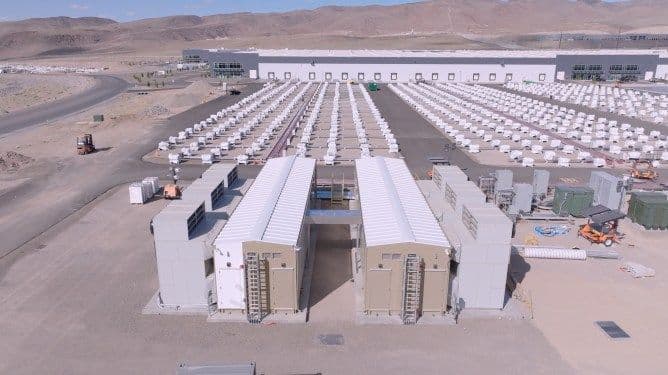
Across the country, discontenthas explodedover the ever-growing glut of server farms that have accompanied the AI boom. Anger has grown so loud that it’s begun to shift legislative agendas. Some states and communities are mulling temporary bans on new data center development altogether. Earlier this month, New York joined the club, with a bold new proposal to halt the local cloud build-out in its tracks. A new billin New York State would impose a three-year moratorium on the issuance of new permits for data center construction throughout the state, while local regulators are given a chance to study the environmental and economic impacts the industry is having on communities. The bill’s co-authors, state senator Liz Krueger and Assemblymember Anna Kelles, have called the legislation the “strongest” introduced in the country. While no statewide moratoriums have passed so far, local bans are proliferating fast. Several weeks before Krueger and Kelles introduced their bill, the New Orleans City Councilpassed a moratorium, pausing all new data center construction in the city for one year. In early January, Madison, Wisconsin,passed a similar lawafter protests erupted over regional tech projects. Similar policies have also passed in droves of communities throughout construction hot spots likeGeorgiaandMichigan, as well as in many other regions throughout the country. Environmental activistshave long taken aim at data centers, but the more recent concerns have come from high-level lawmakers, drawing on populist anger at the tech industry broadly. In conservative Florida, for instance, Gov. Ron DeSantis recently announced anAI “bill of rights”that gives local communities the right to limit new data center construction. In liberal Vermont, U.S. Senator Bernie Sanders hassuggested a nationwide moratorium. And in Arizona, where the political milieu isdecidedly mixed, Gov. Katie Hobbs recently said she supportedpulling the industry’s tax incentives. Politicians have even begun to fight over the topics, with the governor of Mississippitaking shotsat Sanders online over his moratorium proposal. The political resistance is coming just as tech companies commit more and more money to building out infrastructure. The four biggest spenders — Amazon, Google, Meta, and Microsoft — plan to spenda whopping $650 billionin capital expenditures over the next year, the vast majority of it going to data center build-outs. Even more spending isplanned in the following years, as the companies race to secure as much compute capacity as possible. But the speed and scale of those projects has made them increasingly unpopular, according to recent polling.A recent Echelon Insights pollfound 46% of respondents would oppose plans to build a data center in their community, compared with 35% in support.A different pollfrom Politico found that, while there is considerable concern about the facilities, many voters don’t have much of an opinion either way — making it possible for public sentiment to be swayed in either direction. The industry is already spending big to attempt to change those numbers — at least in the regions where it matters. In January, the Financial Timesreported thatsome of the industry’s biggest data center operators were planning a “lobbying blitz,” with plans to “boost spending on targeted advertising and engagement” aimed at the communities where they build. Tech companies are also making real concessions, likethe planned Rate Payer Protection Pledgethat would make them responsible for supplying power to any new AI data centers. But it’s not clear those measures will be enough to bring the public around. Dan Diorio, of the Data Center Coalition, argued, in a conversation with TechCrunch, that data centers should appeal to smaller communities because they provide revenue without straining those communities’ limited resources. If the incentives are cut off and companies decide not to build in those places, the revenue also won’t be there. “That’s where statewide policy considerations come in,” he said. “Are you going to limit communities in which these businesses could be a significant benefit for them?” In general, data center moratoriums are meant to give communities breathing room while policymakers study the potential costs and benefits of allowing such facilities to be built in their communities. Therate of constructionin some states has accelerated at such a pace that communities are unsure of how the industry will impact them in the long run. Justin Flagg, director of communications and environmental policy for Sen. Krueger’s office, told TechCrunch that the legislation was driven, in part, by what he called the energy affordability crisis in New York. Said crisis has troubled both rate payers and politicians. A group of 30 state lawmakers recentlycalled uponthe state’s governor, Kathy Hochul, to declare an “energy state of emergency” in New York due to rate increases. While there area diversity of factorsat work in driving up energy prices, there’s aconsensusthat the growth in data centers is making the problem worse, not better. “There’s broad discontent being expressed about energy prices,” Flagg said. “We certainly hear that constantly from our constituents, whose electric and gas rates are going up.” He added that local pushback was also being driven by environmental concerns — which he described as the “water impact and the noise and the local infrastructure impact as well.” In response to those grid concerns, major tech companies — includingMicrosoft, Google, Meta, andOpenAI— have promised topay for their additions to the electrical gridin the communities where they operate, often installing behind-the-meter power sources paired with the new data centers. The Washington Postrecently reportedthat Silicon Valley is increasingly looking to build its own private electrical supply — a kind of “shadow grid” — that can be used to operate the power-consumptive properties that are now fueling the AI industry. The strategy involves standing up massive new private power sources instead of relying on the public grid. One example of this practice comes from xAI, Elon Musk’s AI startup, which — at the site of its massive data center in Memphis, Tennessee,known as “Colossus”— built a series of methane gas turbines that have been accused of polluting the local community. The company’s efforts have already run into significant trouble. xAI hadreportedlytold local officials that, due to a legal loophole, the turbines were exempt from air-quality permits. In January, the Environmental Protection Agencyruled thatMusk’s company was not exempt from the permits, making their previous operation illegal. Environmental activists, decrying the facility’s discharge of “smog-forming pollution, soot, and hazardous chemicals,”announcedearlier this month that they planned to sue the company over it. Musk’s facility has since permitted its turbines. As the xAI example illustrates, if the “shadow grid” strategy purports to solve one problem (public grid overload), it threatens to create a host of new ones — with environmental activists and local communities alikeexpressing concernfor how the new facilities could spew pollution into people’s backyards. At the federal level, the Trump administration — which has made AI one of its top priorities — has also sought to characterize the industry as responsible stewards of the communities in which they build. Indeed, Trump officials havefloated a hypothetical policyto force AI companies to internalize the costs of their additions to local electrical grids, although the details on this policy remain vague. For years, communities have incentivized data center development through tax breaks. Last summer,an analysis by CNBCfound that 42 states throughout the U.S. either have no sales tax or provide full or partial sales tax exemptions to tech firms. Of that number, some 16 states publicly reported how much they had awarded to companies through tax breaks. The forfeited revenue amounted to some $6 billion over a period of five years, the outlet wrote. Now, however, more and more states are thinking about turning off the spigot. In Georgia, for instance,a variety of bills were recently introducedthat would crack down on the industry’s benefits. State senator Matt Brass, who has introduced a bill thatwould nix the server sales tax exemption, told TechCrunch that he doesn’t think tech companies need the extra money, nor does he think dispensing with the benefit will dissuade them from doing business in the state. “In Georgia, if you compare us to other states, our property taxes are low, our property values are low, our overall tax burden is low,” Brass said. “So, you know, our overall business climate is good. That should be the attraction.” Brass, who chairs the state’s rules committee, told TechCrunch that he expects there to be significant support for his policy. A similar piece of legislation passed the Georgia legislature in 2024, but it was vetoed by the governor. Brass added that, were the exemption to be done away with, he believes it could generate hundreds of millions of dollars for the state. In Ohio, a similar policy battle is currently playing out. A group of Democratic lawmakers recentlyintroduced legislationthat would — like in Georgia — move to nix the state’s sales tax exemption. A similar policy was introduced last year, but — like in Georgia — it was defeated by the state’s governor, Mike DeWine. “The most ridiculous tax break on the books currently is for data centers,” one of the bill’s supporting lawmakers, state Sen. Kent Smith,recently said. “That tax break needs to end, for the benefit of everyone who’s got an electric bill.” At the same time, there are still plenty of lawmakers who support the server sales tax exemption. In Colorado, state representative Alex Valdezrecently introduced a billthat would enshrine data centers’ loophole for the next 20 years. Valdez told TechCrunch that the exemption is merely a carrot to get tech companies in the door. Once they set up a base of operations in the state, they become a source of passive revenue that inevitably boomerangs back to benefit the communities in which they operate, he said.
read moreLatest AI News
View All News →



Submit your Tool


PoweredByAI.app is an AI Tools Directory helping individuals, businesses, and creators discover the best AI tools for writing, coding, design, productivity, and more.
© 2026 , Product of011BQ. All rights reserved.