AI NewsThe most interesting startups showcased at Google Cloud Next 2026

The most interesting startups showcased at Google Cloud Next 2026

6:08 PM IST · April 22, 2026
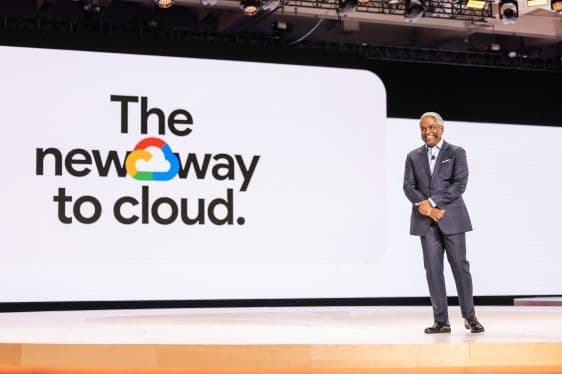
The most interesting startups showcased at Google Cloud Next 2026

Google Cloud Next is taking place this week in Las Vegas, and one clear message has emerged: Google wants AI startups on its cloud. To that end, it made several startup-related announcements. The most significant is that the tech giant has earmarked a new$750 million budgetto help its Cloud partners sell more AI agents to enterprises. This funding is available to partners ranging from startups to the big consulting firms. It can be used for costs like Gemini proof-of-concept projects, Google forward-deployed engineers, cloud credits, and deployment rebates. Google alsohighlighteda long list of startups that are using Google Cloud, either newly signed or expanding their footprint. Among them are a few standout names: Lovableis expanding its use of Google Cloud by launching a new coding agent through Google’s enterprise app marketplace. Lovable is the fast-growing vibe coding startup and was on a$400 million ARR track as of February, it said. Notion, Silicon Valley’s favorite AI-infused document productivity app, most recentlyvalued at about $11 billion, is using Gemini models to power its text and image generation features. Gamma, an AI-powered PowerPoint killerrecently valued at a $2.1 billion valuation, is using Google’s state-of-the-art image model Nano Banana 2 and other Google Cloud features. Inferact,thecommercial inference startupfrom the creators of the popular open-source project vLLM, is accessing Nvidia’s GPUs through Google Cloud, in addition to using the tech giant’s AI stack. ComfyUI, the popular open-source tool forcreating AI-generated images and multimedia, also offers access to Nano Banana 2 and is using other Cloud features. Other startups that received the Google Cloud shout-out this year include: ChorusView, which makes AI-powered smart tags that track the condition and movement of goods in real time. Emergent AI, a vibe coding platform. ExaCare AI, which makes AI software for post-acute medical care facilities. Insilica, which creates AI-generated regulatory-compliant chemical safety reports. Optii, which makes AI-enhanced hotel operations software. Parallel AI, which builds web search and research APIs built for AI agents. Proximal Health, which makes AI-powered software that automates the insurance claims adjudication process. Reducto, which does AI-powered document parsing. Stord, which handles e-commerce fulfillment and parcel operations. Stylitics, which makes AI image generation software for retailers for tasks like outfit styling and product bundles. Temporal, a developer cloud environment built to prevent failures. Vapi, which makes dev tools for building conversational voice agents. Vurvey Labs, which conducts synthetic market research via AI agents. Wand, an in-game assistant for single-player PC games. Watershed, which makes software that helps enterprises report on and manage sustainability programs. ZenBusiness, an all-in-one back-office tool for small businesses that includes an AI chat assistant.

read more

Latest AI News

View All News →
OpenAI Unveils ChatGPT Images 2.0 With Improved Image Generation, Reasoning Capabilities

OpenAI Unveils ChatGPT Images 2.0 With Improved Image Generation, Reasoning Capabilities

OpenAI on Tuesday launched its next-generation image generation model. Dubbed ChatGPT Images 2.0, it is claimed to deliver more precise, usable, and context-aware images, based on prompts entered by the user. The new model introduces improvements in instruction following, multilingual rendering, and composition. The San Francisco-based artificial intelligence (AI) giant says it also adds reasoning capabilities for more complex tasks. ChatGPT Images 2.0 is being rolled out across ChatGPT, Codex, and the API.

2 hours ago

View

Exclusive: Google deepens Thinking Machines Lab ties with new multi-billion-dollar deal

Exclusive: Google deepens Thinking Machines Lab ties with new multi-billion-dollar deal

Former OpenAI executive Mira Murati’s startup, Thinking Machines Lab, has signed a new multi-billion-dollar agreement to expand its use of Google Cloud’s AI infrastructure, including systems powered by Nvidia’s latest GPUs, TechCrunch has exclusively learned. The deal is valued in the single-digit billions, according to a source familiar with the matter, and includes access to Google’s latest AI systems built atop Nvidia’s new GB300 chips, alongside infrastructure services to support model training and deployment. Google has been actively striking a number of cloud deals with AI developers as it aims to wrap together its cloud offerings with other services like storage, a Kubernetes engine, and Spanner, its database product. Earlier this month,Anthropic signed an agreementwith Google and Broadcom for multiple gigawatts of tensor processing unit (TPUs) capacity (these are Google’s custom-designed AI chips for machine learning workloads). But the competition is fierce. Just this week, Anthropic also signed a new agreement with Amazon to secure up to 5 gigawatts of capacity for training and deploying Claude. Earlier this year, Thinking Machines partnered with Nvidia in a deal that included an investment from the chipmaker. But this is the first time the lab has struck a deal with a cloud services provider. The deal is not exclusive, so Thinking Machines may use multiple cloud providers over time, but it’s still a sign that Google is looking to lock in fast-growing frontier labs early. Murati left her job as OpenAI’s chief technologist and founded Thinking Machines in February 2025. The company, which soon afterwards raised a $2 billion seed round at a$12 billion valuation, has remained highly secretive, but launched its first product in October. DubbedTinker, it’s a tool that automates the creation of custom frontier AI models. Wednesday’s deal provided some insight into what Thinking Machines is developing. In a press release, Google noted that it can support the startup’s reinforcement learning workloads, which Tinker’s architecture relies on. Reinforcement learning is a training approach that has underpinned recent breakthroughs at labs, including DeepMind and OpenAI, and the scale of the Google Cloud deal reflects how computationally expensive that work can get. Thinking Machines is among the first Google Cloud customers to access its GB300-powered systems, which offer a 2X improvement in training and serving speed compared to prior-generation GPUs, per Google. “Google Cloud got us running at record speed with the reliability we demand,” Myle Ott, a founding researcher at Thinking Machines, said in a statement.

2 hours ago

View

Google Maps is about to get a big dose of AI

Google Maps is about to get a big dose of AI

Google has unveiled new generative AI features for its mapping and geospatial apps that are designed with enterprise users in mind. The new features, announced at Cloud Next in Las Vegas this week, add generative AI capabilities to Google’s mapping platform, giving it enhanced visual and data analytics powers. One of the new features, called Maps Imagery Grounding, allows enterprise users to use generative AI to create realistic scenes in Google Street View to visualize how a particular project—be it a movie set or a planned construction site—might look. Users merely type a prompt into Gemini Enterprise Agent Platform, which then conjures the scene inside Street View, as long as the proper settings have been enabled within Google Maps Imagery. “In seconds, you can storyboard your creative vision with an accurate image—and you can even use Veo to animate the scene,” the company said in its press release. The company is also expanding the ways in which users can analyze data from satellite imagery in Google Earth. A new feature called Aerial and Satellite Insights allows users to analyze imagery that is stored in Google Cloud’s BigQuery—the company’s cloud-based data warehouse and analytics platform. The company claims that this feature shrinks “weeks of work” into just minutes of labor. Finally, the company is also launching two new Earth AI Imagery models, AI systems designed to assist with geospatial analysis. Google says that the models have been trained to identify “specific objects in imagery–like bridges, roads, and power lines.” Previously, companies had to build and train their own AI systems to do this, a process Google says could take months. The new models mean “businesses no longer need to spend months training and building AI from scratch when developing their own products.” The announcements build on Google’s broader push into enterprise geospatial AI. The company’s Earth AI platform is already being used by partners includingAirbusandBoston Children’s Hospitalfor applications ranging from environmental monitoring to disaster response. “These AI updates unlock entirely new possibilities for businesses, data analysts, and urban planners,” the company said in its release.

2 hours ago

View

The most interesting startups showcased at Google Cloud Next 2026

The most interesting startups showcased at Google Cloud Next 2026

Google Cloud Next is taking place this week in Las Vegas, and one clear message has emerged: Google wants AI startups on its cloud. To that end, it made several startup-related announcements. The most significant is that the tech giant has earmarked a new$750 million budgetto help its Cloud partners sell more AI agents to enterprises. This funding is available to partners ranging from startups to the big consulting firms. It can be used for costs like Gemini proof-of-concept projects, Google forward-deployed engineers, cloud credits, and deployment rebates. Google alsohighlighteda long list of startups that are using Google Cloud, either newly signed or expanding their footprint. Among them are a few standout names: Lovableis expanding its use of Google Cloud by launching a new coding agent through Google’s enterprise app marketplace. Lovable is the fast-growing vibe coding startup and was on a$400 million ARR track as of February, it said. Notion, Silicon Valley’s favorite AI-infused document productivity app, most recentlyvalued at about $11 billion, is using Gemini models to power its text and image generation features. Gamma, an AI-powered PowerPoint killerrecently valued at a $2.1 billion valuation, is using Google’s state-of-the-art image model Nano Banana 2 and other Google Cloud features. Inferact,thecommercial inference startupfrom the creators of the popular open-source project vLLM, is accessing Nvidia’s GPUs through Google Cloud, in addition to using the tech giant’s AI stack. ComfyUI, the popular open-source tool forcreating AI-generated images and multimedia, also offers access to Nano Banana 2 and is using other Cloud features. Other startups that received the Google Cloud shout-out this year include: ChorusView, which makes AI-powered smart tags that track the condition and movement of goods in real time. Emergent AI, a vibe coding platform. ExaCare AI, which makes AI software for post-acute medical care facilities. Insilica, which creates AI-generated regulatory-compliant chemical safety reports. Optii, which makes AI-enhanced hotel operations software. Parallel AI, which builds web search and research APIs built for AI agents. Proximal Health, which makes AI-powered software that automates the insurance claims adjudication process. Reducto, which does AI-powered document parsing. Stord, which handles e-commerce fulfillment and parcel operations. Stylitics, which makes AI image generation software for retailers for tasks like outfit styling and product bundles. Temporal, a developer cloud environment built to prevent failures. Vapi, which makes dev tools for building conversational voice agents. Vurvey Labs, which conducts synthetic market research via AI agents. Wand, an in-game assistant for single-player PC games. Watershed, which makes software that helps enterprises report on and manage sustainability programs. ZenBusiness, an all-in-one back-office tool for small businesses that includes an AI chat assistant.

2 hours ago

View