Want to get featured here? Explore premium visibility opportunities.

Contact us

AI NewsStartup Battlefield 200 applications close in 1 week: Window to nominate and apply for the most promising startups closes May 27

Startup Battlefield 200 applications close in 1 week: Window to nominate and apply for the most promising startups closes May 27

2:53 AM IST · May 21, 2026

Startup Battlefield 200 applications close in 1 week: Window to nominate and apply for the most promising startups closes May 27

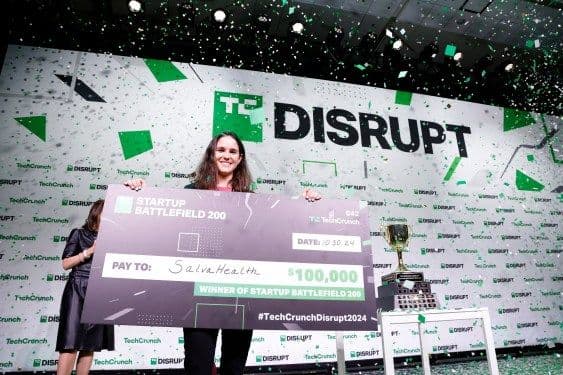
Your shot at VC access, global visibility, TechCrunch coverage, and $100,000 in equity-free funding is gone in a week. Startup Battlefield 200 applicationsclose May 27. If you’re building a breakout startup — or know a founder who is — this is the moment to act. Apply todayfor the opportunity to take the stage atTechCrunch Disrupt 2026, taking place October 13-15, alongside 200 of the world’s most promising early-stage startups. Pre-Series A founders, consider this your final countdown reminder: The strongest startups are already entering the arena, and theapplication window is closing fast. If your startup has already been nominated,don’t wait to complete your application. This final week moves quickly, and last-minute submissions risk getting buried as applications surge ahead of the deadline. Know a startup that deserves the spotlight?Nominate them nowso they still have time to apply before May 27. Some of the most consequential companies in tech history didn’t launch with splashy fundraising announcements. They started with a pitch. Dropbox demoed to a room full of skeptics. Cloudflare took the stage before most people understood what edge networking meant. Discord was still a scrappy gaming startup called Hammer & Chisel. They all passed through the same crucible: Startup Battlefield 200. That’s not a coincidence — it’s a pattern. And it starts with an application. Startup Battlefield 200has never been a competition for the most polished companies. It’s a competition for the most promising ones. Pre-launch is fine. No revenue is fine. What matters is whether what you’re building genuinely changes something — not incrementally, but meaningfully. If you or a founder you know is building something impactful, then the application itself becomes the first pitch.Apply before May 27. Startup Battlefield 200is where breakout companies get discovered. Selected startups will showcase live on the Disrupt Stage in front of 10,000+ attendees, leading VCs, global media, and the broader TechCrunch audience. This is your opportunity to gain investor exposure, receive direct VC feedback, and prove your company belongs among the next generation of category-defining startups. Every one of the 200 selected companies receives: And every selected company pitches, whether on the Disrupt Stage or the Pitch Showcase Stage. Both put founders in front of the investors, media, and partners who attend Disrupt specifically to find what’s next. You don’t need to make the top 20 for this experience to change your trajectory.Get started by nominating and applying here. More than 1,700 companies have competed in Startup Battlefield 200. Together, they’ve raised over $32 billion and generated more than 250 exits, including acquisitions by Microsoft, Google, Salesforce, Uber, and Amazon. The network runs so deep that alumni have even acquired each other: Dropbox acquired fellow Battlefield 200 alum DocSend in 2021. This is also the same launchpad that helped accelerate companies like Fitbit, Trello, and Mint. Behind every one of those outcomes was a founder willing to make a bet on themselves publicly, in front of people who were paying attention.Apply and learn more here. We’re looking for ambitious early-stage startups building innovative, potentially category-defining products. Applications are open globally across all industries. Most selected companies are pre-Series A, though select Series A startups may qualify on a case-by-case basis. To apply, startups should have: Thousands apply every year. Only 200 are selected. Just 20 finalists pitch live on the Disrupt Stage. One startup takes the crown and wins $100,000 in equity-free funding. The founders who wait until they feel ready often wait too long. You do not need to be polished. You need to be promising. If you’ve been sitting on this, here’s the reality: The worst outcome is you don’t get selected this cycle — and you come back next year with a stronger application because you went through the process. The stage matters. The community lasts. The milestone is real. But the deadline is now one week away. If you’re building something category-defining — or know a startup that deserves the spotlight —submit your nomination and complete your application before May 27.

read more
Startup Battlefield 200 applications close in 1 week: Window to nominate and apply for the most promising startups closes May 27

Startup Battlefield 200 applications close in 1 week: Window to nominate and apply for the most promising startups closes May 27

Your shot at VC access, global visibility, TechCrunch coverage, and $100,000 in equity-free funding is gone in a week. Startup Battlefield 200 applicationsclose May 27. If you’re building a breakout startup — or know a founder who is — this is the moment to act. Apply todayfor the opportunity to take the stage atTechCrunch Disrupt 2026, taking place October 13-15, alongside 200 of the world’s most promising early-stage startups. Pre-Series A founders, consider this your final countdown reminder: The strongest startups are already entering the arena, and theapplication window is closing fast. If your startup has already been nominated,don’t wait to complete your application. This final week moves quickly, and last-minute submissions risk getting buried as applications surge ahead of the deadline. Know a startup that deserves the spotlight?Nominate them nowso they still have time to apply before May 27. Some of the most consequential companies in tech history didn’t launch with splashy fundraising announcements. They started with a pitch. Dropbox demoed to a room full of skeptics. Cloudflare took the stage before most people understood what edge networking meant. Discord was still a scrappy gaming startup called Hammer & Chisel. They all passed through the same crucible: Startup Battlefield 200. That’s not a coincidence — it’s a pattern. And it starts with an application. Startup Battlefield 200has never been a competition for the most polished companies. It’s a competition for the most promising ones. Pre-launch is fine. No revenue is fine. What matters is whether what you’re building genuinely changes something — not incrementally, but meaningfully. If you or a founder you know is building something impactful, then the application itself becomes the first pitch.Apply before May 27. Startup Battlefield 200is where breakout companies get discovered. Selected startups will showcase live on the Disrupt Stage in front of 10,000+ attendees, leading VCs, global media, and the broader TechCrunch audience. This is your opportunity to gain investor exposure, receive direct VC feedback, and prove your company belongs among the next generation of category-defining startups. Every one of the 200 selected companies receives: And every selected company pitches, whether on the Disrupt Stage or the Pitch Showcase Stage. Both put founders in front of the investors, media, and partners who attend Disrupt specifically to find what’s next. You don’t need to make the top 20 for this experience to change your trajectory.Get started by nominating and applying here. More than 1,700 companies have competed in Startup Battlefield 200. Together, they’ve raised over $32 billion and generated more than 250 exits, including acquisitions by Microsoft, Google, Salesforce, Uber, and Amazon. The network runs so deep that alumni have even acquired each other: Dropbox acquired fellow Battlefield 200 alum DocSend in 2021. This is also the same launchpad that helped accelerate companies like Fitbit, Trello, and Mint. Behind every one of those outcomes was a founder willing to make a bet on themselves publicly, in front of people who were paying attention.Apply and learn more here. We’re looking for ambitious early-stage startups building innovative, potentially category-defining products. Applications are open globally across all industries. Most selected companies are pre-Series A, though select Series A startups may qualify on a case-by-case basis. To apply, startups should have: Thousands apply every year. Only 200 are selected. Just 20 finalists pitch live on the Disrupt Stage. One startup takes the crown and wins $100,000 in equity-free funding. The founders who wait until they feel ready often wait too long. You do not need to be polished. You need to be promising. If you’ve been sitting on this, here’s the reality: The worst outcome is you don’t get selected this cycle — and you come back next year with a stronger application because you went through the process. The stage matters. The community lasts. The milestone is real. But the deadline is now one week away. If you’re building something category-defining — or know a startup that deserves the spotlight —submit your nomination and complete your application before May 27.

1 hour ago

View

OpenAI barrels toward IPO that may happen in September

OpenAI barrels toward IPO that may happen in September

A day after Elon Musklost his lawsuitthat threatened OpenAI’s structure, leadership, and finances, the AI giant is ready to move forward with its initial public offering, sources toldthe Wall Street Journal. OpenAI chief executive Sam Altman reportedly hopes that his company will be ready to go public by September. The ChatGPT maker has been working with tech IPO powerhouse bankers Goldman Sachs and Morgan Stanley, and may file IPO paperwork confidentially with regulators within days or weeks, per the WSJ. The news of OpenAI’s potential IPO, which by all accounts should be a blockbuster, comes as the world awaits the public disclosure of SpaceX’s IPO filings, which are expected to appear as soon as Wednesday, according to reports. Rocket-maker SpaceX is, of course, now one of OpenAI’s major competitors, after itconsumed Elon Musk’s model maker, xAI. Now that Musk failed to skewer OpenAI, the competitor he co-founded, through the heart with a lawsuit, it looks like the next Musk vs. Altman battle will take place in the world of finance. Which one will be the bigger IPO? OpenAI did not immediately respond to a request for comment.

1 hour ago

View

IrisGo, a startup backed by Andrew Ng, looks to become the AI desktop buddy you never knew you needed

IrisGo, a startup backed by Andrew Ng, looks to become the AI desktop buddy you never knew you needed

Industry insiders say the next big thing in AI is“proactive” systems: agents that can anticipate a user’s needs — and fulfill them — before the user even knows what those needs are. One startup that’s looking to make headway in this area is IrisGo. The company, which closeda $2.8 million seed roundled by Andrew Ng’s AI Fund earlier this year, is building a desktop companion for PCs that can learn about a user’s daily workflows and then automate them with limited to no human prompting. IrisGo was co-founded by Jeffrey Lai, a former Apple engineer who helped to build the Chinese language version of Siri, the company’s automated assistant. (Somewhat slyly, Iris is Siri spelled backward.) The core idea is simple: Show the program how to do something once, and it remembers that process for future automated use — no repeat instructions needed. During a conversation with TechCrunch, Lai ran a demo, showing how his platform could learn to place a coffee order online. As I watched, IrisGo recorded the steps it took to select a latte from Philz Coffee (a popular Bay Area chain), fill out credit card information, and then hit purchase. Lai then asked IrisGo to repeat the order on its own; the agent dutifully complied. Buying coffee, of course, is not really the point. Instead, the hope is that the system will automate a whole host of business-related tasks. Iris comes with a built-in “skills” library — things like email drafting, invoice processing, report building, document summarization, and many other ready-to-use automated workflows. At the same time, Iris learns from the user’s desktop behavior and automatically adds those tasks to its potential list of action items. The application also includes a coding assistant — similar in concept to OpenAI’s Codex or Anthropic’s Claude Code — designed to assist developers as they go about their work. “Our target audience is knowledge workers — white-collar companies. There’s a lot of repetitive tasks that those workers do every day,” Lai said, noting that, despite the high-octane power of today’s frontier models, AI-assisted office work can still feel incredibly manual and repetitive. The goal, he said, is to move away from that and toward a more fully autonomous workflow, where the human works on high-level conceptual work while agentic systems take care of all the clerical work in the background. A particularly appealing feature of IrisGo is that it is designed to process a lot of data on-device, giving it strongerprivacy protectionsthan other applications that rely heavily on the cloud. Lai says that the system is still a hybrid architecture — meaning that larger, more complex tasks are ultimately processed through the cloud, although the companypromises thatcloud processing “only occurs when explicitly authorized by the user and uses end-to-end encryption.” Part of the strategy for scaling Iris has been to garner credibility through association with prominent figures and organizations. Support from Ng — notably a co-founder of the formativedeep learning research team Google Brain— has helped. Lai managed to set up a meeting with Ng through a shared connection: Both are alumni from Carnegie Mellon University. Lai and his co-founder demoed Iris during that meeting, and Ng’s AI Fund ultimately led the startup’s seed round. Nvidia and Google have also backed the company. IrisGo recently launched the beta versions of its macOS and Windows apps, and the company is also currently pursuing deals with laptop companies to preinstall the app on new devices. It recentlystruck such a dealwith Acer, and Lai said the hope is that the company can strike similar deals with other device makers soon.

1 hour ago

View

OpenAI claims it solved an 80-year-old math problem — for real this time

OpenAI claims it solved an 80-year-old math problem — for real this time

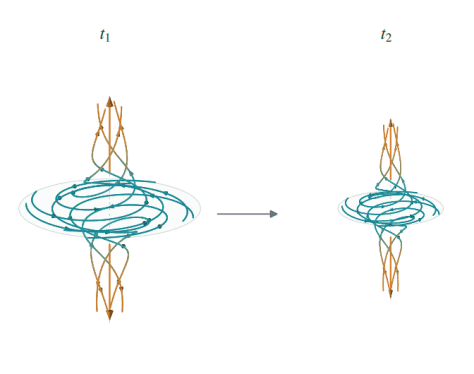
OpenAIclaimsits new reasoning model has produced an original mathematical proof disproving a famous unsolved conjecture in geometry, which was first posed by Paul Erdős in 1946. If this sounds familiar to you, it’s because this isn’t the first time OpenAI has made such a bold claim.Seven months ago, the AI giant’sformer VP Kevin Weilposted on X: “GPT-5 found solutions to 10 (!) previously unsolved Erdős problems and made progress on 11 others.” It turns out, GPT-5 didn’t actually solve those problems; it just found solutions that already existed in the literature. Taunts from rivals like Yann LeCun and Google DeepMind CEO Demis Hassabis followed, and Weil promptly took down his premature post. Today, at least, it seems OpenAI didn’t make the same mistake twice. Alongside the announcement, the company publishedcompanion remarksin support of the disproof from mathematicians like Noga Alon, Melanie Wood, and Thomas Bloom, who maintainsthe Erdos Problems website, and previously called Weil’s post“a dramatic misrepresentation.” “For nearly 80 years, mathematicians believed the best possible solutions looked roughly like square grids,”OpenAI posted on X. “An OpenAI model has now disproved that belief, discovering an entirely new family of constructions that performs better.” The company said this marks “the first time AI has autonomously solved a prominent open problem central to a field of mathematics.” The proof, per OpenAI, came from a new general-purpose reasoning model, not a system specifically designed to solve math problems or even this problem in particular. OpenAI says this is significant because it means AI systems are now more capable of holding together long, difficult chains of reasoning and connecting ideas across fields in ways researchers may not have previously explored. That has implications for biology, physics, engineering, and medicine. “AI is helping us to more fully explore the cathedral of mathematics we have built over the centuries,” Bloom said in a statement. “What other unseen wonders are waiting in the wings?”

1 hour ago

View