Want to get featured here? Explore premium visibility opportunities.
Contact usLatest AI News
View All News â
Elon Musk has given up on solar power (on Earth)
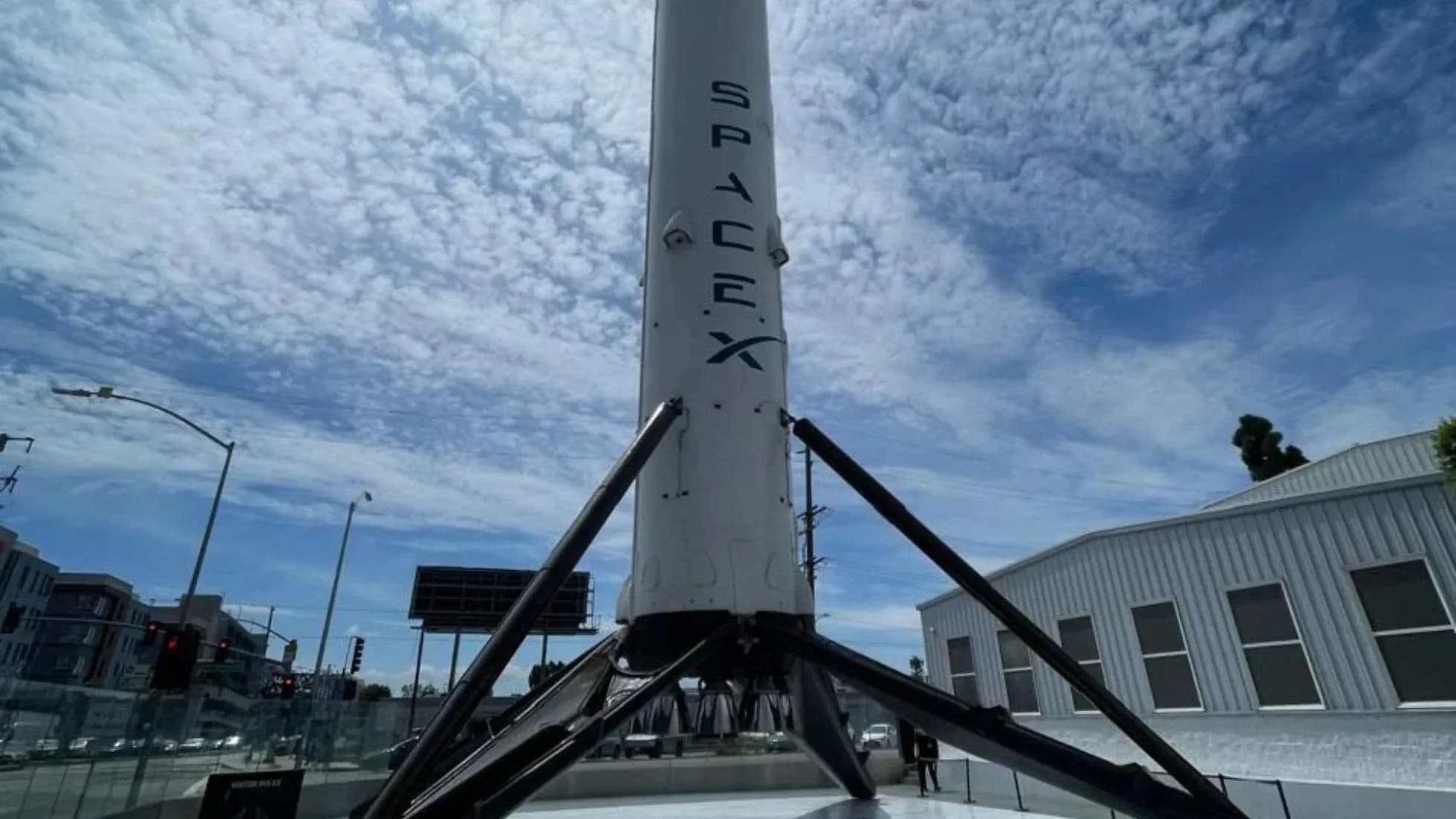
Has Elon Musk given up on Teslaâs Master Plans, on the electrified economy, on solar power as we know it? From theSpaceX IPO filingreleased yesterday, it sure seems like it. A recap for those not enmeshed in the Musk-verse: Tesla has releasedfour Master Plansover the years, and while details have varied, the through line has been electrification of the economy. Musk put it best in his first edition: âthe overarching purpose of Tesla motorsâŚis to help expedite the move from a mine-and-burn hydrocarbon economy towards a solar electric economy.â But recently, one of Muskâs companies, xAI, has embraced the mine-and-burn hydrocarbon economy, usingdozens of unregulated natural gas turbinesto power its data centers with plans tobuy $2.8 billion more, effectively cementing the fossil fuelâs role in the companyâs AI operations. Itâs a curious turn for a businessman who built his empire on clean energy â and who has no qualms directing his companies to buy from one another. SpaceX spent $131 million on 1,279 Cybertrucks, and xAI has spent $697 million in the last two years on Tesla Megapacks, itâs grid-scale battery storage systems that the company will use to manage peak loads. But so far, xAI hasnât bought a materially significant number of solar panels from Tesla. Solar power isnât missing in the SpaceX filing, itâs just all concentrated on space, which the company touts as the future of data center power. Terrestrial solar garners a few mentions â not as a power source for xAI data centers but instead to show how much better SpaceX thinks space-based solar will be. Itâs no secret that Musk and other Silicon Valley executives have become obsessed with space-based solar power. SpaceX says that space-based solar arrays can generate âmore than five-times the energyâ of terrestrial ones thanks to 24/7 illumination. As AI data centers have run into opposition here on Earth, CEOs like Musk have started mulling big server racks in space powered by that 24/7 sunshine. Hammer, meet nail. Even if SpaceX is able to bring down the cost of boosting a data center into orbit, the economics arechallenging at best. Power prices for Starlink satellites are multiples higher than what a terrestrial data center typically spends, and protecting chips from the rigors of space wonât be easy or cheap. Itâs also not clear whether AI training can be distributed across multiple satellites, leaving a significant chunk of AI work earthbound. Itâs not just one problem that SpaceX needs to solve, but many. Itâs likely that Musk considers xAIâs current data centers as stopgaps, that once SpaceX is able to loft gigawatts worth of servers into orbit â probably just a few years away, in his mind â heâll scrap whatâs here on the ground, natural gas turbines included and not have to think about NIMBYs anymore. The risk, of course, is that heâs wrong. Itâs not just NIMBYs that Musk is worried about, though. Heâs clearly concerned that computing demands from AI will quickly outstrip what we can provide here on Earth. Sprinkled throughout the SEC filing are references to âterawatt-scale annual AI compute growth,â which will require power to match. Thatâs a stunning figure when you consider that all the worldâs data centers use around40 gigawatts today. This is Muskâs âfirst principlesâ thinking in action. At some point, he assumed the world will need an additional terawatt worth of compute every year, and he worked back from there. âWe believe that third-party estimates on data center demand are constrained by the practical supply limitations that exist in a terrestrial context and the power shortage may be far greater than what research estimates suggest,â the company argues. Possible? Sure, I suppose. But consider that humanity today usesabout 35,000 terawatt-hoursof energy annually, or about 4 terawatts on a continuous basis. Energy demand has risen lately, and for AI, it probably is in an phase of exponential growth, which could either continue or level off. We have no way of knowing at this point, but if thereâs one thing Musk is good at, itâs spotting a trend at its inflection point and extrapolating wildly. Hereâs where Muskâs problems settle back down to Earth. Iâm no rocket scientist, but I suspect that shipping solar panels on a flatbed truck uses less energy than sending them into orbit. Plus, space-ready solar panels will need to be manufactured at unprecedented scale. Not insurmountable problems, but also maybe a distraction. Weâve barely scratched solarâs potential here on Earth, for example. The perfect doesnât have to be the enemy of the good. Thereâs plenty of room to improve things here on Earth even while we chase after our dreams in the stars. Just three years ago, Musk and his colleagues at Tesla released the âMaster Plan Part 3,â which thoughtfully outlined a âplan to eliminate fossil fuels.â A good starting point might be xAIâs data centers.
View

'India Cannot Build Deeptech on Hype Alone'
While India looks to be a leader in AI and semiconductors, investor Aditya Vuchi suggests focusing on practical applications and real customer needs.
View

AI is being used to resurrect the voices of dead pilots
In the latest sign of these AI-heavy times, the National Transportation Safety Board temporarily removed access to its docket system after discovering that voices of pilots who were killed in a UPS plane crash last year had been re-created using AI and were circulating on the internet. The NTSB is prohibited by federal law from including cockpit audio recordings in its docket system, which otherwise contains troves of data on investigations and has historically been open to the public. But the accident docket for this flight included a spectrogram file of the voice recorder. A spectrogram uses a mathematical process to turn sound signals, including low and high frequencies, into an image. Scott Manley, a popular YouTuber whose channel combines physics, astronomy, and video games,noted on Xthat it could be possible to reconstruct audio from the megabytes of data encoded in that image. And thatâs what happened. People took the spectrogram, along with the publicly available transcript, to create approximations of the cockpit voice recorder audio from UPS Flight 2976 in Louisville, Kentucky,according to the NTSB. They used AI tools like Codex, according to posts on social media. The agencyrestoredpublic access to the docket system on Friday but kept 42 investigations closed pending review â including the one related to Flight 2976.
View

SpaceX files to go public, and the math requires a little faith
Loading the player⌠The SpaceX S-1 is finally here, and the story it tells goes way further than rockets. The filing runs to 36 pages of risk factors alone, and the numbers inside match the ambition: a $28 trillion total addressable market, a pay package tied to establishing a Mars colony, and a valuation target that would make it the largest IPO in American history. Watch asEquitypodcast hosts Kirsten Korosec, Anthony Ha, and Sean OâKane dig into what the filing actually says, what it leaves out, and whether any of this math connects to reality. The team also coversNanoCo turning down a $20M buyoutto raise a $12M seed for its secure Nano Claw alternative, Anthropicâs$300M acquisition of SDK startup Stainless, and the Google I/O announcement thatpromises to change search as we know it. Subscribe to Equity onYouTube,Apple Podcasts,Overcast,Spotifyand all the casts. You also can follow Equity onXandThreads, at @EquityPod.
View
Submit your Tool
PoweredByAI.app is an AI Tools Directory helping individuals, businesses, and creators discover the best AI tools for writing, coding, design, productivity, and more.
Š 2026 , Product of011BQ. All rights reserved.