AI NewsPeter Sarlin’s QuTwo reaches $380M valuation in angel round

Peter Sarlin’s QuTwo reaches $380M valuation in angel round

2:29 PM IST · May 6, 2026
Peter Sarlin’s QuTwo reaches $380M valuation in angel round

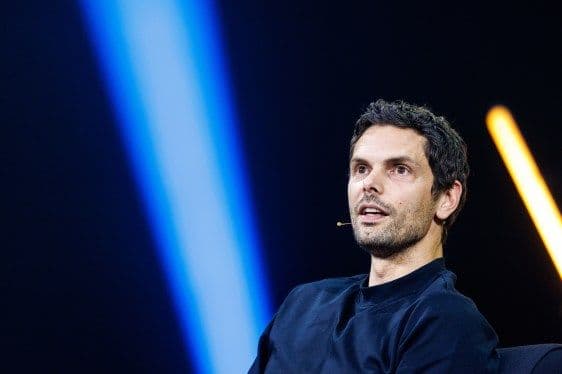
QuTwo, the Finnish AI lab founded by former AMD Silo AI CEO Peter Sarlin, is now valued at €325 million (approximately $380 million) after raising a €25 million angel round ($29 million). It’s a sign of enduring tailwinds for AI, quantum computing, and sovereign tech, especially for Europe-made companies. QuTwo’s name is a nod to quantum computing, but it hasn’t gone all-in on quantum. Its core product, QuTwo OS, is an orchestration layer that directs tasks to classical, quantum or hybrid architectures — with the idea that enterprise use cases are often best served by “quantum-inspired” computing, which uses classical chips to simulate quantum behavior on more reliable hardware. Enterprise AI will be QuTwo’s bread and butter. The company already secured some $23 million in committed revenue thanks to design partnerships with the likes of retail giant Zalando, for which it helped develop AI assistants. “AI is the North Star that we will continue to aim for. Quantum is just a new type of compute,” said Sarlin, who is adamant that QuTwois an AI company. Momentum has been building around Europe-based AI labs, and several of them have become overnight unicorns. Just last week, former DeepMind researcher David Silver secured $1.1 billion for his new endeavor,Ineffable Intelligence. QuTwo’s valuation and round size are somewhat modest in comparison but will let it pursue its roadmap under less pressure. According to Sarlin, who serves as QuTwo’s executive chairman, this was a decision he also made for his previous company, Silo AI, whichAMD acquired for $665 millionin 2024. “I had a lot of investors who would have wanted to pour a lot of money into making Silo into Europe’s OpenAI, but I didn’t believe in that play,” he told TechCrunch. The main difference is that QuTwo wants the freedom to think long term, with a five- to ten-year horizon. “We are on a mission to build the globally leading AI company for the next paradigm, given that Europe did not succeed in building the AI company for this era,” Sarlin said. It’s not that Sarlin is bearish on European AI, of which he is a prolific backer. Nor is he necessarily critical of extra-large rounds — he volunteered that he is also an investor inYann LeCun’s Ami Labs, whichraised $1.03 billion, and in British-American venture Recursive Superintelligence, which isrumored to be following the same path. But he didn’t see a billion-dollar round as the right fit for QuTwo — nor VC money, at least for now. Until recently, QuTwo was solely funded through Sarlin’s family office,PostScriptum, which also incubatedNestAI, the other company where he serves as executive chairman. But whereas NestAIraised some $115 millionin a funding round led by Finland’s sovereign fund and Nokia, QuTwo wasn’t seeking to raise external funding. However, when the lab’s soft launch generated significant interest earlier this year, Sarlin decided he would say no to checks from VCs and strategic investors, but yes to an angel round in part due to the geopolitical moment Europe is currently navigating. With Europe increasinglylooking to favor local alternatives to U.S. tech providers, there are tailwinds for AI made in Finland. But there is also investor appetite for a company that promises to facilitate more ambitious R&D initiatives in the fields where the region already has strong players, such as the automotive, life sciences and gaming sectors. Conversely, Sarlin expects that QuTwo’s angel investors could open doors across Europe. There are definitely quite a few introductions he could request from this group, which includes Yuri Milner, Xavier Niel, Nico Rosberg, Dieter Schwarz and Niklas Zennström, and as well as many startup founders from Hugging Space, Legora, Miro, Skype, Supercell, Wolt, and more. This will also support QuTwo’s growth. It recently expanded into Sweden, and has been hiring. According to Sarlin, some 50 quantum and AI scientists have joined the team, which includes two other second-time entrepreneurs: his former cofounder at Silo, Kaj-Mikael Björk; and Kuan Yen Tan, a cofounder at IQM, the Finnish quantum companythat is set to go public. QuTwo’s connection with IQM is also a reminder that the company believes we are about to enter the quantum era — it just can’t wait. “The question for repeat founders like [us] is how can we have even a larger impact. In the long term, it’s important for Europe that we build the AI company for the next paradigm out of Europe. But, in the short term, we can have a significant impact in driving ambitious R&D moon shots in Europe,” Sarlin said.

read more


Latest AI News

View All News →
Marc Lore says that AI will soon enable anyone open a restaurant

Marc Lore says that AI will soon enable anyone open a restaurant

Marc Lore, the veteran e-commerce entrepreneur who sold his previous startups to Amazon and Walmart, has big plans to infuse AI into hiscurrent venture,Wonder. The centerpiece of those plans is Wonder Create, an initiative that would let anyone — from food entrepreneurs to social media influencers — use AI to design and launch their own restaurant brand in under a minute. The virtual restaurant would then go live across Wonder’s growing network of tech-enabled kitchen locations, currently numbering 120 and expected to reach 400 next year. Lore’s startup, a vertically integrated dining and delivery platform, has evolved from food trucks to fast casual restaurants with 10 to 20 seats. These are not normal restaurants, though; they are “programmable cooking platforms” capable of operating as 25 different types of restaurants based on cuisine, within their all-electric kitchens that are increasingly becoming robotic. Speakingat The Wall Street Journal’s “Future of Everything” conference this week, Lore said these kitchens have a 700-ingredient library. The “restaurants” they house actually consist of many different brands that operate from within these locations. In addition to a staff of up to 12 people in these kitchens, cooking tech, like conveyors and robotic arms, are involved in the cooking process. The company alsojust bought Spice Robotics, a maker of an automatic bowl-making machine previously used by Sweetgreen. Next year, it plans to offer an “infinite sauce machine” that can make bout 80% of all the sauces found in recipes on the internet today. Wonder Create wasannouncedearlier this year as a way for anyone to use Wonder’s software to launch their own restaurant brand and recipes. Lore offered more details as how this would work by leveraging AI technology, describing the plan as something like a “Shopify front-end with an AI prompt.” “You type in what kind of restaurant you want to build. It builds the restaurant — AI does — in under a minute. It does the name, branding, description, pictures, pricing, health information, and all the recipes for your restaurant,” Lore explained during an interview at the WSJ event. The would-be restaurateur could then refine the prompt if changes were needed. When ready to go live, the restaurant would launch across all of Wonder’s locations. The company currently has 120 of these “programmable cooking platforms” in operation, a number that’s expected to grow to 400 next year. As it adds robotics to the equation, the company won’t necessarily reduce headcount, Lore noted. Instead, it will increase the number of meals a kitchen can produce in a given period. “We have about 7 million throughput capacity with 12 people,” he said. “We see a path to getting to 20 million throughput out of 2,500 square feet with just 12 people. The goal also is…I guess by 2035, to have 1,000 unique restaurants operating out of the 2,500 square feet,” Lore added. The goal with these AI-created “restaurants” is to allow people to experiment with food in new ways. A restaurateur could test recipes to gauge customer reaction before adding dishes to his own brick-and-mortar locations, for example. Lore sees other use cases for the platform, too, like letting influencers connect with their audience through their own “restaurant” brands without having to actually launch their own chains. “It could be a mega-influencer, a micro-influencer — anyone that wants to monetize their following,” Lore said. “Or it could be a private trainer that wants to make specific bowls. It could be a not-for-profit. It could be Disney for [marketing] their new movie. Anybody can make a restaurant.” Whether that many people actually want to is an open question. Ghost kitchens — a similar concept that promised to let brands sell food without owning a restaurant — had a rocky run in the early 2020s, with several high-profile operators scaling back or shutting down after struggling to build customer loyalty. Wonder’s added layer of automation and AI may address some of those pitfalls, but the model is still unproven at scale. MrBeast Burger, a famous ghost kitchen experiments, vividly illustrated the challenge. The brand faced widespread complaints over inconsistent food quality — a consequence of relying on dozens of different contracted kitchens and staff. Wonder’s programmable, increasingly automated kitchens are designed to solve exactly that problem. There are still limits to this idea, Lore admitted. Wonder’s team (including its robots) can’t do things like toss and stretch pizza dough or slice and roll sushi. Instead, Wonder’s focus is on simpler basics like burgers, chicken wings, fried chicken, and bowls. The whole plan comes together with Lore’s other acquisitions —Grubhub for its 250 million-deliveries-per-year businessandBlue Apronfor its meal kit business. Now, Wonder is focused on buying restaurant brands, like New York City-basedBlue Ribbon Fried Chicken, which it snapped up for $6.5 million in February. “When you buy a brand — and you can buy a brand that has 10 locations, or even 50 locations — and then overnight put it in 1,000, there’s just an incredible arbitrage there,” Lore noted.

2 hours ago

View

Peter Sarlin’s QuTwo reaches $380M valuation in angel round

Peter Sarlin’s QuTwo reaches $380M valuation in angel round

QuTwo, the Finnish AI lab founded by former AMD Silo AI CEO Peter Sarlin, is now valued at €325 million (approximately $380 million) after raising a €25 million angel round ($29 million). It’s a sign of enduring tailwinds for AI, quantum computing, and sovereign tech, especially for Europe-made companies. QuTwo’s name is a nod to quantum computing, but it hasn’t gone all-in on quantum. Its core product, QuTwo OS, is an orchestration layer that directs tasks to classical, quantum or hybrid architectures — with the idea that enterprise use cases are often best served by “quantum-inspired” computing, which uses classical chips to simulate quantum behavior on more reliable hardware. Enterprise AI will be QuTwo’s bread and butter. The company already secured some $23 million in committed revenue thanks to design partnerships with the likes of retail giant Zalando, for which it helped develop AI assistants. “AI is the North Star that we will continue to aim for. Quantum is just a new type of compute,” said Sarlin, who is adamant that QuTwois an AI company. Momentum has been building around Europe-based AI labs, and several of them have become overnight unicorns. Just last week, former DeepMind researcher David Silver secured $1.1 billion for his new endeavor,Ineffable Intelligence. QuTwo’s valuation and round size are somewhat modest in comparison but will let it pursue its roadmap under less pressure. According to Sarlin, who serves as QuTwo’s executive chairman, this was a decision he also made for his previous company, Silo AI, whichAMD acquired for $665 millionin 2024. “I had a lot of investors who would have wanted to pour a lot of money into making Silo into Europe’s OpenAI, but I didn’t believe in that play,” he told TechCrunch. The main difference is that QuTwo wants the freedom to think long term, with a five- to ten-year horizon. “We are on a mission to build the globally leading AI company for the next paradigm, given that Europe did not succeed in building the AI company for this era,” Sarlin said. It’s not that Sarlin is bearish on European AI, of which he is a prolific backer. Nor is he necessarily critical of extra-large rounds — he volunteered that he is also an investor inYann LeCun’s Ami Labs, whichraised $1.03 billion, and in British-American venture Recursive Superintelligence, which isrumored to be following the same path. But he didn’t see a billion-dollar round as the right fit for QuTwo — nor VC money, at least for now. Until recently, QuTwo was solely funded through Sarlin’s family office,PostScriptum, which also incubatedNestAI, the other company where he serves as executive chairman. But whereas NestAIraised some $115 millionin a funding round led by Finland’s sovereign fund and Nokia, QuTwo wasn’t seeking to raise external funding. However, when the lab’s soft launch generated significant interest earlier this year, Sarlin decided he would say no to checks from VCs and strategic investors, but yes to an angel round in part due to the geopolitical moment Europe is currently navigating. With Europe increasinglylooking to favor local alternatives to U.S. tech providers, there are tailwinds for AI made in Finland. But there is also investor appetite for a company that promises to facilitate more ambitious R&D initiatives in the fields where the region already has strong players, such as the automotive, life sciences and gaming sectors. Conversely, Sarlin expects that QuTwo’s angel investors could open doors across Europe. There are definitely quite a few introductions he could request from this group, which includes Yuri Milner, Xavier Niel, Nico Rosberg, Dieter Schwarz and Niklas Zennström, and as well as many startup founders from Hugging Space, Legora, Miro, Skype, Supercell, Wolt, and more. This will also support QuTwo’s growth. It recently expanded into Sweden, and has been hiring. According to Sarlin, some 50 quantum and AI scientists have joined the team, which includes two other second-time entrepreneurs: his former cofounder at Silo, Kaj-Mikael Björk; and Kuan Yen Tan, a cofounder at IQM, the Finnish quantum companythat is set to go public. QuTwo’s connection with IQM is also a reminder that the company believes we are about to enter the quantum era — it just can’t wait. “The question for repeat founders like [us] is how can we have even a larger impact. In the long term, it’s important for Europe that we build the AI company for the next paradigm out of Europe. But, in the short term, we can have a significant impact in driving ambitious R&D moon shots in Europe,” Sarlin said.

2 hours ago

View

Cabinet Clears 2 New Semiconductor Units Worth ₹3,900 Crore to Boost India’s Chip Ecosystem

Cabinet Clears 2 New Semiconductor Units Worth ₹3,900 Crore to Boost India’s Chip Ecosystem

With these approvals, the total number of semiconductor projects cleared under the India Semiconductor Mission has risen to 12.

2 hours ago

View

Samsung Becomes the First South Korean Firm to Cross $1 Tn Market Cap

Samsung Becomes the First South Korean Firm to Cross $1 Tn Market Cap

With this, Samsung joins the recent TSMC in the $1 trillion club as AI chip demand lifts Korean markets.

2 hours ago

View

Peter Sarlin’s QuTwo reaches $380M valuation in angel round