AI NewsPayPal says it’s ‘becoming a technology company again.’ That means AI.

PayPal says it’s ‘becoming a technology company again.’ That means AI.

10:28 PM IST · May 5, 2026
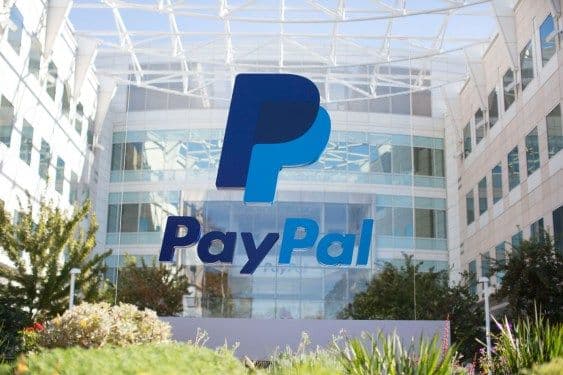
PayPal says it’s ‘becoming a technology company again.’ That means AI.

PayPal is looking towards the future, despite its falling stock and looming layoffs. In its first-quarter earnings call, CEO Enrique Lores told investors that PayPal needs to “recommit to the fundamentals,” which included “becoming a technology company again.” There was no need to read between the lines — PayPal was pitching an AI-powered turnaround. Lores explicitly said so, telling analysts on this week’s call that leading companies find ways to differentiate themselves by innovating, and that now is the time for PayPal to take action. This includes modernizing its tech platform, moving faster to become “cloud-native,” and “aggressively adopting AI in our development processes,” Lores said. The latter would increase developer productivity and shorten time to market, he added. It’s a startling admission from PayPal that it has yet to fully embrace AI in-house, when AI-assisted coding is one of the breakout areas where the technology has truly excelled. Other consumer tech companies have rapidly adopted AI in recent months to assist with coding, with Spotify even declaring in February that its top developershaven’t written a line of codesince December. Meanwhile, top dev teams are trying to outcompete one anotherby tokenmaxxing— a proxy for understanding who at the company is experimenting with AI more often, based on the number of AI tokens they use. PayPal is only now catching up, it seems. Lores said the company has formed a new “AI transformation and simplification” team to help with its enterprise AI agenda. Combined with the planned layoffs, which Lores characterized as PayPal removing layers from its organizational structure, the addition of AI-enabled processes is expected to bring the company at least $1.5 billion in cost savings over the next two to three years, he said. The company announced last week it wasreorganizing its business, which streamlines the operation into three segments: checkout solutions and PayPal, consumer financial services (and Venmo) as well as payment services and crypto. In addition,Bloomberg reportedon Tuesday that PayPal plans to cut around 20% of its workforce over the next two to three years as part of its cost-savings plan, equating to north of 4,500 jobs. More cost savings will come from PayPal’s plans for AI adoption, company execs said on the call. That includes bringing AI into areas beyond coding, like customer service, support operations, and risk management, to name a few. “I think the changes that AI will enable us to do are going to drive — are going to be very significant,” said Lores. “This is why we created a group last week, reporting to me, that is going to be in charge of driving — function by function, process by process — this AI transformation. And this is not about adopting AI as a technology, where we have done many pilots in the company, and we have seen what is possible. It’s really about understanding how can we redesign the key processes … this is what we have seen that really will drive significant savings.” Announcing an AI-driven push to cut costs while eliminating thousands of jobs underscores a core criticism of the technology — it comes with a human cost It’s worth noting that, in this case, PayPal was already in need of restructuring. The company may have beat on its first-quarter earnings with revenue of $8.4 billion, up 7% year-over-year, but it forecast weak guidance for the second quarter,sending the stock tumblingafter earnings. That follows a long post-pandemic decline that has sentthe stock down over 80%from its 2021 high and has stunted PayPal’s growth. Asked if separating Venmo into its own business meant the company would be open to selling it, Lores said that, for now, this is what made the most sense in terms of the turnaround plan. Still, he signaled openness to future deals by saying “my number one priority is to maximize shareholder value,” in answer to an analyst’s question about a sale.

read more


Latest AI News

View All News →
Last 24 hours to get 50% off a second pass to TechCrunch Disrupt 2026

Last 24 hours to get 50% off a second pass to TechCrunch Disrupt 2026

Today is the last day. At 11:59 p.m. PT, the 50% off second pass offer forTechCrunch Disrupt 2026ends. After that, prices go up, and the option to bring a partner, co-founder, or colleague with you at half the cost disappears. Register now to lock in your savings.Save up to $410 on your pass and get 50% on a second pass. Disruptisn’t a single-track experience. It’s multiple conversations happening at once. Sessions overlap. Introductions lead to something else an hour later. Patterns only become clear after you’ve seen the same idea from different angles. When you go alone, you see only part of it. When you bring someone, you see more, and more importantly, you understand more. You compare notes in real time, challenge assumptions, and make decisions while the context is still fresh.Get a discounted second pass now. You and your plus-one will have access to: That’s not a small difference. It’s the difference between leaving with ideas and leaving with direction for your next steps. And after tonight, that second perspective costs more. This is your last day to save 50% on a second pass.Choose your tickets. From October 13–15 in San Francisco atDisrupt,the startup world will be in the same place at the same time, turning conversations into capital, ideas into companies, and connections into trajectories. They’ll be trading signals, testing assumptions, and deciding what matters based on what they’re seeing in real time. When you act now to secure your pass —and a second at 50% off— you’ll be in the room while those decisions (and discussions) are taking shape. Across 250+ sessions, you’ll explore real-world playbooks (not theory), covering: Those conversations don’t pause when the event ends. They carry forward into follow-ups, deals, partnerships, and decisions made in the weeks that follow. If you’re not there, you’re not just missing the event. You’re reacting later to conclusions other people reached sooner.Buy a pass to Disrupt today and get a second one for 50%off to be a part of the conversations. Knowing you have a strong idea isn’t enough. You need clarity on where to take it, who to partner with, and how to fund it. Without that clarity, decisions stall. Roadmaps stretch. Opportunities sit just long enough to lose momentum. Disruptcompresses that uncertainty. You see how decisions get made — onstage, in roundtables, and in conversations that build on each other over three days. Better outcomes come from: Miss that window, and you’re back to piecing together secondhand insight, slower feedback loops, and decisions made without the same level of context. This is your final day to get a second pass for 50% off.Register now before prices increase at 11:59 p.m. ET tonight. After tonight, you can still attendDisrupt. But you’re more likely to go alone — and that changes the experience. It means choosing between sessions instead of covering more ground. Processing everything yourself instead of testing it in real time. Following up later instead of leaving with shared clarity. That’s the real cost. Not just paying more, but also getting less out of being there.Lock in your 50% savings on a second ticketto show up more intentionally. Only hours remain to buy a pass toDisruptand get a second for 50% off. The offer ends tonight at 11:59 p.m. PT. Right now, you can still: After today, that advantage is gone. Buy one pass to Disrupt andget 50% off the second of the same ticket type. Decide who you’re bringing — and secure your passes before midnight tonight. Because missing this isn’t just about price. It’s about showing up with less context, less coverage, and less clarity than the people who didn’t wait.

1 hour ago

View

The “people’s airline” and the enterprise AI gold rush

The “people’s airline” and the enterprise AI gold rush

Everyone wants a piece of the enterprise AI pie, and this week, we saw a string of companies making their moves. FromAnthropic and OpenAI announcing new joint venturestargeting enterprise AI deployment toSAP dropping $1Bon German AI startup Prior Labs, it’s becoming clear that if you’re a startup building enterprise tools, you’re likely an acquisition target. On this episode of TechCrunch’sEquitypodcast, hosts Kirsten Korosec, Anthony Ha, and Sean O’Kane dig into the week’s enterprise AI deals, thexAI-Anthropic compute arrangement, and what it all means ahead of what could be a big IPO season. Listen to the full episode to hear about: Subscribe to Equity onYouTube,Apple Podcasts,Overcast,Spotifyand all the casts. You also can follow Equity onXandThreads, at @EquityPod.

1 hour ago

View

The Great IT Divide: Why India's Mid-Tier Firms are at an AI Advantage

The Great IT Divide: Why India's Mid-Tier Firms are at an AI Advantage

FY26 earnings revealed a widening AI divide in Indian IT, with mid-tier firms outpacing larger rivals through quicker AI adoption and sector-focused execution.

1 hour ago

View

Netflix Is Reportedly Testing an AI-Powered Voice Search Feature

Netflix Is Reportedly Testing an AI-Powered Voice Search Feature

Netflix is reportedly testing a native artificial intelligence (AI)-powered voice search feature. As per the report, the California-based streaming giant is building a semantic search system that can recommend and surface content based on user intent and contextual cues. The feature is currently available in beta and is said to be accessible to only a select group of users. It is unclear when the company might release it for all users, or if it plans to reserve it for specific tiers.

5 hours ago

View