AI Styling Studio — Infinite avatar looks from just 1 photo.Try it now.

AI NewsMeta is reportedly developing an AI pendant

Meta is reportedly developing an AI pendant

11:12 PM IST · May 30, 2026
Meta is reportedly developing an AI pendant

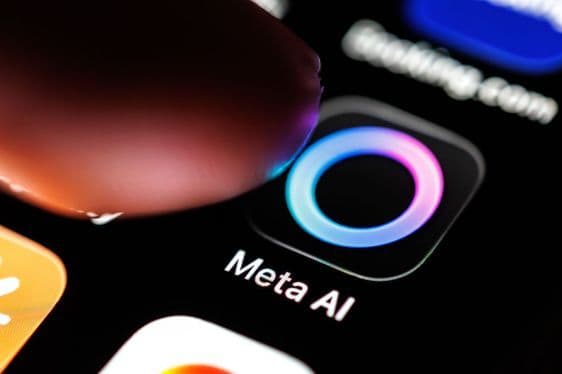
Meta is developing an AI-powered pendant that it plans to start testing in the next year, according to a memoviewed by The Information. This device would presumably build on the work of Limitless, anAI device startup that Meta acquiredat the end of 2025. The startup made an AI pendant that users could attach to their shirt or wear as a necklace to record their conversations.  At the time, Meta said the acquisition would allow it to “accelerate our work to build AI-enabled wearables.” Earlier AI wearables have failed to catch on with consumers — perhaps due toprivacy concerns and tone-deaf marketing, or perhaps because theyjust weren’t that useful. But companies like OpenAIaren’t giving up. The memo also reportedly states that the company is planning to expand its lineup of AI glasses and launch a business subscription called Wearables for Work. With all these planned devices, Meta is apparently hoping to reverse the fortunes of its hardware-focused Reality Labs division, whichlost $4 billionin the first quarter of this year. TechCrunch has reached out to Meta for comment.

read more

Latest AI News

View All News →
I put Google’s 24/7 AI assistant Gemini Spark to work, and it’s actually pretty useful

I put Google’s 24/7 AI assistant Gemini Spark to work, and it’s actually pretty useful

Gemini Sparkis Google’snew 24/7 agentic assistant, designed to help you help you “navigate your digital life,” which essentially means getting your online to-dos done, summarizing the things you don’t have time to read (like the entirety of your inbox), or organizing something that would have otherwise involved too much screen time-filled manual labor, like a personal expenses spreadsheet. The service was firstintroducedat Google’s annual developer conference in May, where CEO Sundar Pichai joked that Spark, which runs on virtual machines in the cloud, means that “yes, you can close your laptop.” The in-joke here is that he’s comparing Spark to other agentic AI systems, like the ever-popular OpenClaw, which require keeping the machine awake to run its tasks. Spark, he’s suggesting, is agentic AI for the rest of us — those who would rather get things done without nerding out about it by setting up an always-on AI machine. In practice, Spark is still very much designed for work-adjacent tasks, given its integration with Google’s productivity apps like Gmail, Calendar, Docs, Sheets, and Slides. (After all, how many times are you preparing a deck for in your personal life? Unless you’rea Gen Z creator explainingthe latest meme to your chronically offline friends, that is?) Google also struggles a bit to come up with real-world examples that would convince someone that Spark is a “must-have” rather than a “nice-to-have” tool for personal use. Among its suggestions for “personal productivity” is using Spark to scan your emails and calendar for the day and send you a recap with your top three must-do tasks,” which already assumes you are a person who jots down your to-dos in a calendar or email app, instead of a notepad (virtual or otherwise), or just keeps a running list in your brain. (E.g.,Grab prescriptions and shampoo at Walgreens. Buy more dog food. Hang out with friends on Saturday.) Google also suggests you could use Spark as a weekend planner, by drafting a Google Doc “suggesting three free activities based on my open calendar blocks for the upcoming weekend,” which, again, assumes you are some sort of scheduling nerd in your offline life. Nevertheless, with early access to Gemini Spark, I decided to put it through its paces, with what are perhaps some real-world suggestions of my own. I came away surprised that it was a fairly useful implementation of consumer AI, but not one that deserves to have its own brand. For one initial task, I asked Spark for help with a shopping-related research. The idea was to help me with an everyday local drugstore trip for household items, so I asked Spark for product suggestions based on weekly deals and coupons I could clip. At first, Spark seemed to do pretty well here, as it told me exactly what products were on sale that matched my needs, and suggested coupons to clip in the Walgreens app for extra savings. It even suggested how I could stack coupons for one item by combining online promo codes, if I were placing an online pick-up order and was planning to spend more on personal care items. However, as is often the case with AI, the devil was in the details, as one of the promo codes was invalid when I tried it, despite meeting what the AI said were the requirements. Still, Spark pointed me to some other savings — like buy-one-get-one-free and rewards deals that made up for this gaffe. In another test, I asked Gemini for help with a packing list for a day trip out of town. I asked it to check the weather, gather the event details, and make suggestions of what to bring with us, like sunscreen or water, to see what it would come up with, after it learned more about the activity. I asked for the final list to be imported into Google Keep. Guess what Spark can’t do? Use Google Keep. That’s a huge oversight, given that Google’s notetaking app would be essential for anything in the realm of personal productivity. Instead, it offered to make me a doc or draft me an email because, sure, that’s the sort of thing I’d want to check for my list of to-brings. (??) In terms of the list itself, however, Spark was spot-on, suggesting lawn chairs or blankets, water, sunscreen, sunglasses, a light layer for when the sun goes down, a reusable shopping bag, and an umbrella for possible light showers that day. It also reminded me that dogs were not allowed, despite the event being outdoors. (Sorry, Princess!) My child has aged out of summer camps for kids (and should probably just get a job), but before we went that route, I wanted to scour the local area to find out if there were any summer activities available for teens that she could do in addition to her engineering camp in June. I asked Spark to do a thorough search and find any and all suggestions, keeping in mind that we would not want to drive more than around 30 minutes. Spark generated a decent list of ideas for activities that matched my child’s interests, and plotted out how far they were from home. Unfortunately, I forgot to prompt Spark to get the costs or dates of the programs, and it didn’t bother to tell me, which meant I still had to do more manual research on my own. Like many, I subscribe to too many newsletters, so I put Spark to work on preparing me a weekly summary, which would arrive every Friday, focused only on the top five posts or articles I shouldn’t miss reading, along with a link. The AI got to work, digging into my inbox and, within moments, had presented a summary of several interesting articles to read that included context and a link. (The link ended up being a Google.com redirect that didn’t work — I had to click the link displayed on the redirect page, as it never automatically sent me to the site in question.) While I generally liked the suggestions, Spark only returned four articles to read when I had requested five. Spark had interpreted the request as “4-5” for some reason. For another request, I asked Spark to compile a list of weekend activities around town for me on Fridays, so I can get to planning my weekend fun. As someone who lives in a smaller city, there aren’t always big events or things to do, so making sure you don’t miss the anticipated street festival or hot show when it comes to town is key. But there’s no single source to find everything there is to do — you have to read multiple local newsletters, visit websites and Facebook Groups, read the newspaper online, and more. Spark instead set up a web search, combined (at my request) with a search of my Gmail for any relevant local newsletters, digests, or lists with keywords indicating a local activity suggestion. It then compiled a list of upcoming weekend events and noted that if I wanted to add any to my calendar, I could just reply. If it wasn’t for Spark, I would have never known there is an Annual Beaver Queen Pageant nearby, which apparently features people in beaver costumes raising money for wetland conservation? OK, I might need to check that out. (You still have to tell Spark to add it, then click a button to confirm, but this is easier than the manual labor of reading through so many sources for ideas.) For my last request, I set Gemini Spark to work on tracking price drops for an expensive eye cream. As a penny-pincher, I’d never buy it unless there was a crazy sale. I wanted Spark to keep track of the price changes for me and alert me if the eye cream ever became more affordable. However, Spark’s interpretation of this request was to simply recheck the price every two weeks to see if it dropped below my target. I’m not sure that would be frequent enough to spot a deal. (I’ll update if the results are successful, but I believe I’ve set too low a bar as my target — even after raising my bar by another $10! — so this is probably just wishful shopping at this point. But I’m always hopeful some online retailer will make a pricing mistake one day!) I can already see how I’ll be able to integrate Spark into my everyday life in other ways, too — I already have ideas for more email monitoring and cleanup tasks, for instance. The next time I change the home’s air filter, I’m going to ask Spark to remind me in three months to swap it out. If I ever get around to taking a vacation, I’ll probably have some tasks for it then, as well. While Spark already performed fairly well on my tasks with only small quibbles, the biggest criticism I had was that there’s no need for this to be a standalone product with a different branding. I think that adds to consumer confusion in this day and age, where there are so many things happening in the AI space, and where every new model has its own name and number, and some of these are quite wild. (Nano Banana, anyone?) Why not just pitch Spark as something Gemini can do out of the box, instead of making it its own product? Why does the toggle have to say “switch to Spark,” instead of just “switch to Tasks?” (If it even needs to have its own space in the user interface!) I personally don’t want to carry the mental load of trying to determine whether something is a question or a task; I just want to type in a question or request and be done with it. I also think the lack of Keep integration is a major miss in terms of being helpful with your personal productivity. Google Docs is overkill for a packing list. And, unfortunately, for iPhone users, tapping into Gemini Spark directly from your device through a push of a hardware button or gesture won’t be possible — unless Apple announces this at next month’s WWDC? Instead, you’ll need to launch the Gemini app and use it from there. (Another issue with having Spark as its own toggle within Gemini — you can’t program the iPhone’s Activity Button to go directly to Spark, which is separate from Gemini’s chatbot interface. How great it would be if everything Gemini does were all in a single destination! Ugh!) And while Spark will later be able to do more with MCP integrations, not being able to set it to perform certain tasks, like booking your favorite date night restaurant regularly through Resy or looking for flight deals on a preferred booking engine, for instance, makes Spark feel somewhat lacking for the time being, given that not everything you do online takes place in Google’s universe of services. (Also, I’d really like to text Spark. I wish that were an option, too.)

1 hour ago

View

Meta is reportedly developing an AI pendant

Meta is reportedly developing an AI pendant

Meta is developing an AI-powered pendant that it plans to start testing in the next year, according to a memoviewed by The Information. This device would presumably build on the work of Limitless, anAI device startup that Meta acquiredat the end of 2025. The startup made an AI pendant that users could attach to their shirt or wear as a necklace to record their conversations.  At the time, Meta said the acquisition would allow it to “accelerate our work to build AI-enabled wearables.” Earlier AI wearables have failed to catch on with consumers — perhaps due toprivacy concerns and tone-deaf marketing, or perhaps because theyjust weren’t that useful. But companies like OpenAIaren’t giving up. The memo also reportedly states that the company is planning to expand its lineup of AI glasses and launch a business subscription called Wearables for Work. With all these planned devices, Meta is apparently hoping to reverse the fortunes of its hardware-focused Reality Labs division, whichlost $4 billionin the first quarter of this year. TechCrunch has reached out to Meta for comment.

1 hour ago

View

‘What a joke’: Github Copilot’s new token-based billing spurs consternation among devs

‘What a joke’: Github Copilot’s new token-based billing spurs consternation among devs

The golden age of Microsoft’s Github Copilot appears to be at an end — for the little guy, at least. The company is switching its billing system from a flat subscription rate to a token-usage system that has the potential to bill users at a significantly higher rate. Bigger enterprises may still have the juice for it, but smaller companies and workers could find themselves wondering how they’re supposed to balance the monthly budget. The changes, whichwill take place June 1, mean that users will charged based on how many tokens they burn through as they work instead of a low flat rate based on requests. Some developers with financial whiplash have taken to places like Reddit and X to bemoan what — in many cases — appears to be a drastic escalation in cost. “What a joke,” one Redditorrecently wrote, claiming that, while they currently only pay around $29 per month, the new rate will balloon their costs to nearly $750 a month. “This new usage model is just stupidly expensive. I’m adjusting mine by cancelling. At that cost, it is no longer cost-effective or useful in any practical way.” Anotheruser posted“WOW, didn’t expect new pricing model to be this ridiculous,” sharing a screenshot that appeared to show that their costs had shot up from around $50 to some $3,000. The increases sound extreme. However, some Copilot users have bitten back at this criticism — noting that, if you know what you’re doing, you really shouldn’t be blowing through quite so many tokens on a regular basis. The people spending this much are vibe-coders with little actual development knowledge, those critics maintain. “The vast difference between some of us working all day and still barely having overage and then these screenshots. I struggle to believe it’s complexity differences in the workload,” wrote one user. “The only way it gets crazy like that is if you are purely ‘vibe coding’ with a ton of bloated iterations,” they later added. “It’s pretty affordable for even small outfits if used as a tool, on pretty much any provider.” Others have focused on the mind-boggling economics behind the company’s previous model. “Holy fuck how much money was copilot losing,” one Redditorasked in a recent post. It’s a good question. The economics behind Copilot have not always seemed so easy to grasp, and the amount that the company must have spent to subsidize the ongoing vibe-coding escapades of its user base is similarly mysterious and hidden from public view. While some have criticized the changes and others have critiqued those critiques, still other online voices have argued that developers have a perfectly good reason to be upset, given that Microsoft encouraged users to use its chatbot indiscriminately and now appear to be pulling the rug out from under them. “To all the people blaming…the people who actually used the system the way that Microsoft built it (and even encouraged it to be used this way), honestly the only one at fault here is Microsoft. Microsoft provided this billing method and they kept making it easier and easier to burn through massive numbers of tokens on single premium requests that could churn for hours or even days while spawning dozens or even hundreds of sub-agents,” one user wrote. TechCrunch reached out to Microsoft for comment, but did not hear back by publication time.

1 hour ago

View

As the browser wars heat up, here are the hottest alternatives to Chrome and Safari in 2026

As the browser wars heat up, here are the hottest alternatives to Chrome and Safari in 2026

Google Chrome and Apple’s Safari currently dominate the web browser market, with Chrome holding a significant share due to the tech giant’s ongoing innovations, particularly in integrating generative AI into its search functionalities. However, users seeking alternatives will find a variety of browsers aiming to challenge these industry giants. To help navigate the competitive landscape of the browser wars, we’ve compiled an overview of some of the top alternative browsers available today. This includes browsers leveraging AI, open source browsers that promote customization and privacy, and “mindful browsers” — a new term that refers to browsers designed to enhance user well-being. Perplexity is the most recent startup in the space tolaunch an AI-powered web browser. CalledComet, the company’s new product acts as a chatbot-based search engine, and can perform actions like summarizing emails, browsing web pages, and performing tasks such as sending calendar invites. It’s currently only available to users with Perplexity’s $200/month Max plan, but there’s also a waitlist where people can sign up. The Browser Company, the startup behind the Arc browser,recently introducedDia, its AI-centric browser that looks similar to Google Chrome but with an AI chat tool. Currently available as aninvite-only beta, Dia is designed to help users navigate the web more easily. It’s able to look at every website that a user has visited and every website they’re logged into, enabling it to help you find information and perform tasks. For instance, Dia can provide information about the page a user is currently browsing, answer questions about a product, and summarize uploaded files. To get early access to Dia, users have to be an Arc member. Non-members can join the waitlist. Anotherrecent entryinto the AI agentic browser war is Opera’sNeon, which has contextual awareness and can do things like researching, shopping, and writing snippets of code. Notably, it can even perform tasks while the user is offline. Neon has yet to become available, but people can join the waitlist. It will be a subscription product; however, Opera hasn’t announced pricing yet. OpenAI recently launched its AI-powered web browser, calledAtlas. The browser allows users to ask ChatGPT about search results and browse websites within the chatbot instead of being directed to outside links. There’s also an “agent mode” for users to ask ChatGPT to complete tasks on their behalf. Atlas was first rumored to launch inJuly; however, it only became available on macOS in October. It’s expected to arrive on Windows, iOS, and Android devices soon. Backed by Y Combinator,Asideis an upcoming AI-first, browser-native automation platform built to autonomously complete tasks, fill out forms, and manage data on behalf of users. The company describes the experience simply: “Give it your passwords, browsing history, and browser context.” Unlike traditional automation tools that rely on integrations, Aside operates directly within the browser itself, allowing it to work across Gmail, Notion, Slack, Figma, and banking platforms. Users can sign up for the waitlist ahead of launch. Braveis among the more well-knownprivacy-first browsers, popular for its built-in ad and tracker blocking capabilities. It also has a gamified approach to browsing, rewarding users with its own cryptocurrency called Basic Attention Token (BAT). When users choose to opt in to view ads, supporting their favorite websites, they get a share of the ad revenue. Additional features include a VPN service,an AI assistant, anda video calling feature. DuckDuckGois anotherbrowserthat many people are probably already familiar with, thanks to its search engine by the same name. Launched in 2008, the company recently made significant investments in its browser to stay competitive byintroducing generative AI features, such as a chatbot. It alsoenhanced its scam blockerto detect a wider range of scams, including fake cryptocurrency exchanges, scareware tactics, and fraudulent e-commerce websites. In addition to blocking scams, DuckDuckGo prevents trackers and ads, and it doesn’t track user data, resulting in fewer pop-ups for users. Ladybird, led by GitHub co-founder and former CEO Chris Wanstrath, has an ambitious mission compared to other rivals: It aims to build an entirely new open source browser from scratch. This means it will not rely on code from existing browsers, a feat that has rarely been accomplished. Most alternative web browsers depend on the Chromium open source project maintained by Google, which is the most widely used base for many browsers. Like other privacy-focused browsers, Ladybird will offer features to minimize data collection, such as a built-in ad blocker and the ability to block third-party cookies. The browser has yet to be launched, with an alpha version scheduled for release in 2026 for early adopters, available on Linux and macOS. Vivaldiis a Chromium-basedbrowsercreated by one of the original developers of the Opera browser. Its biggest selling point is its customizable user interface, which allows users to change the appearance and enable or disable features. One unique feature is that the browser window changes color to match the website being viewed. Other key features include ad blocking, a password manager, no user data tracking, and productivity tools such as a calendar and notes. Operalaunchedthe Air browser in February, becoming one of the first mindfulness-themed browsers in the space. WhileOpera Airfunctions like a typical web browser, it includes unique features designed to support mental well-being. These features consist of break reminders and breathing exercises. Another feature, called “Boosts,” provides a selection of binaural beats to either help improve focus or relaxation. SigmaOSis a Mac-only browser featuring a workspace-style interface that emphasizes productivity. It displays tabs vertically, allowing users to treat them like a to-do list that can be marked as complete or snoozed for later. Users can create workspaces — essentially groups of tabs — to better organize different activities, such as separating work from entertainment. This Y Combinator-backed browser hasbeen aroundfor a few years now and has most recently begun introducing moreAI features,including the ability to summarize various elements of a web page, such as ratings, reviews, and prices. It also has anAI assistantthat can answer questions, translate text, and rewrite content. SigmaOS is free to use, but users who want more than three workspaces can subscribe to a plan for $8 per month, which provides unlimited workspaces. Zen Browseraims to create a “calmer internet” with its open source browser. Zen lets users organize tabs into Workspaces, and offers Split View to view two tabs side by side, among other productivity-focused features. Users can also enhance their browsing experience with community-made plug-ins and themes, such as a mod that makes the tab background transparent. This story has been updated after publication to include newly launched browsers.

5 hours ago

View

Submit your Tool

Submit AI Tools – The ultimate platform to discover, submit, and explore the best AI tools across various categories.Listed on codetrendy.com

PoweredByAI.app is an AI Tools Directory helping individuals, businesses, and creators discover the best AI tools for writing, coding, design, productivity, and more.

© 2026 , Product of011BQ. All rights reserved.