AI NewsDoss raises $55M for AI inventory management that plugs into ERP

Doss raises $55M for AI inventory management that plugs into ERP

1:21 AM IST · March 25, 2026
Doss raises $55M for AI inventory management that plugs into ERP

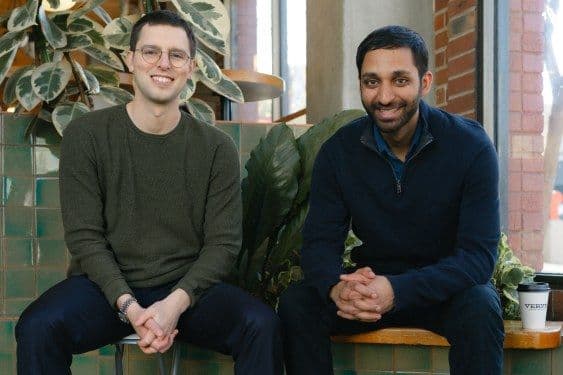
Enterprise resource planning (ERP) systems are often described as a company’s “central brain” because the software connects different departments — including finance, HR, and inventory — into a single database where everyone shares the same information. In recent years, a new crop of AI-powered ERP startups, such as Rillet and Campfire, has emerged hoping to replace legacy offerings like NetSuite. These companies claim that traditional ERPs are clunky, expensive, and time-consuming to implement. However, according to Doss co-founder and CEO Wiley Jones, many new AI ERPs lack robust inventory management, the process of ensuring that the data on physical goods remains synced with the accounting ledger. Doss claims to solve this by providing an AI-native inventory management layer that integrates with existing accounting systems, whether traditional ERPs or ones built by AI-based startups. On Tuesday, Doss announced that it raised a $55 million Series B co-led by Madrona and Premji Invest, with participation from Intuit Ventures. Other new and existing inventors in the round include Theory Ventures, General Catalyst, Contrary Capital, and Greyhound Capital. Doss, founded in 2022, originally focused on a core accounting product similar to those offered by AI-native startups like Rillet and Campfire. But last year, the startup decided instead of competing with these companies, “we would rather partner with them, and play a different game,” Jones told TechCrunch. Jones explained that AI-native ERP companies manage accounts receivable, accounts payable, and other finance functions, but most don’t offer procurement and inventory management that integrates with accounting workflows. “We’re building a lot of the traceability for the supply chain, but through the lens of plugging into a finance and accounting partner,” Jones said. The company’s main partners include Rillet and Campfire. Many clients also use Doss in conjuction with Intuit’s QuickBooks. “The reason that they work with us is that [physical goods management] is not something that they’re likely going to build as a core competency without putting in a lot of energy and effort,” Jones said. Doss’ core customer base consists of mid-market consumer brands, typically generating between $20 million and $250 million in top-line revenue. One such customer is Verve Coffee Roasters, a high-end specialty coffee brand. The startup sees itself as competing with traditional ERPs. But these players are not sitting ideal in the age of AI, either. NetSuite, for instance, has recently introduced its updated AI ERP. It also competes with other agentic procurement startups such asDidero. While Jones admits that selling two ERP systems, one for accounting and another for inventory management like Doss, “is a hard sell,” he says that legacy ERPs are so hard to implement that many customers are choosing to have two newer, AI-powered systems. “I think it’s going to be a very intense fight inside of mid-market that ultimately will be determined by whoever rebuilds their architecture to be most legible and usable for agents,” Jones said. Editor’s Note: The story corrected the list of Doss’ partners.

read more

Latest AI News

View All News →
There aren’t enough rockets for space data centers — Cowboy Space raised $275M to build them

There aren’t enough rockets for space data centers — Cowboy Space raised $275M to build them

The apparently insatiable demand for AI compute has data center entrepreneurs looking to the stars. There’s a key problem: There aren’t enough rockets to put data centers in orbit around Earth, and they’re too expensive. Most of the players are hoping that SpaceX’s Starship — expected to make its twelfth test flight as soon as this weekend— will solve the problem. But once the vehicle is operational it may be years before it is commercially available, given SpaceX’s internal satellite business. Thesame is truefor Blue Origin’s New Glenn rocket, which failed to deliver a satellite during its third launch in April. That leaves space data center schemes either targeting the mid 2030s, like Google Suncatcher, or preparing to start off doing edge processing tasks for space sensors, likeStarcloud. In theory, there’s a third way: “We’re standing up our own rocket program,” Baiju Bhatt, the CEO and founder of Cowboy Space Corporation, told TechCrunch. He expects the first launch before the end of 2028. Today, the company announced the closure of a $275 million Series B round at a post-money valuation of $2 billion, led by earlier backer Index Ventures, as a downpayment on that work. Breakthrough Energy Ventures, Construct Capital, IVP, and SAIC also participated. The company had previously raised $80 million from investors, including Index, Breakthrough Energy Ventures, Andreessen Horowitz, and New Enterprise Associates. Bhatt, a co-founder of online stock platform Robinhood, launched this startup in 2024 as Aetherflux, with plans to collect abundant solar energy in space and beam it down to Earth. The idea of space data centers led the company to pivot towards using its electricity while in orbit. Thepractical realitiesof that effort, in turn, led him to a rocket development program, and the company’s new name. Bhatt said he spoke to multiple launch providers to try and find a path where his company would only build satellites, but he couldn’t find enough launch capacity to truly scale an orbital data center business, or do so in a way where the unit economics could compete with terrestrial alternatives. "There's a lot of new rockets that are coming online, but as we look three, four years out, it's still very, very scarce, and I think that you're going to see a lot of the first party rocket providers actually specialize into their own payloads," Bhatt said. Of course, while bringing the rocket in-house is logical, it's also nuts. Only a handful of private companies in the West, mainly SpaceX, Rocket Lab and Arianespace, are consistently launching commercial rockets. Two others, Blue Origin and United Launch Alliance, have been struggling to drag their vehicles out of development hell for years. A number of startups, including Stoke Space, Firefly Aerospace, and Relativity Space, have worked for years and are still waiting to deliver operational systems. This evolution of the company will also bring Cowboy Space Corporation into direct competition with SpaceX and Blue Origin, the most advanced and well-funded players in the market. "The prize here, and the size of this market, is big enough that there's room for many players to succeed," Bhatt said "I see the demand for AI getting more and more acute, and I see the options on Earth getting more and more limited." One advantage, Bhatt argues, is the company's focus on this single market (data centers), and its unique design. Orbital rockets typically have a booster stage that flies the vehicle to the edge of space, and a second stage that carries the payload and delivers it to orbit. Cowboy Space plans to build its data centers directly into the second stage of its rocket. It's actually a bit of a throw-back: The first US satellite, Explorer 1, was built as the final stage of a rocket, filled with radio equipment and a few scientific instruments. Making the rocket purpose-built only to launch its data-center satellites should simplify the design process. The company expects each satellite to have a mass of 20,000 to 25,000 kilograms and to generate 1 MW of power for just under 800 onboard GPUs. That means its rocket would be slightly more powerful than the SpaceX's workhorse Falcon 9, though still smaller than its under-development Starship. Eventually, Bhatt says, he expects the booster to be reusable. Cowboy Space has hired veterans of the space industry, including former Blue Origin propulsion engineer Warren Lamont and former SpaceX launch director Tyler Grinne. The company also plans to build its own rocket engine, the most complex and expensive part of any launch vehicle. Cowboy Space is still working through key development needs, like facilities to test, manufacture and launch its rockets. The new vision comes with a new name for the startup, to emphasize its mission to "power humanity from the high frontier," although Bhatt admits "it gives me a reason to wear a cowboy hat and also grow this sick mustache."

1 hour ago

View

Digg tries again, this time as an AI news aggregator

Digg tries again, this time as an AI news aggregator

Digg is back from the dead. Again. Just months afterlaunching, therebootof Kevin Rose’s once-popular link-sharing siteshut down in March, as the company shifted course. Originally redesigned as acompetitorto the massive community forum site Reddit, the new Digg found that it wasn’t able to effectively manage the bot traffic invading its platform and hadn’t differentiated itself enough from the competition to make an impact. The startup laid off staff and said it was time to go back to the drawing board. Rose, a partner at True Ventures, returned to work full-time on a new version of Digg in April. On Friday evening, the founderprevieweda link to the newly redesignedDigg, which now looks nothing like a Reddit clone and more like the news aggregator it once was. a little project i've been hacking on:https://t.co/zTuwWy44lybugs expected. more topics soon. This time around, the site is focused on ranking news — specifically, AI news to start. In an email to beta testers, the company said the site’s goal is to “track the most influential voices in a space” and to surface the news that’s actually worth “paying attention to.” AI is the area it’s testing this idea with, but if successful, Digg will expand to include other topics. The email warned that the site was still raw and “buggy,” and was designed more to give users a first look than to serve as its public debut. On the current homepage, Digg showcases four main stories at the top: the most viewed story, a story seeing rising discussion, the fastest-climbing story, and one “In case you missed it” headline. Below that is a ranked list of top stories for the day, complete with engagement metrics like views, comments, likes, and saves. But the twist is that these metrics aren’t the ones generated on Digg itself. Instead, Digg is ingesting content from X in real-time to determine what’s being discussed, while also performing sentiment analysis, clustering, and signal detection to determine what matters most. As Roseremarked on X,when OpenAI CEO Sam Altman engages with a story about AI, it almost always sets off a chain reaction that includes deep discussion and propagation of that topic throughout X. The new Digg will be able to track that increased engagement. This might be something that’s interesting to data nerds, as it exposes the impact of X-based engagement with charts and graphs, and offers a way to track signal among what can, on X, often be a lot of noise. But it’s unclear whether there’s enough underlying value here for an everyday user, beyond seeing that yes, a@samatweet can make something go viral. The site also ranks the top 1,000 people involved in AI, as well as the top companies and the top politicians focused on AI issues. For those who don’t have time to spend on X tracking breaking AI news, Digg could prove a useful resource. But it’s not clear why people would regularly turn to Digg over their preferred news app, RSS reader, or even their X “For You” feed, if they wanted to catch up on what’s trending — especially because there isn’t currently any discussion happening on Digg’s site itself. Digg may also struggle when it moves on to other topics, as AI news is one of the few areas where discussion still heavily takes place on X. Other verticals don’t have the same traction, especially after Musk’s takeover of the site formerly known as Twitter gave rise to an ecosystem of competitors, which now includes Meta’s creator-focused Threads. Many non-tech-related discussions are now happening off X, or off the public internet entirely. However, if Digg does end up gaining steam, it could serve as a useful source of website traffic to publishers whose businesses have been decimated bydeclining clicksthanks to Google’s changing algorithms andthe impact of AI Overviews, the AI-generated summaries Google displays atop search results, which often answer users’ questions before they ever click through to a website.

1 hour ago

View

OpenAI Launches $4 Billion Deployment Company Backed by Top Investors

OpenAI Launches $4 Billion Deployment Company Backed by Top Investors

The Deployment Company will function as a standalone business unit while remaining closely connected to OpenAI’s research and product teams.

1 hour ago

View

Delhi-NCR Raises $1.7 Billion in Q1 2026 Driven by Large Funding Rounds

Delhi-NCR Raises $1.7 Billion in Q1 2026 Driven by Large Funding Rounds

Gurugram dominated the funding landscape, attracting 52% of all capital raised in the region, equivalent to $876 million.

5 hours ago

View