AI NewsBefore quantum computing arrives, this startup wants enterprises already running on it

Before quantum computing arrives, this startup wants enterprises already running on it

1:03 PM IST · March 13, 2026
Before quantum computing arrives, this startup wants enterprises already running on it

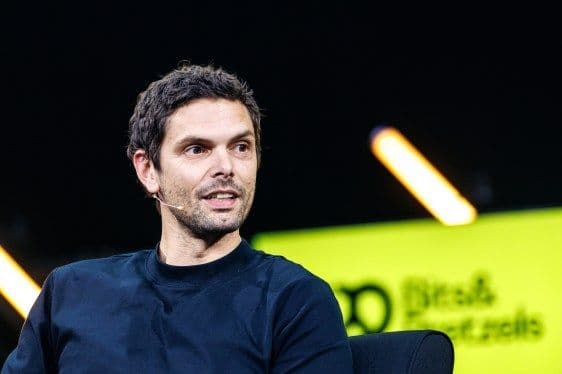
Eighteen months after selling his startup to chipmaker AMDfor $665 million, Finnish entrepreneur Peter Sarlin hasleft his role as CEOof the unit now known as AMD Silo AI. He is now chairman at two new ventures: physical AI labNestAI, andQuTwo, an AI startup aimed at helping companies prepare for the era of quantum computing Currently fully funded by Sarlin’s family office,PostScriptum, QuTwo describes itself as “an AI lab for the quantum era.” Rather than waiting for quantum computing to mature, however, it is already working with enterprise customers — including European fashion retailer Zalando, with which it is developing what the two companies call “lifestyle agents,” AI tools designed to go beyond product search and proactively suggest products and experiences. QuTwo is built on the premise that AI is hitting an efficiency wall that quantum computing may eventually help solve. But the company is not betting on when that will happen, Sarlin told TechCrunch. Instead, the startup is building QuTwo OS as an orchestration layer that allows companies to shift from classical to quantum computing — making use of hybrid computing along the way. Sarlin invested in Finnish quantum companiesIQMand QMill through PostScriptum, and is one of a growing number of investors who believe it willeventually outperform classical computersin a wide range of industry applications while easing AI’s energy demands. But he also thinks that initial use cases will require mixed hardware environments, and that enterprises would rather focus on their business problems while QuTwo OS takes care of the routing. In that respect, the potential advantage of the middle ground known as “quantum-inspired” computing is that it is already viable today, because it uses classical hardware while simulating quantum behavior, working around the hurdles that still hinder quantum hardware. Meanwhile, QuTwo OS is designed to be flexible, supporting quantum or non-quantum algorithms and chips alike. QuTwo’s team brings experience on both sides of the quantum-AI divide. On the quantum side, there’s IQM cofounder Kuan Yen Tan and board member Antti Vasara, also chair at SemiQon, a Finnish semiconductor startup focused on quantum chips. The enterprise side is equally represented, by Sarlin himself and Kaj-Mikael Björk, one of his former cofounders at Silo AI. Pekka Lundmark, the former CEO of Finnish telecom giant Nokia, also joined QuTwo’s board. Across both areas, the team counts over 30 quantum and AI scientists, and Sarlin is clear where the company stands. “We’re building for the quantum world, but QuTwo is an AI company,” he said, meaning that QuTwo is “pushing AI workloads from classical to quantum.” This also means that its customer base could be quite broad. Beyond Zalando, QuTwo also launched a joint quantum AI research initiative with OP Pohjola, a major Finnish financial services provider. From the outset, QuTwo has been commercially minded and already has “large design partnerships which are in the tens of millions,” Sarlin said. Design partnerships — in which a vendor co-develops its product alongside enterprise customers — are a way for QuTwo to learn what those customers expect as it builds its product. They are also a bet from enterprises looking to establish early footing when and if quantum computing does arrive.

read more

Latest AI News

View All News →
GM just laid off hundreds of IT workers to hire those with stronger AI skills

GM just laid off hundreds of IT workers to hire those with stronger AI skills

General Motors has laid off more than 10% of its IT department, or about 600 salaried employees — in a deliberate skills swap: clearing out workers whose expertise no longer fits and making room for some with AI-focused backgrounds. GM confirmed to TechCrunch that it had conducted layoffs; they were firstreportedby Bloomberg News. In an emailed statement, the automaker framed the layoffs as a means to prepare it for the future, without providing specifics. “GM is transforming its Information Technology organization to better position the company for the future,” the company said. These layoffs are not all permanent headcount reductions. A person familiar with the layoffs told TechCrunch that the company is still hiring people for roles in its IT department, but for different skills. The most sought-after capabilities are AI-native development, data engineering and analytics, cloud-based engineering, and agent and model development, prompt engineering, and new AI workflows. In practical terms, GM is looking for people who know how to build with AI from the ground up — designing the systems, training the models, and engineering the pipelines — not just use AI as a productivity tool. GM has laid off white-collar employees in several departments over the past 18 months, as it focuses its resources on high-priority initiatives, including AI. In August 2024, for example, the company cut about1,000 software workers. The software workforce has undergone significant change since Sterling Anderson — co-founder of the autonomous trucking startup Aurora and a veteran of the autonomous vehicle industry — was hired in May 2025 aschief product officer. Last November,three top executivesleft the company’s software team as Anderson pushed to consolidate GM’s disparate technology businesses into one organization: Baris Cetinok, senior vice president of software and services product management; Dave Richardson, senior vice president of software and services engineering; and Barak Turovsky, a former VP at Cisco who spent just nine months as GM’s chief AI officer. GM has since moved to fill the gap with new AI-focused hires. It hired Behrad Toghi, who previously worked at Apple, in October as AI lead. The company also brought on Rashed Haq as its vice president of autonomous vehicles. Haq spent five years at Cruise — the self-driving vehicle company acquired and later shuttered by GM — as its head of AI and robotics. For the industry, GM's restructuring is a signal of what enterprise AI adoption actually looks like in practice -- not just adding AI tools on top of existing teams, but deliberately rebuilding the workforce from the ground up. The specific capabilities it's hiring for -- agent development, model engineering, AI-native workflows -- point directly at where large-enterprise demand is heading.

3 hours ago

View

Thinking Machines wants to build an AI that actually listens while it talks

Thinking Machines wants to build an AI that actually listens while it talks

Thinking Machines Lab, the AI startup founded last year by former OpenAI CTO Mira Murati, on Monday announced something calledinteraction models, which, at its essence, sounds like AI that can interrupt you. Right now, every AI model you’ve ever used works the same way. You talk, it listens. It responds, you listen. Thinking Machines is trying to change that by building a model that processes your input and generates a response at the same time, so it’s more like a phone call than a text chain. The technical term for this is “full duplex,” and the company claims its model, TML-Interaction-Small, responds in 0.40 seconds, which is roughly the speed of natural human conversation and significantly faster than comparable models from OpenAI and Google. Still, this is a research preview, not a product. The company isn’t releasing it to the public yet. A “limited research preview” is coming in the next few months, it says, with a wider release set for later this year. So what to make of it? We’re not sure. Thebenchmarksare impressive and the underlying idea — that interactivity should be native to a model, not bolted on — is definitely interesting. Whether the real-world experience lives up to the technical claims is something we won’t know until people can actually use it.

3 hours ago

View

Ilya Sutskever Reveals $7 Bn OpenAI Stake While Accusing Sam Altman of Dishonesty

Ilya Sutskever Reveals $7 Bn OpenAI Stake While Accusing Sam Altman of Dishonesty

Sutskever also confirmed that after Altman’s temporary ouster, OpenAI board members held discussions with Anthropic regarding a possible merger.

3 hours ago

View

Riding an AI rally, Robinhood preps second retail venture IPO

Riding an AI rally, Robinhood preps second retail venture IPO

Just two months after listing its first venture fund on the stock market, Robinhood is preparing to launch a second. The company hasfiled aconfidential registrationfor RVII, a standard regulatory step that allows it to work through the approval process before making details public. Unlike its first fund, which currently holds stakes in10 late-stage companies— Airwallex, Boom, Databricks, ElevenLabs, Mercor, OpenAI, Oura, Ramp, Revolut, and Stripe— RVII will cast a wider net, investing in growth-stage and early-stage startups.It’s a meaningful distinction, given that early-stage startups are younger and carry more risk but also offer the potential for greater returns. The fundraising target for RVII has not yet been set, the company said in ablog post. For its inaugural fund, Robinhood sought to raise $1 billion but ultimately fellseveral hundred million shortof that goal. Despite the shortfall, the first fund has performed strongly. RVI — the ticker for Robinhood’s first fund, which trades on the NYSE (New York Stock Exchange) — debuting on the NYSE at $21 a share in early March and has since more than doubled, closing on Monday at $43.69. Market enthusiasm for the AI prospects of the fund’s underlying startups has likely fueled the stock’s rise. The premise behind both funds addresses a longstanding gap in who gets to invest in startups. Under federal rules, only “accredited” investors — those with a net worth exceeding $1 million or annual income above $200,000 — can put money into private companies. That has historically locked ordinary investors out of the earliest and most lucrative stages of a company’s growth. RVI and now RVII, are designed to change that, letting anyone invest in a portfolio of private startups through a regular brokerage account. “You can think of [Robinhood Ventures] as a publicly traded venture capital firm with daily liquidity. No accreditation requirements and no carry,” Robinhood CEO Vlad Tenev said in aninterviewat The Wall Street Journal’s Future of Everything conference last week. Daily liquidity means shares can be bought or sold any day the market is open, unlike traditional VC funds, where capital is locked up for years. No carry means Robinhood doesn’t take a percentage of investment profits, as conventional venture firms typically do. Over the past few years, the most valuable AI startups have gone from early bets to companies worth tens or hundreds of billions of dollars, and almost all of that appreciation has happened in the private markets, out of reach for most investors. Tenev's longer-term vision goes further still. “The aspiration is, if you’re a company raising a seed round and a Series A round — so, just first capital — retail should be a big chunk of that round, much like it now is in the public markets,” Tenevsaid at the conference. “And we should let those people in at the ground floor, so that they can actually benefit from this potential appreciation that’s increasingly happening in the private markets.” If that vision takes hold, it could fundamentally change how startups raise their earliest capital, with retail investors eventually sitting alongside venture firms, including in the earliest rounds, where the biggest returns are often made, a whole lot of money is lost, as well.

7 hours ago

View