AI Styling Studio — Infinite avatar looks from just 1 photo.Try it now.

AI NewsAt TechCrunch Disrupt 2026: Databricks’ co-founder on what kills enterprise AI deals

At TechCrunch Disrupt 2026: Databricks’ co-founder on what kills enterprise AI deals

11:07 PM IST · May 28, 2026
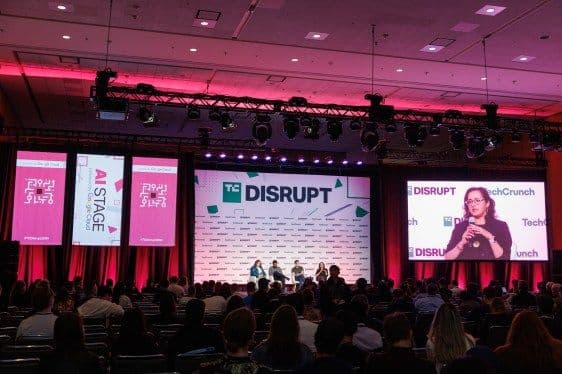
At TechCrunch Disrupt 2026: Databricks’ co-founder on what kills enterprise AI deals

Enterprise organizations are not rejecting AI. They are rejecting operational instability. That is the shift many founders still misunderstand — and it is becoming one of the defining realities separating enterprise AI companies that scale from the ones that stall after early momentum. For the last several years, AI startups benefited from a market driven by experimentation. A strong demo, an impressive model, and a powerful vision were often enough to generate enterprise interest, pilot programs, and investor enthusiasm. But enterprise AI is entering a different phase now, one where enterprises are no longer evaluating whether AI is exciting. They are evaluating whether it is safe to deploy broadly. AtTechCrunch Disrupt 2026,taking place October 13–15 at Moscone West in San Francisco,Arsalan Tavakoli-Shiraji, co-founder and SVP of field engineering at Databricks, will unpack that shift during his AI Stage session, “The Enterprise Isn’t Broken. Your Assumptions About It Are.” Disrupt will bring together 10,000+ founders, investors, and operators to explore the technologies and operational pressures changing how companies are built and scaled. The three-day event will feature 250+ sessions across six stages, led by tech leaders directing the industry today. Explore the sessions appearing on the Disrupt AI Stage.Ticket savings of up to $410 end on May 29 at 11:59 p.m. PT.Register here. The enterprise AI market is full of successful pilots that never became real deployments. Not because the technology failed. But because the organization could not absorb the operational consequences of adopting it. Now the reality founders need to face is that startup AI deals rarely die because the model underperformed. They die because the enterprise lost confidence in what the deployment would require. That is the gap Tavakoli-Shiraji’s session is designed to explore. Most enterprises are not simply evaluating whether an AI product works. They are evaluating: An AI product can perform exceptionally well in a controlled environment and still fail commercially if its deployment creates instability within the business. That distinction is important to founders because many AI startups are still optimizing for the wrong outcome. They are building for initial excitement rather than long-term operational adoption. And enterprises are becoming far more disciplined about recognizing the difference. Register for Disrupt to hear how enterprise AI leaders evaluate what actually survives beyond the pilot phase.Lock in your ticket savings of up to $410when you register by May 29 at 11:59 p.m. PT. The AI startups gaining traction inside large organizations increasingly share one thing in common: They reduce uncertainty. They integrate more cleanly into existing systems. They create less workflow friction. They are easier to govern, easier to explain internally, and easier for organizations to trust over time. That sounds less exciting than breakthrough demos or model benchmarks. But it is quickly becoming the difference between AI startups that generate attention and those that generate durable revenue. The market is maturing. Enterprise buyers are asking different questions now: Those concerns are no longer secondary. In many organizations, they have become core to the buying decision itself. For AI founders selling into the enterprise, this session breaks down what actually drives adoption after the pilot phase ends.Check out the session detailsandget your $410 ticket savingsto learn what to prioritize to gain traction with enterprise AI deals. Tavakoli-Shiraji brings an unusually relevant perspective to this conversation because his background spans both enterprise strategy and deeply technical systems architecture. Before joiningDatabricks, he was an associate principal at McKinsey & Company, advising enterprises, technology vendors, and public-sector organizations on cloud computing, next-generation IT, and enterprise transformation strategy. He also earned a PhD in computer science from UC Berkeley, focused on networking and distributed systems. That lens is valuable to startups because enterprise AI success increasingly depends on more than strong engineering alone. Founders now need to understand how technical systems interact with organizational behavior, infrastructure realities, procurement processes, governance concerns, and operational risk. The startups that succeed in enterprise AI over the next several years may not necessarily be the ones with the most advanced models. They may be the ones that best understand how enterprises actually absorb change. That is the kind of operational pressure that Tavakoli-Shiraji and other speakers on theAI Stage at Disruptwill explore. Presented by Google Cloud, the stage examines how AI agents and generative AI are reshaping SaaS, enterprise adoption, software economics, security, and operational infrastructure — including Tavakoli-Shiraji’s session on why enterprise AI success increasingly depends on operational trust rather than simply technical performance. Across the stage, founders will learn how and why the focus is shifting away from AI novelty and toward the real-world challenges of deploying, governing, and scaling AI systems inside real organizations. Explore the Disrupt agendaand learn how founders, investors, and enterprise operators are managing the next phase of AI adoption.Register by May 29 at 11:59 p.m. PT to save up to $410 on your passes.

read more
Latest AI News

View All News →
2 days left: Lock in ticket savings of up to $410 to TechCrunch Disrupt 2026

2 days left: Lock in ticket savings of up to $410 to TechCrunch Disrupt 2026

Early Bird pricing ends tomorrow, May 29, at 11:59 p.m. PT. After that, prices forTechCrunch Disrupt 2026go up. Miss this, and you’ll be paying more for the same access to one of the most anticipated tech epicenters of the year.Register nowto secure discounts of up to $410 on your pass, or up to 30% ongroup passes. If you want to raise capital, hire top talent, launch your startup, or discover your next portfolio company, missingDisruptfrom October 13–15 at San Francisco’s Moscone West is not an option. Here’s what you’ll gain by attending: Founder Pass: Accelerate growth with the right insights, tools, and connections. Meet investors aligned with your startup. Investor Pass: Discover standout startups and expand your portfolio with curated access. Use matchmaking tools to make every conversation count. This window to the lowest ticket rates of the year is closing at 11:59 p.m. PT tomorrow, May 29.Register nowto secure your ticket with up to a $410 discount. Or save up to 30% withcommunity passesof 4+.

2 hours ago

View

Visa invests in Replit to power agentic payments for developers

Visa invests in Replit to power agentic payments for developers

Visa has announced an undisclosed investment in AI coding platform Replit. The two companies are also exploring how to integrate Visa’s payment products into Replit, so that developers — and the AI agents they build — can accept payments directly from customers without leaving the platform. Visa added that more than 1,000 of its employees have been using Replit for prototyping and development. As part of the partnership, the companies are exploring how developers on Replit can use Visa’s suite for AI-powered payments, called Visa Intelligent Commerce, as well as Visa’s Trusted Agent Protocol — a system that allows AI agents to securely identify themselves by sharing information like their intent and relevant customer details, so that payments made by agents can be verified and trusted. All of these projects are in an exploratory stage, and the companies haven’t formally announced any joint products. The investment reflects a broader race to establish the infrastructure for so-called agentic payments — a world in which AI agents buy and sell things on users’ behalf. Besides Replit and Visa, other tech companies are also moving quickly in this space. Retail investing platform Robinhood now wants people touse agents to trade, while Google wants users to deployagents for shopping. “Over the last few months, our enterprise traction has been growing, and Visa coming on board underscores our mission of making coding available to anyone in a secure and robust manner,” Amjad Masad, CEO and founder of Replit, said in a statement. Replit is also launching self-serve enterprise access, allowing companies to sign contracts worth up to $200,000 without talking to a salesperson. The tier offers enterprise-grade compliance and controls, including SSO — single sign-on, a system that lets employees access multiple tools with one set of credentials — audit logs, and advanced permissions. “Our continued customer and partner additions in the enterprise, coupled with our new self-serve program, bring us closer to a world where any team can go from idea to production-ready software quickly and securely,” Masad added. As demand for so-called vibe-coding platforms has shot up, valuations of startups like Replit, Cursor, and Lovable have risen rapidly, along with investor interest. In September of last year, Replit hit the$3 billionvaluation mark. Six months later, in March, the company raised $400 million in a Series D led by Georgian Partners at a$9 billionvaluation — tripling its valuation in under six months. In May at TechCrunch’sStrictlyVC event in San Francisco, Masad said that Replit’s churn is very low, and customers are sticking around. “Churn is very, very low, and net retention is incredibly high — 300% in some cases. What we actually hear from customers is that when engineers get nervous and try to rebuild an app into their own stack, they often make it worse. Once enterprises get comfortable with the full Replit stack — especially when we set up a single-tenant environment for them — they keep the apps on Replit,” he said.

2 hours ago

View

YouTube adds new podcast features, including an AI recommendation tool and ‘Auto speed’

YouTube adds new podcast features, including an AI recommendation tool and ‘Auto speed’

YouTubeannouncedon Thursday it’s introducing new podcast features for Premium users, including an AI-powered recommendation tool, an “Auto speed” setting, and a new on-the-go listening mode. The update signals YouTube’s ongoing efforts to compete with other platforms for podcast audiences, especially as streaming giantNetflixis investing heavily in video podcasts. Additionally, by focusing on personalized discovery and hands-free listening features, the company also appears to be targeting users who consume podcasts on audio-first apps like Spotify and Apple Podcasts. The Google-owned platform’s “Ask Music” feature already lets Premium users generate personalized radio stations and playlists, and now users will be able to get podcast recommendations based on genres, their current mood, or shows they already enjoy. Users will also get access to a new “Auto speed” feature designed to make listening more efficient by intelligently adjusting playback speed during slower speech or information-dense segments, creating a more streamlined experience without sacrificing comprehension. While you can already adjust your playback speed, it can be inconsistent if the hosts are speaking at different speeds or changing their tone. With this new feature, listeners will be able to listen to content at a speed that addresses these changes throughout the conversation. The new on-the-go mode gives Premium users access to listener-friendly controls designed for activities like running, commuting, or multitasking. Users will get access to quick controls like skipping forward or backward, or jumping to the next episode. YouTube says the feature is designed to make it easier to get the most out of background playback. Auto speed and on-the-go mode are now available for Premium users on Android and are coming to iOS in the coming months. YouTube says Premium users watched over 800 million hours of podcasts in April 2026, and that YouTube Podcasts has over 1 billion monthly active users. With these new features, the company is looking to both retain and grow these numbers.

2 hours ago

View

At TechCrunch Disrupt 2026: Databricks’ co-founder on what kills enterprise AI deals

At TechCrunch Disrupt 2026: Databricks’ co-founder on what kills enterprise AI deals

Enterprise organizations are not rejecting AI. They are rejecting operational instability. That is the shift many founders still misunderstand — and it is becoming one of the defining realities separating enterprise AI companies that scale from the ones that stall after early momentum. For the last several years, AI startups benefited from a market driven by experimentation. A strong demo, an impressive model, and a powerful vision were often enough to generate enterprise interest, pilot programs, and investor enthusiasm. But enterprise AI is entering a different phase now, one where enterprises are no longer evaluating whether AI is exciting. They are evaluating whether it is safe to deploy broadly. AtTechCrunch Disrupt 2026,taking place October 13–15 at Moscone West in San Francisco,Arsalan Tavakoli-Shiraji, co-founder and SVP of field engineering at Databricks, will unpack that shift during his AI Stage session, “The Enterprise Isn’t Broken. Your Assumptions About It Are.” Disrupt will bring together 10,000+ founders, investors, and operators to explore the technologies and operational pressures changing how companies are built and scaled. The three-day event will feature 250+ sessions across six stages, led by tech leaders directing the industry today. Explore the sessions appearing on the Disrupt AI Stage.Ticket savings of up to $410 end on May 29 at 11:59 p.m. PT.Register here. The enterprise AI market is full of successful pilots that never became real deployments. Not because the technology failed. But because the organization could not absorb the operational consequences of adopting it. Now the reality founders need to face is that startup AI deals rarely die because the model underperformed. They die because the enterprise lost confidence in what the deployment would require. That is the gap Tavakoli-Shiraji’s session is designed to explore. Most enterprises are not simply evaluating whether an AI product works. They are evaluating: An AI product can perform exceptionally well in a controlled environment and still fail commercially if its deployment creates instability within the business. That distinction is important to founders because many AI startups are still optimizing for the wrong outcome. They are building for initial excitement rather than long-term operational adoption. And enterprises are becoming far more disciplined about recognizing the difference. Register for Disrupt to hear how enterprise AI leaders evaluate what actually survives beyond the pilot phase.Lock in your ticket savings of up to $410when you register by May 29 at 11:59 p.m. PT. The AI startups gaining traction inside large organizations increasingly share one thing in common: They reduce uncertainty. They integrate more cleanly into existing systems. They create less workflow friction. They are easier to govern, easier to explain internally, and easier for organizations to trust over time. That sounds less exciting than breakthrough demos or model benchmarks. But it is quickly becoming the difference between AI startups that generate attention and those that generate durable revenue. The market is maturing. Enterprise buyers are asking different questions now: Those concerns are no longer secondary. In many organizations, they have become core to the buying decision itself. For AI founders selling into the enterprise, this session breaks down what actually drives adoption after the pilot phase ends.Check out the session detailsandget your $410 ticket savingsto learn what to prioritize to gain traction with enterprise AI deals. Tavakoli-Shiraji brings an unusually relevant perspective to this conversation because his background spans both enterprise strategy and deeply technical systems architecture. Before joiningDatabricks, he was an associate principal at McKinsey & Company, advising enterprises, technology vendors, and public-sector organizations on cloud computing, next-generation IT, and enterprise transformation strategy. He also earned a PhD in computer science from UC Berkeley, focused on networking and distributed systems. That lens is valuable to startups because enterprise AI success increasingly depends on more than strong engineering alone. Founders now need to understand how technical systems interact with organizational behavior, infrastructure realities, procurement processes, governance concerns, and operational risk. The startups that succeed in enterprise AI over the next several years may not necessarily be the ones with the most advanced models. They may be the ones that best understand how enterprises actually absorb change. That is the kind of operational pressure that Tavakoli-Shiraji and other speakers on theAI Stage at Disruptwill explore. Presented by Google Cloud, the stage examines how AI agents and generative AI are reshaping SaaS, enterprise adoption, software economics, security, and operational infrastructure — including Tavakoli-Shiraji’s session on why enterprise AI success increasingly depends on operational trust rather than simply technical performance. Across the stage, founders will learn how and why the focus is shifting away from AI novelty and toward the real-world challenges of deploying, governing, and scaling AI systems inside real organizations. Explore the Disrupt agendaand learn how founders, investors, and enterprise operators are managing the next phase of AI adoption.Register by May 29 at 11:59 p.m. PT to save up to $410 on your passes.

2 hours ago

View

Submit your Tool

Submit AI Tools – The ultimate platform to discover, submit, and explore the best AI tools across various categories.

PoweredByAI.app is an AI Tools Directory helping individuals, businesses, and creators discover the best AI tools for writing, coding, design, productivity, and more.

© 2026 , Product of011BQ. All rights reserved.