AI NewsApple’s WWDC 2026 Teaser Hints at Siri Overhaul With New UI, AI Features: Report

Apple’s WWDC 2026 Teaser Hints at Siri Overhaul With New UI, AI Features: Report

10:03 AM IST · April 20, 2026

Apple’s WWDC 2026 Teaser Hints at Siri Overhaul With New UI, AI Features: Report

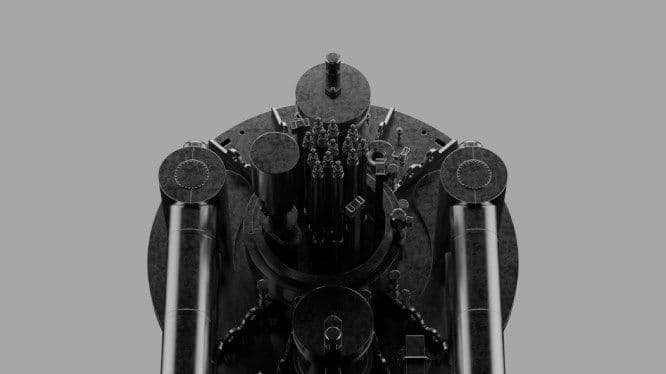
Apple is said to have already teased a major overhaul for Siri ahead of WWDC 2026, which is scheduled for later this year. According to a seasoned journalist, early hints point towards a redesigned interface and deeper AI integration in iOS 27. The Cupertino-based tech giant's official teaser artwork for this year's developer conference has drawn attention for its visual elements, which reportedly offer clues about the next evolution of its voice assistant, although Apple has yet to confirm any details.

read more

Latest AI News

View All News →
Apple’s WWDC 2026 Teaser Hints at Siri Overhaul With New UI, AI Features: Report

Apple’s WWDC 2026 Teaser Hints at Siri Overhaul With New UI, AI Features: Report

Apple is said to have already teased a major overhaul for Siri ahead of WWDC 2026, which is scheduled for later this year. According to a seasoned journalist, early hints point towards a redesigned interface and deeper AI integration in iOS 27. The Cupertino-based tech giant's official teaser artwork for this year's developer conference has drawn attention for its visual elements, which reportedly offer clues about the next evolution of its voice assistant, although Apple has yet to confirm any details.

2 hours ago

View

OpenAI’s existential questions

OpenAI’s existential questions

OpenAI has been all over the news recently, whether that news is aboutacquisitions,competition with Anthropic, orbigger debates about AI’s impact on society. On the latest episode ofTechCrunch’s Equity podcast, Kirsten Korosec, Sean O’Kane, and I did our best to round up all the latest OpenAI news. While the company’s latest acquisitions seem to be classic acqui-hires, Sean suggested they also address “two big existential problems that OpenAI is trying to solve right now.” First, with the team behind personal finance startup Hiro, the company may be hoping to  come up with a product that has “more hooks than just a chatbot, and maybe something worth paying more for.” And with new media startup TBPN, OpenAI could be looking to “better shape its image in the public eye, which lately has not been great.” Read a preview of our conversation, edited for length and clarity below. Anthony:[We have] two deals that are worth mentioning, one is thatOpenAI acquired this personal finance startup called Hiro. And that comes after another deal that was literally announced when we were recording our last episode of Equity, so we didn’t get to talk about it:OpenAI had also acquired TBPN— a business talk show, like a new media company. And I think both of these deals are pretty small compared to the scale of OpenAI. These are not things that people expect to really change the course of their business or anything like that, but they’re interesting because it suggests that there’s still this [attitude of,] “Let’s try out different things.” Especially [with] the TBPN deal […] particularly at this time when it feels like OpenAI, from all the reporting we’re reading, is also trying to really refocus on making ChatGPT and its GPT models really competitive in an enterprise context with programmers. Is running a tech talk show, should that really be on the to-do list? Kirsten:No, this should not be on the to-do list. That’s it. I do want to mention Hiro because to me, that’s an interesting one, because Julie Bort, our venture editor, super talented, she wrote about this and was I think the first to write about it. She dug in a little bit and basically this looks like an acqui-hire. The company is folding. They basically said, “By this date, you won’t be able to access this anymore.” This is a personal finance startup. And they only launched two years ago. So this absolutely is about getting talent on board. So I’m very curious to see if OpenAI is going to be just absorbing them into the ether at OpenAI, or if they’re actually interested in some sort of personal finance product that they want to work on. To me, it’s not really clear. Sean:I think you look at both of these as acqui-hires to a certain extent. I mean, the TBPN acquisition, allegedly they are going to retain their editorial independence on the show that they make every day. And all respect to those guys who’ve put that out there and gotten it off the ground so quickly and grown it into what it has become. I think any person who follows the media should have a healthy dose of skepticism that when you acquire something like that and you put the people who make the show under the org of the public policy people and comms or marketing adjacent people higher up at the company making the acquisition, that you could have good questions about whether or not saying “editorial independence” is enough. It’s not an incantation that just works. But you know, what’s interesting to me about these two, while they are similar in their acqui-hire-ness, I think they both represent two major problems that OpenAI is facing. One is Hiro. OpenAI has a very successful product in ChatGPT. As far as whether or not that will actually ever make them enough money to become a sustainable business that’s not raising the largest private rounds in the world, ever, to keep things going, is a big question. And they also seem to be struggling to keep up on the enterprise side of things where the real money seems to be, so bringing in a team like this seems like taking a shot at, “What else can we do?” The guy who founded Hiro seems to have a serial entrepreneur streak of creating consumer apps, and so this seems to me like a bet on them being able to come up with something else that may have more hooks than just a chatbot, and maybe something worth paying more for. And then TBPN is an acquisition made to help better represent what the company does and better shape its image in the public eye, which lately has not been great and certainly is under more questions now than just a few weeks ago, because Ronan Farrow justled a report at The New Yorkerthat dropped suspiciously right around the time that this and a couple other announcements from OpenAI came out last week. I think those are two big existential problems that OpenAI is trying to solve right now. Kirsten:So the thing that you didn’t say is, there’s Anthropic kind of looming in — not in the shadows, I mean, they’re very much taking up a lot of space here — but they’re having a lot of success on the enterprise side of things. It feels like these guys are competitors and they also feel like very different companies in a lot of ways. Anthony, I’m wondering if you see them as direct competition to OpenAI? Or [are they] just finding their stride in enterprise and in a way, these two companies are clearly going to coexist and they’re really not directly competing with each other — maybe on talent, but not necessarily as we initially thought of them? Anthony:I think they’re directly competing with each other. There’s definitely a scenario where if AI as an industry, as a technology, is as successful as its proponents hope for, they could both be very successful companies, they could just be the one and two. And the success of one does not necessarily mean that the other will just fade into obscurity. And again, none of this is official, but there’s just been a lot of reporting around how it seems like OpenAI, more than anyone, is obsessed with and upset about Anthropic’s rise. Our reporter Lucas [Ropek], he dida great piece over the weekendabout the HumanX conference, where he was talking to everyone there and they’re sort of like, “Yeah, ChatGPT is fine, too,” but like they were all about Claude Code. And I think that is exactly what OpenAI is worried about. Because again, in theory, there could be many other opportunities for generative AI, but it feels like the big growth area, the area where the most money is and where they could at least see a path to having a sustainable business in the future, is in these enterprise and coding tools. Loading the player…

6 hours ago

View

The 12-month window

The 12-month window

In a recent episode of “No Priors” — the excellent podcast co-hosted by AI investors Sarah Guo and Elad Gil — Gil made a point about exit timing that’s undoubtedly familiar to founders who’ve spent time with him but seems particularly useful in this moment of go-go dealmaking. For most companies, Gil said, there’s roughly a 12-month period where the business is at its peak value, “and then it crashes out.” The companies that capture generational returns are often the ones where someone spies that moment instead of assuming the good times will get even better. Lotus, AOL, and Mark Cuban’s Broadcast.com all sold at or near the top, and all are held up by Gil as outfits that foresaw what was coming and smartly pulled the ripcord. To catch that window, Gil offered a practical suggestion: pre-schedule a board meeting once or twice a year specifically to discuss exits. If it’s a standing calendar item, it drains the emotion out of the equation. This matters more now than it might have a few years ago. A lot of AI startups exist partly because the foundation models haven’t expanded into their category yet. But as many founders — like Deel CEO Alex Bouaziz –have jokingly begun to acknowledge, that won’t last forever. Oh great and powerful@DarioAmodei– builder of minds, father of Claude. I humbly request you leave payroll to us at Deel.We are but simple folk who process paystubs and chase compliance deadlines. But if you do come for us, call me first 🙏 As Gil put it: “As you see shift[s] in differentiation and defensibility and all the rest, it’s a good time to ask, ‘Hey, is this my moment? Are these next six months when I’m going to be the most valuable I’ll ever be?’”

10 hours ago

View

TechCrunch Mobility: Uber enters its assetmaxxing era

TechCrunch Mobility: Uber enters its assetmaxxing era

Welcome back to TechCrunch Mobility, your hub for the future of transportation and now, more than ever, how AI is playing a part. To get this in your inbox, sign up here for free — just clickTechCrunch Mobility! A few weeks ago, I wrote about howUberseemed to beeverywhere, all at oncein the emerging autonomous vehicle technology sector. The Financial Times has now put a number on it. The FT calculated that Uber has committedmore than $10 billionto buying autonomous vehicles and taking equity stakes in the companies developing the tech, according to public records and discussions with folks behind the scenes. About $2.5 billion of that is in direct investments, with the remaining $7.5 billion to be spent on buying robotaxis over the next few years, the outlet reported. We’ve reported on Uber’s numerous investments and deals with autonomous vehicle companies across drones, robotaxis, and freight. Some of its investments includeWeRide,Lucid and Nuro,Rivian, andWayve. This rather large number (and particularly that $7.5 billion) got me thinking about another transformative era in Uber’s history and how it has visited these asset-heavy shores before. Uber might have started with a plan to be asset light, but for a brief period it did quite the opposite. Uber went on a moonshot spree between 2015 and 2018. It launched electric air taxi developer Uber Elevate and the in-house autonomous vehicle unit Uber ATG, which would be boosted by itsacquisition of Ottoin 2016. It also snapped upmicromobility startup Jumpin 2018. And then in 2020, Uber pulled the asset-heavy rip cord, ostensibly leaving all of those moonshots behind. Ubersold Uber ATGto Aurora,Jump to Lime, andElevate to Joby Aviation. But it didn’t completely divest; it kept equity stakes in all of them. Uber is now entering into a new and different asset-heavy era. It’s not plunking down millions, or even billions, to develop the technology in-house, although I’m sure folks there would be quick to pipe up that there is always R&D happening over at Uber. Instead, it appears to be focused on owning (or perhaps leasing) the physical assets. That could mean interesting line items on Uber’s balance sheet in the future. Owning fleets of robotaxis built byothercompanies might not have been the original vision of Uber, or its former CEO Travis Kalanick, who has said the companymade a mistakewhen it abandoned its AV development program. But this new approach could still get it to the same end point. Earlier this month, I interviewedEclipsepartnerJiten Behlabout the venture firm’s new$1.3 billion fundand where that money might be headed. The firm, as I wrote, intends to incubate more startups (e.g., it was behind theRivian spinout Also). Behl wouldn’t give me details, only stating, “We’re definitely working on a couple of really cool ideas.” He also said Eclipse is particularly interested in startups that work across enterprises. Thanks to one little bird and some document diving by senior reporter Sean O’Kane, it looks like a seed round announcement is imminent for a San Francisco-based startup working on an autonomous hauler that I’ve been told doesn’t have a driver cab. This sounds similar to what Einride has built, but since we haven’t seen it, we’ll have to wait. The company’s roster isn’t big, but it is chock-full of Silicon Valley tech elite, including a founder who was at Uber ATG, Pronto, and Waabi. Stay tuned for more. Got a tip for us? Email Kirsten Korosec [email protected] my Signal at kkorosec.07, or email Sean O’Kane [email protected]. Slateis back with more capital as it prepares to put its first affordable pickup trucks into production by the end of 2026. The electric vehicle startup, which got its start with backing from Jeff Bezos, raised another$650 millionin a Series C funding round led by TWG Global. Keep your eye on TWG. This is the firm run by Guggenheim Partners chief executive (and Los Angeles Dodgers owner) Mark Walter and investor Thomas Tull. Slate has raised about $1.4 billion to date, and its previous investors include General Catalyst, Jeff Bezos’ family office, VC firm Slauson & Co., and former Amazon executive Diego Piacentini, asTechCrunch first reported last year. Other deals that got my attention … Glydways, a San Francisco-based startup developing personal autonomous pods designed to operate on dedicated 2-meter-wide lanes in cities, raised $170 million in a Series C funding round co-led by Suzuki Motor Corporation, ACS Group, and Khosla Ventures. Existing investors Mitsui Chemicals and Gates Frontier and new investor Obayashi Corporation also participated. But wait,there’s more. GMandFordare reportedly talking to the Pentagon about whether the auto industry can help the military revamp its procurement program and find cheaper, faster ways to buy vehicles, munitions, or other hardware, theNew York Times reported, citing anonymous sources. Loop, a San Francisco-based startup,raised $95 millionin a Series C funding round led by Valor Equity Partners and the Valor Atreides AI Fund, and includes investments from 8VC, Founders Fund, Index Ventures, and J.P. Morgan’s late-stage fund, Growth Equity Partners. Monarch Tractor, the startup developing electric, autonomous tractors, has moved on to (ahem) a different pasture. The startup’s assets have beenacquired by Caterpillarafter struggling to pivot to a software services business. Uberis increasing its stake inDelivery Heroby 4.5%, theFinancial Times reported. Uber agreed to buy about 270 million euros in shares from Prosus, the Dutch investment group and Delivery Hero’s largest shareholder. Doug Field, the high-profile executive who shapedFord’s electric vehicle and technology strategies over the past five years,is leaving. Notably, Ford is shaking up the organization as well, creating a “product creation and industrialization” team to be led by COOKumar Galhotra. Any guesses where Field is headed next? Perhaps he’ll return to Silicon Valley. Lightship, the all-electric RV startup, isexpandingits Colorado-based factory by another 44,000 square feet, which will allow it to quadruple its manufacturing capacity. Rivianand battery recycling and materials startup Redwood Materials partnered years ago. We’re now seeing the fruits of that relationship. Redwood is installing battery energy storage at Rivian’s factory in Illinois. The catch? Redwood is using100 second-life Rivian battery packs, which will provide 10 megawatt-hours (MWh) of dispatchable energy to reduce cost and grid load during peak demand periods. Teslacreated a new self-driving app that makes it easier for owners to subscribe to its Full Self-Driving software andsee statisticson how — and how often — they use it. This may not be huge news, but it did catch my eye because of the gamified qualities of these new stats. Waymo, as per usual, has a few news items this week. The Alphabet-owned company started testing its autonomous vehicles on public roadsin London. It also removed its waitlist in Miami and Orlando to scale its robotaxi services in the two cities. This newsletter isn’t my only project that is leaning more heavily into robotics. My podcast, theAutonocast, is too, as the worlds of autonomous vehicles, AI, and robotics mash together.Check out this interviewwithFoxglovefounderAdrian MacNeil, who previously worked at Cruise.

14 hours ago

View