AI NewsApple under Ternus: what comes next for the tech giant’s hardware strategy

Apple under Ternus: what comes next for the tech giant’s hardware strategy

10:13 PM IST · April 25, 2026

Apple under Ternus: what comes next for the tech giant’s hardware strategy

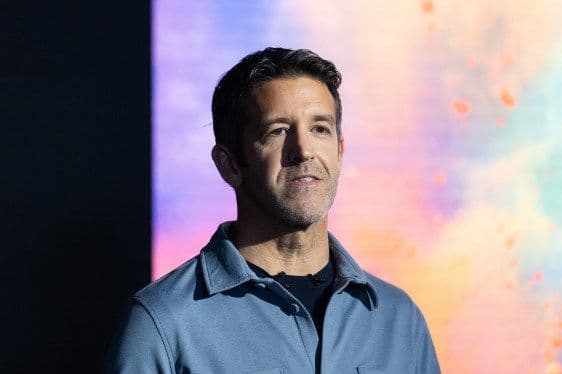
As Apple races to stay competitive in AI while navigating tariffs and supply chain uncertainty, the company’s future is about to shift under new leadership. On Monday, Appleannouncedthat John Ternus will take over as CEO later this year, succeedingTim Cook. Cook transformed Apple into a $4 trillion global powerhouse, expanded its services business, and oversaw some of the most profitable years in tech history.Ternusbrings a different kind of skillset. A longtime hardware executive, he has spent his career building Apple’s devices rather than managing the broader business. Ternus joined Apple in 2001 and rose through the ranks of hardware engineering. Along the way, he has contributed to some of the company’s biggest products, including AirPods, the Apple Watch, and Vision Pro. His appointment signals a renewed focus on hardware at a moment when Apple is under pressure to define its next era. Ternus will now help determine what that looks like. Rather than trying to compete head-on with companies building the biggest AI models, Ternus may push Apple to focus on the AI-powered devices themselves, whether that be the one in your hand, something you wear, or something that lives in your home. There’s already a lot ofspeculationabout what Apple could launch next. Ideas floating around include smart glasses, a wearable pendant with a built-in camera, and even AirPods with AI features. According toBloomberg, the idea is that all of these products would connect to the iPhone, with Siri playing a major role. Ternus is also expected to push forward on products that have been stuck in limbo.Foldable iPhonesare the obvious example. They’ve been rumored for years, and while competitors have already moved ahead, Apple has taken a slower approach, waiting until the technology meets its standards.Reportssay it will arrive in September, which means Ternus will be overseeing the launch. Apple has also reportedly been exploring robotics, particularly for the home. One concept includes atabletop devicewith a robotic arm attached to a display, essentially a smart assistant that can move and turn toward you. Notably, this lines up with Ternus’s long-standing interest in robotics. In college, he built a device that allowed quadriplegics to control a mechanical feeding arm using head movements, as reported by theNew York Times. There are also ideas formobile robotsthat could follow you around, handle simple tasks, or act like a moving FaceTime screen. Some reports even mention experiments withhumanoid robots, though those are likely years away. While none of these are guaranteed to happen, they do give a pretty clear sense of where Apple’s thinking might be going. However, ongoing memory chip shortages, President Trump’s frequently shifting tariff policies, and the company’s reliance on Chinese manufacturing could create a challenging period ahead. Roughly 80% of iPhones were produced in China before the tariffs. The company recently pivoted to India, making about 25% of its iPhones in the country last year, according toBloomberg.

read more

Latest AI News

View All News →
The $100,000 Experiment: What Happens When an AI Agent Manages a Store with Its Own Credit Card?

The $100,000 Experiment: What Happens When an AI Agent Manages a Store with Its Own Credit Card?

The world's first artificial intelligence (AI) store, which is entirely designed, managed, and run by an AI agent, is here. Even five years ago, the previous sentence would have sounded like it was taken from science fiction; however, today it is reality. A San Francisco-based startup, Andon Labs, designed an AI agent with all the necessary tools required to run a physical store, and gave it the keys to a retail store and a corporate credit card with $100,000 (roughly Rs. 94.25 lakh) in the bank.

2 hours ago

View

Meta AI Business Assistant Expanded to Global Markets, to Let Advertisers Optimise Marketing Campaigns

Meta AI Business Assistant Expanded to Global Markets, to Let Advertisers Optimise Marketing Campaigns

Meta is now expanding its artificial intelligence (AI) tool for marketing campaigns to major global markets. Dubbed the Meta AI Business Assistant, it is a conversational AI platform designed to help advertisers optimise marketing campaigns, resolve account issues, and manage customer interactions across Meta's platforms. It was first introduced last year and was limited to select advertisers in the US. The Menlo Park-based tech giant is now widely rolling out the AI tool globally across its key markets.

2 hours ago

View

Meta inks deal for solar power at night, beamed from space

Meta inks deal for solar power at night, beamed from space

The race to secure electricity for AI models has reached new heights: Meta has signed an agreement with the startup Overview Energy that could see a thousand satellites beam infrared light to solar farms that power data centers at night. In 2024, Meta’s data centers used more than 18,000 gigawatt-hours of electricity—roughly enough to power more than1.7 million American homesfor a year—and its need for compute power is only increasing. The company has committed to building 30 gigawatts of renewable power sources, with a focus on industrial-scale solar power plants. Typically, data centers turning to solar power must either invest in battery storage or rely on other generation sources to operate at night. Overview, a four-year-old, Ashburn, Virginia, outfit thatemerged from stealthin December, has a different solution: The company is developing spacecraft that collect plentiful solar power in space. It then plans to convert that energy to near-infrared light and beam it at sufficiently large solar farms—on the order of hundreds of megawatts—which can convert that light to electricity. By using a wide, infrared beam to power existing terrestrial solar infrastructure, Overview thinks it can sidestep the technological challenges and safety and regulatory issues that bedevil plans to transmit power to Earth through high-power lasers or microwave beams. CEO Marc Berte says you’ll be able to stare right into his satellite’s beam with no ill effects. The technology would increase the return on investment from building solar farms and reduce reliance on fossil fuels — if it can be deployed at scale. Overview says it has already demonstrated power transmission to the ground from an aircraft, and is planning to launch a satellite to low Earth orbit in January 2028 to perform its first power transmission from space. In today’s announcement, Meta said it signed the first capacity reservation agreement with Overview to receive up to 1 gigawatt of power from the company’s spacecraft, although it’s not clear if any money changed hands. Overview developed a new metric for this contract, megawatt photons, which is the amount of light required to generate a megawatt of electricity. Berte expects to begin launching the satellites that would fulfill that commitment in 2030, with a goal of flying 1,000 spacecraft in geosynchronous orbit, a high orbit in which each satellite remains fixed above the same point on Earth. He expects each of the company’s spacecraft to provide power from space for more than 10 years. Once in space, Berte says the fleet of spacecraft will be able to cover about a third of the planet, with an initial deployment that will reach from the West Coast of the United States across to Western Europe. As the Earth rotates below and customer solar farms enter evening and night, Overview’s spacecraft should boost their electrical generation with additional light from space. Berte sees opportunity in combining both generation and transmission, with the flexibility to deliver power to solar farms wherever and whenever it is most valuable. “There’s a big difference between being in any one energy market, and being in all of the energy markets,” Berte told TechCrunch.

2 hours ago

View

TSMC Unveils A13 Node for AI Computing, But Production Begins in 2029. Why?

TSMC Unveils A13 Node for AI Computing, But Production Begins in 2029. Why?

This new process technology targets AI and high-performance computing workloads, with production planned for 2029.

2 hours ago

View