AI NewsAnthropic’s relationship with the Trump administration seems to be thawing

Anthropic’s relationship with the Trump administration seems to be thawing

10:02 PM IST · April 18, 2026
Anthropic’s relationship with the Trump administration seems to be thawing

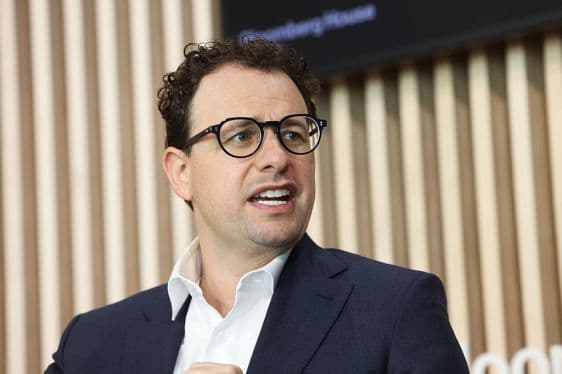
Despite recently being designated a supply-chain risk by the Pentagon, Anthropic is still talking to high-level members of the Trump administration. There were earlier signs of a thawing relationship — or a sense that not every part of the administration wanted to cut off Anthropic — with reports saying that Treasury Secretary Scott Bessent and Federal Reserve Chair Jerome Powell wereencouraging the heads of major banks to test out Anthropic’s new Mythos model. Anthropic co-founderJack Clark seemed to confirm this, claiming that the ongoing fight over the supply-chain risk designation is a “narrow contracting dispute” that would not interfere with the company’s willingness to brief the government about its latest models. Then on Friday,Axios reportedthat Bessent and White House Chief of Staff Susie Wiles had met with Anthropic CEO Dario Amodei. In a statement, the White House described this as an “introductory meeting” that was “productive and constructive.” “We discussed opportunities for collaboration, as well as shared approaches and protocols to address the challenges associated with scaling this technology,” the White House said. Similarly, Anthropic issueda statementconfirming that Amodei had met with “senior administration officials for a productive discussion on how Anthropic and the U.S. government can work together on key shared priorities such as cybersecurity, America’s lead in the AI race, and AI safety.” The company added that it’s “looking forward to continuing these discussions.” The dispute between Anthropic and the Pentagon seemingly began after failed negotiations over the military’s use of Anthropic’s models; the AI company sought to maintain safeguards around the use of its technology for fully autonomous weapons and mass domestic surveillance. (OpenAI quicklyannounced a military deal of its own, leading to someconsumer backlash.) The Pentagon subsequentlydeclared Anthropic a supply-chain risk— a label that’s generally reserved for foreign adversaries and could severely limit the use of Anthropic’s models by the government. The company ischallenging that designation in court. But it sounds like the rest of the Trump administration doesn’t share the Pentagon’s hostility, with an administration source telling Axios that “every agency” except the Department of Defense wants to use the company’s technology.

read more

Latest AI News

View All News →
The App Store is booming again, and AI may be why

The App Store is booming again, and AI may be why

Everyone said AI would kill apps. Instead, new app launches are soaring. According to a new analysis from market intelligence providerAppfigures, worldwide app releases in the first quarter of 2026 were up 60% year-over-year across both Apple’s App Store and Google Play. That percentage was an even higher 80% when looking at the iOS App Store alone. In April 2026 so far, the total number of app releases is up 104% across both stores compared to the same time last year, and up 89% on iOS. As Apple’s Senior Vice President of Worldwide Marketing, Greg “Joz” Joswiak, quipped Ina recent interview: rumors of the App Store’s death in the AI age “may have been greatly exaggerated.” These findings come amid concerns that the rise of AI chatbots and agents would ultimately see users turning away from apps — a theory that’s already being floated by those in the industry,like Nothing CEO Carl Pei, who is focused on building a smartphone for the AI era.The New York Timesalso reported last year on the potential for new computing platforms to eclipse the smartphone, like smart glasses, ambient computing devices, or reimagined smartwatches with AI features. OpenAI is evenworking on an AI hardware devicewith famed Apple designer Jony Ive. But there’s another possibility, too: AI will make it easier for anyone to create apps, driving a rebirth of the App Store. The new app gold rush could be led by creators who have ideas but not the technical skills to design mobile software. Appfigures’ data indicates that certain categories of apps are seeing more new releases than others. Mobile games still account for most of the new app releases worldwide as of Q1 2026, as they have in prior years. But “productivity” apps have moved into the top five this year. The “utilities” category has also moved up to the number two slot, and the “lifestyle” apps category moved up from the No. 5 slot last year to now No. 3. Finally, “health and fitness”-style applications rounded out the top five categories. The working hypothesis here is that AI-powered tools, like Claude Code or Replit, could be behind the surge of new launches. It also seems possible that we’re hitting some sort of tipping point in terms of AI usability, where it’s easy enough for people to leverage these tools to build their own desired mobile apps more quickly — or even build their first apps ever. The explosion of new apps for Apple to review could also be behind some of the tech giant’s recent missteps. This week,Apple pulled the rewards app Freecash from the App Storefor rules violations, after letting the app climb the store’s Top Charts and sit in the top five for months. Apple was also caught off guard by a malicious cryptocurrency app, a clone of Ledger Live, thatdrained $9.5 million in cryptofrom victims’ accounts. While high-profile problems like this can generate bad PR for the App Store, the company still does a lot of heavy lifting in terms of blocking and rejecting dangerous or spammy apps. Apple’smost recent analysis from 2024said the company had removed or rejected more than 17,000 apps for bait-and-switch violations that year; rejected more than 320,000 app submissions that were found to be spam, copying other apps, or misleading; and took action to prevent more than 37,000 potentially fraudulent apps from reaching users on the App Store. Still, Apple pundits like John Gruber havelong arguedthat the App Storeneedsa “bunco squad” of sorts that watches for scammy or fraudulent apps that are gaining in popularity or high-grossing. If AI-assisted vibe coding turns out to be behind the recent surge of app releases, that need will only grow as more new apps flood the marketplace, not all of which will be benign.

3 hours ago

View

Anthropic’s relationship with the Trump administration seems to be thawing

Anthropic’s relationship with the Trump administration seems to be thawing

Despite recently being designated a supply-chain risk by the Pentagon, Anthropic is still talking to high-level members of the Trump administration. There were earlier signs of a thawing relationship — or a sense that not every part of the administration wanted to cut off Anthropic — with reports saying that Treasury Secretary Scott Bessent and Federal Reserve Chair Jerome Powell wereencouraging the heads of major banks to test out Anthropic’s new Mythos model. Anthropic co-founderJack Clark seemed to confirm this, claiming that the ongoing fight over the supply-chain risk designation is a “narrow contracting dispute” that would not interfere with the company’s willingness to brief the government about its latest models. Then on Friday,Axios reportedthat Bessent and White House Chief of Staff Susie Wiles had met with Anthropic CEO Dario Amodei. In a statement, the White House described this as an “introductory meeting” that was “productive and constructive.” “We discussed opportunities for collaboration, as well as shared approaches and protocols to address the challenges associated with scaling this technology,” the White House said. Similarly, Anthropic issueda statementconfirming that Amodei had met with “senior administration officials for a productive discussion on how Anthropic and the U.S. government can work together on key shared priorities such as cybersecurity, America’s lead in the AI race, and AI safety.” The company added that it’s “looking forward to continuing these discussions.” The dispute between Anthropic and the Pentagon seemingly began after failed negotiations over the military’s use of Anthropic’s models; the AI company sought to maintain safeguards around the use of its technology for fully autonomous weapons and mass domestic surveillance. (OpenAI quicklyannounced a military deal of its own, leading to someconsumer backlash.) The Pentagon subsequentlydeclared Anthropic a supply-chain risk— a label that’s generally reserved for foreign adversaries and could severely limit the use of Anthropic’s models by the government. The company ischallenging that designation in court. But it sounds like the rest of the Trump administration doesn’t share the Pentagon’s hostility, with an administration source telling Axios that “every agency” except the Department of Defense wants to use the company’s technology.

3 hours ago

View

When Classrooms Fit the System, Not the Student

When Classrooms Fit the System, Not the Student

Historically, the burden of adaptation has fallen on individuals to learn, behave, and fit into predefined structures. AI can redistribute that burden.

15 hours ago

View

Kevin Weil and Bill Peebles exit OpenAI as company continues to shed ‘side quests’

Kevin Weil and Bill Peebles exit OpenAI as company continues to shed ‘side quests’

OpenAI is losing two of the architects of its most ambitious moonshots. Kevin Weil, who led the company’s science research initiative, and Bill Peebles, the researcher behind AI video tool Sora, both announced their departures on Friday. The exits come as OpenAI consolidates around enterprise AI and itsforthcoming “superapp.” The departures follow OpenAI’s decision to cut back on “side quests,” including customer-facing bets like Sora and OpenAI for Science. Sora, which was losing anestimated $1 million per dayin compute costs, wasshut down last month. OpenAI for Science was the internal research group behindPrism, an AI-powered platform that promised to accelerate scientific discovery. It’s being absorbed into “other research teams,” according to Weil’ssocial media postannouncing the news. “It’s been a mind-expanding two years, from Chief Product Officer to joining the research team and starting OpenAI for Science,” Weil wrote. “Accelerating science will be one of the most stunningly positive outcomes of our push to AGI.” The team had a short and bumpy road after its formal announcement in October 2025. Weil deleted a tweet claiming GPT-5 hadsolved 10 previously unsolved Erdősmathematical problems, but that claim fell apart immediately when the mathematician who runs the website erdosproblems.com called it out. Weil’s departure comes a day after his teamreleased GPT-Rosalind, a new model to accelerate life sciences research and drug discovery. In asocial media postannouncing his departure, Peebles credited Sora with igniting a “huge amount of investment in video across the industry,” and argued that the kind of research that produced the video tool requires space away from the company’s mainline roadmap. “Cultivating entropy is the only way for a research lab to thrive long-term,” he wrote. OpenAI is also losing Srinivas Narayanan, its chief technology officer of enterprise applications,Wired reports. Narayanan reportedly announced the news internally that he was leaving to spend more time with family. This article was updated to include the departure of Srinivas Narayanan.

19 hours ago

View