AI NewsAnthropic acquires computer-use AI startup Vercept after Meta poached one of its founders

Anthropic acquires computer-use AI startup Vercept after Meta poached one of its founders

8:30 AM IST · February 26, 2026
Anthropic acquires computer-use AI startup Vercept after Meta poached one of its founders

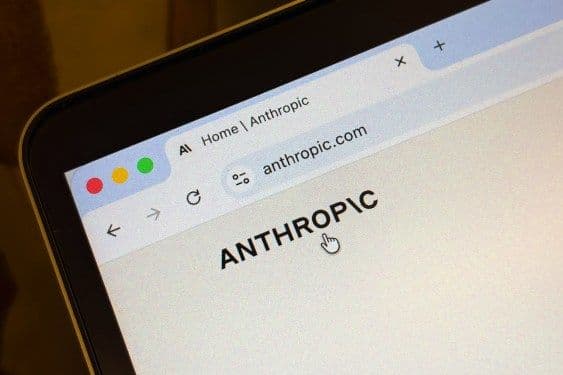
Anthropic on Wednesdayannouncedthat it has acquired Vercept, an AI startup with deep roots to some of the biggest names in Seattle’s tech scene. The acquisition marks the latest after Anthropicacquired coding agent engine Bunin December to help scale Claude Code. Vercept had created tools for more complex agentic tasks, including its product Vy, a computer-use agent in the cloud that could operate a remote Apple MacBook. Vercept is one of the many startups working on re-imagining the personal computer for the age of AI agents. As part of the deal, Anthropic is shuttering Vercept’s product on March 25. The startup was a grad of Seattle’s AI-focusedincubatorA12,which spawned from the longstanding Allen Institute for AI. Vercept’s co-founders had roots with the Allen Institute, as well, and were previously researchers there. One co-founder, Matt Deitke, made news last year as one of the AI researcherswho negotiated a monster $250 million salaryfrom Meta to join its Superintelligence Lab. On Wednesday, Deitke congratulated his former colleaguesin a post on X. Congrats to@ehsanik,@LucaWeihs, and@inkynumbers!Happy for you all :) 🚀https://t.co/n3WTq4CAAs Vercept was a relatively high-profile AI startup in the region. In aLinkedIn postannouncing the acquisition by Anthropic, Vercept CEO Kiana Ehsani said the startup had raised a total of $50 million. She called out A12’s Seth Bannon, a board member, as the lead investor. Vercept previously announced it had raised a$16 million seed roundlast January. The list of angel investors was impressive, too, and included former Google CEO Eric Schmidt, Google DeepMind chief scientist Jeff Dean, Cruise founder Kyle Vogt, and Dropbox co-founder Arash Ferdowsi,GeekWire reported. In Anthropic’s announcement of the acquisition, the company named co-founders Ehsani, Luca Weihs, and Ross Girshick as some of the team brought on to join Anthropic in the acquisition. However, not all of Vercept’s co-founders are joining the Claude maker. Oren Etzioni, who haspreviously been namedas a co-founder of Vercept and investor in the startup, is well known in Seattle as the founding leader of the Allen Institute for AI. Along with Deitke, he is also not joining Anthropic, and was vocally less pleased about the acqui-hire. He postedon LinkedIn: “After a little bit more than a year,Verceptis throwing in the towel and giving their customers 30 days to get off the platform. Sad. A fantastic team is joining Anthropic. I wish them the very best!” Etzioni is also a professor at the University of Washington and known forother startupshe’s founded and backed as a VC. He did not respond to a request for comment. On Etzioni’s LinkedIn post, he accused Bannon, the Vercept lead investor, of being “partly responsible” for Vercept not hiring the correct business people. A back and forth ensued between the investors, withBannon condemningEtzioni’s remarks: “… you disparaged the heroic work of the founders for achieving an outcome most could only dream of,” Bannon replied in the LinkedIn string. They also accused each other of other less savory things like lying and legal threats. While public spats between investors are entertaining, and essentially meaningless, the underlying motivation is notable. The stakes are high to build the next big AI winner, and now a promising startup that raised a decently sized war chest will be tucked into Anthropic. While the terms of the deal were not disclosed, Etzioni says he got a return on his money. Anthropic clearly wanted these researchers (perhaps — especially — with another of them at Meta). Still, Etzioni told GeekWire that he remains bummed. “I’m pleased to have gotten a positive return but obviously disappointed that after just a little over a year with so much traction, and such a fantastic team, we’re basically throwing in the towel,” he said. The founders joining Anthropic, however, appear happy, according to CEO’s Ehsani’s LinkedIn post. “The choices were clear: we could build independently and work toward the same vision as two separate versions of it, or join forces with an incredible team and accelerate that vision into reality. The decision became an easy choice,” she said of joining Anthropic.

read more

Latest AI News

View All News →
Why the Highest‑Spending Customer Might Not Be the Most Valuable One

Why the Highest‑Spending Customer Might Not Be the Most Valuable One

Modern platforms like Snowflake and Databricks have evolved to support relationship modelling, graph computation, and semantic layers within a single environment.

2 hours ago

View

Medicare’s new payment model is built for AI, and most of the tech world has no idea

Medicare’s new payment model is built for AI, and most of the tech world has no idea

Neil Batlivala has spent seven years building a healthcare company that most of the tech industry has never heard of and that serves a patient population most of Silicon Valley ignores. But last month, that work put him at the center of something much bigger. His company,Pair Team, announced on April 30 it had beenacceptedintoACCESS, a Medicare program — as one of 150 participants chosen by the Centers for Medicare & Medicaid Services to test what AI-driven medical care could look like at federal scale. The program goes live July 5. “The government is creating swim lanes for AI innovation in traditionally regulated industries,” he told me over a Zoom call a few days later. “The best solution wins, which, in regulated industries like healthcare — that’s not been the case.” ACCESS — Advancing Chronic Care with Effective, Scalable Solutions — is a 10-year CMS program testing a payment model that rewards health outcomes rather than required activities (like a certain number of check-ins). Participating organizations like Pair Team receive predictable payments for managing qualifying conditions and earn the full amount only when patients meet measurable health goals, like lower blood pressure or reduced pain. It covers diabetes, hypertension, chronic kidney disease, obesity, depression, and anxiety. That payment structure is the real news. Traditional Medicare reimburses based on time spent with a clinician. There’s no mechanism to pay for an AI agent that monitors a patient between visits, calls to check in, coordinates a housing referral, or makes sure someone picks up their medication. ACCESS creates that mechanism for the first time. “It’s a payment model transformation,” Batlivala said. “You just couldn’t do this before.” The first cohort spans a wide range of participants — AI doctor startups, virtual nutrition therapy providers, connected device companies, and wearable makers like Whoop. Batlivala is skeptical of some of them. "I'm a big fan of wearables, but for a senior who's struggling with food insecurity, I don't know how much Whoop is going to be able to do," he said, adding of his own company, "We've been building toward this for five-plus years now." Pair Team launched in 2019 with a specific kind of patient in mind: people managing chronic conditions who were also dealing with unstable housing, too little food, or lack of transportation. About a third of Americans fall somewhere in that category. The company's premise was that you can't improve health outcomes without addressing the full context of someone's life. It now employs roughly 850 clinical professionals, runs what it describes as the largest community health workforce in California, and, per Batlivala, generates revenue above nine figures. It has raised about $30 million, backed by Kleiner Perkins, Kraft Ventures, and Next Ventures. The model has peer-reviewed evidence behind it. A study, co-authored by Pair Team researchers and peer-reviewed by theJournal of General Internal Medicine, evaluated Pair Team's community-integrated model, which blends medical, behavioral, and social care for Medicaid members with high rates of homelessness, serious mental illness, and chronic disease and it showed strong patient engagement and significant reductions in avoidable emergency and inpatient utilization. Batlivala says one in four hospital visits and one in two ER visits don't happen when a patient is in his company's care. But for years, delivering that level of care required human teams, which limited how fast and cheaply it could scale. Then, about nine months ago, Pair Team deployed a voice AI agent called Flora as its primary patient-facing interface. Flora is available 24 hours a day, handles intake, coordinates referrals, and does the check-ins that keep patients engaged between clinical visits. The first call that shifted his thinking was with a 67-year-old woman living out of her car, managing PTSD and congestive heart failure. She spoke with Flora for over an hour. "It was both incredible and depressing," Batlivala told me. "Flora was probably the only 'person' she'd talked to in weeks about her situation." Now, hour-long conversations with Flora are routine. "That's the companionship piece," he said. "And it turns out that is truly an intervention." The architects of ACCESS are themselves former startup operators. The program was designed by Abe Sutton, Director of the CMS Innovation Center, and Jacob Shiff, Chief AI and Technology Officer of the CMS Innovation Center. Sutton was previously a venture capitalist at a healthcare fund called Rubicon Founders. Shiff is a former healthcare founder. Both joined CMS under the Trump administration and their startup backgrounds are reflected in the program's design: outcome-based payments, direct-to-consumer enrollment, and a deliberate push for competition. There are real risks. Participants are feeding extraordinarily sensitive patient data — intimate conversations about housing and diseases and mental illness — into a federal infrastructure with a documented history of breaches, includingexposed Social Security numbers. For the vulnerable populations ACCESS is designed to serve, that's not an impractical concern. There are financial risks, too. The track record of CMS innovation programs is mixed. A 2023 Congressional Budget Officeanalysisfound that the CMS Innovation Center increased federal spending by $5.4 billion during its first decade rather than producing the projected savings. CMS is also paying less per patient per month than many participants anticipated, which means the math only works for organizations that have fully automated most of their patient interactions. Batlivala's answer to the reimbursement concern is that it's a feature, not a bug. "If you want to build a model that truly incentivizes the use of AI, the reimbursement rates have to be low," he told me. "The economics only work if you're running a lean, AI-first operation." Pair Team says it right now has partnerships in place that give it access to roughly 500,000 potential patients, and that it wants to reach a million within three years. Healthcare investors have been watching this closely. Digital health funding hit itshighest Q1 totalsince the pandemic this year, with AI companies capturing the bulk of it. But ACCESS has barely registered outside health tech trade press.

6 hours ago

View

Google adds Gemini-powered dictation to Gboard, which could be bad news for dictation startups

Google adds Gemini-powered dictation to Gboard, which could be bad news for dictation startups

Google announced Rambler, a new AI-powered voice dictation feature for Gboard — its widely used Android keyboard app — at its Android Show: I/O Edition 2026 event on Tuesday morning. The launch puts Google in direct competition with the likes ofWispr Flow and Typeless, a growing crop of AI-powered dictation apps that have built audiences on desktop and mobile in recent years — most of which have yet to establish a strong foothold on Android. Just like other dictation apps, Rambler removes filler words like “ums” and “ahs.” It also understands midsentence corrections like, “I am going to meet you on Wednesday at our usual coffee shop at 3 p.m. … um, 2 p.m.” Google said it is using Gemini-based multilingual models that also support code switching. Code switching means users can move between languages midsentence — say, from English to Hindi — and Rambler will follow along without losing context. It’s a capability that reflects how many multilingual speakers actually communicate, and one that most Western dictation apps have been slow to support. The company said that Gboard will clearly indicate to its users that the Rambler feature is in use. It doesn’t store any voice recordings and uses the audio only to transcribe what users speak. Google mentioned during the briefing that, as you can use the Rambler feature across all apps, it is like “reinventing the keyboard.” Loading the player… On privacy, Ben Greenwood, director of Android Core Experiences, said Google uses a combination of on-device and cloud-based processing and has “invested significantly over many years” to ensure features are “safe and private” — a calculated message to users weighing Rambler against third-party dictation apps that may handle data differently. In the past few years, a host of dictation apps — Wispr Flow, Willow, Superwhisper, Monologue, Handy, and Typeless — have cropped up. But until now, most of that activity has been on desktop and iOS, leaving Android relatively underserved. Google itself releasedAI Edge Eloquent, an offline-first dictation app powered by its on-device Gemma AI models, on iOS last month. Rambler is Google's clearest move yet to close that gap. These new features will be limited to Samsung Galaxy and Google Pixel phones for an initial summer rollout but will eventually reach other Android devices. The core advantage here is distribution: Gboard is the default keyboard for the vast majority of Android users worldwide, meaning Rambler arrives pre-installed for hundreds of millions of people. When a platform player enters a market at the operating-system level, stand-alone apps need a compelling reason — better accuracy, deeper features, or stronger privacy guarantees — to justify a separate download. For dictation startups, the question is no longer whether they can build something good — it's whether they can build something good enough that users actively go looking for it.

10 hours ago

View

Report: Google and SpaceX in talks to put data centers into orbit

Report: Google and SpaceX in talks to put data centers into orbit

Google and SpaceX are in talks to launch orbital data centers in space,reportsThe Wall Street Journal, citing sources familiar with the matter. The potential deal comes as SpaceX gears up for its$1.75 trillion IPOlater this year, selling investors on the idea that data centers in space will be the cheapest place to put AI compute within the next few years. It also followsSpaceX’s deal with Anthropiclast week to use computing resources from xAI’s data center in Memphis, Tennessee, with the potential to work together on orbital ones in the future. (SpaceX acquired xAI in February.) Google is reportedly talking to other rocket-launch companies, as well. The company also plans to launch prototype satellites by 2027 as part of an initiative called Project Suncatcher, announced late last year. Elon Musk hascreated hypefor orbital data centers, claiming they are cheaper to operate. Advocates also point out they are free from local backlash that U.S. ground-based buildouts attract. However, asTechCrunch recently reported, today’s terrestrial data centers are much cheaper than those in orbit once satellite construction and launch costs are factored in. Google invested $900 million in SpaceX in 2015, according toregulatory filings. TechCrunch has reached out to Google and SpaceX for comment.

10 hours ago

View