AI NewsA ‘pound of flesh’ from data centers: one senator’s answer to AI job losses
A ‘pound of flesh’ from data centers: one senator’s answer to AI job losses
2:55 AM IST · March 27, 2026
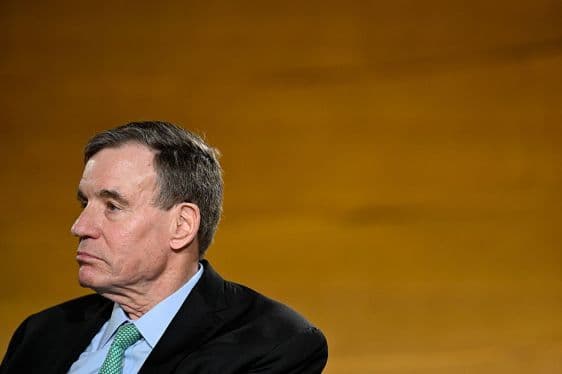
The signs that AI could lead to mass job displacement are already piling up: entry-level job postings in the U.S. havesunk 35% since 2023,masslayoffshavesweptacross Big Tech, and evenAI leaders themselvesare warning about what’s coming. Backstage at the Axios AI Summit in Washington on Wednesday, Sen. Mark Warner (D-VA) said a venture capitalist recently told him he’s writing software investments down to zero in large part due to the strides of Anthropic’s Claude, and a major law firm told him it’s not hiring first-year associates because AI can now handle much of the work once assigned to junior lawyers. Warner says the fear of AI-related job loss is “palpable,” even asdata from one AI companysuggests AI hasn’t yet started taking jobs. As those fears grow, they’re bleeding over into a different fight, which is who should foot the bill. Warner has a proposal: tax the data centers powering the AI boom and use that revenue to help workers through the transition. He hasn’t introduced legislation yet, but the idea is gaining urgency as public anger toward AI and data centers grows. Across the U.S., there’s beenpushback on data centers, including a bill on Wednesday introduced by Sen. Bernie Sanders (D-VT) and Rep. Alexandria Ocasio-Cortez (D-NY), calling for adata center moratorium. The loudest concerns are about noise, pollution, and rising electricity costs. But there’s a bubbling resentment underneath those concerns, a resistance to suffering the potential ill effects of having a data center in your backyard that powers the technology some fear will replace workers. Warner doesn’t plan to support his colleagues’ bill. On stage at the event, he said: “A data center moratorium simply means China is gonna move quicker, and this is one where we can’t lose.” There’s no stuffing the genie back into the bottle when it comes to AI and data centers, he added. And while Warner believes in strict requirements that ensure data centers don’t pass their water and power costs to residents, he told TechCrunch he thinks there’s another way for communities to extract their “pound of flesh” in a way that addresses the underlying job loss fears. “I’ve thought for a long time there’s an obligation from the industry to help figure this out and help pay for it, but one of the questions I was asking was, Who should pay?” Warner told TechCrunch. “Should it be the chip makers, Jensen [Huang, Nvidia’s CEO]? Should it be the large language model companies? Should it be the Goldman Sachs of the world who are using these tools to cut back on a number of first-year associates?” Ultimately, he said, he thinks the “easiest place to extract the pound of flesh is probably going to be from the data centers.” That could look like putting data center tax revenue toward training for new nurses or funding AI upskilling programs — so long as there’s a “tangible benefit to communities” as they navigate this economic transition AI companies have foisted on them. Warner sees it as a way to balance the need to build data centers with some obligation to the communities bearing their costs The idea is not without precedent. Warner pointed to Henrico County, Virginia which used the tax revenue from a local data center tokickstart a new affordable housingproject. Finding a way to connect data centers to a tangible benefit to the community will be essential, he says, because otherwise, “the pitchforks are coming out.” The public mood suggests he could be on to something. According to a recentNBC News poll, AI has a lower public approval rating than Immigration and Customs Enforcement (ICE), with 46% of registered voters viewing AI negatively compared to only 26% viewing it positively. In Virginia, that is playing out in a proposal torepeal the state’s tax breaksfor data center buildouts, which cost the state and localities nearly $2 billion a year in lost tax revenue in one of the world’s largest data center markets. Warner says other states might follow suit. AI and data centers, he said, are “easy to demonize.”
read more