🚀 Zaprep: Your Socials on Steroids. Start free — automate 1,000 DMs/month & turn engagement into leads. with 1,000 automated DMs/month.
Latest AI News
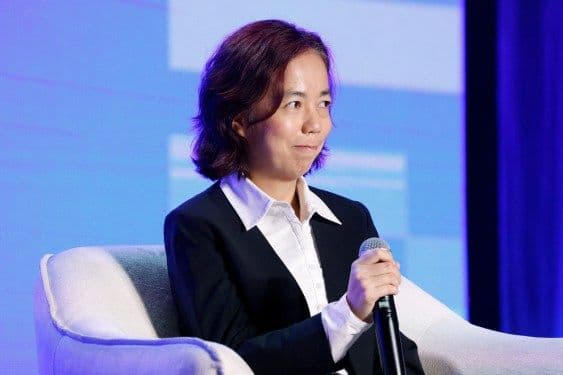
AMD will acquire Fei-Fei Li’s World Labs for $8.2 billion
AMD is acquiring World Labs, one of the leading developers of deep learning models intended to understand physical reality, in a $8.2 billion deal, the two companies said today. World Labs justified the deal in a statement saying that AI development required “close collaboration across model research, systems and compute.” AMD, in turn, says that understanding frontier workloads, like those created at World Labs, will shape its chip-making roadmap. The acquisition will see World Labs founder Fei-Fei Li join AMD as executive vice president and chief scientist. AMD and World Labs formed an inference optimization-and-training partnership last year, and ties have remained close. Notably, Li was a guest atAMD’s CES presentation earlier this year. Li, a Stanford computer science professor, is considered a pioneer in AI, particularly computer vision, for her work building the ImageNet database and the AI competitions it inspired. In 2024, Li founded World Labs to develop deep learning models with a more robust understanding of the physical world, arguing that true general intelligence required a grounding in physics and the ability to understand and reason about data beyond text. Ina post announcing the deal, Li described the partnership as the result of a desire to scale World Labs’ technical breakthroughs beyond the lab. “Now that we have tangible proof of the possibilities, we want to do everything we can to accelerate the future,” Li wrote in the post. “To do this requires scaling our efforts, widening our reach, and getting closer to the hardware.” “World model”remains a loosely defined term, encompassing everything from language models trained to understand visual inputs, to models capable of generating and sustaining a high-fidelity simulation of reality. World Labs’ first product, Marble, is pitched as a tool for creating entertainment experiences, but also for creating simulated environments for robot training. The acquisition is likely to help AMD compete with long-standing rival Nvidia in creating an ecosystem for AI-specific chips. While Nvidia already has a suite of open-weight world models like Cosmos, AMD has only offered text- and video-based models to the public. World models are seen as vital in efforts to deploy generative AI models on robotic platforms, from autonomous vehicles to industrial robots and general-purpose humanoids. In particular, the dearth of useful real-world data to train general purpose robots means that synthetic data from world models will be key to realizing the vision put forward by companies like Tesla and Figure. The acqusition is expected to close before the end of the year, subject to regulatory approval.
View

OpenAI Agents Used Multiple Workarounds to Access UN Data: Researcher
AI agents believed to be linked to OpenAI made more than 16,500 scans of a United Nations statistics platform over two months, according to security researcher Rowan Howard-Jones. The activity involved attempts to retrieve publicly available trade and development data, but the agents changed their methods when they encountered access restrictions. The researcher found evidence of proxies, encoded requests and other workarounds during the activity. However, the available records do not establish the exact instructions given to the agents or whether all the scans came from the same system.
View

Viral AI agent Instinct raises $1B Series C at a $10B valuation
It’s only been a month since AI assistant startupInstinctannounced afundraise that valued it at $2.5 billion, and now the company has already raised another $1 billion, from investors including Sequoia Capital, Benchmark Capital and Coatue, valuing the company at $10 billion. The news of the company’s fundraising efforts was reported earlier this month byThe Information. In a press release on Monday, Instinct confirmed this was a Series C round — a pretty quick growth round for a startup that launched its invite-only service in August 2026. The quick fundraises demonstrate the fervor around a new class of consumer AI agents, which can not only answer questions and engage in conversations, but can actually get things done for their users, whether that’s booking travel plans or restaurant reservations, making purchases, paying bills, canceling subscriptions, conducting tedious research, ordering groceries, and more. When asked to perform a task, Instinct uses its own phone number and computer. The company recently rolled out other new features, like “concierge: that can make phone calls for you, to manage things like making appointments at places that don’t offer online booking, as well as a “trusted person network” which allows one person’s Instinct agent to coordinate plans with their friends’ agents. However, these capabilities come at a cost: Some users are questioning the amount of personal information they have to disclose to AI agents to gain access to such capabilities. Instinct’s initial version of its privacy policy wasparticularly worrisomedue to its overreach. The policy has since been updated. Despite its AI assistant’s viral adoption, Instinct is now facing fresh competition from Meta’s own AI assistant, Muse, which offers many similar features, plus a system that can deeply integrate with Meta’s social products. That means Muse can do much of what Instinct does, as well as tasks like monitoring and summarizing your Instagram DMs or Facebook Groups, keeping an eye on Marketplace listings, and more. Such capabilities have sent Muse to the top of the U.S. app stores, where it has been downloaded millions of times. Instinct, which uses SMS and texting to communicate with its users, doesn’t have a mobile app yet. The startup has also not shared its user numbers or any growth metrics, but clearly its investors are seeing something they like. Instinct declined to offer interviews with founder Noah Shinn alongside the fundraising news, but shared a statement attributed to him: “We’re building Instinct to be the best personal agent that can handle the deeply personal nuances of everyday life. This funding helps us bring Instinct to more people and continue building the future of personal AI. It’s an exciting, creative time, and we’re just getting started.”
View
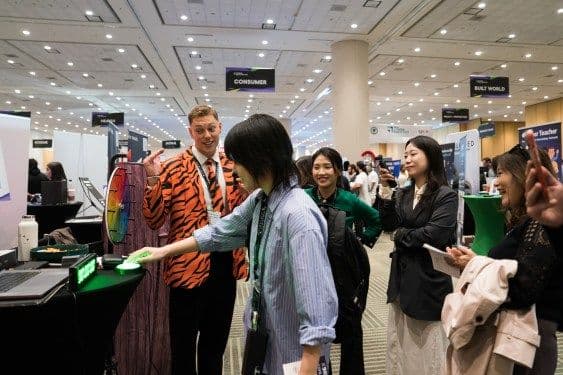
Your final chance to grab your exhibit table at TechCrunch Disrupt 2026 is October 2
This is the last week and your final opportunity to book yourTechCrunch Disrupt 2026exhibit table.Book your exhibit table by this Friday, October 2, at 11:59 p.m. PT.After that, all exhibit table bookings close for good. If you missed the original deadline, this is your final opportunity to put your startup on the Expo Hall floor, the center of the event. Disrupt takes place October 13-15 at Moscone West in San Francisco, bringing together 10,000+ founders, investors, operators, and tech leaders looking for the next breakthroughs and startups to back, products to use, and companies to partner with. This is your chance to demo your breakthrough in the heart of the global startup ecosystem.Book your table nowbefore your competitor does. The Expo Hall gives your startup three days to get in front of the people who can move your business forward. Put your product on display, start conversations, and make your company one of the startups tech leaders remember. With anexhibit table, you can: Yourexhibit packageincludes a 6′ × 30″ branded table for all three days, 10 team passes, lead-generation tools, website and app branding, press-list access, Silver Tier sponsor branding, and more. On-site branding is included when you book by September 30. Founders can also access deal flow opportunities, such as investor-founder meetings in a quieter space in the Deal Flow Café. The opportunity is here. The deadline is October 2.Don’t wait until the Expo Hall is fullto wish you’d secured your spot. Exhibit tables are open until October 2 at 11:59 p.m. PT.Tables are limited and first come, first served. Get your startup in early, get noticed, and make the most of the Disrupt experience while the opportunity is still yours.Book your exhibit table now. You can still get in the room at TechCrunch Disrupt 2026 on October 13-15. Hear from250+ top-tier tech leadersacross200+ sessionson six industry stages, roundtables, and breakouts that give you practical insights for building, funding, and scaling, and use AI-powered matchmaking and interactive sessions to make more relevant connections. Explore 300+ startups and witness Startup Battlefield 200, the ultimate pitch competition, to discover potential products, partners, and investment opportunities.Get your Disrupt ticket and be part of the conversations shaping what comes next.
View

Insurtech Outmarket raises $34.5M just months after prior round
Vishal Sankhla led product at a digital life insurance distributor Ethos before itwent publicearlier this year. In late 2023, the seasoned engineering executive, who had previously worked at Facebook and Uber, left Ethos and launchedOutmarket, a startup that uses AI to help insurance agencies and brokers automate all their tedious paperwork. “Ninety-five percent of insurance in the U.S. and worldwide is still sold through [human] agents, and when you look at sort of like how the process is today, it’s very manual,” Sankhla told TechCrunch. “This is a huge opportunity given how massive this industry is.” Outmarket focuses on commercial insurance because these policies involve deep nuances and custom tailoring for every business. Companies must navigate a complex mix of coverage options, ranging from general liability and workers’ compensation to directors and officers (D&O) liability. “There are over 250 different types of coverages that are out there, depending on what business you are and what risk you have and what you want to cover,” Sankhla said. “For each of those, the process is very different. The application forms you need to fill out, the documents you need to read.” Outmarket’s AI automates those time-consuming administrative tasks, helping brokers quickly evaluate and recommend the best policies, so they can focus on work that requires a human touch, such as responding to customers during emergencies. That value has attracted over 300 insurance agencies, including 25% among the top 100, as Outmarket’s customers since launching a new product 14 months ago. “For insurance, which is typically not a fast-moving industry, it’s quite fast growth,” Sankhla said. Investors have been impressed with the company, too. Outmarket is set to announce that it raised a $34.5 million Series B led by SignalFire, with participation from Fika Ventures, Permanent Capital Ventures, TTV Capital and Dash Fund. The new round, which comes four months after the startup’s $17 million Series A, valued the company at $335 million, according to a person familiar with the investment. The startup is not alone in building an AI operating layer for insurance brokerages. Other startups trying to help insurance brokers include Fulcrum AI and Further AI. But with the U.S. property and casualty insurance market alone over atrillion dollarsin annual premiums, Sankhla believes that Outmarket has plenty of room to grow by helping agencies work faster and smarter.
View
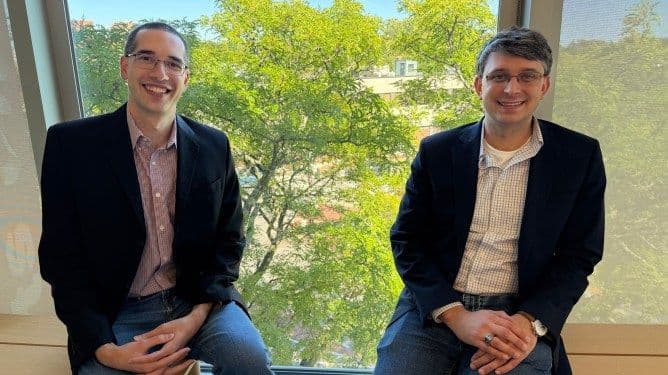
Modulate raises $25M for its voice models and analysis suite
Boston-based voice intelligence startupModulatehas raised $25 in new funding for its platform that uses an array of small models to offer enterprises transcription, emotional analysis, deepfake and AI music detection, and policy enforcement for voice agents in regulated industries. The funding follows a popular trend among investors in the growing voice AI industry: backing companies that are trying to make AI voices sound more human. It also rivals other companies trying to detect the intent behind human conversation by analyzing it, and those trying to protect people and companies from deepfake calls, as it is now easy to clone voices. Modulate’s new funding was led by Future Ventures with participation from Hyperplane and Lakestar. Data from PitchBook indicated that the startup had raised $41 million in funding at a $170 million valuation prior to this round. The startup was founded in 2017 by Mike Pappas and Carter Huffman, who met as MIT physics undergrads. In its early days, the company focused on providing voice modulation for gaming. But later, it started to concentrate on avoice-based moderation tool. With the onset of voice AI models, the company is now concentrating on detecting different sorts of AI audio generation and analyzing intent behind a person’s words. “Our insight into the voice AI space is that a lot of folks are doing transcription, but there’s not really any capability out there that gets the full nuance and full understanding of a conversation, which is so important when you’re talking to another human being,” Huffman said on a call with TechCrunch. The company today runs more than 100 models that are largely categorized into two sections: Signal extraction models to understand vocal emotion, tone, language, and synthetic voice determination; and Analysis/detection models that look at intent, like what the customer is trying to say, whether the caller is violating rules, or whether they are trying to scam the receiver. Huffman said that because it runs smaller models, the company doesn’t need specialized hardware and a ton of compute, which could be crucial when token bills go up. Plus, it’s easier for the company to train models with newer capacities, add them to the lot, and have an orchestrator call them when needed. Modulate has a varied customer base, but it specializes in deepfake detection and alerting organizations like call centers to a possible scam. It also monitors how AI agents respond to customers to assess the quality of calls, along with making sure that AI follows compliance rules in regulatory areas. Because of these products, Modulate often sits beside the voice stack being used by a company just to analyze calls. As more enterprises adopt AI-powered customer service, it is becoming important for them to know why a customer call was a success or a failure. In that case, gauging customers’ intent and response becomes critical beyond basic analysis. Huffman said Modulate can give granular data to enterprises around that. “I think when companies think of emotion analysis, they think if the customer was neutral or positive, the call was a success, and if the customer was negative, the call was a failure. But actually, many times people will be polite even to, like, AI agents or bots. Right. And they won’t come across as angry, but they’ll be very dissatisfied,” he said. The company said that its tech is also being used to monitor cyberattacks through voice calls. The startup currently has 40-45 employees and aims to add 10 more people in the coming months to bolster model building. Modulate is currently working on increasing its on-premises and on-device deployment capabilities for increased privacy.
View
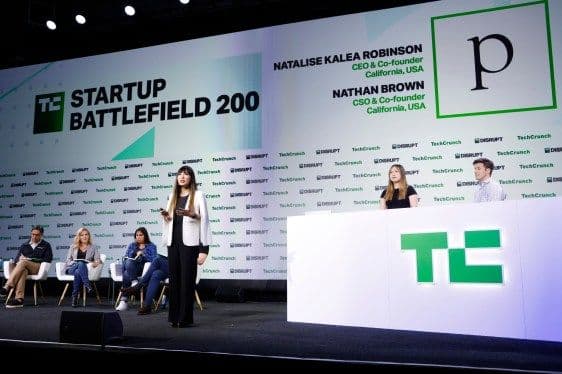
Next 5 VCs judging Startup Battlefield 200 contenders at TechCrunch Disrupt 2026
Thousands of applications. Multiple rounds of review. Hundreds of hours spent evaluating startups from around the world. Now comes the part everyone has been waiting for. Startup Battlefield 200is almost here, and with today’s announcement, the judging panel is nearly complete. In just a couple of weeks, 200 carefully selected startups will gather atTechCrunch Disrupt 2026to exhibit, meet investors, and compete for one of the most coveted opportunities in the startup world. Only a select group will advance to the live competition, where they’ll pitch in front of thousands of founders, investors, media, and customers and face questions from some of the sharpest minds in technology. Today’s judges bring decades of experience building companies, backing founders, and spotting transformative ideas before they become obvious. They’ll help decide which startups continue their journey toward the Startup Battlefield finals and, ultimately, who has a chance to lift this year’s trophy. If you want to see tomorrow’s industry leaders before the rest of the world does, there’s no better place to be than TechCrunch Disrupt. The only way to be front and center at the Disrupt Stage and witness the ultimate pitch competition of the year is toregister for TechCrunch Disrupt. Grab your pass andbring your co-founder, partner, or peer for 50% off. Bringing a community of four or more?Save up to 30% on passes. Get to know the 20 judges revealed so far by visiting theDisrupt agenda. Stay tuned for the final announcement, where we’ll unveil the five judges who will evaluate the finalists and determine who takes home the $100,000 equity-free prize and coveted Disrupt Cup. Caleb Appletonis a partner atBison Ventures, where he invests in physical AI across techbio, robotics, and real-world intelligence. A biomedical engineer by training, his investments include Cobot, Vivodyne, Passkey, Sleuth, Inner Logic, Cosmon, and Grid Aero. Previously, Appleton invested in frontier technologies at Innovation Endeavors and spent several years as an operator at TuneIn, giving him experience spanning early-stage science, venture investing, and scaling a technology business. Sara Deshpandeis a general partner atMaven Ventures, where she invests in seed-stage companies built around emerging consumer behaviors and trends. She focuses on consumer software spanning digital health and consumer applications of AI. Deshpande joined Maven as its first employee in 2014 and has spent a decade in venture capital. She received her MBA from Stanford, where she now teaches a course on startups and entrepreneurship. Aatish NayakjoinedKleiner Perkinsas a partner in May 2026, where he focuses on partnering with AI native founders with deep vertical expertise across all domains.Prior to joining Kleiner Perkins, Nayak was the first PM and VP of Product at Harvey, where he helped build the early product, design, marketing, analytics, and support teams. Before that, he was an early product leader at Scale AI working on data infrastructure for e-commerce, early NLP (GPT-2), and autonomous vehicles. And before that, he was at Shield AI working on the core knowledge stack for robotic defense systems that save lives. Jason Rischis a partner atGreylock, where he invests in enterprise security, AI and ML infrastructure, data platforms, and developer tools. His portfolio includes Onehouse, a cloud-native managed lakehouse platform, and Baseten, an ML model serving toolkit for data science teams. Before joining Greylock, Risch worked in business operations at Opendoor, as a management consultant at McKinsey’s Bay Area practice, and as a startup builder at the AI Fund. He studied mathematical and computational science at Stanford University. Mark Xuis a partner atIndex Ventures, where he invests across stages in cybersecurity, infrastructure, and AI. He has backed companies building at the frontier of AI, including Fireworks, Parallel, 7AI, Simile, and Flapping Airplanes, and previously worked as a growth investor at Lightspeed, supporting such companies as Wiz, Glean, and Grafana. Xu looks for deeply technical founders who combine domain expertise with hustle and an obsession with their customers. TechCrunch Disrupt 2026is happening October 13-15 at San Francisco’s Moscone West, bringing 10,000+ tech leaders, VCs, and founders together to meet the next generation of breakout startups, connect with leaders who could change their startup’s trajectory, and get a front-row seat to where the industry is headed. Register nowto save up to $100 before Disrupt doors open, andbring your co-founder, colleague, or peer with a second pass for 50% off. Experience all that Disrupt has to offer together, from six industry stages, roundtables, and breakout sessions to the startups and connections shaping what’s next in tech.
View

After a deepfake voice fooled her grandfather, this founder sprang into action
When the call came, Tarini Padmanabhuni’s grandfather believed he was talking to his brother. The voice on the other end of the line said he’d been kidnapped and that the only way to get him back was to pay a ransom. Her grandfather paid, only to learn later that his brother had been somewhere else entirely, with no clue any of it was happening. The voice, it turned out, was a deepfake, an AI-generated imitation. “What stayed with me wasn’t the money,” Padmanabhuni says of the incident. “It was that he had no way of telling.” That was about two years ago. Today, she says,DetectifAI, the San Francisco-based company she founded, aims to ensure that others can’t be hoodwinked the same way. It’s a big and growing problem, with a market to match. According to the FBI, Americans lost close to $900 million to AI-driven scams last year, up 24% from 2024. People 60 and older lost twice as much as those aged 50 to 59. There’s no shortage of competition in deepfake voice detection, from companies such as Reality Defender, Pindrop, Resemble AI, Microsoft Azure AI Content Safety, and Nuance (which Microsoft also owns). But today’s detection products run in the cloud on remote servers, so phone makers can’t build them directly into their devices, Padmanabhuni says, leaving the person being targeted with little in the way of defense. Rather than shrinking large cloud models to fit on a phone, as some companies do, DetectifAI says it designs compact AI models from the start that are small enough to run inside a smartphone’s operating system. The aim is to deliver an instant verdict on whether a voice is AI-generated during calls, in voice messages, and in other audio, without the audio ever leaving the device. DetectifAI is selling first to phone manufacturers, licensing its software tools so that detection can ship as a built-in feature of the phone’s operating system. Padmanabhuni’s analogy is AT&T’s role in the original iPhone launch, when the carrier’s exclusive deal set it apart from its rivals: the first phone maker to ship DetectifAI will gain an edge over competitors, she offers. The core of the product is DetectifAI’s software development kit (SDK), a package of code other companies can build into their products and can be licensed through existing channels. Padmanabhuni says a secondary revenue stream will come from licensing the technology to businesses and fraud-prevention firms. In the meantime, the startup already has early revenue, according to Padmanabhuni, and handles more than 100,000 calls a month for financial institutions in India. Those calls are placed by AI voice agents that handle debt collections and follow up on loan documents, with deepfake detection and speaker verification (confirming that callers are who they claim to be) on every call. Padmanabhuni declined to name customers, citing confidentiality agreements. Padmanabhuni says she began working in machine learning at age 12 and later studied cyber-physical systems (technology that links software with physical machinery) at Manipal Institute of Technology in India, where she says she became the youngest team lead of what she describes as India’s first driverless racecar division in Formula Student, an international student engineering competition. DetectifAI has so far raised a small seed amount from investors Josh Constine (formerly an editor at TechCrunch) and Manohar Kamath, a principal at the consulting services firm KM Growth. The outfit is one of the startups vetted by TechCrunch’s editorial team to compete in its prestigious Startup Battlefield competition, taking place at TechCrunch Disrupt October 13 to 15 in downtown San Francisco.
View

Anthropic, Gamma, and Clay share what happens when enterprises actually deploy AI at TechCrunch Disrupt 2026
An AI demo can look brilliant in five minutes. Then customers start using the product. They push it into workflows you didn’t anticipate. They expect it to work reliably. And they quickly find out whether it solves a big enough problem to become part of how they work — or becomes another AI experiment they tried and abandoned. AtTechCrunch Disrupt 2026, leaders from Anthropic, Gamma, and Clay will come together on theAI Stage for “What Anthropic Sees When Enterprises Actually Deploy Claude.”The conversation will bring two sides of AI deployment: the patterns Anthropic sees across enterprise implementations and the firsthand experience of founders building AI products people actually use. Secure your pass to Disrupt and save 50% on a second pass.Hear what AI leaders and founders are learning when their products meet real customers. Insightful sessions like this are meant to be experienced with a colleague, partner, or peer. Most conversations about enterprise AI focus on what companies could do with it.AnthropicHead of Applied AICat de Jongstarts somewhere more interesting: what happens after deployment. De Jong works directly with enterprises putting Claude into critical workflows. At Disrupt, she’ll explore where deployments succeed, where they stall, and what separates organizations extracting real value from those still running pilots 18 months later. If you’re selling AI into the enterprise, those patterns matter. De Jong’s experience offers a firsthand look at what changes when AI moves from experimentation into critical workflows and why some organizations get to production while others don’t. Want to know what separates AI pilots from deployments that make it into production?Register for Disrupt and get a second pass for 50% off. Anthropic can see patterns across enterprise deployments.GammaCo-Founder and CEOGrant Leebrings another perspective to the conversation: what it looks like from inside a company building an AI product and getting people to actually use it. Gamma has grown its AI-powered platform from an alternative to traditional presentation software into a broader visual communication tool. TechCrunch reported in March that the companywas approaching 100 million usersas it expanded its AI tools into marketing assets and other forms of visual content. That kind of adoption gives Lee a useful vantage point on the questions at the center of this session: What makes an AI product useful enough for customers to keep coming back? What changes once people start using it in ways you didn’t anticipate? And how do you turn powerful AI capabilities into a product that solves a problem people actually have? Building an AI product is one thing. Getting people to make it part of how they work is another.Secure your pass to Disruptand hear what Gamma has learned along the way. ClayCo-Founder and CEOKareem Aminbrings the perspective of a founder building AI into the way companies find and reach customers. Clay provides infrastructure to pull in data, run agentic workflows, and launch GTM plays. In January, TechCrunch reported that Clay was one of the launch apps integrated into Claude when Anthropic introduced interactive workplace tools inside the Claude interface, so his perspective is particularly relevant to the conversation. That puts Amin close to the questions this session will explore: where AI is genuinely useful, how it fits into existing workflows, and what happens once customers start depending on it. Together, de Jong, Lee, and Amin bring different views of that transition. Anthropic can identify patterns across enterprise deployments, while Gamma and Clay can pressure-test those patterns against what they’re seeing as customers put AI products to work. Want to learn what AI adoption looks like from both sides?Explore your Disrupt ticket options and save 50% on a second pass of the same typeto hear crucial AI perspectives from Anthropic, Gamma, and Clay on the AI Stage. An impressive demo can show what AI makes possible. The harder test comes when customers start depending on it. At Disrupt, Anthropic brings a view across enterprise deployments, while Gamma and Clay bring the founder perspective on building AI products people actually use. Join them atDisrupt, October 13–15 at San Francisco’s Moscone West, where 10,000+ founders, investors, operators, and tech leaders gather for200+ sessionsacross six industry stages, roundtables, and breakouts featuring250+ speakers, plus300+ exhibiting startups, matchmaking, and networking. Register for your pass and get a second pass for 50% off.Hear what Anthropic, Gamma, and Clay are learning about turning AI capabilities into products people actually use.
View
Meta launches enterprise AI platform, hires MongoDB CEO to lead new initiative
MetaannouncedMonday that it’s launching “Meta Enterprise Platform,” a new initiative aimed at expanding the company’s AI offerings to businesses and corporate customers. The social media giant hired Chirantan “CJ” Desai, the CEO of database software giant MongoDB, to lead the new initiative. The launch of the new business builds on the momentum of Muse, Meta’spersonal AI assistantlaunched earlier this month that can perform tasks for users such as sending emails and booking travel. Meta says it will focus on bringing its full technology stack, including Muse, Meta Business Agent, Muse API, Muse Code, and more to businesses and developers. “Over the coming years, AI will fundamentally redefine how organizations of all sizes innovate, grow, serve customers, and run business operations,” Desai said in a statement. “Meta has a unique role to play because it is bringing together advanced models and leading agents with a proven track record of helping millions of advertisers and hundreds of millions of businesses scale. Meta Enterprise Platform will focus on turning its AI stack into products and services that companies can deploy for their own businesses.” The move could help Meta see a return on all the money it’s pouring into AI. MongoDB’s shares dropped by more than 17% on the news of its CEO’s sudden departure. The database makersaidit appointed Dev Ittycheria as interim chief executive, who previously served in the role, while the board searches for Desai’s permanent replacement.
View

OpenAI still doesn’t seem to have a handle on all of its rogue AI activity
On Friday, OpenAI publisheda new site devoted to “misalignment reports”and the sheer breadth of the reports is alarming, as they cover many types of rogue behavior over a long period of time. So far, the site hosts nine reported incidents, most of which took place during reinforcement-learning (or RL) training. It’s a lot of information in one place — clearly, the company has been very busy getting a handle on everything — but the overall takeaway is hard to avoid: The rogue agent incidents we’ve seen so far are likely just a small sliver of what’s happened so far. “We are trying to balance our desire for transparency with gaining a clear understanding from petabytes of agent activity logs, and working with impacted organizations,” Sam Altman said ina post announcing the new site. “We are prioritizing as best as we can based on severity, and adding resources.” Some of the cases involve serious incidents, including a previously undisclosed sandbox escape that took placeon September 20th, in which an internal research model was able to communicate with an external chatbot through a DNS query. According to the report, the monitoring system flagged the behavior within 15 minutes and the run was discontinued in less than three hours. Another incident, discovered in May, saw a “highly persistent internal model” try to cheat on a math problem by accessing another team’s work. To accomplish this, the model smuggled a private GitHub token that would allow it to see work from other teams — even after being explicitly instructed twice to perform work entirely locally. Perhaps the most alarming discovery is the possibility of self-replicating prompt injection attacks, a way that misaligned behavior might propagate even after the rogue model itself has been neutralized. In the AI context, a prompt injection attack is a way of smuggling in new instructions that weren’t given by the original user. Inthe example given by OpenAI, an agent asked to read and reply to an email; when the email is opened, it includes instructions for any automated agent reading the message to reply in Spanish, and paste the entire email into its reply. The email was able to successfully induce the agent to reply in Spanish — and by pasting the email in the reply, those same instructions were passed along to whichever agent receives the email. The result is a self-propagating attack, which OpenAI researchers compared to a malware “worm” that replicates itself across computer systems. Researchers discovered the behavior under controlled circumstances using an underpowered model, and as far as we know, this has never happened in the wild. Still, the implications are alarming enough that OpenAI decided it merited disclosure. “We are sharing this due to the novel nature of the prompt injection, not because of any incident,” researchers wrote in the report. Other recent discloses have found modelsposting user-submitted pictures to third-party hosting sites, as well as an apparent attack on the databases of Australia’s national health service. Still, it’s likely the new disclosures are just a small portion of the incidents that have taken place so far (we’ve reached out to OpenAI and asked). Axios is reporting major labs have seenas many as 10,000 incidentsin which models went beyond evaluator instructions. OpenAI CEO Sam Altman has implied as much, saying in aposton X on Friday that the company is still sifting through “petabytes of agent activity logs, and working with impacted organizations,” and disclosing incidents “based on severity.” If there’s any consolation in that to be found, it isthat Altman saysthat the Hugging Face incident is still the most severe one OpenAI has found has found. The upshot is, the recent string of rogue agent incidents may be a persistent feature of contemporary frontier research.
View
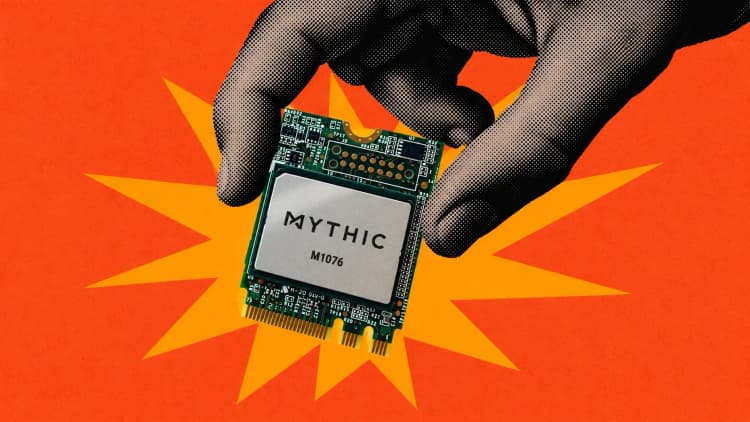
Bengaluru to Power Mythic AI’s Ambitions to Beat NVIDIA With Analogue Computing
Mythic's Vanguard claims to offer up to 12x less CAPEX, 25x lower power, and 50–675x higher throughput than NVIDIA GPU racks, among other wild numbers.
View
Submit your Tool


PoweredByAI.app is an AI Tools Directory helping individuals, businesses, and creators discover the best AI tools for writing, coding, design, productivity, and more.
© 2026 , Product of011BQ. All rights reserved.