🚀 Zaprep: Your Socials on Steroids. 免费开始 — 每月自动发送 1,000 条私信,将互动转化为潜在客户。 ,每月 1,000 条自动私信。
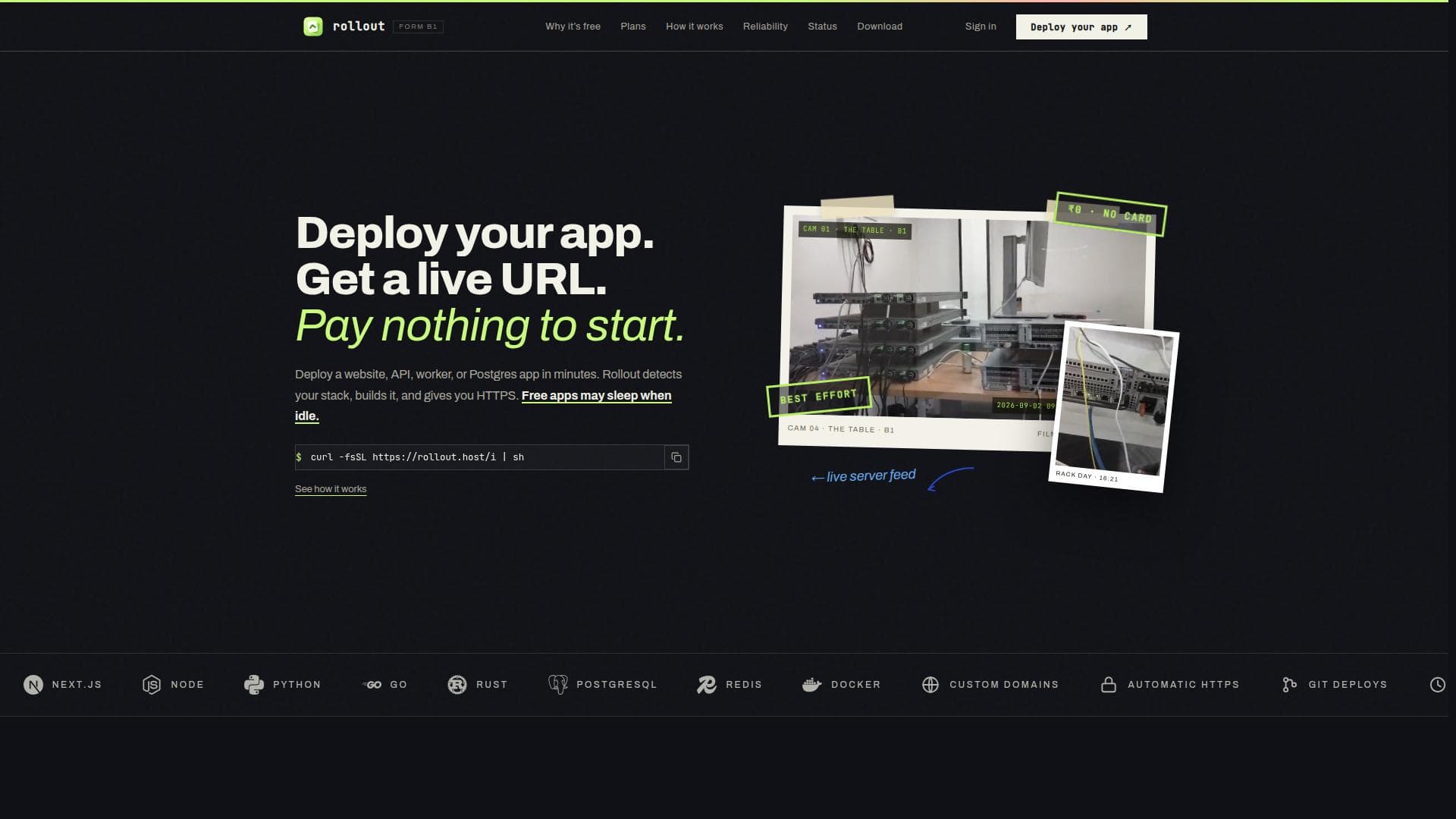


Rollout is a rapid deployment platform that automatically detects your app’s stack and delivers a live HTTPS URL within minutes, making it ideal for developers and small teams seeking hassle-free deployment of websites, APIs, workers, and Postgres apps. Its free tier and simple path to production empower users to launch projects quickly without upfront costs or complex setup.

描述
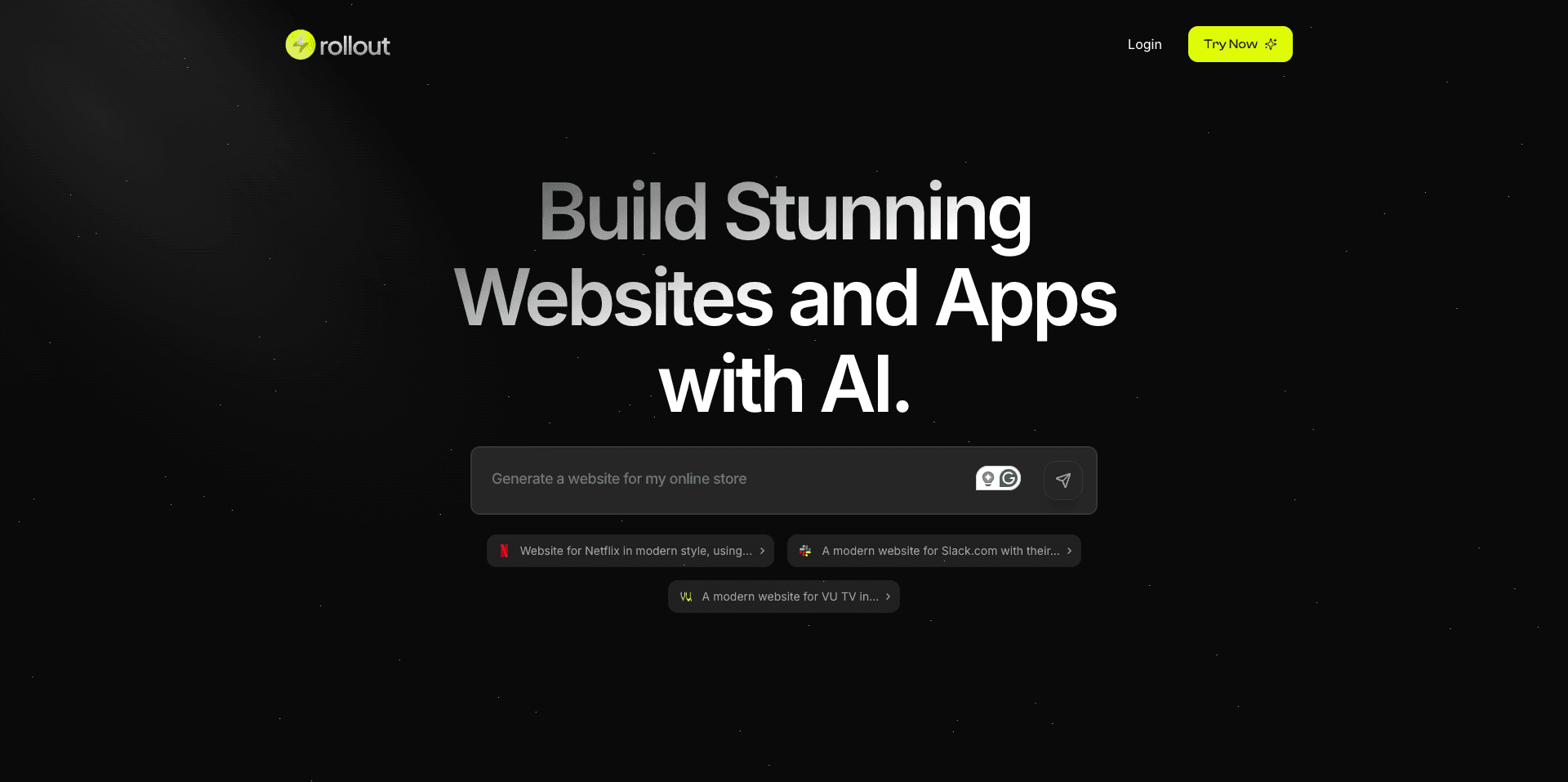
Rollout is an AI website builder that helps you build professional websites using a human-friendly chat interface.
详细描述
Rollout is a streamlined deployment platform designed to simplify the process of launching websites, APIs, workers, and Postgres applications with minimal effort and time. Its core purpose is to enable developers and teams to deploy their applications quickly without worrying about complex configuration or infrastructure management. By automatically detecting the technology stack used in your project, Rollout builds and deploys your app, providing a secure, live HTTPS URL instantly. This eliminates the traditional friction associated with deployment pipelines and hosting setups, making it ideal for rapid development cycles and continuous delivery. One of Rollout's standout features is its automatic stack detection and build system. Whether your app is built with React, Next.js, Node.js, Python, Go, Rust, or uses Postgres and Redis databases, Rollout identifies the components and dependencies and configures the environment accordingly. This automation reduces manual setup errors and accelerates the deployment timeline. Additionally, Rollout offers access to real-time logs, enabling developers to monitor their applications' behavior and troubleshoot issues efficiently. The platform also supports custom domains, automatic HTTPS provisioning, Git-based deployments, and cron jobs, providing a comprehensive suite of tools to manage production-ready applications. Rollout is particularly well-suited for individual developers, startups, and small to medium-sized teams who need a fast, reliable, and cost-effective way to deploy web services and backend components. Its support for diverse app types — from static websites to APIs and background workers — makes it versatile for various use cases such as prototyping, MVP launches, side projects, and even production deployments of lightweight services. The free tier is especially attractive for hobbyists or those experimenting with new ideas, as it allows apps to be deployed without upfront costs, though free apps may enter a sleep state when idle to conserve resources. Regarding pricing, Rollout offers a free deployment option that includes essential features like HTTPS URLs and logs, with the caveat that free apps may sleep when not in use. While the website mentions plans, detailed pricing tiers and enterprise options are not explicitly outlined in the provided content, suggesting that the platform focuses on accessible free usage with potential paid upgrades for enhanced reliability or performance. This model aligns with many modern deployment services that provide generous free tiers to onboard users quickly. Compared to alternatives like Vercel, Netlify, or Heroku, Rollout distinguishes itself with its automatic stack detection and the ability to deploy a broader range of app types including workers and Postgres apps in addition to websites and APIs. Its simplicity and speed make it a compelling choice for developers who want to avoid the complexity of configuring build pipelines or managing infrastructure. However, unlike some competitors with mature ecosystems and extensive plugin marketplaces, Rollout may have fewer integrations or advanced features out of the box, focusing instead on core deployment functionality. Potential limitations include the sleeping behavior of free apps, which can introduce latency on first access after idle periods, and the lack of detailed information on paid plans or enterprise-grade SLAs in the publicly available content. Users with high-availability requirements or complex scaling needs might need to evaluate whether Rollout meets their demands or if they require a more robust platform. Additionally, while automatic detection is powerful, edge cases with uncommon stacks might require manual configuration or might not be fully supported. In summary, Rollout is a fast, user-friendly deployment platform that excels at getting apps live quickly with minimal setup. Its automatic stack detection, support for multiple app types, and free tier make it an excellent choice for developers seeking simplicity and speed. While it may not yet offer the extensive features or guarantees of some established competitors, it provides a solid foundation for deploying modern web applications and backend services efficiently.
工具功能
- Deploy a website, API, worker, or Postgres app in minutes
- Automatic stack detection and build
- Provides live HTTPS URL
- Access to logs
- Simple path to production
- Free apps may sleep when idle
描述
Rollout is a rapid deployment platform that automatically detects your app’s stack and delivers a live HTTPS URL within minutes, making it ideal for developers and small teams seeking hassle-free deployment of websites, APIs, workers, and Postgres apps. Its free tier and simple path to production empower users to launch projects quickly without upfront costs or complex setup.
Rollout is an AI website builder that helps you build professional websites using a human-friendly chat interface.
详细描述
Rollout is a streamlined deployment platform designed to simplify the process of launching websites, APIs, workers, and Postgres applications with minimal effort and time. Its core purpose is to enable developers and teams to deploy their applications quickly without worrying about complex configuration or infrastructure management. By automatically detecting the technology stack used in your project, Rollout builds and deploys your app, providing a secure, live HTTPS URL instantly. This eliminates the traditional friction associated with deployment pipelines and hosting setups, making it ideal for rapid development cycles and continuous delivery. One of Rollout's standout features is its automatic stack detection and build system. Whether your app is built with React, Next.js, Node.js, Python, Go, Rust, or uses Postgres and Redis databases, Rollout identifies the components and dependencies and configures the environment accordingly. This automation reduces manual setup errors and accelerates the deployment timeline. Additionally, Rollout offers access to real-time logs, enabling developers to monitor their applications' behavior and troubleshoot issues efficiently. The platform also supports custom domains, automatic HTTPS provisioning, Git-based deployments, and cron jobs, providing a comprehensive suite of tools to manage production-ready applications. Rollout is particularly well-suited for individual developers, startups, and small to medium-sized teams who need a fast, reliable, and cost-effective way to deploy web services and backend components. Its support for diverse app types — from static websites to APIs and background workers — makes it versatile for various use cases such as prototyping, MVP launches, side projects, and even production deployments of lightweight services. The free tier is especially attractive for hobbyists or those experimenting with new ideas, as it allows apps to be deployed without upfront costs, though free apps may enter a sleep state when idle to conserve resources. Regarding pricing, Rollout offers a free deployment option that includes essential features like HTTPS URLs and logs, with the caveat that free apps may sleep when not in use. While the website mentions plans, detailed pricing tiers and enterprise options are not explicitly outlined in the provided content, suggesting that the platform focuses on accessible free usage with potential paid upgrades for enhanced reliability or performance. This model aligns with many modern deployment services that provide generous free tiers to onboard users quickly. Compared to alternatives like Vercel, Netlify, or Heroku, Rollout distinguishes itself with its automatic stack detection and the ability to deploy a broader range of app types including workers and Postgres apps in addition to websites and APIs. Its simplicity and speed make it a compelling choice for developers who want to avoid the complexity of configuring build pipelines or managing infrastructure. However, unlike some competitors with mature ecosystems and extensive plugin marketplaces, Rollout may have fewer integrations or advanced features out of the box, focusing instead on core deployment functionality. Potential limitations include the sleeping behavior of free apps, which can introduce latency on first access after idle periods, and the lack of detailed information on paid plans or enterprise-grade SLAs in the publicly available content. Users with high-availability requirements or complex scaling needs might need to evaluate whether Rollout meets their demands or if they require a more robust platform. Additionally, while automatic detection is powerful, edge cases with uncommon stacks might require manual configuration or might not be fully supported. In summary, Rollout is a fast, user-friendly deployment platform that excels at getting apps live quickly with minimal setup. Its automatic stack detection, support for multiple app types, and free tier make it an excellent choice for developers seeking simplicity and speed. While it may not yet offer the extensive features or guarantees of some established competitors, it provides a solid foundation for deploying modern web applications and backend services efficiently.
常见问题
What is Rollout?
Rollout is a deployment platform that enables you to deploy websites, APIs, workers, and Postgres applications quickly and easily. It automatically detects your app’s technology stack, builds it, and provides a live HTTPS URL along with access to logs and other production-ready features.
How much does Rollout cost?
Rollout offers a free deployment option that allows you to deploy apps without any upfront cost. Free apps may sleep when idle to conserve resources. While the website references plans, detailed pricing information is not explicitly provided, suggesting a focus on free usage with potential paid upgrades.
Who is Rollout best for?
Rollout is best suited for individual developers, startups, and small to medium-sized teams who want a fast, simple, and cost-effective way to deploy web applications, APIs, background workers, and Postgres databases without managing complex infrastructure.
What are the main features of Rollout?
Key features include automatic stack detection and build, deployment of websites, APIs, workers, and Postgres apps, live HTTPS URLs, real-time access to logs, support for custom domains, automatic HTTPS provisioning, Git-based deployments, cron jobs, and a simple path to production.
Does Rollout offer a free trial?
Rollout offers a free tier that allows you to deploy apps at no cost. This free usage can be considered a free trial of the platform’s core capabilities, although apps on the free plan may sleep when idle.
What integrations does Rollout support?
Rollout supports deploying apps built with popular frameworks and languages such as React, Next.js, Node.js, Python, Go, Rust, and databases like Postgres and Redis. It also supports Git-based deployments and custom domains with automatic HTTPS.
How does Rollout work?
Rollout works by automatically detecting the technology stack of your app when you deploy it. It then builds the app accordingly and provisions a live HTTPS URL. You can monitor your app through logs and manage deployments via Git, all through a simple and streamlined interface designed to minimize setup and configuration.
社交媒体
使用工具评价
暂无评价。成为第一个分享使用体验的人。
赞助工具


























推荐工具
及时了解最新 AI 工具
获取最新资讯,订阅我们的新闻通讯
已有 50,000+ 位读者阅读并信赖
加入最大的 AI 社区
我们的社区和团队随时为您提供帮助!
您的反馈将帮助 Alice AI 在未来版本中不断改进。