GPT Computer Assistant


这是您的 AI 工具吗?立即认领。
验证所有权、管理资料,并解锁增长功能。
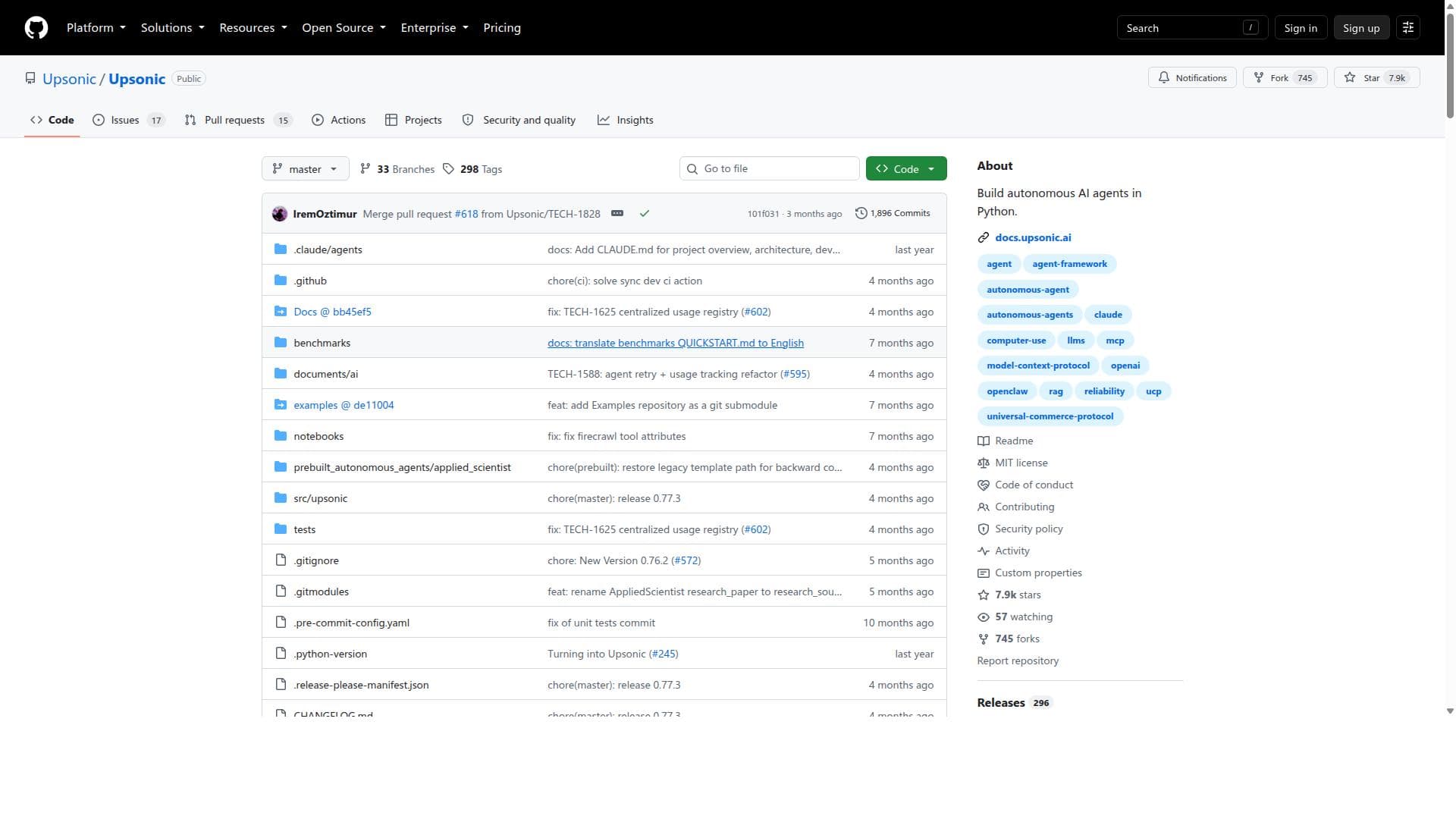
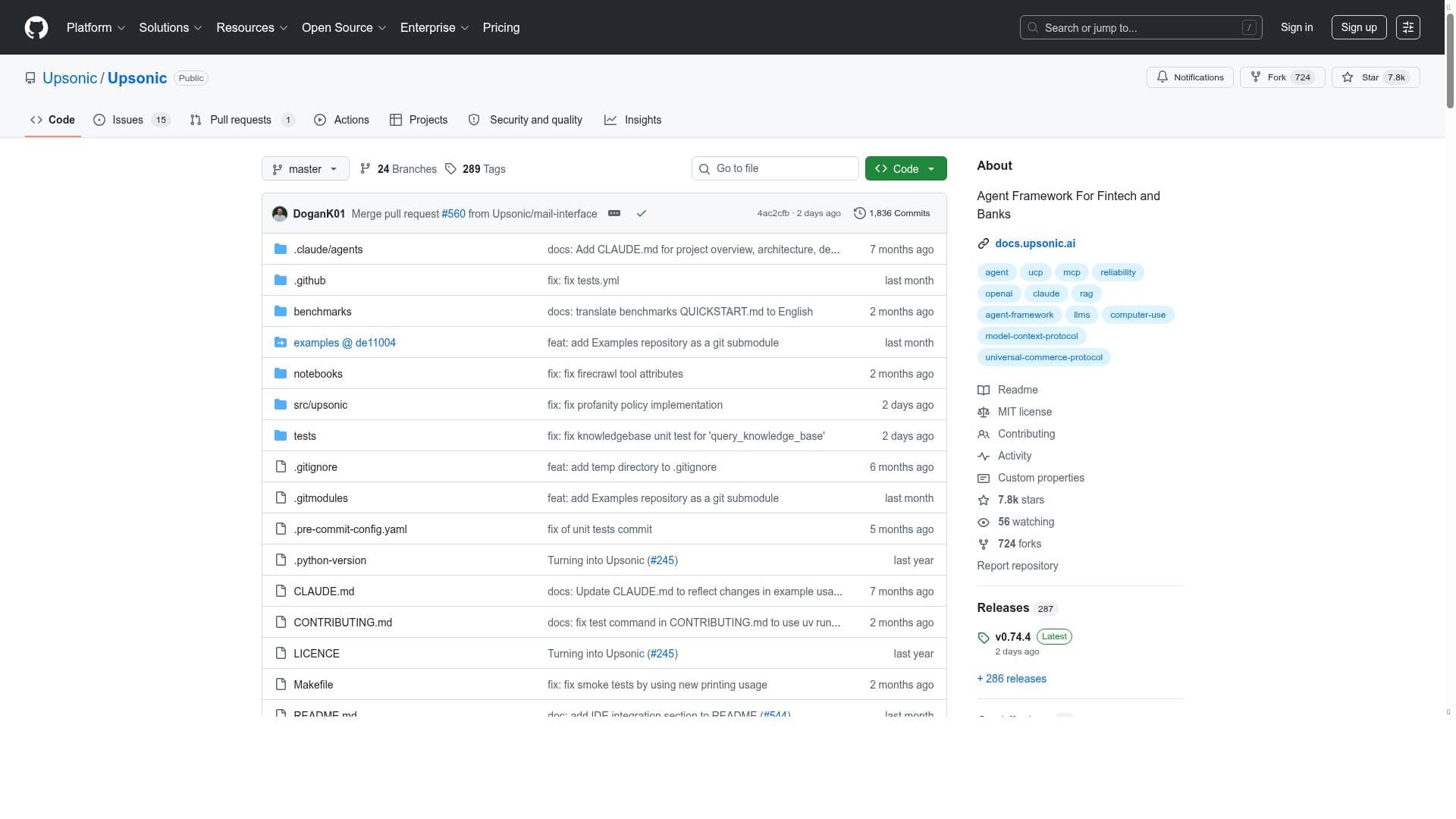
Upsonic is an open-source Python framework that enables developers to create autonomous AI agents capable of independently executing complex tasks and workflows. Ideal for AI developers and organizations seeking flexible, cost-effective automation solutions, Upsonic combines modular design with community-driven innovation to advance intelligent agent development.

描述
Create your own intelligence specific to your product. With an agentic infrastructure, custom tools, and extensive API support, customize your intelligence in detail and establish extensive artificial intelligence infrastructures like apple intelligence.
详细描述
Upsonic is an open-source Python-based framework specifically designed to empower developers and AI practitioners to build autonomous AI agents capable of performing tasks independently. Its core purpose is to facilitate the creation of intelligent agents that can automate complex workflows and decision-making processes without continuous human intervention. By leveraging Python, a widely adopted programming language in AI and software development, Upsonic provides a flexible and accessible platform for developing advanced AI-driven automation solutions. At its heart, Upsonic enables users to design, implement, and deploy autonomous agents that can operate within diverse environments and handle a variety of tasks. The framework supports the integration of multiple AI models and tools, allowing agents to reason, plan, and execute actions based on dynamic inputs. Key features include the ability to build fully autonomous agents that can manage task sequences, monitor progress, and adapt to changing conditions. Upsonic’s architecture encourages modular development, making it easier to extend functionality and incorporate new AI capabilities as they emerge. One of the standout aspects of Upsonic is its community-driven development model. Being open source, it benefits from contributions by developers worldwide, fostering continuous improvement and innovation. This collaborative approach ensures that the framework stays up-to-date with the latest AI research and best practices. Additionally, Upsonic integrates smoothly with Python development environments, enabling developers to use familiar tools and libraries, which accelerates the development cycle and reduces the learning curve. Upsonic is ideally suited for AI developers, researchers, and organizations looking to implement autonomous AI agents for automation, data processing, or intelligent decision-making workflows. Use cases span from automating routine business processes and managing IT operations to creating intelligent assistants capable of complex problem-solving. Its flexibility allows it to be employed in experimental AI research as well as in production environments where reliability and scalability are critical. Regarding pricing, Upsonic is free to use as it is distributed under an open-source license. This makes it an attractive option for startups, academic institutions, and enterprises seeking cost-effective AI automation solutions without vendor lock-in. Users can freely access the source code, customize it to their needs, and contribute back to the community. When compared to alternative AI agent frameworks, Upsonic stands out due to its Python-centric design and strong emphasis on autonomy and modularity. While some platforms may offer more out-of-the-box integrations or commercial support, Upsonic’s open-source nature provides unmatched flexibility and transparency. However, unlike some commercial tools, it may require more hands-on development effort and technical expertise to deploy effectively. Potential limitations include the need for proficiency in Python and AI concepts to fully leverage the framework’s capabilities. Additionally, as a community-driven project, users might encounter varying levels of documentation and support compared to commercial offerings. Organizations should consider these factors when evaluating Upsonic for mission-critical applications. In summary, Upsonic is a powerful, open-source framework tailored for building autonomous AI agents in Python. Its rich feature set, community backing, and flexibility make it a compelling choice for developers aiming to automate complex tasks and workflows with intelligent agents. While it demands a certain level of technical skill, the benefits of customization and cost savings are significant, positioning Upsonic as a valuable tool in the AI automation landscape.
工具功能
- Build autonomous AI agents in Python
- Supports creation of intelligent agents for task automation
- Open source and community-driven development
- Facilitates advanced AI workflows
- Integrates with Python development environments
描述
Upsonic is an open-source Python framework that enables developers to create autonomous AI agents capable of independently executing complex tasks and workflows. Ideal for AI developers and organizations seeking flexible, cost-effective automation solutions, Upsonic combines modular design with community-driven innovation to advance intelligent agent development.
Create your own intelligence specific to your product. With an agentic infrastructure, custom tools, and extensive API support, customize your intelligence in detail and establish extensive artificial intelligence infrastructures like apple intelligence.
详细描述
Upsonic is an open-source Python-based framework specifically designed to empower developers and AI practitioners to build autonomous AI agents capable of performing tasks independently. Its core purpose is to facilitate the creation of intelligent agents that can automate complex workflows and decision-making processes without continuous human intervention. By leveraging Python, a widely adopted programming language in AI and software development, Upsonic provides a flexible and accessible platform for developing advanced AI-driven automation solutions. At its heart, Upsonic enables users to design, implement, and deploy autonomous agents that can operate within diverse environments and handle a variety of tasks. The framework supports the integration of multiple AI models and tools, allowing agents to reason, plan, and execute actions based on dynamic inputs. Key features include the ability to build fully autonomous agents that can manage task sequences, monitor progress, and adapt to changing conditions. Upsonic’s architecture encourages modular development, making it easier to extend functionality and incorporate new AI capabilities as they emerge. One of the standout aspects of Upsonic is its community-driven development model. Being open source, it benefits from contributions by developers worldwide, fostering continuous improvement and innovation. This collaborative approach ensures that the framework stays up-to-date with the latest AI research and best practices. Additionally, Upsonic integrates smoothly with Python development environments, enabling developers to use familiar tools and libraries, which accelerates the development cycle and reduces the learning curve. Upsonic is ideally suited for AI developers, researchers, and organizations looking to implement autonomous AI agents for automation, data processing, or intelligent decision-making workflows. Use cases span from automating routine business processes and managing IT operations to creating intelligent assistants capable of complex problem-solving. Its flexibility allows it to be employed in experimental AI research as well as in production environments where reliability and scalability are critical. Regarding pricing, Upsonic is free to use as it is distributed under an open-source license. This makes it an attractive option for startups, academic institutions, and enterprises seeking cost-effective AI automation solutions without vendor lock-in. Users can freely access the source code, customize it to their needs, and contribute back to the community. When compared to alternative AI agent frameworks, Upsonic stands out due to its Python-centric design and strong emphasis on autonomy and modularity. While some platforms may offer more out-of-the-box integrations or commercial support, Upsonic’s open-source nature provides unmatched flexibility and transparency. However, unlike some commercial tools, it may require more hands-on development effort and technical expertise to deploy effectively. Potential limitations include the need for proficiency in Python and AI concepts to fully leverage the framework’s capabilities. Additionally, as a community-driven project, users might encounter varying levels of documentation and support compared to commercial offerings. Organizations should consider these factors when evaluating Upsonic for mission-critical applications. In summary, Upsonic is a powerful, open-source framework tailored for building autonomous AI agents in Python. Its rich feature set, community backing, and flexibility make it a compelling choice for developers aiming to automate complex tasks and workflows with intelligent agents. While it demands a certain level of technical skill, the benefits of customization and cost savings are significant, positioning Upsonic as a valuable tool in the AI automation landscape.
常见问题
What is Upsonic?
Upsonic is a Python-based open-source framework designed to build autonomous AI agents that can perform tasks independently, enabling automation and advanced AI workflows.
How much does Upsonic cost?
Upsonic is free to use as it is distributed under an open-source license, allowing users to access, modify, and deploy the framework without any licensing fees.
Who is Upsonic best for?
Upsonic is best suited for AI developers, researchers, and organizations looking to create intelligent autonomous agents for task automation and complex workflow management.
What are the main features of Upsonic?
Key features include building autonomous AI agents in Python, support for task automation, modular and extensible architecture, integration with Python development environments, and a community-driven open-source development model.
Does Upsonic offer a free trial?
As an open-source project, Upsonic is freely available to use without the need for a trial period or subscription.
What integrations does Upsonic support?
Upsonic integrates with Python development environments and supports incorporating various AI models and tools, enabling flexible and extensible autonomous agent creation.
How does Upsonic work?
Upsonic works by providing a Python framework where developers can design and deploy autonomous AI agents that independently plan, execute, and adapt to tasks within automated workflows.
社交媒体
使用工具评价
暂无评价。成为第一个分享使用体验的人。