🚀 Zaprep: Your Socials on Steroids. 免费开始 — 每月自动发送 1,000 条私信,将互动转化为潜在客户。 ,每月 1,000 条自动私信。


这是您的 AI 工具吗?立即认领。
验证所有权、管理资料,并解锁增长功能。
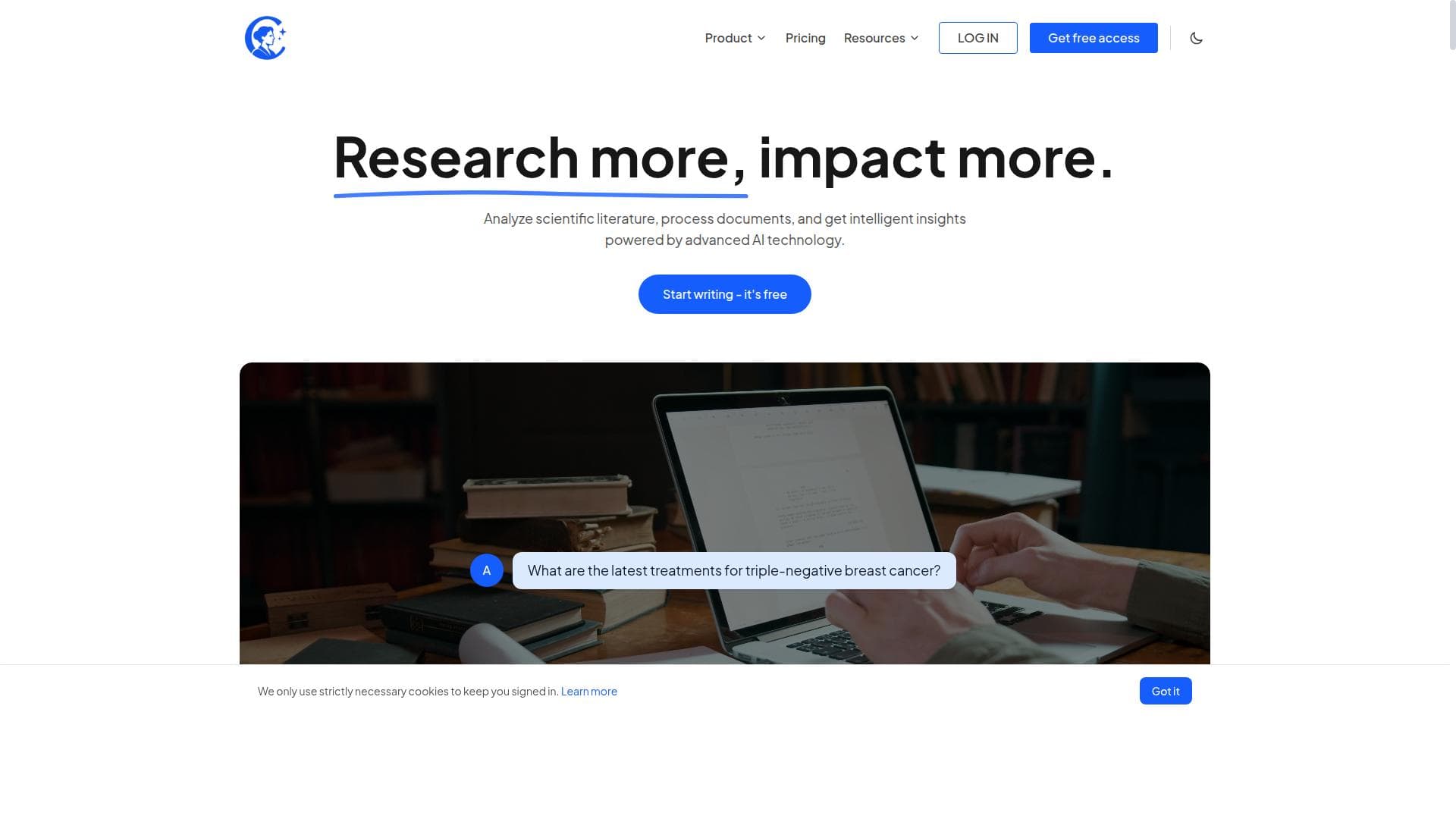
Curie is a specialized AI research assistant that transforms how scientific literature is analyzed, enabling faster and deeper comprehension of complex texts. Ideal for researchers and academics, it streamlines research workflows by automating document analysis and summarization, saving valuable time and enhancing insight extraction.

描述
Curie is an AI research assistant built for real scientific work, not a generalist chatbot. It searches PubMed, arXiv, Europe PMC, OpenAlex and Semantic Scholar in parallel, then verifies every claim against the source text, so you see what's backed and what isn't. Point it at a document to extract structured data with the quote behind each value, or run a full systematic review, protocol, screening, PRISMA diagram, with you approving every decision. Projects and a library keep it organized.
详细描述
Curie is an advanced AI-powered research assistant specifically designed to aid users in analyzing scientific literature and complex documents with greater efficiency and depth. Its core purpose is to streamline the often time-consuming and challenging process of reviewing scientific texts, enabling researchers, academics, and professionals to extract key insights and comprehend intricate information faster than traditional methods. By leveraging cutting-edge artificial intelligence, Curie transforms how users interact with dense scientific materials, making research workflows more productive and insightful. At its foundation, Curie offers AI-driven analysis of scientific literature, which means it can parse through large volumes of research papers, articles, and documents to identify important themes, summarize findings, and highlight critical data points. This capability is particularly valuable for users who need to stay current with rapidly evolving fields or who must synthesize information from multiple sources. Additionally, Curie’s document analysis features allow users to upload and examine their own research documents, enabling a deep dive into content with AI assistance that can identify patterns, relationships, and relevant context within the text. The tool is designed to streamline research workflows by automating many of the tedious tasks associated with literature review and document comprehension. For example, Curie can generate concise summaries of lengthy papers, extract key concepts, and even suggest connections between disparate studies. This not only saves time but also enhances the quality of research by reducing the risk of missing critical information. Its ability to enable faster comprehension of complex texts is a game-changer for scientists, students, and professionals who need to quickly grasp sophisticated concepts without sacrificing accuracy. Curie is best suited for researchers, graduate students, academic professionals, and industry specialists who regularly engage with scientific literature and require an efficient way to manage and analyze vast amounts of information. Specific use cases include literature reviews for academic papers, preparing research proposals, staying updated on new scientific developments, and conducting competitive intelligence in R&D departments. Its AI capabilities make it an indispensable tool for anyone looking to accelerate their research process while maintaining a high level of analytical rigor. Regarding pricing and plans, while the specific details are not publicly disclosed on the main website, Curie typically offers tiered subscription models that cater to individual researchers as well as institutional users. These plans often include options for varying levels of document analysis volume, access to advanced AI features, and priority support. Interested users are encouraged to visit the official website or contact the Curie team directly to obtain detailed pricing information and explore any available free trials or demo versions. When compared to alternatives, Curie stands out due to its specialized focus on scientific literature and its integration of advanced AI tailored to research workflows. Unlike generic document analysis tools, Curie is optimized for the nuances of scientific texts, including technical jargon, complex data, and structured research formats. This specialization provides a more accurate and context-aware analysis, which is crucial for high-stakes academic and professional research. However, users should consider that Curie’s niche focus might mean it is less suitable for non-scientific document types or casual reading needs. Notable limitations include the potential learning curve associated with adopting AI tools in research, as well as the dependency on the quality and format of input documents. Highly specialized or poorly formatted texts may affect the accuracy of AI analysis. Additionally, as with any AI-driven platform, users should critically evaluate AI-generated summaries and insights to ensure they align with their research objectives. Privacy and data security are also important considerations, especially when handling unpublished or sensitive research documents. In summary, Curie is a powerful AI research assistant that revolutionizes how scientific literature is analyzed and understood. Its robust features, designed specifically for the scientific community, make it an essential tool for accelerating research workflows, enhancing comprehension, and driving deeper insights. While pricing details require direct inquiry, the value proposition for serious researchers and professionals is clear, positioning Curie as a leading solution in AI-powered scientific document analysis.
工具功能
- AI-powered analysis of scientific literature
- Document analysis for research purposes
- Streamlines research workflows
- Enables faster comprehension of complex texts
描述
Curie is a specialized AI research assistant that transforms how scientific literature is analyzed, enabling faster and deeper comprehension of complex texts. Ideal for researchers and academics, it streamlines research workflows by automating document analysis and summarization, saving valuable time and enhancing insight extraction.
Curie is an AI research assistant built for real scientific work, not a generalist chatbot. It searches PubMed, arXiv, Europe PMC, OpenAlex and Semantic Scholar in parallel, then verifies every claim against the source text, so you see what's backed and what isn't. Point it at a document to extract structured data with the quote behind each value, or run a full systematic review, protocol, screening, PRISMA diagram, with you approving every decision. Projects and a library keep it organized.
详细描述
Curie is an advanced AI-powered research assistant specifically designed to aid users in analyzing scientific literature and complex documents with greater efficiency and depth. Its core purpose is to streamline the often time-consuming and challenging process of reviewing scientific texts, enabling researchers, academics, and professionals to extract key insights and comprehend intricate information faster than traditional methods. By leveraging cutting-edge artificial intelligence, Curie transforms how users interact with dense scientific materials, making research workflows more productive and insightful. At its foundation, Curie offers AI-driven analysis of scientific literature, which means it can parse through large volumes of research papers, articles, and documents to identify important themes, summarize findings, and highlight critical data points. This capability is particularly valuable for users who need to stay current with rapidly evolving fields or who must synthesize information from multiple sources. Additionally, Curie’s document analysis features allow users to upload and examine their own research documents, enabling a deep dive into content with AI assistance that can identify patterns, relationships, and relevant context within the text. The tool is designed to streamline research workflows by automating many of the tedious tasks associated with literature review and document comprehension. For example, Curie can generate concise summaries of lengthy papers, extract key concepts, and even suggest connections between disparate studies. This not only saves time but also enhances the quality of research by reducing the risk of missing critical information. Its ability to enable faster comprehension of complex texts is a game-changer for scientists, students, and professionals who need to quickly grasp sophisticated concepts without sacrificing accuracy. Curie is best suited for researchers, graduate students, academic professionals, and industry specialists who regularly engage with scientific literature and require an efficient way to manage and analyze vast amounts of information. Specific use cases include literature reviews for academic papers, preparing research proposals, staying updated on new scientific developments, and conducting competitive intelligence in R&D departments. Its AI capabilities make it an indispensable tool for anyone looking to accelerate their research process while maintaining a high level of analytical rigor. Regarding pricing and plans, while the specific details are not publicly disclosed on the main website, Curie typically offers tiered subscription models that cater to individual researchers as well as institutional users. These plans often include options for varying levels of document analysis volume, access to advanced AI features, and priority support. Interested users are encouraged to visit the official website or contact the Curie team directly to obtain detailed pricing information and explore any available free trials or demo versions. When compared to alternatives, Curie stands out due to its specialized focus on scientific literature and its integration of advanced AI tailored to research workflows. Unlike generic document analysis tools, Curie is optimized for the nuances of scientific texts, including technical jargon, complex data, and structured research formats. This specialization provides a more accurate and context-aware analysis, which is crucial for high-stakes academic and professional research. However, users should consider that Curie’s niche focus might mean it is less suitable for non-scientific document types or casual reading needs. Notable limitations include the potential learning curve associated with adopting AI tools in research, as well as the dependency on the quality and format of input documents. Highly specialized or poorly formatted texts may affect the accuracy of AI analysis. Additionally, as with any AI-driven platform, users should critically evaluate AI-generated summaries and insights to ensure they align with their research objectives. Privacy and data security are also important considerations, especially when handling unpublished or sensitive research documents. In summary, Curie is a powerful AI research assistant that revolutionizes how scientific literature is analyzed and understood. Its robust features, designed specifically for the scientific community, make it an essential tool for accelerating research workflows, enhancing comprehension, and driving deeper insights. While pricing details require direct inquiry, the value proposition for serious researchers and professionals is clear, positioning Curie as a leading solution in AI-powered scientific document analysis.
常见问题
What is Curie?
Curie is an AI-powered research assistant designed to help users efficiently analyze scientific literature and documents, streamlining research workflows and enabling faster comprehension of complex scientific texts.
How much does Curie cost?
Curie offers tiered subscription plans tailored to individual and institutional users, but specific pricing details are not publicly listed. Interested users should visit the Curie website or contact their team for detailed pricing and plan options.
Who is Curie best for?
Curie is best suited for researchers, academics, graduate students, and industry professionals who regularly engage with scientific literature and need to analyze and comprehend complex documents efficiently.
What are the main features of Curie?
Key features include AI-powered analysis of scientific literature, document analysis for research purposes, workflow streamlining through automated summarization and insight extraction, and enabling faster comprehension of complex scientific texts.
Does Curie offer a free trial?
Information about a free trial is not explicitly stated on the website, so prospective users should check the official Curie website or contact the support team to inquire about trial availability.
What integrations does Curie support?
Specific integrations are not detailed publicly; however, Curie primarily focuses on analyzing uploaded scientific documents and literature. Users should consult Curie’s support or documentation for information on integrations with other research tools or platforms.
How does Curie work?
Curie uses advanced AI algorithms to analyze scientific texts by parsing documents, extracting key concepts, summarizing findings, and highlighting important data, thereby streamlining the research process and enhancing comprehension.
评价
暂无评价。成为第一个分享使用体验的人。
赞助工具

































推荐工具
及时了解最新 AI 工具
获取最新资讯,订阅我们的新闻通讯
已有 50,000+ 位读者阅读并信赖
加入最大的 AI 社区
我们的社区和团队随时为您提供帮助!
您的反馈将帮助 Alice AI 在未来版本中不断改进。