🚀 Zaprep: Your Socials on Steroids. 免费开始 — 每月自动发送 1,000 条私信,将互动转化为潜在客户。 ,每月 1,000 条自动私信。
博客Why Focused iOS Utilities Still Matter
Why Focused iOS Utilities Still Matter
 Shashank Jain
2026年7月27日
6 分钟阅读
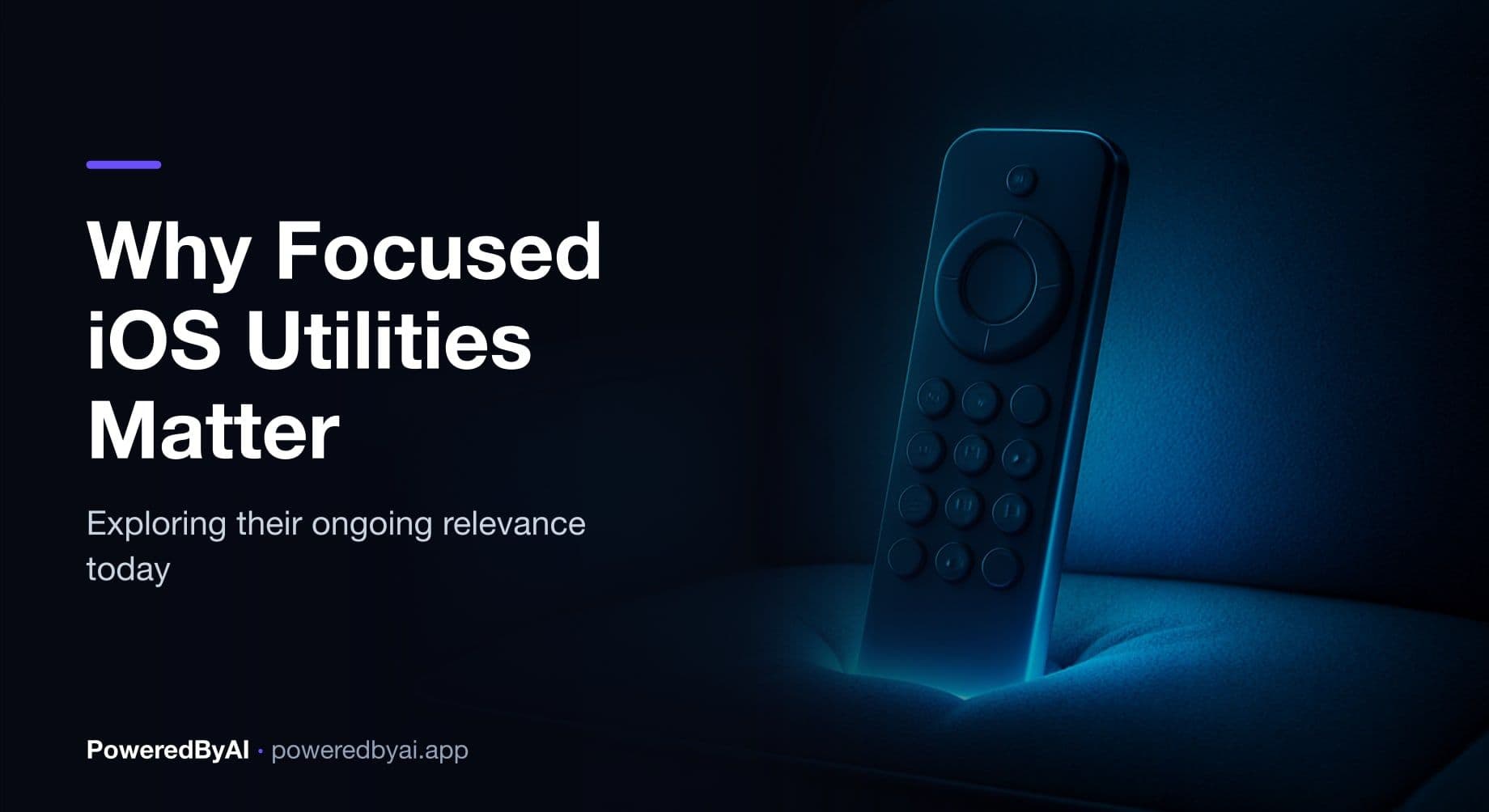
The app market is full of products that try to do too much at once, but users often remember the tools that solve one ordinary problem cleanly. A person does not always want a large platform, a complicated dashboard, or a long setup process. Sometimes the need is much simpler: control a TV from an iPhone, mirror a screen for a family gathering, or stream a video to a larger display without dealing with cables and confusing device menus. Focused iOS utilities still matter because they respect that moment. They work best when they remove friction quickly and let the user get back to what they were trying to do.
Electronic Team is a software company with a long history of building practical tools for connectivity, media handling, file management, remote access, and device-related workflows. Its products are usually built around concrete user tasks rather than broad lifestyle promises, which makes the company a useful example for looking at how smaller utilities earn a place on someone’s phone. On iOS, that approach is especially clear in apps connected with home entertainment and screen sharing.
Why small iOS utilities still have a place
The strongest utility apps often begin with a familiar irritation. A remote disappears between sofa cushions. A TV search screen takes too long to type into. A person wants to show photos from an iPhone on a larger screen without passing the phone around the room. These are not unusual problems, but they are repeated often enough that a well-made app can become part of a household routine.
iOS users also tend to expect quick onboarding, clear permissions, stable behavior, and an interface that feels natural on the device. A utility may have a simple idea, but it still has to handle real-world details: different TV brands, mixed home networks, streaming devices, screen sizes, and users who do not want to troubleshoot for twenty minutes before watching something.
That is where focused product design becomes valuable. A good utility does not need to impress users with a long feature list. It needs to make the next action obvious.
Electronic Team’s iOS work in context
Electronic Team’s iOS collection at https://ios.eltima.com/ brings together mobile tools and guidance around practical iPhone and iPad use, including apps for TV control, screen mirroring, and media streaming. The page fits naturally into the company’s wider software direction because it takes familiar device problems and turns them into narrower, easier workflows.
Two apps are especially useful for understanding that approach: TVRem and DoCast. TVRem is positioned as a free universal remote app for iPhone and iPad, while DoCast is a paid app focused on screen mirroring and media streaming from iOS devices to larger screens. They sit near the same home-entertainment routine, but they do different jobs, which keeps each experience easier to understand.
TVRem solves the remote problem without making it larger
TVRem is built around a very common situation: the iPhone is often easier to find than the physical TV remote. A universal remote app becomes useful when the original remote is lost, has weak batteries, is slow for text input, or belongs to a TV setup with too many separate controllers.
The value of TVRem is its directness. It turns an iPhone or iPad into a remote for smart TVs and streaming devices, helping with navigation, playback, volume, search, and app access. For a household with several TV brands or streaming platforms, that can reduce the usual mix of manufacturer apps and physical remotes.
Its free positioning also matches the user’s need. Someone looking for a remote app is often trying to solve a small problem immediately, not research a major software purchase. A lighter entry point makes sense because the app category depends on speed, clarity, and trust from the first use.
DoCast handles the bigger-screen moment
DoCast belongs to a different part of the same living-room experience. Instead of controlling the TV, it helps users mirror an iPhone or iPad screen and stream media such as photos, videos, and music to a larger display. That can be useful for family photos, short videos, casual presentations, travel memories, or shared viewing when a phone screen feels too small.
The paid model fits the type of problem DoCast addresses. Screen mirroring and casting are tasks where users care about reliability, supported devices, image quality, and fewer interruptions. If a person is sharing something during a meeting, a family event, or a group viewing moment, they want the connection to feel steady.
DoCast also reflects how people actually use devices at home. Many households are mixed ecosystems: an iPhone, a Samsung or LG TV, a Roku device, Fire TV, Chromecast, or a DLNA-compatible screen. A useful casting app has to bridge those setups without turning every attempt into a technical lesson.
TVRem and DoCast answer different needs
App | Main purpose | Best fit |
TVRem | Turns an iPhone or iPad into a universal TV remote | Everyday TV control, search, playback, app access, lost remotes |
DoCast | Mirrors and streams iOS content to larger screens | Photos, videos, music, presentations, shared viewing |
The difference between these two apps matters from a product perspective. TVRem is about control. DoCast is about display. One helps users operate the TV more easily, while the other helps move content from a smaller screen to a bigger one.
Keeping those jobs separate prevents the common utility-app problem where one product becomes crowded with unrelated features. A remote app should be fast, readable, and available at the exact moment someone wants to change something on the TV. A casting app should focus on device discovery, connection quality, playback flow, and a smoother handoff from phone to screen.
What app builders can learn from focused utilities
TVRem and DoCast show that useful apps do not have to feel large to feel valuable. The promise is easy to understand: control the TV from the iPhone, or mirror and stream iOS content to a bigger screen. That kind of clarity helps users decide quickly whether the app belongs in their routine.
There are a few practical lessons here:
- Start with a problem people already recognize.
- Keep the main workflow easy to explain.
- Avoid adding features that slow down the first task.
- Match the business model to the seriousness of the need.
- Make setup feel lighter than the problem the app is solving.
Practical apps still win through clarity
The future of iOS utilities will probably be shaped by better device discovery, smoother connections, cleaner interfaces, and fewer setup steps. A TV remote app can become more useful by recognizing devices faster. A casting app can feel better by making playback and mirroring more predictable. Those improvements matter because they support the task instead of distracting from it.
Electronic Team’s iOS work shows a grounded version of mobile product development. TVRem and DoCast are not trying to turn the iPhone into a complicated control center for every part of digital life. They focus on common entertainment problems and make them easier to handle from a familiar device.
在高流量博客与文章中展示您的 AI 工具
在 PoweredByAI 获得展示,触达正在发现与您类似工具的用户。建立强大的 SEO 外链,提升 Google 排名并带来持续自然流量。
定向触达的赞助博客展示
带 do-follow 外链的客座文章
提升 SEO 的上下文链接投放
深受 25,000+ 款 AI 工具及成长型初创公司信赖
Enjoyed this? Talk AI tools with other founders and builders.
Join our Slack community