🚀 Zaprep: Your Socials on Steroids. 免费开始 — 每月自动发送 1,000 条私信,将互动转化为潜在客户。 ,每月 1,000 条自动私信。
博客What Makes a Proxy Network Suitable for Business Automation?
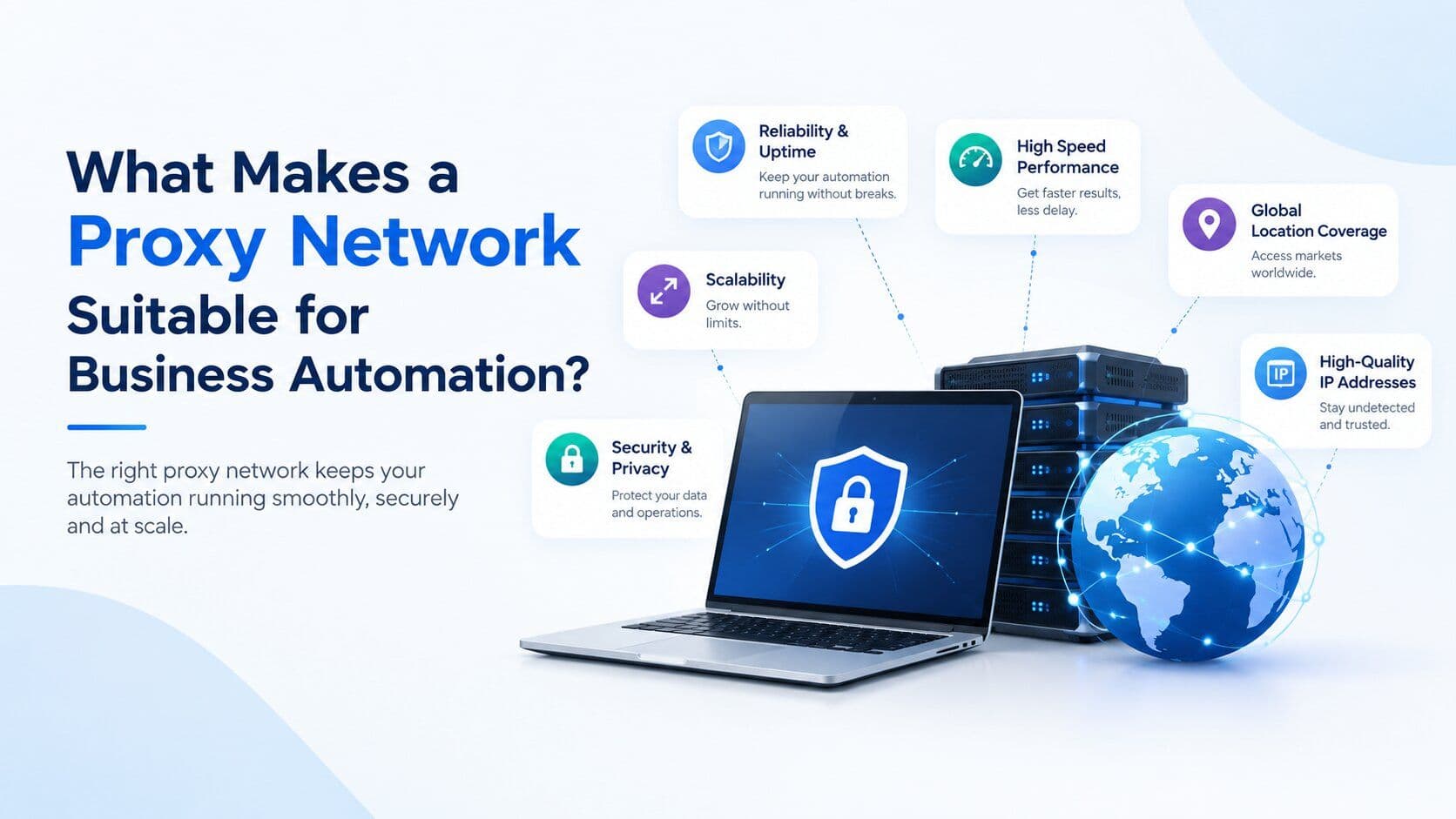
What Makes a Proxy Network Suitable for Business Automation?
 Shashank Jain
2026年9月22日
4 分钟阅读
What Makes a Proxy Network Suitable for Business Automation?
A price-monitoring script that runs cleanly for a week and then starts returning CAPTCHA pages is a familiar headache for data teams. The code hasn't changed. What changed is how the target site sees the traffic behind it.
Imperva's 2025 Bad Bot Report found that automated traffic made up 51% of all web activity in 2024, and websites have responded by filtering it hard. For companies running legitimate automation (price tracking or ad verification, for instance), the proxy network often decides whether a job finishes or stalls halfway.
So what separates a business-grade network from a cheap IP list?
IP Reputation Decides Whether Requests Get Through
Anti-bot systems from Cloudflare and Akamai look at more than request volume. One of their first checks is who owns the IP address, and that single lookup can end a job before the second page loads.
Datacenter ranges belong to hosting companies like AWS or DigitalOcean, so they're easy to flag. Rotating residential pools pass that check but tend to be slower and priced per gigabyte, which gets expensive for teams pulling millions of pages a month.
That gap is why ISP proxies have become the go-to option for a lot of business automation.
The model works like this: static IPs sit on datacenter hardware, but reputable isp proxy providers lease those address blocks from consumer internet carriers. Target sites see an ISP registration, while the automation runs at datacenter speed on an address that won't change mid-task.
Session Handling Needs Two Modes
Pool size gets the headlines, but session handling is where most jobs actually break. A checkout test on a Shopify store or a logged-in supplier portal needs one IP for the whole session; switching addresses halfway through looks like account takeover to most fraud systems.
But bulk collection works the other way. A crawler hitting 20,000 product pages should spread requests across many addresses, so no single IP builds a suspicious history.
The right network supports both modes (sticky sessions and per-request rotation) from the same dashboard or API. It should also spread IPs across different subnets and autonomous systems, because a pool of 200 addresses sitting in one /24 blocks can be banned with a single firewall rule.
Dedicated IPs help here as well. Shared addresses inherit whatever the previous user did with them, and one careless scraping run can burn an IP's reputation on a major marketplace.
Speed and Uptime Under Real Load
Latency compounds fast in automation. A 400 ms delay seems harmless in a browser, but across 100,000 requests it adds more than 11 hours of cumulative wait time.
Geography matters here too. Routing a job through Virginia to scrape a retailer hosted in Frankfurt adds a transatlantic round trip to every request, so city-level targeting earns its cost when target servers are regional.
Uptime claims deserve scrutiny as well: 99.9% still allows almost nine hours of downtime a year.
And check concurrency limits before signing anything. Some plans cap simultaneous connections, which quietly throttles a Scrapy or Playwright setup built to run hundreds of parallel workers.
Integration and Compliance Can't Be an Afterthought
Automation teams rarely touch a proxy dashboard once jobs are live, so the API does the real work. Look for SOCKS5 support alongside HTTP(S), plus endpoints that let scripts refresh IPs without anyone logging in.
Proxies don't replace good crawling manners, though. When a server returns HTTP 429 (the "Too Many Requests" status defined in RFC 6585), the right move is to back off, not rotate to a fresh IP and hit the same endpoint again.
Honoring robots.txt directives matters just as much. Google's own documentation explains how crawlers should read these files, and skipping that step is an easy way to turn a routine data project into a legal headache.
Pricing models deserve a quick spreadsheet check. Per-GB billing punishes image-heavy pages, while per-IP plans with unlimited bandwidth make monthly costs predictable enough for finance to sign off on.
Where Business Automation Is Heading
Anti-bot vendors keep adding detection signals, from TLS fingerprints to cursor movement, but IP reputation is still the first gate most requests have to pass. Expect the gap between carefully sourced networks and recycled IP lists to widen over the next few years.
Teams planning an automation stack for 2027 should test providers against their own target sites before signing annual contracts. A one-week pilot on real workloads (with success rates and ban counts logged) reveals more than any feature comparison chart.
在高流量博客与文章中展示您的 AI 工具
在 PoweredByAI 获得展示,触达正在发现与您类似工具的用户。建立强大的 SEO 外链,提升 Google 排名并带来持续自然流量。
定向触达的赞助博客展示
带 do-follow 外链的客座文章
提升 SEO 的上下文链接投放
深受 10,000+ 款 AI 工具及成长型初创公司信赖
Enjoyed this? Talk AI tools with other founders and builders.
Join our Slack community